📊 Full opportunity report: Phone Answering Software That Books Jobs For Home Services on IdeaNavigator AI — validation score, market gap, and execution plan.

Get the latest gadgets delivered free with Prime
- Fast, free delivery on millions of items
- Prime Video, Amazon Music and more included
- Member-only deals all year
TL;DR
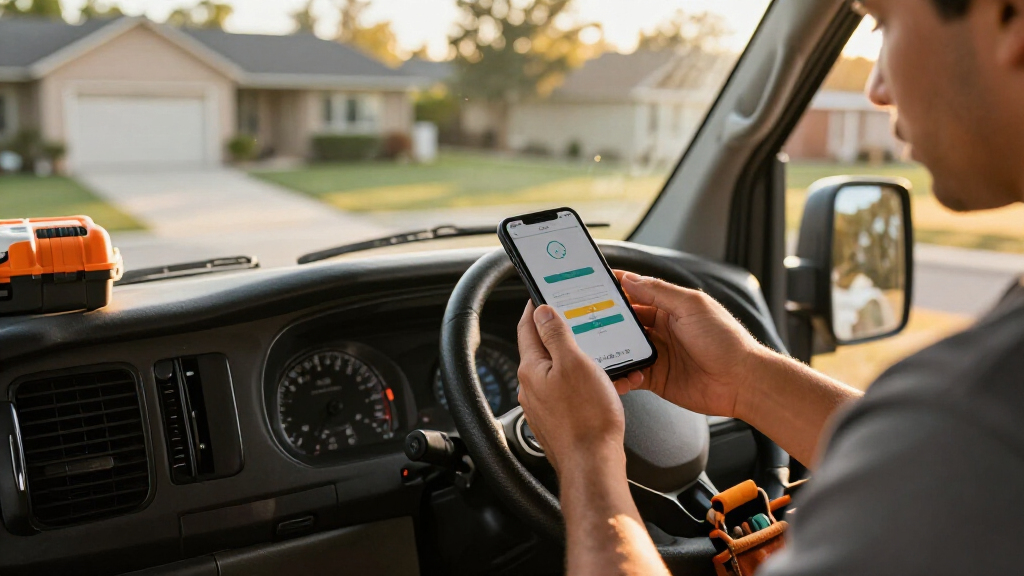
A proposal for plumbing, HVAC and electrical businesses would use AI to answer calls, collect job details and book appointments while owners are working. The suggested next step is a one-month pilot with five shops; no pilot results or independently verified performance figures are provided.
IdeaNavigator AI has proposed an AI phone-answering service that would collect job details and schedule appointments for plumbing, HVAC and electrical businesses when owners cannot take calls. The concept is framed as a narrow business workflow to test, not as a launched product: the suggested trial would forward after-hours calls for five shops over a month and count appointments the owners say they would otherwise have missed. These details come from IdeaNavigator AI’s published proposal; it reports no trial results.
According to IdeaNavigator AI’s proposal, the service would answer calls with a natural-sounding voice, ask about the problem, service address and urgency, then book a time in the business calendar or compatible software such as ServiceTitan or Jobber. It would also text the owner a call summary and transfer emergencies to a person. These are proposed features; the material does not document a working product, completed integrations or customer results.
IdeaNavigator AI says the business model under consideration combines a monthly fee per phone line with a charge for each booked job. The proposal targets owner-operators who may miss inbound calls while working at a job site. It argues that callers unable to reach one contractor may contact another, but provides no call-volume data, missed-call rate or conversion figures to quantify the problem.
IdeaNavigator AI proposes routing after-hours calls from five shops for one month, then counting jobs booked that owners believe would otherwise have been lost. The proposal says those bookings could be compared with each business’s average job value to assess potential economics. It does not specify how to verify whether a booking was genuinely incremental, and provides no price, trial outcome or estimate of operating costs.
AI call answering for trade shops
IdeaNavigator AI proposes software to collect job details and book appointments when owners cannot answer. It is a proposal with no reported pilot results.
How the proposed service works
It focuses on routine call intake and appointment scheduling.
Ask about the problem, service address and urgency.
Try to book in the business calendar or compatible software such as ServiceTitan or Jobber.
Text the owner a call summary and transfer emergencies to a person.
What the pilot would measure
The proposed test would route after-hours calls and assess whether the service captures work owners might otherwise miss.
What remains unproven
The proposal describes possible features and benefits, not a launched product or verified performance.
- Structured intake for plumbing, HVAC and electrical calls
- Monthly fee per phone line plus a charge per booked job
- Working integrations, accuracy or customer results
- Specific pricing, operating costs or pilot findings
Testing Missed Calls Against Bookings
The proposal’s rationale is that answering a call can help a small trade business win work: owners may be unable to stop mid-job, while a prospective customer can call another provider. A system that reliably handles routine intake could help capture requests outside normal answering hours and reduce interruptions during work. However, IdeaNavigator AI presents these as potential benefits, not established results.
The pilot’s business case would depend on more than answering calls. The system would need to gather accurate details, schedule a suitable appointment, handle urgent situations appropriately and hand off calls when automation is not enough. It would also have to generate bookings worth more than its monthly and per-job charges. The proposal does not report evidence on these points; measuring them in a trial could help owners assess whether the service adds jobs or simply automates calls they would have received anyway.
Products Worth Considering

Kindle Paperwhite (16 GB) – 7 Glare-Free Display, Black

Kindle Paperwhite Signature Edition Bundle, 32GB, Jade, with Plant-Based Leather Cover and Wireless Charging Dock

Sonos Era 300 Wireless Smart Speaker with Dolby Atmos, Black
As an affiliate, we earn on qualifying purchases.
A Narrow Workflow for Trade Shops
IdeaNavigator AI’s proposal focuses on the front-office work of home-service businesses, rather than describing a general-purpose voice assistant. Its proposed initial scope is structured intake: identify the type of job, capture a location and urgency, and arrange a visit. The proposed emergency escalation is intended to distinguish cases that should not be handled as routine scheduling.
IdeaNavigator AI says voice AI crossed a reliability threshold for structured intake calls in 2025–2026, making round-the-clock answering economically viable below the cost of a human answering service. The proposal offers this as its rationale, but the material provides no benchmark, vendor pricing, accuracy study or named service to support or assess the comparison.
Pilot Results and Safeguards
IdeaNavigator AI reports no pilot findings. Its material does not say whether a service has been built, which shops would participate or when a trial might begin. The proposed five-shop, one-month test is a validation plan, not evidence that the system has booked jobs or recovered revenue.
The proposal also leaves practical details unspecified: how the software would confirm appointment availability, respond to unclear information, identify and transfer emergency calls, and store or use customer data. It names ServiceTitan and Jobber as possible scheduling destinations but does not establish that integrations exist. No pricing, accuracy rates, customer feedback or comparison with human answering services is provided.
A Five-Shop Test Would Measure Value
IdeaNavigator AI describes a one-month after-hours trial across five shops as the next step. To make its results useful, participating businesses would need to record calls answered, appointments booked, emergency handoffs, errors and cancellations, then compare bookings with what would likely have happened without the service. The proposal suggests comparing results with average job value to inform pricing, but that comparison alone would not prove that the AI caused each booking.
Until a trial is reported, the proposal provides no evidence on booking performance, integration reliability or total cost. A reported pilot could clarify whether the workflow works for routine calls and where human intervention remains necessary. IdeaNavigator AI’s material announces no launch date, product name or further milestone.
Source: IdeaNavigator AI
Key Questions
Is this AI phone-answering service available now?
IdeaNavigator AI’s material describes a product proposal and test plan. It does not confirm a launch, a working service or an availability date.
What would the proposed system do during a call?
According to the proposal, it would ask about the caller’s issue, address and urgency, then try to book an appointment, send the owner a summary and transfer emergencies to a person. No reported results demonstrate these features.
How would the proposed pilot measure success?
IdeaNavigator AI suggests forwarding after-hours calls for five shops over one month and counting jobs owners believe they would otherwise have missed. The proposal reports no results or method for independently verifying those bookings.
What would the service cost?
The proposed model, as described by IdeaNavigator AI, is a monthly charge per phone line plus a fee per booked job. The material states no specific prices or cost comparison with human answering services.
Source: IdeaNavigator AI