To improve your rowing machine form, focus on initiating each stroke with your legs rather than your arms or back. Engage your strongest muscles early, drive through your heels, and keep your posture upright. Avoid common mistakes like rushing or leaning back too soon. Mastering the “legs first” cue builds power, efficiency, and reduces injury risk. Keep practicing this sequence, and you’ll discover better technique and long-term performance—there’s more to learn to perfect your approach.

Get the latest gadgets delivered free with Prime
- Fast, free delivery on millions of items
- Prime Video, Amazon Music and more included
- Member-only deals all year
Key Takeaways
- Initiate each stroke by driving with your legs, not the back or arms, to maximize power and proper sequencing.
- Maintain proper posture with a neutral spine and upright seat to prevent early leaning and support smooth movement.
- Focus on controlled, steady leg drive before engaging hips and arms to ensure efficient force transfer.
- Use breathing cues—inhale during setup, exhale during drive—to enhance rhythm and control.
- Regularly check equipment setup and practice slowly to develop muscle memory for the correct “legs first” technique.
rowing machine with adjustable resistance
As an affiliate, we earn on qualifying purchases.
As an affiliate, we earn on qualifying purchases.
How the “Legs First” Cue Transforms Your Rowing Technique
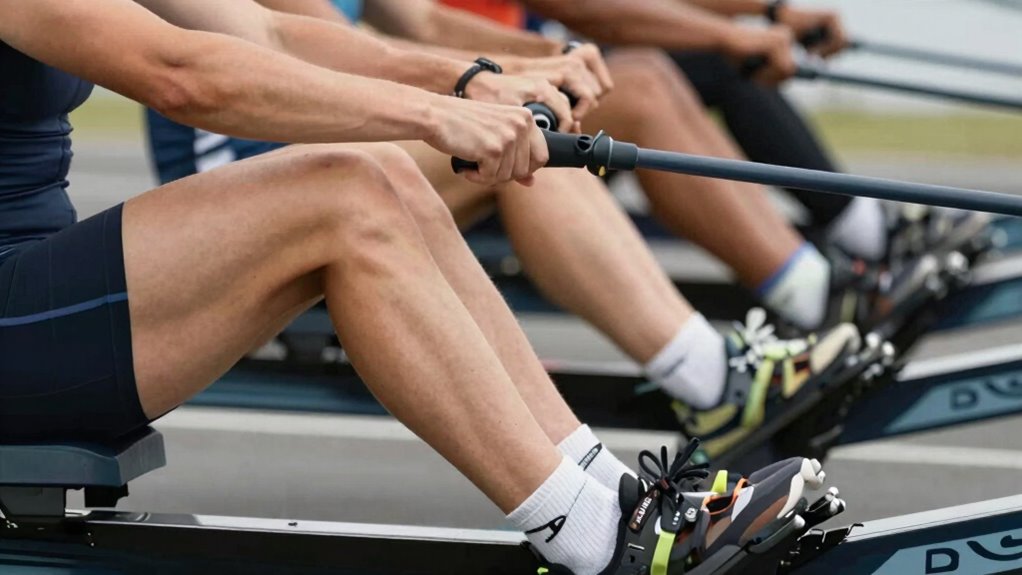
When you focus on the “legs first” cue, you immediately improve your rowing efficiency. This simple shift refines your technique by ensuring you engage your strongest muscles early in the stroke. Properly initiating with your legs helps you maintain a smooth, powerful rhythm and prevents common errors like over-reliance on your arms or back. Technique refinement through this cue also promotes better posture, reducing strain on your joints and muscles. As a result, you lower your risk of injury, especially strains to your lower back and shoulders. By consistently emphasizing the legs first, you develop a more effective and safe rowing form that maximizes power while safeguarding your body. This foundational adjustment creates a solid base for progressing your rowing skills. Additionally, understanding the importance of power transfer in rowing can help you optimize your technique for even better performance. Recognizing the sequence of muscle engagement ensures you generate maximum force efficiently throughout each stroke. Incorporating proper sequencing into your training further enhances overall efficiency and effectiveness. Focusing on muscle recruitment helps in developing a more synchronized and powerful rowing motion. Emphasizing the initial drive phase can lead to more consistent and explosive strokes, making your rowing more efficient.
ergometer rowing machine for home
As an affiliate, we earn on qualifying purchases.
As an affiliate, we earn on qualifying purchases.
Why Initiating With Your Legs Is the Key to Power and Efficiency
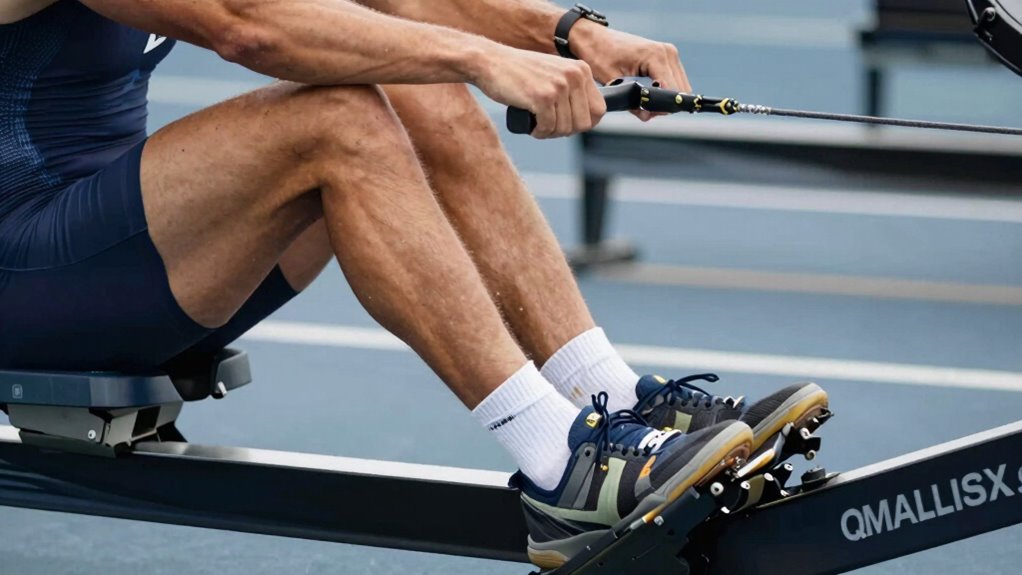
Starting with your legs activates your strongest muscles, giving you more power with each stroke. It also helps you maintain a smooth, consistent rhythm throughout your row. Focusing on this movement guarantees you get the most efficiency from every pull. Additionally, adopting simple, practical techniques like this can help you create a more organized and effective workout routine. Engaging the proper rowing form ensures that your efforts translate into better performance and reduced risk of injury.
Engages Power Muscles
Engaging your power muscles is crucial for maximizing the effectiveness of each rowing stroke. When you initiate with your legs, you activate your large muscle groups, including your glutes, quads, and hamstrings. This muscle activation generates greater force, allowing you to row more efficiently and with less fatigue. Properly engaging these muscles also helps distribute the workload evenly, reducing strain on your back and arms, which is essential for injury prevention. When your power muscles do the heavy lifting, you not only improve your rowing performance but also protect yourself from overuse injuries. Understanding proper technique ensures that you engage your muscles correctly for optimal results. Focusing on activating your legs first ensures your entire stroke is aligned for maximum strength and safety, making every pull more powerful and effective. Additionally, understanding the correct rowing technique can further enhance your efficiency and reduce the risk of injury. Developing a consistent power muscles engagement routine can further improve your overall performance and endurance during rowing sessions. Incorporating proper warm-up routines can also help prepare your muscles for sustained effort and prevent strains, especially when paired with hydration strategies to maintain optimal muscle function throughout your workout.
Promotes Smooth Rhythm
Why does initiating your stroke with your legs promote a smooth rowing rhythm? When you start with your legs, you set a consistent, powerful pace that naturally flows into your back and arms. This sequencing helps maintain a steady breathing technique, preventing abrupt or uneven movements. Proper equipment adjustments, like seat height and foot straps, ensure your legs can engage fully without strain, making the motion more fluid. As you drive with your legs first, you create a seamless rhythm that reduces unnecessary pauses or jerks, improving efficiency and endurance. Over time, this smooth rhythm becomes automatic, making your rowing sessions more effective and enjoyable. Remember, focusing on legs-first initiation supports consistent pacing, better breathing, and optimal use of your equipment.
rower with ergonomic seat and handle
As an affiliate, we earn on qualifying purchases.
As an affiliate, we earn on qualifying purchases.
Common Mistakes That Hinder a Proper “Legs First” Start
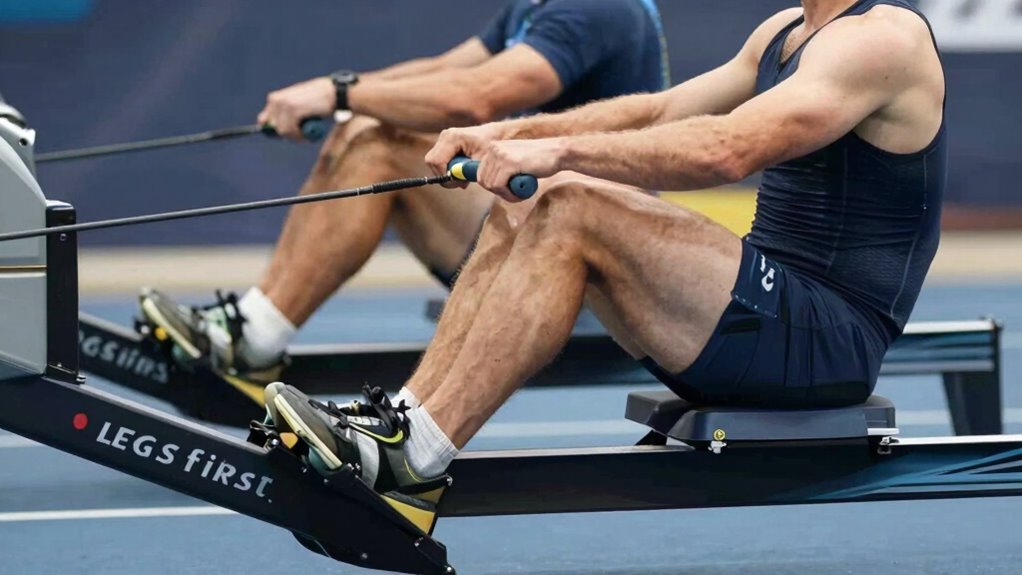
Starting with a backward lean can throw off your rhythm and reduce power. Rushing the leg drive often leads to poor timing and strain on your back. To improve, focus on initiating movement with your legs first and maintaining proper posture. Ensuring your proper form aligns with correct rowing technique helps prevent injury and maximizes workout benefits. Additionally, understanding the importance of body mechanics can optimize your performance and reduce fatigue. Incorporating proper warm-up routines can also prepare your muscles for efficient movement and prevent injury during your row. Paying attention to seasonal maintenance of your equipment can also ensure consistent performance and safety.
Starting With Backward Lean
Are you accidentally beginning your rowing stroke with a backward lean? This mistake often stems from poor seated posture and improper arm positioning. When you start with a backward lean, you shift your center of gravity prematurely, making it harder to engage your legs correctly. Instead, focus on sitting upright with a relaxed back and neutral spine. Your arms should be extended forward, holding the handle lightly, without pulling or leaning back. This proper starting position ensures your power originates from your legs, not your back. Avoid the temptation to lean back early, which can cause unnecessary strain and disrupt rhythm. Maintaining a balanced seated posture and correct arm positioning sets a solid foundation for a smooth, effective “legs first” start. Additionally, paying attention to body alignment can help prevent ingrained faulty habits that hinder proper form. Developing an awareness of proper ergonomic positioning can lead to more consistent and injury-free rowing sessions.
Rushing the Leg Drive
Rushing the leg drive can substantially undermine your rowing efficiency by causing you to skip the proper sequence of movements. When you accelerate too quickly into the leg push, you often sacrifice breath control, making it harder to stay smooth and coordinated. Proper seat positioning is vital here—sitting too far forward or back can tempt you to rush the drive, disrupting the “legs first” rhythm. Instead, focus on maintaining a steady, controlled motion, initiating the drive with your legs, then engaging your core and arms. Keep your breath steady to support this controlled movement. By resisting the urge to rush, you guarantee each phase flows seamlessly, maximizing power and reducing fatigue. Security features in modern fitness equipment can also help monitor and improve your form, ensuring consistent and safe workouts. Patience and attention to detail are key to mastering a proper, efficient start.
As an affiliate, we earn on qualifying purchases.
Step-by-Step Guide to Practicing the “Legs First” Cue
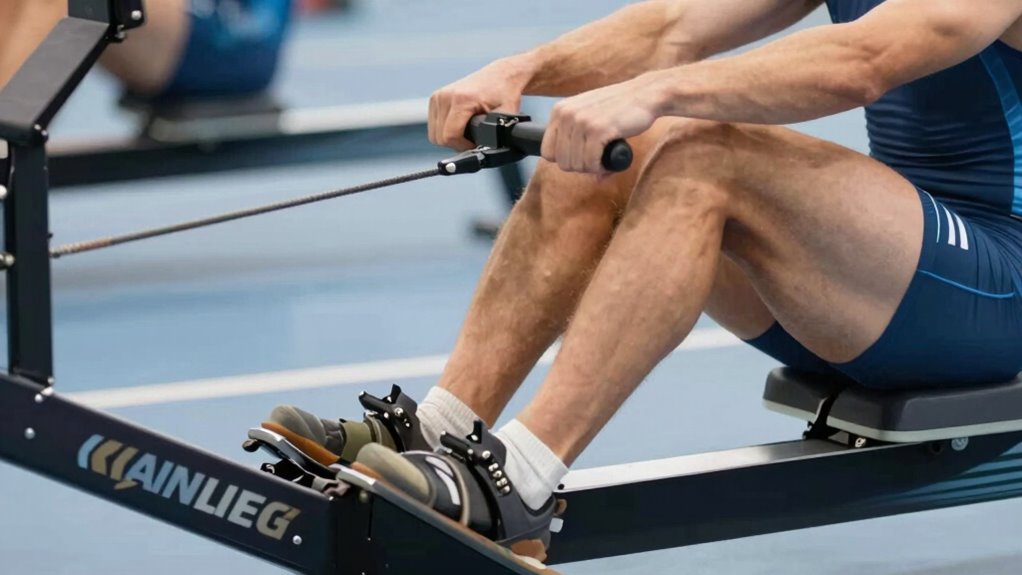
To master the “legs first” cue on a rowing machine, you need to focus on initiating each stroke with your legs rather than your arms or back. Start by adjusting your seat so your knees are slightly bent at the catch position, ensuring proper seat positioning for efficient drive. As you prepare to row, use your breathing technique—inhale deeply as you set up and exhale during the drive—to stay controlled. When beginning the stroke, drive through your heels, pushing with your legs first before engaging your hips and arms. Practice this sequence slowly at first, paying attention to how your legs lead the movement. Consistently reinforcing this pattern helps develop muscle memory and makes the “legs first” cue natural during your rowing session.
Troubleshooting: What to Do When Your Legs Don’t Drive First?

When your legs aren’t leading the stroke as they should, it often signals a breakdown in your technique or setup. To troubleshoot, first check your seat adjustment—ensure it’s set so your legs can extend fully without overreaching. Proper grip positioning also matters; a relaxed grip helps maintain focus on leg drive rather than grip tension. If your legs still don’t initiate the stroke, consider these tips:
- Adjust the seat height for ideal leg extension
- Keep your grip loose, not tight
- Focus on pushing through your heels, not your toes
- Practice engaging your legs first, consciously delaying arm pull
- Remember that proper rowing technique is crucial for efficient and safe movement.
How to Incorporate “Legs First” Into Your Entire Rowing Stroke

Ever wonder how to seamlessly integrate the “legs first” movement into your entire rowing stroke? Start by adjusting your foot placement so your feet are firmly secured, allowing smooth transfer of power from your legs. As you initiate the drive, focus on pushing through your heels, engaging your legs first before leaning back or pulling with your arms. Proper seat positioning is essential; sit tall with your hips slightly forward, enabling a full leg drive without overextending your back. Maintain a strong core to support this motion. With consistent practice, your legs will lead each stroke naturally, creating a fluid, powerful movement. Remember, initiating with your legs sets the foundation for an efficient, effective rowing technique. Incorporating expert voice actors into your training can also help you fine-tune your technique through clear and engaging instruction. Emphasizing proper technique ensures that you develop consistent, injury-free rowing habits over time. Additionally, paying attention to timing and rhythm helps synchronize your entire stroke for maximum efficiency. Developing a disciplined focus on fundamental biomechanics can further improve your overall form and performance. Furthermore, understanding the muscle engagement involved in each phase can help optimize your power output and endurance.
Benefits of Mastering the “Legs First” Approach for Long-Term Performance
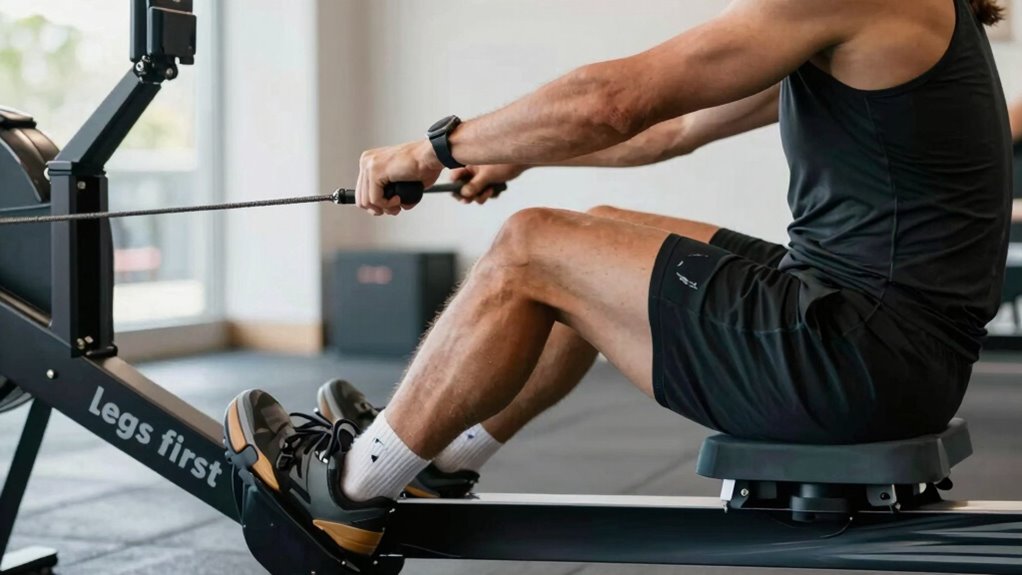
Mastering the “legs first” approach markedly boosts your long-term rowing performance by building a solid foundation of power and efficiency. When you focus on initiating each stroke with your legs, you improve muscle engagement and reduce fatigue. This technique encourages proper rowing machine setup and highlights the importance of equipment maintenance to keep your machine functioning smoothly. Over time, you’ll notice better stroke consistency and increased endurance.
Advantages include:
- Improved power transfer from legs to upper body
- Reduced risk of injury through proper form
- Greater consistency in training sessions
- Enhanced overall technique and performance longevity
Frequently Asked Questions
How Does “Legs First” Improve Overall Rowing Endurance?
Focusing on “legs first” improves your rowing endurance by enhancing power transfer and muscle activation. When you engage your legs early, you generate more force from the strongest muscles, reducing fatigue in your arms and back. This efficient movement pattern allows you to row longer without tiring quickly, as you rely on your legs’ strength, which is better suited for sustained effort, ultimately boosting your overall stamina and endurance.
Can “Legs First” Technique Prevent Injuries?
Ever wonder if proper technique can keep you safe? The “legs first” cue enhances your rowing biomechanics, helping you engage muscles correctly and distribute force evenly. This reduces strain on your back and shoulders, markedly lowering injury risk. By focusing on your legs to initiate each stroke, you promote better posture and movement patterns, making injury prevention more effective. Isn’t protecting your body worth adopting a smarter, safer rowing approach?
Is “Legs First” Suitable for All Rowing Skill Levels?
Yes, “legs first” works for all rowing skill levels, from novices to advanced rowers. As a rowing novice, adopting this technique helps you develop proper form and build strength safely. For advanced rowers, it’s an essential component of efficient, powerful strokes. This cue guarantees correct sequencing, reduces injury risk, and improves overall performance. No matter your skill level, focusing on “legs first” keeps your technique effective and safe.
How Long Does It Take to Master the “Legs First” Cue?
It usually takes a few weeks of consistent training and mental focus to master the “legs first” cue. Your progress depends on how often you practice and stay mindful of your form. Stay patient and committed, and you’ll notice improvements over time. With regular effort and concentration, you’ll develop the muscle memory needed to execute the cue smoothly, enhancing your rowing efficiency and overall performance.
What Equipment Adjustments Support a “Legs First” Start?
To support a “legs first” start, adjust your seat height so your legs are slightly bent at the finish. Make sure your foot straps are snug, securing your feet firmly in place. When you begin, focus on pushing with your legs first by maintaining proper seat height and foot strap tension. This setup encourages correct form, helping you activate your legs properly from the start and improve your rowing efficiency.
Conclusion
Mastering the “legs first” cue can dramatically improve your rowing efficiency. Imagine a beginner who struggled with inconsistent strokes but then focused on driving with their legs—suddenly, their power and stamina skyrocketed. By consistently applying this simple shift, you’ll notice smoother, more powerful rows and fewer injuries. Keep practicing, troubleshoot as needed, and soon, “legs first” will become second nature—transforming your rowing experience for the long haul.
Halloween Picks
halloween
As an affiliate, we earn on qualifying purchases.