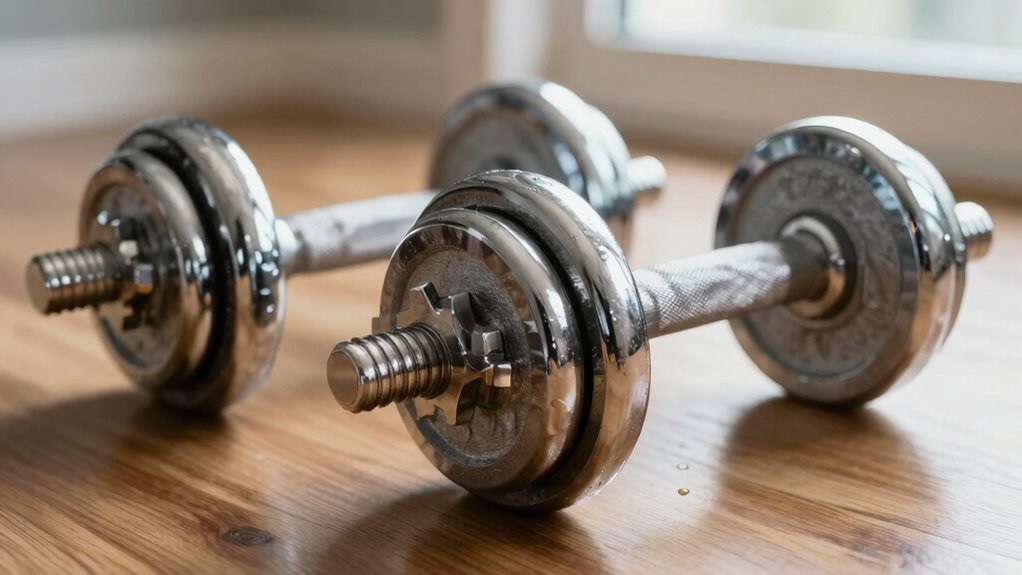

To stop your adjustable dumbbells from rattling and extend their lifespan, regularly inspect and tighten loose parts, including locking mechanisms and weight plates. Clean and lubricate moving components with silicone or lightweight oil to reduce noise and wear. Store them in a dry, impact-absorbing area, and handle with care to prevent damage. Consistent maintenance keeps your dumbbells quiet and durable—if you want to learn more tips, you’re in the right place.

Get the latest gadgets delivered free — and shop member deals
- Fast, free delivery on millions of items
- Access to Prime Big Deal Days deals on October 6–7
- Prime Video, Amazon Music and more included
Key Takeaways
- Regularly inspect and tighten locking mechanisms and weight plates to prevent rattling caused by loose parts.
- Apply silicone-based lubricant to adjustment tracks and moving components every few months for smooth operation.
- Store dumbbells in a dry, padded area to prevent rust, corrosion, and impact damage that can lead to noise.
- Replace worn or damaged collars and parts promptly to maintain secure weight fastening and stability.
- Perform routine cleaning, check for wear, and ensure even weight distribution to extend the lifespan of your adjustable dumbbells.
adjustable dumbbells with secure locking collars
As an affiliate, we earn on qualifying purchases.
As an affiliate, we earn on qualifying purchases.
Why Do Adjustable Dumbbells Rattle, and How Can You Fix It?

Adjustable dumbbells often rattle because the weight plates aren’t secured tightly enough, causing them to shift during use. This issue often stems from material durability; lower-quality metals or plastics can wear down or deform, making securing mechanisms less effective. An ergonomic design also plays a role—dumbbells with poorly designed locking systems or uneven weight distribution are more prone to rattling. To fix this, check that all collars or locking mechanisms are fully tightened before each workout. Consider upgrading to dumbbells made from high-quality, durable materials that resist wear and ensure secure locking features. Proper maintenance, like cleaning and inspecting the locking parts regularly, helps maintain the ergonomic integrity of the design, preventing rattling and prolonging the lifespan of your dumbbells. Additionally, selecting high-quality materials with high build quality can minimize issues related to material wear and enhance overall durability.
As an affiliate, we earn on qualifying purchases.
How to Diagnose Rattling in Your Dumbbells
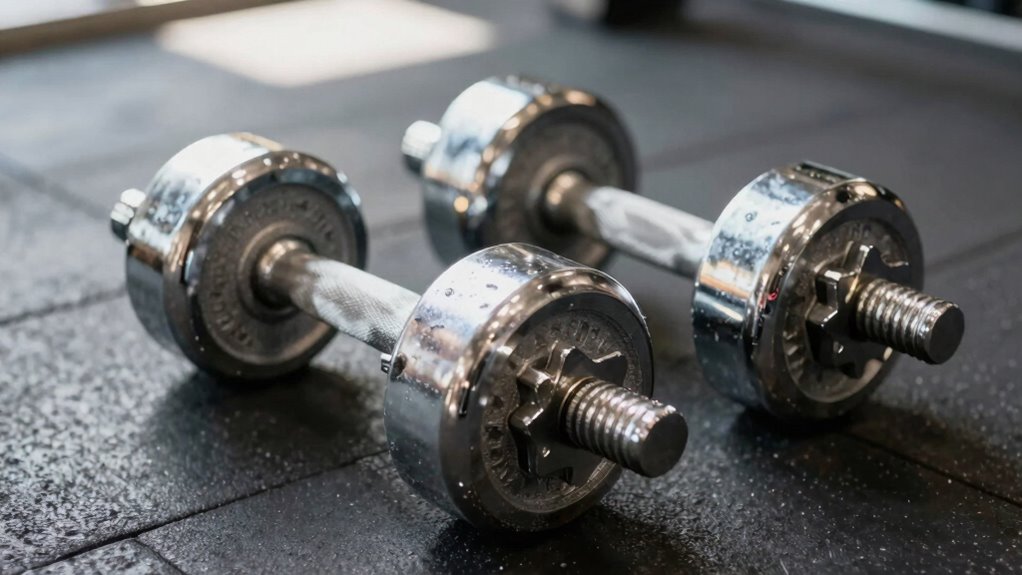
Rattling in your dumbbells can often be caused by loose or shifting weight plates, but diagnosing the exact issue requires a careful inspection. Start by checking the dumbbell materials—plastic, rubber, or metal—since each affects how likely rattling is. For example, plastic or rubber-coated weights might produce different rattle sound causes compared to metal plates. Listen closely to identify where the noise originates: is it from the plates moving within the handle or from loose screws and collars? Feel for any play or movement in the weight sections. Tighten any loose parts and ensure the weight plates are securely fastened. Proper diagnosis helps you pinpoint whether the rattle is due to material flaws or loose components, guiding effective fixes. Additionally, understanding the 16PF traits can help in selecting more durable and stable equipment suited to your fitness needs. Ensuring the quality of the materials used in your dumbbells can also reduce the likelihood of rattling and extend their lifespan. Incorporating sound vibrations principles from sound healing science might offer innovative ways to minimize noise during workouts. Regular maintenance and checking for wear and tear can further prevent future rattling issues.
silicone lubricant for dumbbells
As an affiliate, we earn on qualifying purchases.
As an affiliate, we earn on qualifying purchases.
Inspect Your Dumbbells Regularly to Prevent Loose Parts
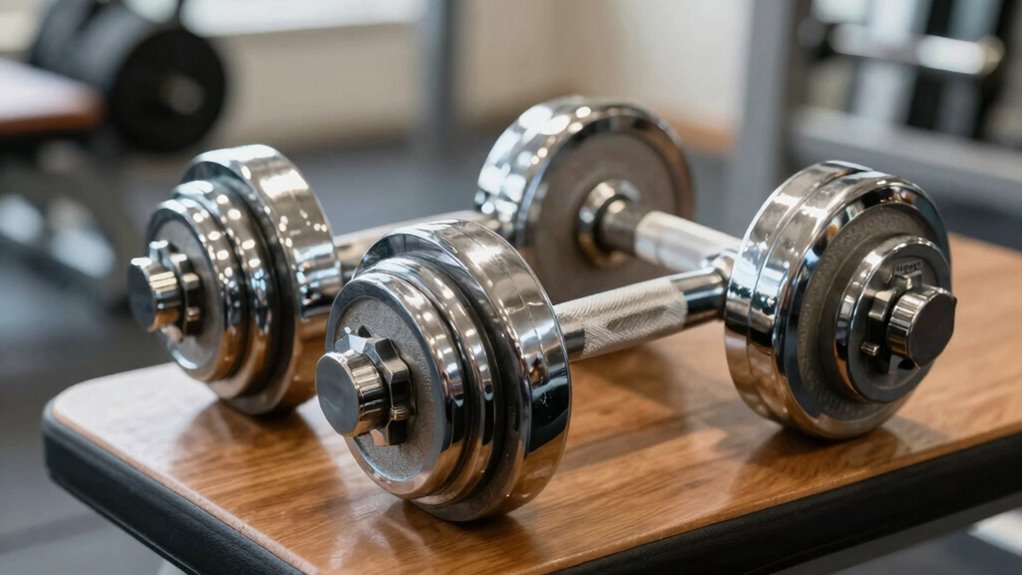
Regularly inspecting your dumbbells helps catch loose parts before they cause bigger problems. During a dumbbell inspection, check all components for stability and tightness. Look for any signs of wear, such as rust, cracks, or wobbling, which could indicate loose or damaged parts. Confirming component stability is key to preventing rattling and extending the lifespan of your equipment. Tighten any bolts or screws that seem loose, and verify that weight plates are securely in place. Don’t forget to examine the locking mechanisms or collars, as their security directly impacts stability. Incorporating a proper maintenance routine and understanding the signs of wear ensures your dumbbells stay in optimal condition. Regular inspections help identify loose parts early, reducing the risk of accidents and ensuring your workouts remain safe and effective. Being aware of environmental factors, such as humidity, can help prevent corrosion and deterioration. For example, understanding cryptid mysteries can add an element of curiosity to your routine, encouraging you to stay vigilant with your equipment. Make this a routine to maintain your equipment’s performance over time.
dumbbell storage rack with padding
As an affiliate, we earn on qualifying purchases.
As an affiliate, we earn on qualifying purchases.
How to Tighten and Secure Loose Components

Start by checking your dumbbells for any loose parts that need tightening. Use the appropriate tools to secure these components firmly in place. Ensuring everything is tight will keep your dumbbells safe and effective for your workouts. Additionally, inspecting tool maintenance regularly helps prolong the lifespan of your equipment. Regularly verifying equipment integrity also reduces the risk of unexpected failure during use. Recognizing the importance of product longevity can lead to better care and maintenance routines. Being aware of machine weight is essential when moving or installing your dumbbells to prevent damage. Understanding performance cookies can also help you monitor how well your equipment is functioning over time.
Check for Loose Parts
If you notice any loose parts on your adjustable dumbbells, it’s important to address them promptly to guarantee safe and effective workouts. Check for any wobbling or shifting components, focusing on areas where parts connect or slide. Design improvements in newer models often make these components more secure, but older dumbbells may require extra attention. Material quality also plays a role; higher-quality materials tend to hold up better over time, reducing the risk of looseness. Regularly inspecting and tightening loose nuts, bolts, or locking mechanisms helps prevent rattling and prolongs your dumbbells’ lifespan. Staying vigilant about loose parts not only ensures your safety but also maintains excellent performance during your workouts. Additionally, understanding the materials used in your dumbbells can help identify which parts are more prone to wear and tear over time. Incorporating regular maintenance routines can further extend the lifespan of your equipment and keep it functioning optimally. Being aware of wear and tear patterns can help you anticipate when parts might need replacement before issues arise. Proper storage and cleaning also contribute to preventing corrosion or damage, ensuring your dumbbells remain in good condition for years to come. Moreover, using the right lubrication can reduce friction and help keep moving parts functioning smoothly.
Use Proper Tightening Tools
Using the proper tightening tools is essential to securely fasten loose components on your adjustable dumbbells. Correct tools ensure you don’t damage parts or compromise weight distribution, which affects workout safety and effectiveness. An ergonomic design depends on tight, secure fittings, so always use the recommended wrench or screwdriver. Additionally, maintaining the integrity of equipment components helps prolong the lifespan of your dumbbells. Regularly checking the jewelry materials for wear and tear can prevent unexpected loosening and damage during use.
Cleaning and Lubricating Your Dumbbells for Quieter Workouts
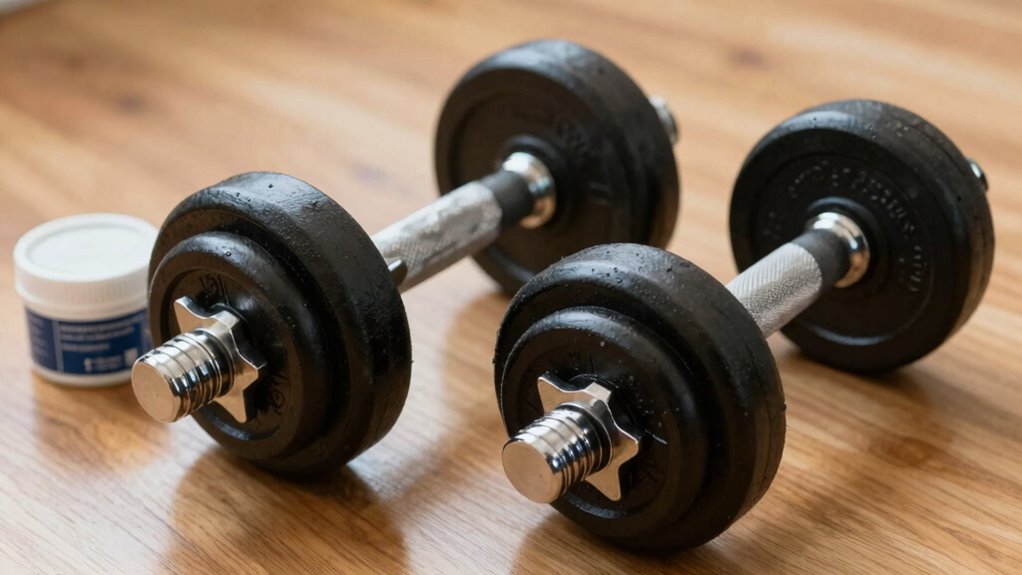
Keeping your dumbbells clean and well-lubricated helps guarantee quieter, smoother workouts. Use proper cleaning techniques to remove dirt and sweat, and apply the right lubrication to reduce noise and wear. Regular maintenance makes your equipment last longer and performs better. Incorporating proper maintenance practices ensures your dumbbells remain in optimal condition over time.
Proper Cleaning Techniques
Regular cleaning and lubrication are essential for maintaining your adjustable dumbbells and ensuring they operate quietly. Follow simple cleaning routines to keep dust removal effective; wipe down the handles and weight plates with a damp cloth after each use. Use a soft brush or compressed air to remove dust from hard-to-reach areas, especially around adjustment mechanisms. Avoid harsh chemicals that could damage the metal or coating. Keep the moving parts free from debris to prevent sticking and rattling. Regular cleaning not only reduces noise but also extends the lifespan of your dumbbells. Make sure to dry all parts thoroughly to prevent rust. Consistent maintenance will ensure your dumbbells stay smooth, quiet, and ready for a safe workout.
Effective Lubrication Methods
After cleaning your adjustable dumbbells, applying the right lubricant helps keep their moving parts functioning smoothly and quietly. Use lubrication techniques like applying a few drops of silicone or lightweight oil to the barbell tracks and adjustment mechanisms. Regular maintenance routines, such as lubricating every few months, prevent rust and reduce noise during workouts. Make sure to wipe away excess oil to avoid dirt buildup. Avoid over-lubricating, as it can attract dust and debris. Proper lubrication ensures the locking pins and adjustment plates move effortlessly, minimizing rattling. Incorporating safe riding habits into your maintenance routines can also help extend your dumbbells’ lifespan and maintain quiet, smooth operation. Consistent lubrication is key to preventing wear and tear over time.
Replacing Worn or Damaged Parts Safely and Easily

When your adjustable dumbbells show signs of wear or damage, replacing the affected parts promptly is essential for safety and performance. Start by identifying worn or broken components, such as collars, adjustment pins, or weight plates. Always use genuine replacement parts to maintain your dumbbell’s ergonomic design and support dumbbell customization. Guarantee the dumbbell is on a stable surface before replacing parts to prevent injury. Use the proper tools and follow manufacturer instructions for a secure fit. Regular inspections help catch issues early, extending the lifespan of your equipment. Here’s a quick guide:
| Part to Replace | Signs of Wear | Replacement Tips |
|---|---|---|
| Adjustment Collars | Loose or damaged locks | Use compatible, high-quality collars |
| Weight Plates | Cracks, rust | Opt for corrosion-resistant plates |
| Adjustment Pins | Bending or rust | Choose durable, ergonomic pins |
| Handle Attachments | Looseness or damage | Tighten or replace with ergonomic designs |
Storage Tips to Minimize Rattling and Extend Dumbbell Lifespan

To keep your adjustable dumbbells quiet and in good shape, use secure storage solutions that prevent unnecessary movement. Avoid dropping or hitting them, which can cause damage over time. Regularly check for loose parts and tighten them to make certain longevity and smooth operation.
Secure Storage Solutions
Proper storage is essential for keeping your adjustable dumbbells in top condition and preventing unnecessary rattling. Well-organized storage helps maintain even weight distribution, which reduces movement inside the plates and minimizes noise. Choose a sturdy rack or designated space that keeps your dumbbells secure and upright. Ensure the storage solution allows easy access, so you don’t have to force or drop weights, protecting grip comfort and preventing damage. Avoid stacking weights haphazardly, which can cause uneven wear. Consider padded or rubberized surfaces to cushion the dumbbells and absorb vibrations. Regularly check that locking mechanisms remain tight and components are secure. Proper storage not only reduces rattling but also prolongs the lifespan of your dumbbells by preventing unnecessary strain on moving parts.
Avoid Excessive Impact
Ensuring your adjustable dumbbells aren’t subjected to unnecessary impact during storage helps prevent damage and reduces rattling. When dumbbells experience excessive impact, parts can loosen or break, shortening their lifespan. To minimize this, focus on impact absorption strategies and material selection for your storage setup. Use padded surfaces or rubber mats to cushion your weights, absorbing shock from accidental bumps. Choose sturdy, vibration-dampening racks made from materials like rubber or foam to protect your dumbbells. Proper storage not only preserves their integrity but also keeps them quiet during use. Consider this table for effective impact prevention:
| Impact Absorption | Material Selection | Storage Tips |
|---|---|---|
| Cushioned mats | Rubber, foam | Use padded shelves |
| Shock-absorbing | Plastic, rubber | Avoid hard surfaces |
| Dampening layers | Soft fabrics | Store in stable spots |
Regular Maintenance Checks
Regular maintenance checks are essential for keeping your adjustable dumbbells in ideal condition and preventing rattling during use. By inspecting them regularly, you can catch issues early and ensure smooth operation. Focus on guaranteeing the dumbbell weight is securely in place, so it doesn’t shift or create noise. Check the handle grip for wear or looseness, which can affect stability and safety. Also, tighten any loose screws or locking mechanisms to prevent rattling. Keep the weight plates clean and dry to avoid rust or corrosion. Finally, store your dumbbells properly, in a dry place with minimal impact. Regular checks help extend their lifespan, keep your workouts safe, and maintain the quiet, stable performance you want.
Proper Use and Maintenance to Keep Your Adjustable Dumbbells in Top Shape
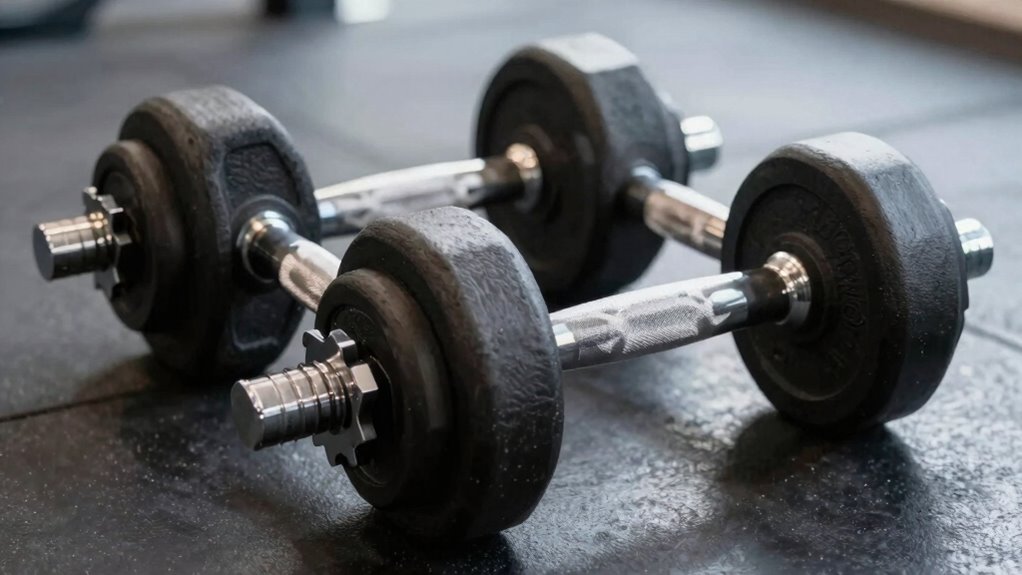
To keep your adjustable dumbbells in top shape, it’s essential to use and maintain them correctly. Focus on proper dumbbell ergonomics by gripping the handles firmly and maintaining a natural wrist position to prevent strain. Always verify the weights are securely locked in place before lifting to maximize user safety. Regularly check that adjustment mechanisms are functioning smoothly and tighten any loose parts. Avoid dropping or mishandling the dumbbells, as impact can damage internal components and cause rattling. Clean the dumbbells after each workout with a damp cloth to remove sweat and debris. Proper storage also helps prevent rust and wear. Consistent attention to these details prolongs the lifespan of your dumbbells and keeps them safe and effective for your workouts.
Troubleshooting Persistent Rattling and When to Seek Professional Help
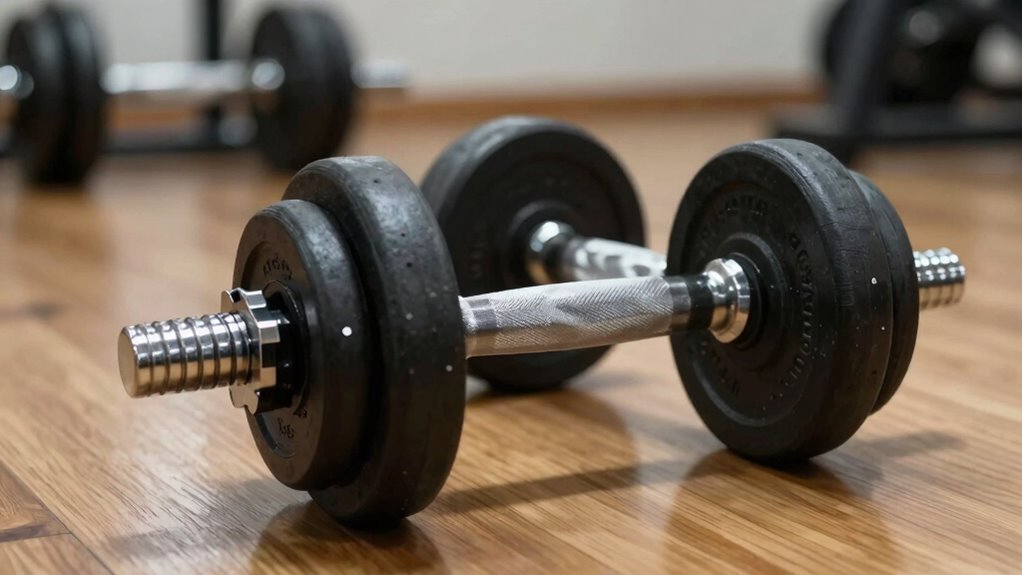
If your adjustable dumbbells persistently rattle even after tightening and proper maintenance, it’s a sign that something may be amiss with the adjustment mechanisms or internal components. Persistent dumbbell noise can signal loose parts or worn-out pieces that compromise rattle prevention.
To troubleshoot, consider these steps:
- Check for loose collars or locks and tighten them securely.
- Inspect the adjustment pins or mechanisms for damage or misalignment.
- Examine the internal weight plates for shifts or misplacements.
- Clean any debris or dust that might interfere with smooth operation.
If these steps don’t stop the rattle, or if you notice unusual sounds, it’s best to seek professional help. Proper inspection and repair ensure your dumbbells stay safe and quiet during workouts.
Quick Tips to Keep Your Dumbbells Quiet and Durable

Keeping your adjustable dumbbells quiet and durable requires a few simple, proactive steps. First, regularly check and tighten all locking mechanisms to prevent rattling, which can affect dumbbell aesthetics and performance. Lubricate moving parts with a silicone-based spray to reduce noise and wear during workouts. Avoid dropping the dumbbells, as impacts can damage the internal components and shorten their lifespan. Storing them in a dry, clean area prevents rust and corrosion, maintaining their appearance and functionality. Maintaining smooth operation also allows you to switch weights easily, supporting workout variety without unnecessary noise. By taking these precautions, you keep your dumbbells looking good, functioning smoothly, and providing a quiet workout experience for years to come.
Frequently Asked Questions
Can Adjustable Dumbbells Develop Rattling Over Time Even With Proper Maintenance?
Yes, adjustable dumbbells can develop rattling over time even with proper maintenance. Regular dumbbell maintenance helps minimize noise and keeps parts secure, but wear and tear can cause loose components or internal shifts. To reduce noise, check and tighten all locking mechanisms regularly, and ensure weights are properly seated. This proactive approach helps extend the dumbbells’ lifespan and maintains smooth, quiet operation during your workouts.
Are There Specific Brands More Prone to Rattle Issues Than Others?
Some brands are more prone to rattle issues, often due to inconsistent manufacturing quality. You may find that lesser-known or budget options tend to rattle sooner, reflecting their reliability. To avoid this, prioritize brands with a solid reputation for durability and precise construction. Investing in higher-quality adjustable dumbbells minimizes rattling, ensuring you get long-lasting performance. Remember, a well-made product can save you hassle and extend the lifespan of your equipment.
How Often Should I Replace Parts to Prevent Persistent Rattling?
You should follow a regular maintenance schedule, inspecting your adjustable dumbbells every 3 to 6 months. Replace worn or loose parts promptly to prevent persistent rattling and guarantee safety. Keep an eye on locking mechanisms and adjustment pins, and don’t wait until they break. Regular part replacement not only minimizes noise but also extends the lifespan of your dumbbells, keeping them in prime condition for your workouts.
Is It Safe to Use Lubricants on Adjustable Dumbbells Regularly?
Using lubricants on your adjustable dumbbells is like giving them a gentle kiss, but only if you choose the right one. Lubricant safety matters—opt for silicone or graphite-based products, and avoid WD-40. Incorporate proper maintenance routines by applying a small amount sparingly to prevent rust and reduce rattling. Regular, careful lubrication can extend your dumbbells’ lifespan while keeping your workouts smooth and safe.
Can Improper Storage Cause Long-Term Damage to Adjustable Dumbbells?
Improper storage can definitely cause long-term damage to your adjustable dumbbells. If you leave them in poor storage conditions—like damp, humid, or overly hot environments—material degradation can occur, weakening parts or causing rust. Always store your dumbbells in a dry, cool place, and avoid exposure to moisture or extreme temperatures. Proper storage not only prevents damage but also extends the lifespan of your dumbbells, keeping them safe and functional for years.
Conclusion
So, next time your adjustable dumbbells rattle like a maraca, remember it’s a sign you’ve been ignoring. The irony? A little maintenance can keep them quiet and extend their life, yet many overlook this simple truth. Instead of risking a costly break or noisy workout, take a moment to care for your equipment. After all, the real weight isn’t just in the dumbbells—it’s in the effort you put into maintaining them.
Fall Picks
fall essentials
As an affiliate, we earn on qualifying purchases.