TL;DR
A maker is testing used Android phones as compact alternatives to a Raspberry Pi build that would otherwise require separate camera, GPS, storage, battery and display components. The phones cost about ¥300–500 in the cited second-hand listings, compared with an illustrative fully equipped Pi parts total of about ¥2,317, but the camera comparison and the feasibility of sourcing many reliable phones remain unresolved.
A maker is testing whether a used Android phone can replace a more expensive Raspberry Pi setup for a project involving a high-resolution camera, GPS and light controls. In a report published on so.long.thanks.fish, the maker says a second-hand Redmi or Huawei phone listed for roughly ¥300–500 already includes several components that would otherwise need to be purchased separately, though performance and supply questions remain.

Get the latest gadgets delivered free with Prime
- Fast, free delivery on millions of items
- Prime Video, Amazon Music and more included
- Member-only deals all year
The project needs a camera, GPS, storage and a microcontroller to control lights. The maker had been designing circuit-board adapters around a Raspberry Pi 4, an Arducam 64MP camera and a GPS module, with other planned additions including a battery backup, touchscreen and cellular connection. They are also testing an ESP32-P4 board, which the report says will be covered separately.
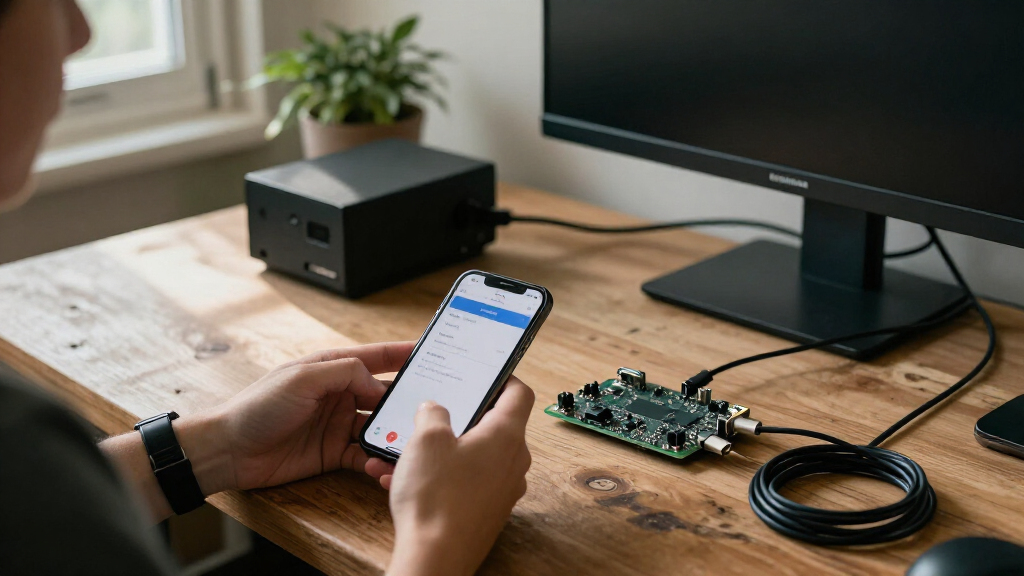
The proposed phone alternatives are a Redmi 13C 5G and a Huawei Mate 30 5G. The report says the Redmi saves 50MP JPEG images and the Mate 30 has a 40MP main camera and a telephoto lens. Both phones include GPS, storage, a clock, a battery and a touchscreen; the maker says a USB-C connection provides a route to a custom circuit board for controlling lights and other sensors.
Using illustrative November 2026 listings, the report puts the Pi build’s core total at about ¥1,483, against ¥300–500 for either used phone. A more fully equipped Pi configuration is listed at about ¥2,317, plus batteries, compared with the same phone price. Those estimates exclude the custom light-controller board, a SIM or data plan, and an enclosure. The cellular HAT in the higher Pi estimate provides GPS and 4G; the phones are 5G models.
A Phone Bundles the Hardware
The comparison matters to people building small installations or other connected devices because a phone can combine several functions in one used item. Instead of assembling a computer with separate camera, GPS, storage, display and backup-power parts, a builder may be able to use hardware already present in a phone and add only the control electronics needed for the project.
The report also points to a possible use in digital art installations. The maker says a configured phone might be sent to a client and plugged into a display, with mobile data and remote access allowing maintenance without relying on a gallery’s Wi-Fi or asking it to open a network port. That is a proposed application, not a demonstrated deployment. The cost figures are also a parts comparison from particular listings, not a guarantee that every phone-based build will be cheaper or easier.
Products Worth Considering

LG UltraGear 34-inch Curved OLED Gaming Monitor, WQHD 1440p, 240Hz, 0.03ms, 800R

DJI Mini 3 Drone with DJI RC and 3‑Axis Mechanical Gimbal

Apple MacBook Air 15-inch Laptop with M5 Chip, 16GB Memory, 512GB SSD, Midnight
As an affiliate, we earn on qualifying purchases.
From Pi Parts to Phone Tests
The maker says the initial design centered on a Raspberry Pi and add-on hardware, with the bill rising as more features were added. The alternative emerged from having access to two used phones that already provide the camera, location, storage and user interface required by parts of the project.
The Redmi has been unlocked and rooted, according to the report. The maker says they have tested its camera and scheduled it to sleep and wake for work, and have connected it to a computer to configure and test components. The Huawei is harder to root, but can still run a kiosk app. These are the maker’s reported tests; the article does not provide independent measurements of reliability, image quality or long-term power use.
The report’s price table uses listings from November 2026 and currency conversions based on mid-market rates from 10 November 2026. Its totals are therefore estimates tied to a particular date and component selection, rather than fixed market prices. The maker is also comparing a camera-equipped phone with a separate Arducam unit, but says that test is still pending.
“The alternative I keep coming back to is an old smartphone.”
— The maker, in the report on so.long.thanks.fish
Camera Quality and Supply
The report does not establish whether the phone cameras produce better or worse results than the Arducam in the project’s intended conditions. The maker has prepared a side-by-side test using the Redmi and Arducam to photograph the same target, but says the comparison is intended to measure actual captured detail. The reported 50MP and 40MP specifications alone do not answer that question.
It is also unclear whether the phone approach would work at larger scale. The maker says finding two suitable used phones was easy, but acquiring a few hundred matching devices with healthy batteries and predictable camera behavior would require more work. The report does not give test results for durability, energy consumption, operating-system support, or maintenance across a large group of devices.
The cost comparison has limits: it reflects specific component listings and excludes several costs, including the custom controller, SIM and data service, and enclosure. The report does not establish the total cost of a finished phone-based system or whether it would meet every project requirement.
The Camera Test Comes Next
The maker says the next practical step is to photograph the same target with the Redmi and the Arducam and compare the detail each captures. That test could clarify whether the phone’s camera is suitable for the project, beyond the headline megapixel figures.
The maker also plans to continue testing the phone as a controller and report separately on the ESP32-P4 board. No completed light-control system, broader phone deployment or large-scale sourcing plan is described in the report. The next development is therefore whether the camera and hardware tests support the phone-based design, and whether a consistent supply of suitable used devices can be found.
Key Questions
How much do the used phones cost in the report?
The maker cites second-hand listings on Taobao at roughly ¥300–500, or about £33–56, €40–67 or $45–75 using the report’s stated November 2026 conversions. Prices may vary by condition and listing.
How does that compare with the Raspberry Pi parts?
The report estimates a Pi build’s core parts at about ¥1,483 and a more fully equipped configuration at about ¥2,317, plus batteries. The estimates exclude the custom controller board, SIM or data plan, and enclosure, so they are not totals for a finished system.
Has the maker shown that the phone camera is better?
No. The maker says a side-by-side test with the Redmi and Arducam is planned. The phone’s stated 50MP image resolution does not establish how much detail it captures compared with the separate camera.
What could make this difficult to scale?
The maker identifies the challenge of finding many matching used phones with healthy batteries and predictable camera behavior. The report does not describe a completed bulk-sourcing effort or reliability testing across a large number of devices.
Source: so.long.thanks.fish