
📊 Full opportunity report: Loan covenant calendar for bootstrapped companies on IdeaNavigator AI — validation score, market gap, and execution plan.

Get the latest gadgets delivered free with Prime
- Fast, free delivery on millions of items
- Prime Video, Amazon Music and more included
- Member-only deals all year
TL;DR
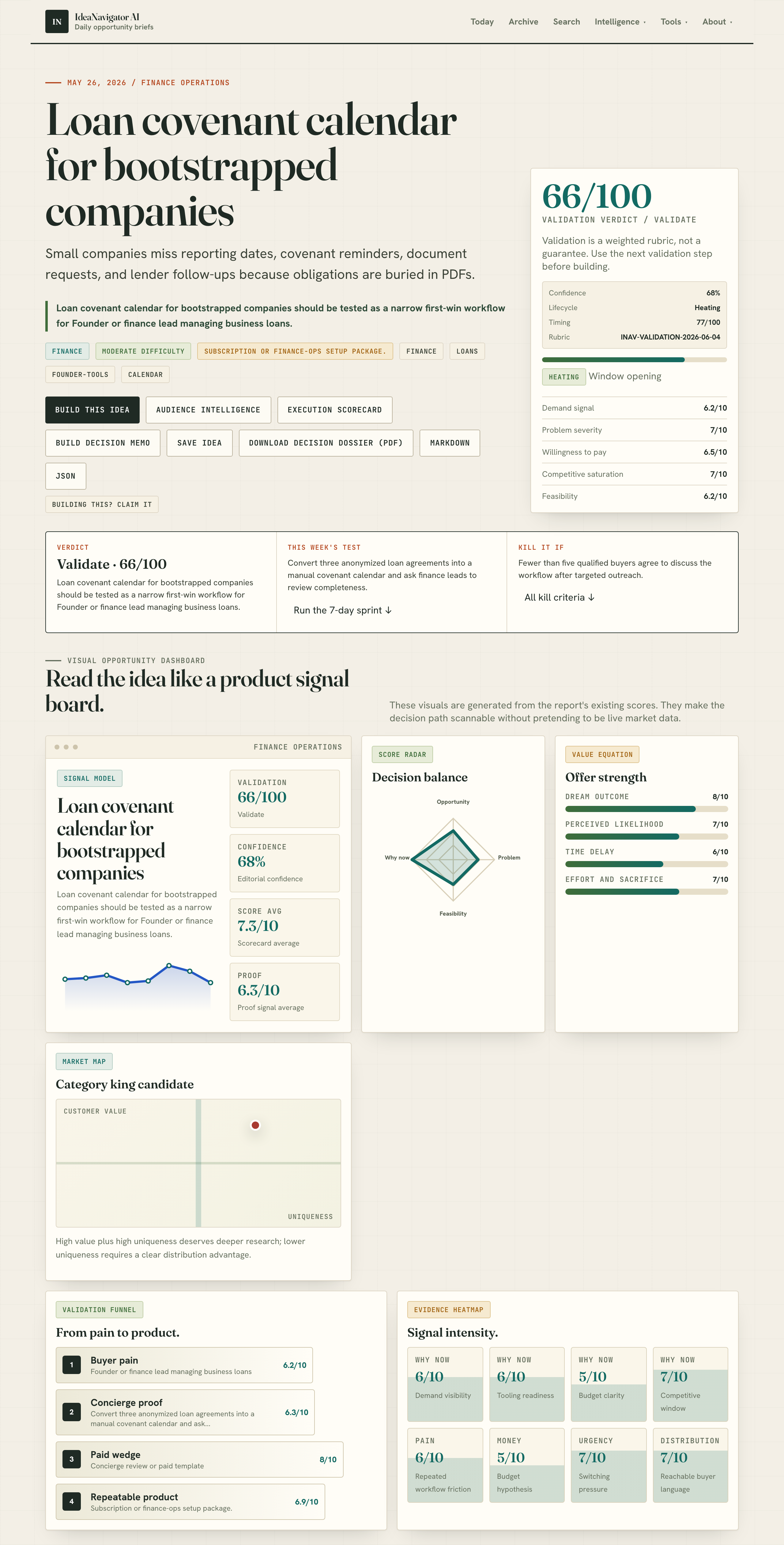
A prototype loan covenant calendar is being tested for bootstrapped companies to help manage loan obligations more effectively. This initiative aims to reduce missed reporting and follow-ups, addressing a key operational challenge.
A new workflow prototype called the loan covenant calendar is being tested for bootstrapped companies to better manage loan obligations. This development aims to address operational gaps that often lead small firms to miss reporting deadlines and follow-up actions, especially as financing scrutiny increases.
The proposed covenant calendar extracts key obligations from loan agreements, including due dates, responsible owners, required evidence files, and communication history with lenders. This tool is intended for founders or finance leads managing business loans, particularly in small or bootstrapped firms where obligations are often buried in PDFs or scattered across documents.
The initial validation involves converting three anonymized loan agreements into a manual covenant calendar and assessing whether the extracted data is complete and usable. The goal is to create a minimal viable product (MVP) that improves operational follow-through, which is increasingly critical as small companies face heightened scrutiny from lenders.
Market interest is primarily in finance operations, with revenue models based on subscription services or finance-ops setup packages. The development is driven by the need for small firms to ensure compliance without extensive manual tracking, especially as they grow and seek more sophisticated financing arrangements.
Why Streamlining Loan Covenant Management Matters for Small Firms
Effective management of loan covenants is vital for small, bootstrapped companies to avoid breaches that could lead to penalties or loan defaults. As lenders impose stricter oversight, operational tools that automate and clarify covenant obligations can significantly reduce compliance risks. This initiative could help small businesses maintain healthy financial relationships, improve their operational efficiency, and potentially access better financing terms in the future.
Products Worth Considering

Samsung Odyssey G7 G75F 40-Inch WUHD Curved Gaming Monitor

Bose TV Speaker (2nd Gen) Compact Soundbar with Bluetooth and HDMI-ARC, Black

Bose QuietComfort Headphones – Wireless Bluetooth Over-Ear Noise Cancelling Headphones, Petal Pink Limited Edition
As an affiliate, we earn on qualifying purchases.
Growing Pressure on Small Companies to Manage Loan Covenants
Small companies often struggle with tracking loan obligations because key details are buried in lengthy PDFs or scattered across various documents. As financing conditions tighten and lenders increase scrutiny, the risk of missing covenant deadlines or documentation requests rises. Currently, many firms rely on manual processes, which are prone to errors and omissions. This has created a market need for lightweight, automated tools that can help founders and finance leads stay on top of their loan commitments, especially during periods of rapid growth or financial stress.
“A covenant calendar that extracts obligations and owner responsibilities directly from loan agreements could significantly reduce missed deadlines and compliance breaches for small firms.”
— an anonymous researcher
Uncertainties in Adoption and Effectiveness of the Covenant Calendar
It is not yet clear how small companies will adopt this prototype or how effective it will be in real-world scenarios. The validation process involves converting existing loan agreements into the calendar format, but the scalability, user-friendliness, and integration with existing systems remain to be tested. Additionally, the market response and willingness of firms to pay for such a tool are still unconfirmed.
Next Steps for Validation and Market Rollout
The immediate next step involves completing the manual conversion of three anonymized loan agreements into the covenant calendar and gathering feedback from finance leads. Based on this input, developers will refine the MVP and consider broader testing. If successful, the tool could be launched as a subscription product aimed at small and bootstrapped companies, with further integrations and automation features planned for future updates.
Key Questions
What is a loan covenant calendar?
A loan covenant calendar is a tool that tracks obligations, deadlines, and communication related to a company’s loan agreements, helping ensure compliance.
Why is this important for small companies?
Small companies often miss covenant reporting deadlines because obligations are buried in PDFs, risking penalties or default. A calendar improves operational follow-through.
How will the calendar be created?
Initially, the calendar will be manually populated by extracting data from existing loan agreements to test its effectiveness before automating the process.
When will this tool be available commercially?
The timeline depends on validation outcomes. If successful, a beta version could be available within the next few months, with broader rollout following further testing.
Can this help with other operational compliance tasks?
While designed for loan covenants, the concept could potentially be adapted for other compliance tracking needs, but that is not yet confirmed.
Source: IdeaNavigator AI