Choosing a wired audiophile gaming headset means balancing sound quality against the practical features a gaming headset is expected to provide. My top picks split into distinct camps: the beyerdynamic DT 900 PRO X offers spacious, detailed open-back audio with detachable cables; the ASUS ROG Kithara pairs planar magnetic drivers with a boom microphone; and the HyperX Cloud III is the straightforward choice when comfort, platform reach, and a ready-to-use mic matter more than studio-style openness.

Get the latest gadgets delivered free with Prime
- Fast, free delivery on millions of items
- Prime Video, Amazon Music and more included
- Member-only deals all year
The tradeoff is simple but consequential. Open-back studio headphones can create a broader, more natural sense of space, but they leak sound and offer little isolation. Gaming headsets add microphones and convenient connections, though they may not provide the same open presentation. I rank these five by how well each serves wired gaming while preserving the qualities audiophile-minded buyers care about: soundstage, detail, connection flexibility, and comfortable listening. None is a perfect fit for every desk, room, or platform.
Complete the kit


Key Takeaways
- Best open-back balance: DT 900 PRO X combines a spacious presentation with 48-ohm impedance and detachable cables, making it easier to match to everyday audio gear than the DT 990 PRO 250 Ohm.
- Most ambitious gaming-audio design: ASUS ROG Kithara brings 100 mm planar magnetic drivers, an open-back build, and a detachable MEMS microphone, but it still cannot isolate room noise.
- Best for direct gaming convenience: HyperX Cloud III includes a detachable microphone and USB-C, USB-A, and 3.5 mm connectivity, while keeping the sound presentation more gaming-focused than the studio picks.
- Best microphone software package: Logitech G PRO X adds Blue VO!CE processing and USB-based surround features, but those extras depend on supported Windows software and the included sound card.
- Amplification changes the shortlist: DT 990 PRO’s 250-ohm impedance makes it the least plug-and-play studio option here; the DT 900 PRO X’s 48-ohm design is a more flexible starting point.
| beyerdynamic DT 900 PRO X Studio Mixing Open Back Headphones |  | Best Overall for Open-Back Gaming Audio | Design: Over-ear, open-back, circumaural | Driver: Dynamic | Frequency range: 5–40,000 Hz | VIEW ON AMAZON | See Our Full Breakdown |
| ASUS ROG Kithara Open-Back Planar Magnetic Headphones with Microphone |  | Best Premium-Style Pick with an Included Mic | Driver type: Planar magnetic | Driver size: 100 mm | Frequency response: 8 Hz–55 kHz | VIEW ON AMAZON | See Our Full Breakdown |
| beyerdynamic DT 990 PRO 250 Ohm Open-Back Studio Headphones |  | Best for Dedicated Amplifier Setups | Design: Over-ear, open-back | Driver type: Dynamic | Impedance: 250 ohms | VIEW ON AMAZON | See Our Full Breakdown |
| HyperX Cloud III Wired Gaming Headset |  | Best Value in Convenience and Platform Reach | Driver size: 53 mm, angled and retuned | Connectivity: USB-C, USB-A, and 3.5 mm | Microphone: Detachable noise-cancelling 10 mm mic | VIEW ON AMAZON | See Our Full Breakdown |
| Logitech G PRO X Wired Gaming Headset with Detachable Microphone | 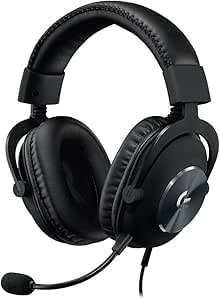 | Best for PC Mic Processing and Gaming Features | Driver size: 50 mm PRO-G | Connectivity: Wired USB and 3.5 mm | Microphone: Detachable, with Blue VO!CE technology | VIEW ON AMAZON | See Our Full Breakdown |
| wired audiophile gaming headset | Design | Weight | Driver size | Microphone |
|---|---|---|---|---|
| beyerdynamic DT 900 PRO X Stud | Over-ear, open-back, circumaural | 345 g | — | — |
| ASUS ROG Kithara Open-Back Pla | Over-ear, open-back | — | 100 mm | Detachable full-band MEMS boom microphone |
| beyerdynamic DT 990 PRO 250 Oh | Over-ear, open-back | — | — | — |
| HyperX Cloud III Wired Gaming | — | 308 g | 53 mm, angled and retuned | Detachable noise-cancelling 10 mm mic |
| Logitech G PRO X Wired Gaming | — | 9.14 ounces | 50 mm PRO-G | Detachable, with Blue VO!CE technology |
More Details on Our Top Picks
beyerdynamic DT 900 PRO X Studio Mixing Open Back Headphones
The DT 900 PRO X earns the leading spot because it offers the studio-style strengths audiophile-minded gamers often want without the DT 990 PRO’s particularly demanding 250-ohm impedance. At 48 ohms, it is a more flexible match for common audio gear, while its open-back, circumaural design aims for a natural, roomy presentation. That can suit atmospheric games and careful listening, where separating sounds across a scene matters more than blocking the rest of the room.
Compared with the ASUS ROG Kithara, the DT 900 PRO X is the simpler headphone-first choice: it has detachable cables and serviceable parts, but no included boom mic. The Kithara is better equipped for someone who wants a microphone attached to the same headset and is interested in planar drivers. Compared with the DT 990 PRO, the DT 900 PRO X is also easier to accommodate in a setup that may not include a dedicated headphone amplifier.
The tradeoff is that “gaming” here still means a studio headphone used for games, not an all-in-one headset. Buyers need a separate microphone for team chat, and the open backs provide little isolation from household noise. The stated 5–40,000 Hz range is not a substitute for listening preferences or room suitability. I would choose this for a quiet room and a buyer who values a spacious presentation over built-in chat convenience.
Pros:- Open-back design supports a spacious, natural presentation for games and music.
- 48-ohm impedance is more flexible for everyday audio sources than the DT 990 PRO 250 Ohm.
- Detachable 1.8 m and 3 m cables and serviceable parts suit a durable desk setup.
- Velour ear pads and circumaural fit are suited to extended listening.
Cons:- No built-in microphone, so multiplayer chat needs a separate solution.
- Open-back construction leaks sound and does not block surrounding noise.
- Its listening-first approach offers fewer gaming-specific conveniences than HyperX or Logitech.
Best for: Gamers who want open-back spatial presentation, detachable cables, and a relatively flexible 48-ohm load, and who are happy to add a separate microphone.
Not ideal for: Players in noisy or shared rooms, or anyone who needs an integrated boom mic and strong sound isolation.
- Design:Over-ear, open-back, circumaural
- Driver:Dynamic
- Frequency range:5–40,000 Hz
- Impedance:48 ohms
- Weight:345 g
- Cable:Detachable 1.8 m and 3 m cables
- Connector:Mini-XLR, 3.5 mm plug, and 6.3 mm adapter
- Ear pads:Velour
Our verdict“I recommend the DT 900 PRO X as the strongest headphone-first choice for spacious wired gaming when a separate mic is acceptable.”
ASUS ROG Kithara Open-Back Planar Magnetic Headphones with Microphone
The ROG Kithara is the most direct attempt in this group to unite audiophile-minded hardware with a gaming-ready microphone. Its 100 mm planar magnetic drivers and open-back design are aimed at detailed audio and a broad sense of space, while the detachable full-band MEMS boom mic avoids the extra purchase required by the DT 900 PRO X and DT 990 PRO. For a buyer who wants one wired setup for game audio and voice chat, that combination gives it a distinct role.
Its connection bundle is unusually adaptable: the included options cover 4.4 mm balanced, 3.5 mm, 6.3 mm, and USB-C. That can help when moving between an audio device, console, or mobile setup, though connector choice does not itself guarantee a particular sound result. The DT 900 PRO X is the more conventional studio-headphone alternative, with detachable cables and a lower stated impedance; the Kithara stands apart through its planar design and included microphone.
The central compromise remains the open-back format. It will not isolate a player from a noisy room, and nearby people may hear the game. It is also a wired headset, so it does not suit anyone seeking freedom from a cable. The supplied details do not list impedance, so I would check source compatibility rather than assume every output will drive it equally well. Choose this when the mic and connector options matter as much as its open, planar-oriented design.
Pros:- 100 mm planar magnetic drivers and open-back design target detailed, spacious game audio.
- Detachable full-band MEMS boom microphone supports voice chat without a separate mic.
- Includes balanced and single-ended plugs plus a USB-C adapter.
- Metal frame and two ear-cushion options provide useful fit and build choices.
Cons:- Open-back construction offers little isolation and allows sound to leak.
- Wired connection limits movement compared with wireless options.
- Impedance is not listed in the supplied specifications, making source matching less clear.
Best for: PC and console players who want an open-back soundstage, planar magnetic drivers, a detachable boom mic, and several wired connector options in one package.
Not ideal for: People who play in noisy shared spaces, prefer closed-back isolation, or want a wireless connection.
- Driver type:Planar magnetic
- Driver size:100 mm
- Frequency response:8 Hz–55 kHz
- Design:Over-ear, open-back
- Microphone:Detachable full-band MEMS boom microphone
- Connectors:4.4 mm balanced, 3.5 mm, 6.3 mm, and USB-C adapter
- Cable length:1.8 m
- Frame and cushions:Metal frame; hybrid fabric and leatherette cushions
Our verdict“I would choose the Kithara when a built-in mic and planar open-back design matter more than room isolation.”
beyerdynamic DT 990 PRO 250 Ohm Open-Back Studio Headphones
The DT 990 PRO 250 Ohm is a specialist pick for gamers who already have a headphone amplifier or audio interface and want an open-back studio headphone. Its wide stereo image is relevant to games with layered environments, and the replaceable velour pads and adjustable headband support long listening sessions. A 3 m coiled cable gives room to move around a desk, while the included 6.35 mm adapter makes it compatible with larger headphone jacks.
Compared with the newer DT 900 PRO X, this model asks more of the audio source: its 250-ohm impedance makes an amplifier or interface the safer match, while the DT 900 PRO X is listed at 48 ohms and adds detachable cables. The DT 990 PRO may appeal to buyers whose equipment already suits it, but it is less convenient as a direct plug-in option. Unlike the HyperX Cloud III, it also lacks an integrated microphone and gaming-focused connection bundle.
Those limitations define its audience. The open backs provide no meaningful room isolation, and the fixed cable cannot be swapped if it becomes damaged or if a different length is preferred. This is not the easiest choice for console-first players connecting directly to an ordinary controller. I rank it below the DT 900 PRO X because its source requirements and fixed lead narrow its usefulness, not because a studio design lacks value for gaming.
Pros:- Open-back design provides a wide stereo image suited to monitoring and game environments.
- Replaceable velour ear pads and an adjustable headband support longer sessions.
- Coiled 3 m cable and 6.35 mm adapter suit a stationary desk setup.
- Broad stated frequency range covers a wide span of audio reproduction.
Cons:- 250-ohm impedance works best with a headphone amplifier or audio interface.
- Fixed cable cannot be detached or replaced independently.
- Open-back design leaks audio and does not isolate the listener from room noise.
Best for: Players with a suitable headphone amplifier or audio interface who want open-back stereo sound and replaceable velour pads.
Not ideal for: Buyers who need a built-in mic, use a low-powered source, play in a shared room, or want a detachable cable.
- Design:Over-ear, open-back
- Driver type:Dynamic
- Impedance:250 ohms
- Frequency response:5 Hz–35,000 Hz
- Sensitivity:96 dB
- Cable:Fixed 3 m coiled cable
- Connector:3.5 mm with 6.35 mm adapter
- Ear pads:Replaceable grey velour
Our verdict“I recommend the DT 990 PRO to amplifier-equipped buyers who prefer a studio headphone and accept its fixed cable and lack of mic.”
HyperX Cloud III Wired Gaming Headset
The HyperX Cloud III is the most uncomplicated gaming headset in this roundup. Its angled, retuned 53 mm drivers are designed for gaming audio, and the package includes a detachable noise-cancelling microphone with a mute indicator. USB-C, USB-A, and 3.5 mm connections give it broad reach across PC, consoles, Mac, and mobile devices, so it makes more sense than a studio headphone for someone who wants one practical wired headset for several platforms.
That convenience comes at the cost of a more specialist listening focus. The Cloud III is closed in its practical gaming role, with memory foam cushions and a flexible aluminum frame, while the DT 900 PRO X and DT 990 PRO choose open-back designs for a roomier presentation. For noisy surroundings or frequent voice chat, the HyperX’s integrated mic and all-in-one nature are advantages. For a buyer prioritizing open spatial presentation and music listening, the two beyerdynamic models are better aligned with that goal.
The supplied information does not specify audiophile tuning or an open soundstage, so I would not buy this expecting the same headphone-first character as the studio picks. Its wired cable also limits movement, and buyers seeking advanced microphone processing should compare it with the Logitech G PRO X. Still, it is the clearest fit for a new gaming setup that needs comfort, a detachable mic, and simple platform flexibility without separate components.
Pros:- Detachable microphone includes noise-cancelling design and a mute indicator.
- USB-C, USB-A, and 3.5 mm connections suit many gaming and mobile devices.
- Memory foam headband and ear cushions are designed for extended sessions.
- Aluminum frame adds structure without turning it into a studio-only headphone.
Cons:- Wired connection limits movement compared with a wireless headset.
- Does not offer the open-back presentation of the beyerdynamic and ASUS picks.
- Its gaming-first feature set may be less appealing to listeners seeking a headphone-focused setup.
Best for: Gamers who want an easy-to-use wired headset with a detachable mic, memory foam comfort, and connections spanning PC, console, and mobile.
Not ideal for: Listeners who specifically want open-back sound, studio-style listening, or extensive microphone software controls.
- Driver size:53 mm, angled and retuned
- Connectivity:USB-C, USB-A, and 3.5 mm
- Microphone:Detachable noise-cancelling 10 mm mic
- Frame:Aluminum
- Cushions:Memory foam ear cushions and headband
- Weight:308 g
- Compatible platforms:PC, PlayStation, Xbox, Switch, Mac, and mobile
- Warranty:2 years
Our verdict“I would pick the Cloud III for practical, multi-platform gaming and voice chat rather than for an open-back audiophile presentation.”
Logitech G PRO X Wired Gaming Headset with Detachable Microphone
The Logitech G PRO X is the right fit when microphone options and PC gaming features matter more than an open-back soundstage. Its detachable microphone supports Blue VO!CE voice processing, and the included USB sound card enables 7.1 and object-based surround features on supported Windows PC setups. A 50 mm PRO-G driver, two types of memory foam ear cushions, and a steel-and-aluminum build give it a feature set aimed squarely at gaming and chat.
Compared with the HyperX Cloud III, the Logitech offers more explicit software-driven microphone and surround functions, but those depend on the included sound card, Logitech G HUB, and Windows. The HyperX has wider stated platform compatibility and a simpler connection mix; it is the more straightforward option for people moving between devices. Compared with the DT 900 PRO X or ROG Kithara, the Logitech trades open-back spaciousness for a closed gaming-headset format and a bundled mic.
The extra software is only useful if the buyer uses a compatible PC setup and wants to configure it. A console player or someone who prefers minimal software may not get the main benefit. Its wired cable also restricts movement, while its surround modes should not be mistaken for a replacement for headphone quality or a guarantee of more accurate positional cues. I place it below the HyperX for broad simplicity, but it is a strong match for PC players who specifically want voice processing and supplied accessories.
Pros:- Detachable microphone offers Blue VO!CE processing on a supported Windows setup.
- Included USB sound card enables surround features with Logitech G HUB.
- Memory foam cushions include leatherette and breathable velour options.
- Steel headband and aluminum fork provide a substantial wired gaming build.
Cons:- Blue VO!CE and surround features depend on the USB sound card, Windows, and Logitech G HUB.
- Closed gaming-headset design does not provide the open presentation of the studio picks.
- Wired connection limits movement compared with wireless alternatives.
Best for: Windows PC gamers who want a detachable mic with Blue VO!CE processing, USB sound-card features, and included cable and cushion options.
Not ideal for: Players who want open-back audiophile sound, avoid companion software, or need the same feature set across consoles and mobile devices.
- Driver size:50 mm PRO-G
- Connectivity:Wired USB and 3.5 mm
- Microphone:Detachable, with Blue VO!CE technology
- Surround features:7.1 and object-based audio on supported Windows PC setups
- Ear cushions:Memory foam, leatherette and velour options
- Construction:Aluminum fork and steel headband
- Cable lengths:1.5 m mobile cable and 2 m PC cable
- Weight:9.14 ounces
Our verdict“I recommend the G PRO X to Windows PC players who will use its microphone software and USB sound-card features.”
How We Picked
I ranked these products for the overlap between wired gaming usefulness and audiophile-oriented listening, rather than treating the word “gaming” as a reason to favor microphones or surround effects alone. I compared the stated design, drivers, impedance, connections, cable arrangements, microphone provisions, and comfort materials. Those details show whether a product suits careful positional listening, straightforward multiplayer chat, or a setup that needs broad device compatibility.
The ranking also reflects meaningful compromises. An open-back design can make game environments feel more spacious, but it does not block room noise and lets audio escape. Studio headphones can offer a more listening-first setup, but a separate microphone may be needed for voice chat. Conversely, the HyperX and Logitech models arrive with gaming microphones, while their bundled processing and gaming-oriented tuning do not make them interchangeable with open-back studio headphones.
I gave extra weight to easy system matching, useful gaming features, and replaceable or detachable parts, without assuming that a long frequency-range figure alone guarantees better sound. Product information does not establish identical tuning or performance across platforms, so I describe capabilities rather than claiming a winner in measured sound quality. My order favors options that balance soundstage and detail with practical wired use; specialized picks rank lower when their specific requirements are a bigger part of the decision.
| wired audiophile gaming headset | Design | Microphone |
|---|---|---|
| beyerdynamic DT 900 PRO X Stud | Over-ear, open-back, circumaural | — |
| ASUS ROG Kithara Open-Back Pla | Over-ear, open-back | Detachable full-band MEMS boom microphone |
| beyerdynamic DT 990 PRO 250 Oh | Over-ear, open-back | — |
| HyperX Cloud III Wired Gaming | — | Detachable noise-cancelling 10 mm mic |
| Logitech G PRO X Wired Gaming | — | Detachable, with Blue VO!CE technology |
Factors to Consider When Choosing Wired Audiophile Gaming Headset
For this category, I would decide first whether the priority is open-back listening or a complete gaming headset with a microphone. That choice changes which specifications matter and which compromises are acceptable.
Open-back sound versus room isolation
The DT 900 PRO X, DT 990 PRO, and ROG Kithara use open-back designs. Their construction is intended to support a more spacious presentation, which can make game environments feel less confined. The tradeoff is physical: sound escapes, and outside noise comes through. They are best suited to a quieter room where leakage will not bother anyone nearby. The HyperX and Logitech are more conventional gaming-headset picks for players who want a dedicated mic and do not want their purchase to rest on open-back listening.
Match impedance and connectors to your source
The DT 990 PRO lists 250-ohm impedance and is best matched with a headphone amplifier or audio interface. The DT 900 PRO X is listed at 48 ohms, making it a less demanding starting point according to the supplied specifications. Kithara includes multiple plugs and a USB-C adapter, while HyperX offers USB-C, USB-A, and 3.5 mm; Logitech has USB and 3.5 mm connections. Check the exact output you plan to use, especially if connecting directly to a controller or mobile device.
Decide how you will handle voice chat
A headphone-first model is not automatically a complete gaming headset. The DT 900 PRO X and DT 990 PRO have no included mic, so budget for a separate desk or clip-on microphone and decide whether its cable will suit your setup. The Kithara, HyperX, and Logitech include detachable microphones. Logitech’s Blue VO!CE and surround features are tied to a Windows PC, the USB sound card, and G HUB, while HyperX presents a simpler multi-platform route.
Comfort, cables, and replacement parts
Look beyond driver size when planning long sessions. HyperX uses memory foam in the headband and cushions; Logitech includes leatherette and velour cushion options; the beyerdynamic models use velour pads. The DT 900 PRO X has detachable cables, while the DT 990 PRO uses a fixed coiled lead. Consider cable length, desk layout, and whether a replaceable lead matters to you. The supplied weight figures also differ in how they are presented, so fit and clamp preference cannot be settled from those numbers alone.
Treat headline frequency ranges as context
Frequency response figures describe a stated range, but they do not tell the whole story of tuning, comfort, positional clarity, or whether a particular presentation suits your games. The Kithara’s listed 8 Hz–55 kHz range and the DT 900 PRO X’s 5–40,000 Hz range should not be read as a direct sound-quality ranking. I would use those figures as specifications, then choose by design, source compatibility, microphone needs, and room conditions.
Frequently Asked Questions
Are open-back headphones a good choice for gaming?
They can suit gaming when you play in a quiet room and value a spacious, less enclosed presentation. The DT 900 PRO X, DT 990 PRO, and ROG Kithara all use open-back designs, but they do not block outside noise and can be heard by people nearby. For shared rooms or noisy surroundings, an open-back model may be a poor fit regardless of its soundstage.
Do I need an amplifier for the beyerdynamic DT 990 PRO?
The DT 990 PRO in this roundup has a 250-ohm impedance and is described as working best with a headphone amplifier or audio interface. If you plan to connect straight to a controller, laptop, or phone, source output can affect how practical that pairing is. The DT 900 PRO X is listed at 48 ohms and is the more flexible beyerdynamic option on paper.
Which picks include a microphone?
The ASUS ROG Kithara, HyperX Cloud III, and Logitech G PRO X include detachable microphones. The Kithara combines its mic with an open-back planar design, while HyperX focuses on broad device compatibility and Logitech adds PC-oriented Blue VO!CE processing. The DT 900 PRO X and DT 990 PRO are headphone-first models, so you need a separate microphone for voice chat.
Which headset is easiest to use across different platforms?
The HyperX Cloud III has stated compatibility with PC, PlayStation, Xbox, Nintendo Switch, Mac, and mobile, with USB-C, USB-A, and 3.5 mm connections. The Kithara also supplies several connector options, and Logitech lists USB and 3.5 mm connections, though some of its headline software functions require Windows and G HUB. Check the connection available on your specific device before choosing.
Should I choose a studio headphone or a gaming headset?
Choose a studio headphone such as the DT 900 PRO X or DT 990 PRO if open-back listening and a headphone-focused setup matter more than an included mic. Choose HyperX or Logitech if you want an all-in-one gaming headset with voice chat ready to go. The Kithara sits between those groups by pairing an open-back planar design with a detachable microphone, while still retaining the room-noise limitations of open backs.
Conclusion
For the broadest blend of spacious wired gaming audio and flexible source matching, I would start with the beyerdynamic DT 900 PRO X, provided a separate microphone is acceptable. Choose the ASUS ROG Kithara if you want an open-back planar design and a detachable boom mic in one package. For a gaming-first setup with easy platform reach and a ready mic, the HyperX Cloud III is the practical pick; Windows PC players who want software-driven voice processing should look at the Logitech G PRO X instead.
The DT 990 PRO makes the most sense for buyers who already have a suitable amp or interface and prefer its studio-headphone format. I would skip all three open-back options for a noisy shared room, and I would skip the headphone-first beyerdynamic models if you do not want to add a mic. The best choice depends less on a single headline specification than on your room, audio source, and voice-chat needs.