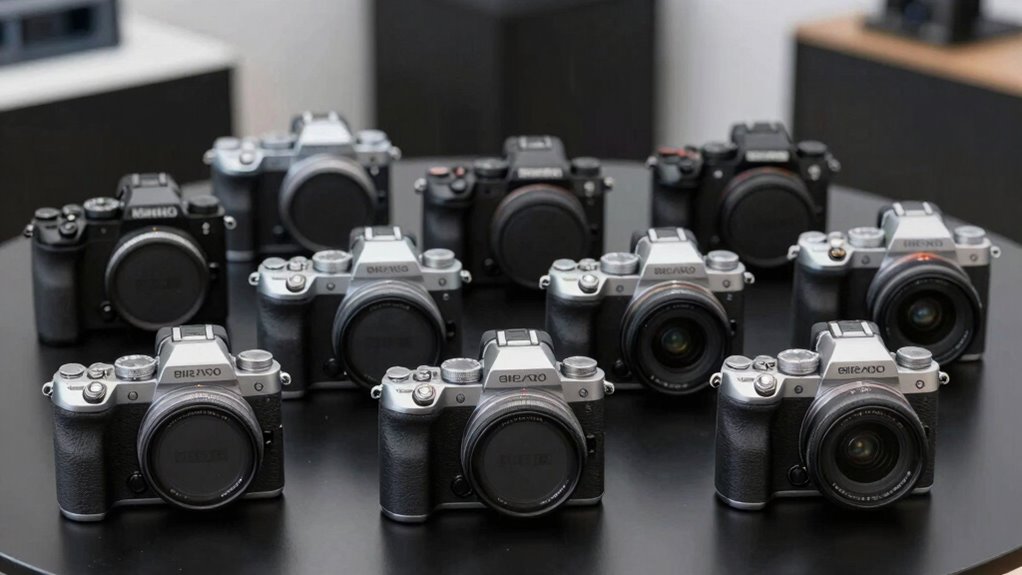

A full frame mirrorless camera gives you the biggest jump in image quality per dollar of any upgrade you can make, but the right model depends heavily on what you shoot. The Sony Alpha a7 V earns my best overall pick for its AI-driven autofocus and 30fps burst shooting, which put it ahead of everything else here for hybrid stills-and-video work. If budget matters more than speed, the Sony Alpha a7 III and Canon EOS RP remain the value benchmarks, while the Nikon Z5 II splits the difference with modern features at a mid-range price. The main tradeoff you will face throughout this category: cutting-edge speed and autofocus cost real money, while older sensors deliver nearly identical image quality for far less. Body-only versus kit lens bundles is the second big decision, since kit zooms are convenient but rarely showcase what a full frame sensor can do. Keep reading for the full breakdown of all 14 cameras and who each one suits best.

Get the latest gadgets delivered free with Prime
- Fast, free delivery on millions of items
- Prime Video, Amazon Music and more included
- Member-only deals all year
Complete the kit



Key Takeaways
- Sensor age matters less than processing power here — the a7 III and EOS RP still produce excellent images, but their autofocus and burst rates fall well behind the a7 V and R6 Mark III.
- Sony‘s lineup spans the widest price range, which makes it the default choice if you want to stay in one lens ecosystem from entry level to professional.
- The Nikon Z5 II is the strongest middle-ground pick, offering current-generation autofocus that undercuts Sony and Canon‘s flagship-tier bodies.
- Kit lens bundles (the 28-70mm Sony and 24-105mm Canon) make sense for first-time full frame buyers, but anyone upgrading should buy body-only and reuse lenses.
- The Canon EOS R6 Mark II and Mark III are nearly identical for stills shooters — the Mark III only justifies itself if you shoot fast action or heavy video.
| Sony Alpha a7 III Mirrorless Camera with 28-70mm Lens (Black) |  | Best Value Kit | Sensor: 35mm full-frame Exmor R CMOS, 24.2MP | ISO Range: 50-204,800 | Dynamic Range: 15 stops | VIEW ON AMAZON | See Our Full Breakdown |
| Sony Alpha a7 V Full-Frame Mirrorless Camera Body AI AF 30fps |  | Best Premium Pick | Sensor: Partially stacked Exmor RS CMOS, 33.0MP | Continuous Shooting: Up to 30 fps blackout-free | Dynamic Range: Up to 16 stops | VIEW ON AMAZON | See Our Full Breakdown |
| Nikon Z 5 Full-Frame Mirrorless Camera Body |  | Best for Beginners | Sensor: Full-frame CMOS, 24.3MP | Continuous Shooting: 4.5 fps | Video: 4K UHD 30p / 1080p 60p | VIEW ON AMAZON | See Our Full Breakdown |
| Sony Alpha 7 IV Full-Frame Mirrorless Interchangeable Lens Camera |  | Best Hybrid Workhorse | Sensor: Full-frame Exmor R BSI CMOS, 33MP | Video: 4K 60p 10-bit 4:2:2; 7K oversampled 4K 30p | Processor: BIONZ XR | VIEW ON AMAZON | See Our Full Breakdown |
| Canon EOS R6 Mark II Mirrorless Camera with RF24-105mm F4-7.1 IS STM Lens Kit |  | Best Overall | Sensor: Full-frame CMOS, 24.2MP | Continuous Shooting: 12 fps mechanical / 40 fps electronic | Autofocus: Dual Pixel CMOS AF II, 1,053 zones | VIEW ON AMAZON | See Our Full Breakdown |
| Canon EOS R6 Mark III Body, Full-Frame Mirrorless Camera |  | Best Hybrid Performer | Sensor: 32.5 MP full-frame CMOS | Processor: DIGIC X | Continuous Shooting: Up to 40 fps | VIEW ON AMAZON | See Our Full Breakdown |
| Sony Alpha a7 IV Mirrorless Camera with 28-70mm Lens Black |  | Best Ready-to-Shoot Kit | Sensor: 33 MP full-frame Exmor R BSI CMOS | Processor: BIONZ XR | Continuous Shooting: 10 fps | VIEW ON AMAZON | See Our Full Breakdown |
| Sony Alpha a7 III Full-Frame Mirrorless Camera Body Black |  | Best Budget Full-Frame Entry | Sensor: 24.2 MP BSI full-frame CMOS | Continuous Shooting: 10 fps | Autofocus: 693 phase-detection / 425 contrast points, 93% coverage | VIEW ON AMAZON | See Our Full Breakdown |
| Nikon Z5 II Full-Frame Mirrorless Camera (USA Model, Black) |  | Best Low-Light Shooter | Sensor: 24.5 MP BSI CMOS full-frame | Processor: EXPEED 7 | Burst Rate: Up to 30 fps | VIEW ON AMAZON | See Our Full Breakdown |
| Canon EOS R8 Mirrorless Camera (Body Only) |  | Best Lightweight Pick | Sensor: 24.2 MP full-frame CMOS | Processor: DIGIC X | Autofocus: Dual Pixel CMOS AF II, 1,053 AF zones, 100% x 100% coverage | VIEW ON AMAZON | See Our Full Breakdown |
| Canon EOS R8 Mirrorless Camera with 24-50mm Lens Bundle |  | Best Travel and Vlogging Bundle | Sensor: Full-frame CMOS, 24.2MP | Video: 4K 60p | Lens: RF 24–50mm | VIEW ON AMAZON | See Our Full Breakdown |
| Canon EOS RP Full Frame Mirrorless Camera (Body Only) |  | Best Budget Full-Frame Entry Point | Sensor: Full-frame CMOS, 26.2MP | Processor: DIGIC 8 | Video: 4K UHD 2160p (cropped) | VIEW ON AMAZON | See Our Full Breakdown |
| Canon EOS RP Mirrorless Camera with RF24-105mm f/4-7.1 IS STM Lens Kit |  | Best One-Lens Starter Kit | Sensor: Full-frame CMOS, 26.2MP | Lens: RF 24–105mm f/4-7.1 IS STM | Zoom Range: 24–105mm | VIEW ON AMAZON | See Our Full Breakdown |
| Canon EOS R6 Mark II Mirrorless Camera (Body Only) |  | Best for Action and Hybrid Professionals | Sensor: Full-frame CMOS, 24.2MP | Processor: DIGIC X | Continuous Shooting: Up to 40 fps (electronic shutter) | VIEW ON AMAZON | See Our Full Breakdown |
| full frame mirrorless camera | Sensor | Video | Continuous Shooting | Processor |
|---|---|---|---|---|
| Sony Alpha a7 III Mirrorless C | 35mm full-frame Exmor R CMOS, 24.2MP | 4K UHD 2160p HDR | 10 fps | — |
| Sony Alpha a7 V Full-Frame Mir | Partially stacked Exmor RS CMOS, 33.0MP | 4K 120p | Up to 30 fps blackout-free | BIONZ XR2 |
| Nikon Z 5 Full-Frame Mirrorles | Full-frame CMOS, 24.3MP | 4K UHD 30p / 1080p 60p | 4.5 fps | — |
| Sony Alpha 7 IV Full-Frame Mir | Full-frame Exmor R BSI CMOS, 33MP | 4K 60p 10-bit 4:2:2; 7K oversampled 4K 30p | — | BIONZ XR |
| Canon EOS R6 Mark II Mirrorles | Full-frame CMOS, 24.2MP | 4K 60p with 6K ProRes RAW output | 12 fps mechanical / 40 fps electronic | — |
| Canon EOS R6 Mark III Body | 32.5 MP full-frame CMOS | Up to 8K, 4K 120p | Up to 40 fps | DIGIC X |
| Sony Alpha a7 IV Mirrorless Ca | 33 MP full-frame Exmor R BSI CMOS | 4K 60p 10-bit 4:2:2, XAVC HS/H.265 | 10 fps | BIONZ XR |
| Sony Alpha a7 III Full-Frame M | 24.2 MP BSI full-frame CMOS | 4K UHD, XAVC S / H.264 | 10 fps | — |
| Nikon Z5 II Full-Frame Mirrorl | 24.5 MP BSI CMOS full-frame | 4K/60p, 12-bit N-RAW | — | EXPEED 7 |
| Canon EOS R8 Mirrorless Camera | 24.2 MP full-frame CMOS | Uncropped 4K up to 60 fps (from 6K), Full HD 180 fps | — | DIGIC X |
| Canon EOS R8 Mirrorless Camera | Full-frame CMOS, 24.2MP | 4K 60p | — | — |
| Canon EOS RP Full Frame Mirror | Full-frame CMOS, 26.2MP | 4K UHD 2160p (cropped) | 5 fps | DIGIC 8 |
| Canon EOS RP Mirrorless Camera | Full-frame CMOS, 26.2MP | 4K UHD 2160p | — | — |
| Canon EOS R6 Mark II Mirrorles | Full-frame CMOS, 24.2MP | 6K oversampled uncropped 4K up to 60fps; FHD 180fps | Up to 40 fps (electronic shutter) | DIGIC X |
More Details on Our Top Picks
Sony Alpha a7 III Mirrorless Camera with 28-70mm Lens (Black)
This option earns the value slot because it bundles a proven 24.2MP full-frame BSI sensor with a starter lens, letting a buyer shoot immediately instead of budgeting for glass. Compared with the newer Sony a7 IV, the a7 III gives up resolution and 4K 60p, but its 15-stop dynamic range and 693-point hybrid AF still hold up for portraits, events, and travel. Where the Nikon Z 5 undercuts it on simplicity, the a7 III counters with faster 10fps bursts and a far deeper lens ecosystem through the Sony FE mount. The catch is the kit optic: the 28-70mm f/3.5-5.6 is slow in dim light, so serious shooters will outgrow it quickly. The menu system also assumes some photographic literacy, which may frustrate first-time full-frame buyers.
Pros:- 24.2MP back-illuminated sensor with 15 stops of dynamic range for flexible RAW editing
- 693-point phase-detection AF covering 93% of the frame tracks moving subjects reliably
- 10fps continuous shooting with silent shutter option for events and wildlife
- Built-in optical stabilization steadies handheld shooting with any attached lens
Cons:- Kit 28-70mm lens maxes out at f/3.5-5.6, limiting low-light and background blur
- Menu depth and pro-oriented controls present a learning curve for newcomers
Best for: Enthusiast upgraders from APS-C who want a capable full-frame body plus a usable lens without buying separately
Not ideal for: Low-light shooters and beginners — the slow kit aperture and deep menu system both work against them
- Sensor:35mm full-frame Exmor R CMOS, 24.2MP
- ISO Range:50-204,800
- Dynamic Range:15 stops
- Autofocus:693 phase-detection / 425 contrast points
- Continuous Shooting:10 fps
- Video:4K UHD 2160p HDR
- Lens Mount:Sony FE
- Weight:1.8 pounds
Our verdict“A smart entry point into Sony full-frame for buyers who prioritize sensor quality and autofocus over having the newest body.”
Sony Alpha a7 V Full-Frame Mirrorless Camera Body AI AF 30fps
As the flagship of this lineup, the a7 V justifies its premium role through sheer speed: a partially stacked Exmor RS sensor reads out roughly 4.5x faster than the a7 IV, enabling blackout-free 30fps bursts and 4K 120p recording. The new BIONZ XR2 engine pushes dynamic range to 16 stops and improves AI subject recognition by about 30%, which matters for wedding and sports photographers who can’t afford a missed focus. Compared with the Canon EOS R6 Mark II, the a7 V pulls ahead on resolution (33MP versus 24.2MP) and slow-motion capability, though Canon’s body costs meaningfully less. Stabilization is another strength at up to 7.5 stops. The tradeoffs are real: it’s a body-only purchase at flagship pricing, and its feature depth will go largely unused by anyone shooting casual family photos.
Pros:- Partially stacked sensor enables 30fps blackout-free shooting with AF/AE tracking
- AI Real-time Recognition AF improves subject detection roughly 30% over the a7 IV
- Up to 16 stops of dynamic range and 4K 120p for demanding HDR and slow-motion work
- 7.5-stop in-body stabilization supports handheld shooting at low ISO
Cons:- Flagship body-only positioning means the total cost climbs once a quality lens is added
- Feature complexity rewards professionals far more than general photographers
Best for: Working professionals in sports, weddings, or hybrid photo-video production who need cutting-edge speed and AF
Not ideal for: Hobbyists and casual shooters — most of its headline capabilities demand subjects and workflows that never use them
- Sensor:Partially stacked Exmor RS CMOS, 33.0MP
- Continuous Shooting:Up to 30 fps blackout-free
- Dynamic Range:Up to 16 stops
- ISO Range:100-51,200 (expandable 50-204,800 stills)
- Video:4K 120p
- Max Shutter Speed:1/16,000 second
- Image Stabilization:Up to 7.5-stop 5-axis in-body
- Processor:BIONZ XR2
Our verdict“The buy-once choice for professionals whose income depends on never missing a frame.”
Nikon Z 5 Full-Frame Mirrorless Camera Body
The Nikon Z 5 stands out as the friendliest full-frame entry here because it strips away intimidation without sacrificing the sensor. At 1.3 pounds, it’s lighter than both the Canon EOS R6 Mark II and the Sony a7 III kit, and its twin SD card slots are a rarity at entry level. 5-axis in-body stabilization means handheld low-light shots stay sharp even with slow kit glass, and eye-detection AF that recognizes people, dogs, and cats does the tracking work for you. Compared with the Sony a7 III, the Z 5 loses on burst speed — 4.5fps versus 10fps — and its 4K video carries a crop, so action and video-first shooters should look elsewhere in this lineup. For stills-oriented photographers moving up from a phone or DSLR, though, the controls and SnapBridge wireless sharing make the learning curve gentle.
Pros:- Most compact and lightweight full-frame body in this roundup at 1.3 pounds
- 5-axis in-body stabilization keeps handheld shots sharp in dim light
- Dual SD card slots provide backup security rarely found at entry level
- Eye-detection AF tracks people, dogs, and cats automatically
Cons:- 4.5fps continuous shooting is slow for action, sports, or running children
- 4K video is cropped and limited to 30p, weakening its hybrid credentials
Best for: First-time full-frame buyers and casual stills photographers who value simplicity, comfort, and wireless sharing
Not ideal for: Sports and video creators — the 4.5fps burst rate and cropped 4K recording cap both of those workflows
- Sensor:Full-frame CMOS, 24.3MP
- Continuous Shooting:4.5 fps
- Video:4K UHD 30p / 1080p 60p
- Image Stabilization:5-axis sensor-shift
- Screen:3.2-inch tilting touchscreen
- Memory:Dual SD card slots
- Weight:1.3 pounds
- Connectivity:Built-in Wi-Fi and Bluetooth (SnapBridge)
Our verdict“The gentlest on-ramp into full-frame photography for stills shooters who want quality without complexity.”
Sony Alpha 7 IV Full-Frame Mirrorless Interchangeable Lens Camera
For photographers and videographers in equal measure, the a7 IV hits a sweet spot the others in this lineup circle around. Its 33MP back-illuminated sensor resolves noticeably more detail than the 24MP Canon EOS R6 Mark II, while 4K 60p 10-bit 4:2:2 with full pixel readout and 7K oversampled 4K 30p gives video creators real grading latitude. The S-Cinetone profile delivers pleasing skin tones straight out of camera, reducing post-production time for content creators. Against its sibling a7 III, the a7 IV’s BIONZ XR engine brings roughly 8x the processing power, though it also runs warmer during long recordings and its rolling shutter is more noticeable than the stacked-sensor a7 V. Body-only pricing means lens planning is required, but for a one-camera photo-plus-video business, this is the most balanced tool here.
Pros:- 33MP BSI sensor offers more cropping and printing headroom than 24MP rivals
- 4K 60p 10-bit 4:2:2 with full pixel readout supports serious color grading
- S-Cinetone profile produces polished video without heavy editing
- BIONZ XR processor roughly 8x more powerful than the a7 III’s chip
Cons:- Rolling shutter is visible when panning fast compared with stacked-sensor bodies
- Sold body-only, so total cost rises once a quality lens is added
Best for: Content creators and part-time professionals who shoot both photography and video and need one camera to do both well
Not ideal for: Budget-conscious beginners who still need a lens and don’t shoot 10-bit video — the a7 III kit delivers more for less
- Sensor:Full-frame Exmor R BSI CMOS, 33MP
- Video:4K 60p 10-bit 4:2:2; 7K oversampled 4K 30p
- Processor:BIONZ XR
- Color Profile:S-Cinetone
- Lens Mount:Sony FE
- Operating Temperature:0-40°C (32-104°F)
- Form Factor:Mirrorless interchangeable lens
Our verdict“The most sensible single-camera investment for hybrid shooters who refuse to compromise on either photos or video.”
Canon EOS R6 Mark II Mirrorless Camera with RF24-105mm F4-7.1 IS STM Lens Kit
This kit takes the top spot because it solves the two biggest full-frame buying problems at once: a genuinely fast body and a versatile 24-105mm zoom covering everything from landscapes to portraits. The R6 Mark II shoots 40fps with its electronic shutter and offers deep-learning subject detection for people, animals, vehicles, trains, and even horses — a broader net than the Nikon Z 5’s eye-AF and quicker in practice than the Sony a7 III’s 10fps. Dual Pixel CMOS AF II covers essentially the entire frame, so off-center subjects stay locked. Compared with the higher-resolution Sony a7 IV, Canon trades megapixels for speed, better ergonomics, and included glass; 24.2MP still prints large but limits heavy cropping. The kit lens dims to f/7.1 at the long end, and 4K 60p comes with a slight crop — fair compromises at this tier, but compromises nonetheless.
Pros:- 40fps electronic shutter with pre-capture RAW burst catches split-second action
- Deep-learning AF detects people, animals, vehicles, trains, and aircraft across the full frame
- Versatile 24-105mm kit lens covers wide-angle through telephoto immediately
- Fully articulating screen and dual card slots suit both vlogging and professional backup
Cons:- Kit lens slows to f/7.1 at telephoto, restricting low-light reach
- 24.2MP sensor trails 33MP rivals for cropping freedom and large prints
Best for: Serious hobbyists and semi-pros who want one complete kit that handles travel, family, wildlife, and events out of the box
Not ideal for: Landscape and studio photographers who crop heavily or print very large — 24.2MP and a dim kit aperture limit both
- Sensor:Full-frame CMOS, 24.2MP
- Continuous Shooting:12 fps mechanical / 40 fps electronic
- Autofocus:Dual Pixel CMOS AF II, 1,053 zones
- ISO Range:100-102,400 (expandable 204,800)
- Video:4K 60p with 6K ProRes RAW output
- Kit Lens:RF24-105mm f/4-7.1 IS STM
- Viewfinder:3.69-million-dot OLED EVF
- Memory:Dual UHS-II SD slots
- Weight:2.2 pounds
Our verdict“The most complete do-everything package in this roundup — buy it, charge it, and shoot anything the next day.”
Canon EOS R6 Mark III Body, Full-Frame Mirrorless Camera
The EOS R6 Mark III is the speed demon of this batch, and that is exactly why it sits near the top. Its 40 fps continuous shooting and 8.5-stop in-body stabilization put it a full tier above the Sony a7 IV for action work — Sony’s burst tops out at 10 fps. The 32.5MP sensor also nudges past the Nikon Z5 II’s 24.5MP for cropping latitude, and the 8K-capable video pipeline outclasses the EOS R8’s more modest 4K output.
The tradeoff is weight and cost of ownership: at 1.5 pounds with pro-grade internals, this is a body bought for work, not casual weekends. The absence of a built-in flash and unspecified battery details mean buyers should budget for extras, and the body-only configuration assumes you already own RF glass or are ready to invest in it.
Pros:- 40 fps burst rate outpaces every other camera in this lineup for action capture
- 8.5 stops of in-body stabilization enables sharp handheld work in dim venues
- 8K-capable recording with 4K 120p for slow-motion and heavy grading latitude
- 32.5MP sensor gives more resolution than the Nikon Z5 II or Canon R8 for cropping
Cons:- Body-only configuration requires a separate investment in RF lenses
- No built-in flash and battery specifications are not clearly documented
- Pro-level feature set makes it overkill for beginners moving up from a phone
Best for: Working hybrid shooters — wedding, sports, and event professionals who need one body for fast stills and serious video
Not ideal for: Casual hobbyists and travelers — its speed and video depth are wasted money compared to the lighter EOS R8
- Sensor:32.5 MP full-frame CMOS
- Processor:DIGIC X
- Continuous Shooting:Up to 40 fps
- Image Stabilization:Sensor-shift, up to 8.5 stops
- Video:Up to 8K, 4K 120p
- Shutter Speed:30s to 1/16000s
- Lens Mount:Canon RF
- Weight:1.5 pounds
Our verdict“If you shoot fast-moving subjects for money, the R6 Mark III’s speed and stabilization justify its premium over slower rivals like the a7 IV.”
Sony Alpha a7 IV Mirrorless Camera with 28-70mm Lens Black
Most cameras in this roundup arrive as bare bodies, which quietly adds hundreds to the real cost. The a7 IV kit with the 28-70mm lens solves that, making it the most sensible single purchase for someone building a system from zero. Its AI-powered Real-time Eye AF for humans, animals, and birds is smarter than the older Sony a7 III’s contrast-plus-phase system, and 10-bit 4:2:2 4K at 60p with full pixel readout gives it real video credibility the a7 III can’t match.
Where it lags is speed: at 10 fps it is a quarter of the Canon R6 Mark III’s burst rate, so sports shooters should look elsewhere. The 33MP sensor rewards landscape and portrait work, but the 1.5 kg body with lens is heavier than Canon’s EOS R8, and the kit zoom, while convenient, is modest glass you will likely outgrow.
Pros:- Bundled 28-70mm lens means no extra purchase before first use
- AI subject-recognition autofocus tracks eyes of people, animals, and birds in photo and video
- 4K 60p 10-bit 4:2:2 with full pixel readout plus S-Log3 and S-Cinetone for grading
- 33MP back-illuminated sensor delivers more detail than the 24MP a7 III and EOS R8
Cons:- 10 fps burst falls well short of action-oriented rivals like the R6 Mark III
- Kit lens is serviceable but becomes the bottleneck for low-light or professional work
Best for: First-time full-frame buyers and hybrid photo-video creators who want to start shooting the day the box arrives
Not ideal for: Wildlife and sports photographers — 10 fps and a variable-aperture kit lens limit fast-action reach
- Sensor:33 MP full-frame Exmor R BSI CMOS
- Processor:BIONZ XR
- Continuous Shooting:10 fps
- Video:4K 60p 10-bit 4:2:2, XAVC HS/H.265
- ISO Range (Expanded):50 to 204,800
- Autofocus:759 phase-detection points, Real-time Eye AF
- Lens Mount:Sony E
- Weight:1.51 kg
Our verdict“The most sensible one-box entry into full-frame here — buy it for the autofocus and video depth, not for burst speed.”
Sony Alpha a7 III Full-Frame Mirrorless Camera Body Black
A few generations old doesn’t mean outclassed. The a7 III remains the value anchor of this roundup because its fundamentals — a 24.2MP BSI sensor with 15 stops of dynamic range, 693 phase-detection AF points, and outstanding battery life around 610–710 shots — still hold up against newer midrange bodies. Compared with the Nikon Z5 II, its autofocus grid is broader and its dual card slots plus headphone/mic terminals give it professional credibility for the money.
The compromises are generational: 4K is capped at UHD with 8-bit output, the tilting LCD can’t fully articulate like the Canon EOS R8’s vari-angle screen, and its subject-detection intelligence trails the a7 IV’s AI-driven tracking. Anyone whose priority is modern video or bird-in-flight AF should pay up for a newer model rather than settle here.
Pros:- 15 stops of dynamic range from the 24.2MP BSI sensor still rivals current midrange bodies
- 693 phase-detection points covering 93% of the frame for dependable tracking
- Excellent battery life of roughly 610–710 shots per charge
- Dual card slots and pro audio terminals rare at this tier
Cons:- 8-bit 4K video lacks the grading flexibility of 10-bit rivals
- Tilting-only LCD limits vlogging and vertical framing flexibility
- Older autofocus lacks the AI subject recognition of the a7 IV
Best for: Budget-conscious enthusiasts and students who want genuine full-frame image quality and battery endurance without flagship pricing
Not ideal for: Video-first creators — 8-bit 4K and a merely tilting screen fall behind the a7 IV and R6 Mark III
- Sensor:24.2 MP BSI full-frame CMOS
- Continuous Shooting:10 fps
- Autofocus:693 phase-detection / 425 contrast points, 93% coverage
- ISO Range:50 to 204,800
- Video:4K UHD, XAVC S / H.264
- Battery Life:Approx. 610 shots (EVF) / 710 shots (LCD)
- Screen:3-inch tilting LCD
- Lens Mount:Sony E
Our verdict“The smart pick if image quality per dollar matters more than the newest video features — skip it if you grade footage professionally.”
Nikon Z5 II Full-Frame Mirrorless Camera (USA Model, Black)
What separates the Nikon Z5 II from the pack is how it behaves when the light dies. Autofocus detection down to -10EV means it locks focus in conditions where the Sony a7 III hunts and the Canon EOS R8 slows to a crawl — think candlelit receptions or blue-hour cityscapes. Pair that with 7.5 stops of stabilization and a 3000-nit viewfinder bright enough to use in direct sun, and this model earns a distinct role rather than competing on resolution.
Its 24.5MP sensor is modest next to the Canon R6 Mark III’s 32.5MP, and its 30fps burst, while impressive on paper, trails Canon’s 40 fps for sustained action. Cloud and SnapBridge features also depend on having compatible smart devices. Still, for anyone whose shooting happens after sunset, nothing else in this batch matches its focusing confidence.
Pros:- AF detection down to -10EV focuses in near-darkness where rivals fail
- 7.5 stops of built-in stabilization for sharp handheld slow shutters
- 3000-nit EVF is dramatically brighter than typical viewfinders
- 4K/60p video with 12-bit N-RAW gives serious grading headroom
Cons:- 24.5MP sensor offers less cropping room than 32–33MP competitors
- 30fps burst trails the Canon R6 Mark III’s 40 fps for peak action
- SnapBridge and cloud features require compatible smart devices
Best for: Event, street, and available-light photographers who shoot in dim venues and need reliable autofocus and handheld stability
Not ideal for: High-resolution landscape or commercial shooters who crop heavily — 24.5MP trails the R6 Mark III and a7 IV
- Sensor:24.5 MP BSI CMOS full-frame
- Processor:EXPEED 7
- Burst Rate:Up to 30 fps
- AF Detection:Down to -10EV, 9 subject detection types
- Image Stabilization:Up to 7.5 stops
- Video:4K/60p, 12-bit N-RAW
- EVF Brightness:3000 nits
- Lens Mount:Nikon Z
Our verdict“The low-light specialist of this lineup — choose it when dim venues are your normal working conditions, not your exception.”
Canon EOS R8 Mirrorless Camera (Body Only)
The EOS R8 plays a different game than everything else here: it is Canon’s lightest full-frame RF-mount body, and that portability changes how you actually use a camera — it is the one you carry instead of the one you leave home. Its Dual Pixel CMOS AF II with 1,053 AF zones and deep-learning subject detection (including aircraft, trains, and horses) is uncannily capable for a body this size, and uncropped 4K60 oversampled from 6K keeps it honest for video.
Against the Sony a7 IV, the R8’s smaller 0.39-inch EVF feels cramped, and unlike the a7 IV kit, this is body only — the real cost includes a lens. It also lacks the in-body stabilization of the R6 Mark III and Nikon Z5 II, relying instead on lens-based IS. For travel and everyday hybrid shooting, those tradeoffs are acceptable; for paid low-light work, they are not.
Pros:- Lightest full-frame RF body in Canon’s lineup, ideal for all-day carry
- 1,053-zone Dual Pixel CMOS AF II with deep-learning detection of unusual subjects
- Uncropped 4K60 oversampled from 6K plus 180fps Full HD slow motion
- Vari-angle touchscreen and UVC/UAC webcam support for streaming
Cons:- No in-body image stabilization, unlike the R6 Mark III and Nikon Z5 II
- Small 0.39-inch EVF feels dated next to larger, brighter finders
- Body-only configuration means the lens cost is still ahead of you
Best for: Travelers, street photographers, and content creators who prioritize a light kit with modern autofocus and clean 4K
Not ideal for: Low-light and event professionals — no in-body stabilization and a small EVF limit dim-venue performance
- Sensor:24.2 MP full-frame CMOS
- Processor:DIGIC X
- Autofocus:Dual Pixel CMOS AF II, 1,053 AF zones, 100% x 100% coverage
- Video:Uncropped 4K up to 60 fps (from 6K), Full HD 180 fps
- EVF:0.39-inch OLED, 2.36 million dots, up to 120 fps refresh
- LCD:3.0-inch vari-angle touchscreen, 1.62 million dots
- Log Profiles:Canon Log 3, HDR PQ
- Lens Mount:Canon RF
Our verdict“The carry-everywhere full-frame choice — buy it for weight and autofocus, and accept the stabilization and EVF compromises.”
Canon EOS R8 Mirrorless Camera with 24-50mm Lens Bundle
This bundle stands out for buyers who want a ready-to-shoot full-frame kit without piecing together accessories. The R8’s sub-one-pound body makes it the lightest option in this roundup alongside the EOS RP, but its 4K 60p recording and Dual Pixel AF II put it a generation ahead of Canon’s budget entry — the EOS RP tops out at a heavily cropped 4K with older autofocus. Compared with the R6 Mark II, the R8 gives up in-body stabilization and battery capacity, which matters on long travel days. The included 24–50mm lens covers vlogging and street widths nicely, though its short reach means anyone shooting wildlife or events will add a telephoto quickly. The bundled 64GB UHS-II card is a genuine convenience rather than filler.
Pros:- Extremely lightweight full-frame body under one pound
- 4K 60p with no severe crop plus fast Dual Pixel AF II eye tracking
- Complete bundle with lens and 64GB UHS-II card included
- Compact 24–50mm zoom well matched to vlogging and walkaround use
Cons:- Small battery struggles through extended shooting days
- No in-body image stabilization, so handheld low-light work depends on the lens
- Kit lens range is narrow, inviting an early extra purchase
Best for: Travel photographers and content creators who want a light full-frame kit that works straight out of the box
Not ideal for: Event and sports shooters — the 24–50mm range, modest battery, and lack of in-body stabilization limit all-day heavy use
- Sensor:Full-frame CMOS, 24.2MP
- Video:4K 60p
- Lens:RF 24–50mm
- Autofocus:Dual Pixel AF II with Eye Tracking
- Memory Card:64GB UHS-II SDXC (included)
- Battery:LP-E17 Lithium-Ion
- Weight:Under 1 lb
- Mount:Canon RF
Our verdict“A smart buy for mobile creators who value portability and modern video over lens reach and battery endurance.”
Canon EOS RP Full Frame Mirrorless Camera (Body Only)
The EOS RP remains the cheapest doorway into Canon’s full-frame RF system, and that is its entire pitch. Compared with the EOS R8 bundle elsewhere in this lineup, the RP is a generation behind: its DIGIC 8 processor, 5fps burst rate, and heavily cropped 4K video feel dated next to the R8’s 4K 60p. Yet the RP holds two quiet advantages — it accepts EF and EF-S lenses via an inexpensive adapter, letting DSLR owners reuse glass they already own, and its guided interface plus vari-angle touchscreen make it friendlier to first-time full-frame buyers than the button-dense R6 Mark II. The 26.2MP sensor still delivers the shallow depth of field and low-light character that drew people to full frame in the first place. Buyers should just accept its 1/4000s shutter ceiling and modest battery as the price of admission.
Pros:- Most affordable entry into Canon’s full-frame RF mount
- Adapter support opens the door to decades of EF and EF-S lenses
- Genuinely compact and light with a fully articulating touchscreen
- Beginner-friendly guides and scene modes rare at this sensor size
Cons:- 4K video is heavily cropped and limited, poor for serious video work
- 5fps continuous shooting misses fast action
- 1/4000s maximum shutter and short battery life constrain demanding use
Best for: First-time full-frame upgraders, especially Canon DSLR owners with existing EF lenses and an adapter budget
Not ideal for: Action or video-focused shooters — 5fps burst and heavily cropped 4K fall well short of the R8 or R6 Mark II
- Sensor:Full-frame CMOS, 26.2MP
- Processor:DIGIC 8
- Video:4K UHD 2160p (cropped)
- Continuous Shooting:5 fps
- Screen:3.0-inch vari-angle touchscreen, 1.04m dots
- Shutter Speed:1/4000 to 30 seconds
- Lens Compatibility:Canon RF native; EF/EF-S via optional adapter
- Connectivity:Wi-Fi, Bluetooth, micro-HDMI
Our verdict“The lowest-commitment route into full-frame Canon — ideal for stills shooters upgrading from a DSLR, less so for hybrid video creators.”
Canon EOS RP Mirrorless Camera with RF24-105mm f/4-7.1 IS STM Lens Kit
This kit solves the EOS RP’s biggest practical problem: what lens to put on it. Pairing the body with the RF24-105mm f/4-7.1 covers wide landscapes to portrait-length telephoto in a single compact lens, where the R8’s bundled 24–50mm runs out of reach almost immediately. The lens also brings up to 5 stops of optical stabilization, which partially compensates for the RP’s lack of in-body stabilization — a real advantage for handheld low-light stills compared with the body-only RP listing. The tradeoff is honest: the slow f/4-7.1 variable aperture dims badly at the long end, so indoor and evening shooting demands higher ISO than an R6 Mark II with a faster prime would need. For a newcomer who wants one camera, one lens, and no decisions for a year, though, this is the most coherent package in the Canon budget tier here.
Pros:- 24–105mm range covers nearly every everyday shooting scenario with one lens
- Up to 5 stops of in-lens stabilization steadies handheld shooting
- Lightweight, cohesive kit that stays portable all day
- 0.4x macro magnification adds close-up flexibility most kit lenses lack
Cons:- f/4-7.1 aperture becomes genuinely slow at the telephoto end
- Inherits the RP’s cropped 4K video and 5fps burst limits
- Full macro capability requires a special focus mode
Best for: Beginners and casual hobbyists who want a single do-everything full-frame kit covering travel, family, and portrait shooting
Not ideal for: Low-light and indoor sports shooters — the dim variable aperture forces high ISO at telephoto distances
- Sensor:Full-frame CMOS, 26.2MP
- Lens:RF 24–105mm f/4-7.1 IS STM
- Zoom Range:24–105mm
- Image Stabilization:Up to 5 stops (optical)
- Macro:0.4x magnification (0.5x in Center Focus Macro)
- Minimum Focus Distance:0.66 ft (0.43 ft in macro mode)
- Video:4K UHD 2160p
- Webcam Support:EOS Utility Webcam Beta or clean HDMI
Our verdict“The most complete walk-out-the-door full-frame starter kit at Canon’s entry tier, as long as dim-light shooting isn’t the priority.”
Canon EOS R6 Mark II Mirrorless Camera (Body Only)
The R6 Mark II is the performance ceiling of this Canon group, and the body-only format suits buyers who already own RF glass. Its 40fps electronic shutter and subject detection that extends to horses, trains, and aircraft make it the clear choice over the EOS R8 and both RP listings for wildlife, sports, and fast-moving kids. Video is another tier again: 6K oversampled uncropped 4K up to 60fps with hours of recording without overheating, versus the RP’s cropped, time-limited 4K. The 5-axis sensor-shift stabilization means any lens mounted gains steadiness — something none of the other three Canon options offer. Against Sony’s a7 IV in this roundup, the Canon counters with faster burst shooting and stronger subject tracking, though its 24.2MP resolution trails for heavy croppers and landscape printers. The missing piece is simply cost of entry once a quality lens is added.
Pros:- 40fps electronic shutter with broad subject detection including animals and vehicles
- Uncropped 6K oversampled 4K/60 video with long record times and no overheating
- 5-axis in-body stabilization improves every lens mounted
- Bright 3.69-million-dot 120fps viewfinder and fully articulating touchscreen
Cons:- Body-only purchase means a significant additional lens investment
- 24.2MP resolution trails competitors for large prints or heavy cropping
- Feature depth is overkill — and added weight — for casual stills shooters
Best for: Enthusiast and professional hybrid shooters pursuing wildlife, sports, or events who need speed, stabilization, and serious video
Not ideal for: Budget-conscious beginners — body-only pricing plus a quality lens far exceeds what an RP kit or even the R8 bundle demands
- Sensor:Full-frame CMOS, 24.2MP
- Processor:DIGIC X
- Continuous Shooting:Up to 40 fps (electronic shutter)
- Video:6K oversampled uncropped 4K up to 60fps; FHD 180fps
- Stabilization:5-axis sensor-shift IBIS
- Viewfinder:0.5-inch OLED, 3.69 million dots, 120fps
- Screen:3.0-inch vari-angle touchscreen, 1.62 million dots
- Connectivity:5GHz Wi-Fi, Bluetooth 5, USB-C 10Gbps
- Weight:1.3 lb (body)
Our verdict“The most capable Canon in this roundup, worth the premium only if speed, stabilization, and video genuinely drive your shooting.”

How We Picked
I ranked these 14 cameras by weighing image quality, autofocus performance, burst speed, video capability, and value retention. Because this lineup spans several generations — from the original EOS RP to the a7 V — I judged each camera against its current selling position rather than its launch price. A body that was flagship-tier in 2018 still earns a high ranking if it outperforms newer entry-level models today, but I penalized older bodies where autofocus or buffer limits would frustrate a working shooter.
I also factored in ecosystem fit and configuration. Body-only options rank differently than kit bundles because they serve different buyers: the kit buyer wants one purchase and done, while the body-only buyer already owns glass. Finally, I favored cameras with room to grow — better viewfinders, weather sealing, and dual card slots — since most people keep a full frame body for four to six years and the cost per year of use matters more than the sticker.
| full frame mirrorless camera | Lens Mount | Processor |
|---|---|---|
| Sony Alpha a7 III Mirrorless C | Sony FE | — |
| Sony Alpha a7 V Full-Frame Mir | — | BIONZ XR2 |
| Nikon Z 5 Full-Frame Mirrorles | — | — |
| Sony Alpha 7 IV Full-Frame Mir | Sony FE | BIONZ XR |
| Canon EOS R6 Mark II Mirrorles | — | — |
| Canon EOS R6 Mark III Body | Canon RF | DIGIC X |
| Sony Alpha a7 IV Mirrorless Ca | Sony E | BIONZ XR |
| Sony Alpha a7 III Full-Frame M | Sony E | — |
| Nikon Z5 II Full-Frame Mirrorl | Nikon Z | EXPEED 7 |
| Canon EOS R8 Mirrorless Camera | Canon RF | DIGIC X |
| Canon EOS R8 Mirrorless Camera | — | — |
| Canon EOS RP Full Frame Mirror | — | DIGIC 8 |
| Canon EOS RP Mirrorless Camera | — | — |
| Canon EOS R6 Mark II Mirrorles | — | DIGIC X |
Factors to Consider When Choosing Full Frame Mirrorless Camera
Before settling on a specific model, it helps to understand the bigger decisions that shape a full frame purchase. These are the factors that separate a camera you will outgrow from one you will keep shooting for years.
Sensor Resolution: More Megapixels Is Not Always Better
Most cameras in this roundup sit in the 24–33 megapixel range, and that is deliberate. A 24MP sensor handles large prints, client work, and heavy cropping with room to spare, while producing manageable file sizes and better low-light performance than higher-resolution chips. Higher resolution only pays off if you regularly print billboard-size images or crop wildlife shots heavily — and it costs you in burst buffer depth and storage. A common mistake I see is buyers paying a premium for resolution they will never use while ignoring autofocus, which affects far more real-world shots. Match resolution to your actual output, not to spec-sheet bragging rights.
Autofocus: The Feature That Ages Fastest
Autofocus is where camera generations diverge most sharply. The gap between the a7 III’s subject tracking and the a7 V’s AI-driven recognition system is enormous in practice — the newer camera locks onto eyes, animals, and vehicles with almost no user input. If you shoot sports, kids, pets, or events, prioritize the newest AF system you can afford over almost any other spec. For landscapes, product photography, and posed portraits, older autofocus is perfectly adequate and this is where you can save real money. Test yourself honestly: if your subjects move, pay for modern AF; if they hold still, spend that money on lenses instead.
Lens Ecosystem: The Commitment That Outlasts the Body
Whichever brand you choose, you are really buying into its lens mount, and lenses typically outlast two or three camera bodies. Sony’s E-mount has the deepest third-party support, which translates directly into cheaper lens options at every focal length. Canon’s RF mount delivers excellent first-party glass but restricts third-party alternatives, which raises your long-term lens budget. Nikon’s Z mount is the youngest of the three but has matured quickly, with a strong mix of affordable and professional glass. Switching systems later usually means rebuying your entire lens collection, so this decision deserves as much thought as the camera itself.
Body-Only Versus Kit Lens: Do the Math
Kit bundles feel like a deal, but the bundled zooms — the Sony 28-70mm and Canon 24-105mm f/4-7.1 — are slow lenses that limit low-light shooting and background blur, the two things you bought full frame for. If this is your first interchangeable-lens camera, a kit is a reasonable way to start shooting immediately. If you already own lenses, or plan to buy a quality prime within a year, buy body-only and put the difference toward glass that will still be in your bag a decade from now. A modest body with a great lens beats a great body with a modest lens in almost every shooting situation.
Video Features: Buy for What You Actually Shoot
Full frame cameras are marketed heavily on 4K and beyond, but video capability varies wildly beneath the headline specs. Check whether 4K recording is oversampled from the full sensor (better detail) or cropped (less light and narrower angle). Also look at recording time limits, heat management, and rolling shutter — a camera that overheats after fifteen minutes is useless for events regardless of its resolution. If video is half your work, the a7 V and R6 Mark III class of body justifies itself. If video is an occasional extra, do not pay for codecs and frame rates you will never open.
Ergonomics and Handling: The Overlooked Dealbreaker
Compact bodies like the Canon EOS R8 and EOS RP are appealing for travel, but smaller grips and single card slots become frustrating with larger lenses or paid work. Dual card slots are not about convenience — they are insurance for wedding and event shooters who cannot reshoot a moment. Battery life, viewfinder resolution, and weather sealing follow the same pattern: invisible in the store, obvious after six months of use. My advice is to handle the camera with the heaviest lens you plan to buy before committing, because a body that feels great with a kit zoom can feel unbalanced with a 70-200mm attached.
Frequently Asked Questions
Is the Sony a7 III still worth buying in 2026, or should I stretch for the a7 IV or a7 V?
The a7 III remains a legitimate buy if your budget is tight and you shoot relatively static subjects, because its image quality is still excellent and the money you save can go toward a better lens. Where it shows its age is autofocus subject recognition, burst rate, and video — the a7 IV and a7 V track moving subjects and record video with far more capability and less fuss. If you shoot people, pets, sports, or video regularly, the jump to the a7 IV class is worth the extra cost because autofocus failures cost you shots no lens can fix. If you shoot landscapes, portraits, or travel stills, the a7 III’s output will be nearly indistinguishable from newer bodies. The honest answer: buy the newest AF system you can afford if your subjects move, and buy the older body if they do not.
Should I buy the Canon EOS R6 Mark II or wait for the Mark III?
For stills photographers, the R6 Mark II covers everything most people need — fast burst rates, excellent autofocus, and a sensor that matches the Mark III in image quality. The Mark III justifies its premium if you shoot fast action professionally or record serious video, where its newer processor and upgraded capabilities deliver real performance differences. Waiting does not make much sense because the Mark II does not become a worse camera when a newer model exists; it simply becomes better value. If the two bodies are within a modest amount of each other at the time you buy, the Mark III is the safer long-term purchase given how long people keep full frame bodies. But if the price gap is large, the Mark II is one of the most complete hybrid cameras available and you will not feel shortchanged.
Is the Canon EOS RP too old to buy as a first full frame camera?
Too old is the wrong question — the EOS RP delivers genuine full frame image quality at the lowest entry point in this entire roundup, and for a first-time full frame buyer that alone is transformative. What you give up is modern autofocus, battery life, and 4K without a heavy crop, and its single card slot and modest burst rate limit it as a professional tool. As a learning camera for portraits, landscapes, and everyday shooting, it teaches you full frame depth of field and low-light behavior for minimal investment. The main caveat is upgrade path: if you know you will want action or video within a year, the R8 or Z5 II class of body saves you from buying twice. If you want to test whether full frame matters to you before committing real money, the RP is a sensible first step.
How does the Nikon Z5 II compare to similarly priced Sony and Canon options?
Nikon’s Z5 II competes by bundling current-generation autofocus into a mid-range body, which undercuts Canon and Sony models that reserve their best AF systems for premium prices. It also includes in-body stabilization, weather sealing, and dual card slots — features Canon reserves for higher tiers in this price neighborhood. Its weakness is lens selection: Nikon’s Z mount has fewer third-party options than Sony’s E-mount, so your lens budget over time may run higher. For a buyer starting fresh who values build and handling, the Z5 II is arguably the most complete package at its level. For a buyer who wants the cheapest path to a deep lens collection, Sony still wins on ecosystem.
Do I need a kit lens bundle or should I buy body only?
Buy the kit if this is your first interchangeable-lens camera and you want to start shooting the day it arrives — the bundled zooms are functional and give you a focal range to learn with. Buy body-only if you already own lenses, or if your first planned purchase is a quality prime, because the kit zooms are slow lenses that limit exactly the low-light and background-blur capabilities that drew you to full frame. Practically, most kit buyers upgrade the lens within a year, so the kit lens becomes a spare. One middle path: buy the body-only version and pair it with an affordable 50mm prime, which often costs little more than the kit bundle and delivers dramatically better results for portraits and low light. The kit is convenience; the prime is a lesson in why full frame matters.
Conclusion
After comparing all 14 cameras, the right choice comes down to what you shoot and how long you plan to keep the body. For the best overall pick, the Sony Alpha a7 V stands apart with AI autofocus and 30fps burst shooting that nothing else in this lineup matches — it is the camera for hybrid shooters who refuse to compromise. The Sony a7 III takes best value: its image quality still rivals cameras costing far more, and the savings are better spent on glass. Best premium honors go to the Canon EOS R6 Mark III, which pairs professional speed with Canon’s excellent color science for serious action and video work. For beginners, the Canon EOS RP kit is the gentlest and cheapest entry into full frame, while the Nikon Z5 II earns best for upgraders who want modern autofocus without flagship pricing. If you already own lenses in a mount, stay in that ecosystem — the a7 IV for Sony shooters, the R6 Mark II for Canon, the Z5 II for Nikon — because the body matters less than the system you build around it.
Halloween Picks
halloween
As an affiliate, we earn on qualifying purchases.