For Black Friday portable power stations, my best overall pick is the Anker SOLIX C1000 Gen 2, whose 1,024Wh capacity and 2,000W output balance everyday backup and broader appliance use. The Jackery Explorer 1000 v2 is another strong fit for shoppers who want a familiar mid-capacity format, while the Dabbsson 2000L stands out for buyers who need substantially more stored energy. The main tradeoff is between capacity and portability: larger stations can run more devices for longer but are harder to move, while compact models suit lighter loads and shorter outages. Output limits, battery chemistry, charging options, and the devices you plan to power matter more than a seasonal label. Read on for my full comparison of all 15 models and a guide to choosing one for your needs.

Get the latest gadgets delivered free with Prime
- Fast, free delivery on millions of items
- Prime Video, Amazon Music and more included
- Member-only deals all year
Complete the kit


Key Takeaways
- The 1,024Wh class is the roundup’s most balanced group: the Anker SOLIX C1000 Gen 2, OUPES Mega 1 Lite, Jackery Explorer 1000 v2, and DJI Power 1000 V2 offer a middle ground between compact emergency power and larger, heavier capacity.
- Capacity alone does not determine what you can run: the OUPES Mega 1 Lite lists 2,000W output, while the Anker SOLIX S2000 lists 1,500W despite having nearly twice the battery capacity.
- The largest batteries suit longer runtimes, not every shopper: the Dabbsson 2000L and Anker SOLIX S2000 each exceed 2,000Wh, a better match for sustained backup than brief, lightweight trips.
- Compact models serve different needs: the 155Wh MARBERO M365 and 192Wh Akiisolo favor small loads and easy carry, while the Jackery Explorer 300 and CYBPULTE 600W add more capacity or charging flexibility.
- Several mid-size choices cluster around 600W output: the MARSRIVA MP6 Plus, LIBRIDS C600, and VTOMAN Jump 600X call for careful appliance checks; the named 500W station and smaller CTOLITY AP400 sit in distinct capacity and output brackets.
| Anker SOLIX C1000 Gen 2 Portable Power Station, 1,024Wh LiFePO4 Battery |  | Best Overall | Battery capacity: 1,024Wh | Battery type: LiFePO4 | Running / peak output: 2,000W / 3,000W | VIEW LATEST PRICE | See Our Full Breakdown |
| Anker SOLIX S2000 Portable Power Station, 2,010Wh LiFePO4 Battery, 1,500W Output |  | Best for Extended Outages | Battery capacity: 2,010Wh | Battery chemistry: LiFePO4 | Continuous / peak output: 1,500W / 3,000W | VIEW LATEST PRICE | See Our Full Breakdown |
| MARSRIVA MP6 Plus Portable Power Station, 512Wh LiFePO4 Battery, 600W Output |  | Best Compact UPS Pick | Battery capacity: 512Wh | Battery chemistry: LiFePO4 | USB-C output: 100W PD | VIEW LATEST PRICE | See Our Full Breakdown |
| OUPES Mega 1 Lite Portable Power Station, 1024Wh, 2000W | 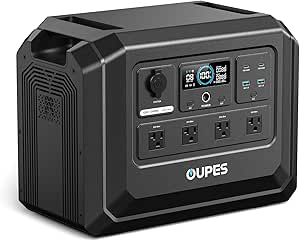 | Best for Solar Recharging | Battery capacity: 1,024Wh | Battery type: LiFePO4 | Solar input: Up to 800W | VIEW LATEST PRICE | See Our Full Breakdown |
| LIBRIDS C600 Portable Power Station, 640Wh LiFePO4 Battery, 600W Output |  | Best Value for Mid-Size Backup | Battery capacity: 640Wh | Battery type: LiFePO4 | Output ports: 8 total, including 4 AC outlets | VIEW LATEST PRICE | See Our Full Breakdown |
| CYBPULTE 600W Portable Power Station, 299Wh, 1200W Surge, 140W USB-C |  | Best for Lightweight, Higher-Wattage Carry | Capacity: 299Wh | Continuous output: 600W | Peak surge output: 1,200W | VIEW LATEST PRICE | See Our Full Breakdown |
| 500W Portable Power Station, 519.48Wh, with 2 AC Outlets |  | Best for More Runtime on a Budget-Friendly Setup | Capacity: 519.48Wh | Peak output: 1,000W | Weight: 14.1 lb | VIEW LATEST PRICE | See Our Full Breakdown |
| Akiisolo 192Wh Portable Power Station with LiFePO4 Battery |  | Best Compact LiFePO4 Pick | Capacity: 192Wh | Battery type: LiFePO4 | Surge output: 200W | VIEW LATEST PRICE | See Our Full Breakdown |
| VTOMAN Jump 600X Portable Power Station, 600W |  | Best for Frequent Use and Fast Recharging | Continuous AC output: 600W | Peak output: 1,200W | Battery chemistry: LiFePO4 | VIEW LATEST PRICE | See Our Full Breakdown |
| Jackery Explorer 300 Portable Power Station, 292Wh |  | Best for Simple, Familiar Portable Backup | Capacity: 292Wh | Peak surge output: 600W | Weight: 7.5 lb | VIEW LATEST PRICE | See Our Full Breakdown |
| Jackery Explorer 1000 v2 Portable Power Station, 1024Wh LiFePO4 Battery |  | Best for Fast Emergency Recharging | Battery capacity: 1,024Wh | Battery type: LiFePO4 (LFP) | AC output: 1,500W continuous; 3,000W peak | VIEW LATEST PRICE | See Our Full Breakdown |
| CTOLITY AP400 Portable Power Station, 345Wh 500W |  | Best Compact Station for Quiet Backup | Battery capacity: 345Wh | Battery chemistry: LiFePO4 | Output power: 500W | VIEW LATEST PRICE | See Our Full Breakdown |
| Dabbsson 2000L Portable Power Station, 2048Wh LiFePO4 Battery |  | Best for High-Capacity Home Backup | Battery capacity: 2,048Wh | Battery type: Semi-solid LiFePO4 | AC output: 2,200W continuous; 3,300W power boost | VIEW LATEST PRICE | See Our Full Breakdown |
| DJI Power 1000 V2 Portable Power Station, 1024Wh LFP Battery |  | Best Premium 1kWh Power Station | Battery capacity: 1,024Wh | Battery type: LFP | Maximum output: 2,600W | VIEW LATEST PRICE | See Our Full Breakdown |
| MARBERO M365 Portable Power Station, 155Wh, 100W |  | Best Ultra-Portable Electronics Backup | Capacity: 155Wh | Battery capacity: 42,000mAh | Output: 100W; 150W maximum engine power | VIEW LATEST PRICE | See Our Full Breakdown |
| Black Friday portable power station | Weight | Battery capacity |
|---|---|---|
| Anker SOLIX C1000 Gen 2 Portab | 11.3 kg | 1,024Wh |
| Anker SOLIX S2000 Portable Pow | 35.7 lb | 2,010Wh |
| MARSRIVA MP6 Plus Portable Pow | 15.7 lb | 512Wh |
| OUPES Mega 1 Lite Portable Pow | 26.7 lb | 1,024Wh |
| LIBRIDS C600 Portable Power St | 16.3 lb | 640Wh |
| CYBPULTE 600W Portable Power S | 6.8 lb | — |
| 500W Portable Power Station | 14.1 lb | — |
| Akiisolo 192Wh Portable Power | 3.9 lb | — |
| VTOMAN Jump 600X Portable Powe | 9.92 lb | — |
| Jackery Explorer 300 Portable | 7.5 lb | — |
| Jackery Explorer 1000 v2 Porta | 23.4 lb | 1,024Wh |
| CTOLITY AP400 Portable Power S | 11.1 lb | 345Wh |
| Dabbsson 2000L Portable Power | 41 lb | 2,048Wh |
| DJI Power 1000 V2 Portable Pow | 15kg | 1,024Wh |
| MARBERO M365 Portable Power St | 3.74 lb | 42,000mAh |
More Details on Our Top Picks
Anker SOLIX C1000 Gen 2 Portable Power Station, 1,024Wh LiFePO4 Battery
For a Black Friday shortlist, I’d put the Anker SOLIX C1000 Gen 2 first because it balances a useful 1,024Wh capacity with 2,000W running output, giving it room for many household essentials without moving into the larger, heavier class. Its 49-minute AC recharge can be handy when an outage warning arrives late, while solar input adds a way to recharge away from an outlet. Compared with the OUPES Mega 1 Lite, it is lighter and switches to UPS backup faster, but OUPES offers more solar input and a higher surge rating. The C1000’s under-10 ms UPS and app management suit home backup as well as camping. Tradeoffs: solar input tops out at 600W, and the product details disagree on whether it has nine outlets or powers up to ten devices.
Pros:- 1,024Wh capacity and 2,000W running output cover a broad range of small appliances and electronics.
- AC recharge is listed at 49 minutes, with solar charging supported up to 600W.
- LiFePO4 battery is rated to retain at least 80% capacity after 4,000 cycles.
- Under-10 ms UPS switchover, app management, and a five-year warranty add useful home-backup features.
Cons:- Solar input is limited to 600W and 60V maximum, below the OUPES Mega 1 Lite’s 800W input.
- Product information lists nine outlets but also says it can power up to ten devices, leaving the outlet count unclear.
- At 11.3 kg, it is less convenient to carry for extended distances than the smaller stations in this roundup.
Best for: Households seeking one mid-capacity station for outage backup, camping, and everyday device charging, especially buyers who value fast AC recharging and UPS switching.
Not ideal for: Buyers who need maximum solar input, a clearly stated outlet count, or a lighter station for frequent long-distance carrying.
- Battery capacity:1,024Wh
- Battery type:LiFePO4
- Running / peak output:2,000W / 3,000W
- AC recharge time:49 minutes at 1,600W
- Maximum solar input:600W, 60V maximum
- UPS switchover:Under 10 ms
- Battery cycle life:At least 80% capacity after 4,000 cycles
- Weight:11.3 kg
- Warranty:5 years
Our verdict“Choose the C1000 Gen 2 if you want a versatile 1kWh-class station with fast recharging and quick UPS switching, rather than the OUPES Mega 1 Lite’s stronger solar and surge figures.”
Anker SOLIX S2000 Portable Power Station, 2,010Wh LiFePO4 Battery, 1,500W Output
The Anker SOLIX S2000 is the capacity-first pick here: its 2,010Wh battery holds nearly twice the energy of the Anker SOLIX C1000 Gen 2, making it better suited to longer stretches between recharges. That extra reserve can matter for routers, lights, and other modest loads during an outage, though runtime depends on what is connected. The tradeoff is a lower 1,500W continuous output, so the C1000 Gen 2 and OUPES Mega 1 Lite are stronger choices for running more demanding appliances. Eight outlets and several charging routes—including generator and alternator charging—give it flexibility at home or on the road. Its under-10 ms UPS is a useful backup feature, but the 400W solar ceiling is modest for a station this large, and there is no 12V DC port.
Pros:- 2,010Wh capacity provides substantially more stored energy than the C1000 Gen 2 and other 1kWh-class picks.
- Eight outlets and multiple charging methods include AC, solar, generator, alternator charger, and car outlet.
- LiFePO4 battery is specified for up to 10,000 charge cycles.
- Under-10 ms UPS switchover supports use as backup for connected electronics.
Cons:- Continuous output is 1,500W, below the 2,000W ratings of the Anker SOLIX C1000 Gen 2 and OUPES Mega 1 Lite.
- Solar input is limited to 400W, which can make replenishing its larger battery slower with solar alone.
- It has no 12V DC port for buyers with equipment that needs that connection.
Best for: Campers, van owners, and households prioritizing longer runtime for low- to medium-draw devices over high continuous appliance output.
Not ideal for: Buyers who need a 12V DC port, higher continuous output for demanding appliances, or faster solar replenishment than 400W input can provide.
- Battery capacity:2,010Wh
- Battery chemistry:LiFePO4
- Continuous / peak output:1,500W / 3,000W
- Solar input:Up to 400W
- Outlets:8
- Recharging methods:AC, solar, generator, alternator charger, car outlet, AC + solar
- UPS switchover:Under 10 ms
- Weight:35.7 lb
- 12V DC port:Not included
Our verdict“Choose the S2000 when stored energy and flexible recharging matter more than high continuous output or fast solar charging.”
MARSRIVA MP6 Plus Portable Power Station, 512Wh LiFePO4 Battery, 600W Output
For buyers who want backup power without hauling a 1kWh-class unit, the MARSRIVA MP6 Plus offers a more compact 512Wh package with 600W rated output. Its 100W USB-C PD port can charge compatible laptops directly, while the under-10 ms UPS function gives it a useful role for a router or other small electronics. Compared with the LIBRIDS C600, MARSRIVA has less capacity but offers the same 600W output and a stated UPS feature; LIBRIDS provides 640Wh and four AC outlets. The MP6 Plus also supports up to 300W solar input and is rated for 3,000-plus cycles. I’d keep its limits in view: 512Wh is better for shorter backup needs, and it must stay dry. AC charge-time details also differ, listing both a one-hour 0–90% charge and a 1.5-hour recharge.
Pros:- 512Wh capacity and 15.7 lb weight make it more manageable than the larger 1kWh-class stations.
- 600W rated output with up to 1,200W peak output supports a range of smaller devices.
- 100W USB-C PD and under-10 ms UPS add practical laptop and small-electronics support.
- LiFePO4 battery is rated for 3,000-plus cycles, with MPPT solar input up to 300W.
Cons:- 512Wh capacity is less suited to prolonged outages than the 640Wh LIBRIDS C600 or larger stations.
- It must be kept away from rain, water, and excessive moisture during outdoor use.
- Charging details differ, listing 0–90% in one hour and a separate 1.5-hour recharge claim.
Best for: Solo campers, remote workers, and home users who need a compact station for laptops, networking gear, and other modest loads with UPS support.
Not ideal for: Buyers seeking multi-day capacity, dependable outdoor use in wet conditions, or a clearly consistent AC recharge-time specification.
- Battery capacity:512Wh
- Battery chemistry:LiFePO4
- USB-C output:100W PD
- Solar input:300W
- UPS transfer time:Under 10 ms
- Battery cycle life:3,000+ cycles
- Weight:15.7 lb
- Warranty:5 years
Our verdict“Pick the MP6 Plus for compact, dry-weather backup and laptop charging; choose a higher-capacity model if longer runtime is the priority.”
OUPES Mega 1 Lite Portable Power Station, 1024Wh, 2000W
Among the 1kWh-class options, I’d favor the OUPES Mega 1 Lite for buyers planning to recharge from panels: its 800W solar input exceeds the Anker SOLIX C1000 Gen 2’s 600W ceiling. It also combines 2,000W rated output with a listed 4,500W surge capacity, giving it a higher stated surge figure than the Anker. Nine output ports, including two 140W USB-C PD ports, support a mix of appliances and laptops, while Wi-Fi and Bluetooth app control add monitoring options. The tradeoff is portability: at 26.7 lb, it is heavier than the C1000 Gen 2, and its under-20 ms UPS switchover is slower than Anker’s under-10 ms figure. The 70-minute solar recharge claim also depends on three 240W panels, so it is less compelling for buyers with a smaller panel setup.
Pros:- Up to 800W solar input gives it more panel-charging headroom than the Anker SOLIX C1000 Gen 2.
- 2,000W rated output and 4,500W surge capacity support demanding loads within the station’s limits.
- Nine output ports include two 140W USB-C PD ports for capable laptop charging.
- LiFePO4 battery is rated for over 3,500 cycles to 80% capacity, with Wi-Fi and Bluetooth app control.
Cons:- At 26.7 lb, it is less convenient to carry than the Anker SOLIX C1000 Gen 2.
- UPS switchover is under 20 ms, slower than the under-10 ms figures of the Anker models in this roundup.
- The 70-minute solar recharge claim requires three 240W panels, which may be more equipment than casual buyers have.
Best for: Off-grid campers and home-backup buyers who can use higher-wattage solar panels and want strong AC output plus fast panel recharging.
Not ideal for: Frequent travelers who need a lighter carry, buyers with limited solar equipment, or users who prioritize the quickest UPS switchover.
- Battery capacity:1,024Wh
- Battery type:LiFePO4
- Solar input:Up to 800W
- AC recharge time:46 minutes from 0 to 100%
- Solar recharge claim:70 minutes with three 240W solar panels
- USB-C ports:2 × 140W PD
- UPS switchover:Under 20 ms
- Weight:26.7 lb
Our verdict“Choose the Mega 1 Lite if you can make use of its 800W solar input and high surge capacity, but favor the lighter C1000 Gen 2 for easier carrying and faster UPS switching.”
LIBRIDS C600 Portable Power Station, 640Wh LiFePO4 Battery, 600W Output
The LIBRIDS C600 makes a practical case for buyers who need more reserve than a compact 512Wh station but do not need the output of a 1kWh model. Its 640Wh battery is larger than the MARSRIVA MP6 Plus’s 512Wh pack, while both are rated for 600W output; the LIBRIDS also lists four AC outlets among eight total ports. Pure sine wave AC and 10 ms UPS switching suit sensitive electronics and short backup interruptions. A metal housing, LCD, and integrated handle add useful everyday details, and the battery is rated for over 4,000 cycles while retaining over 80% capacity. Still, the 600W ceiling rules out many higher-draw appliances, and 16.3 lb is a noticeable carry for a station in this capacity range. Its fastest recharge claim requires combined AC and solar input.
Pros:- 640Wh capacity gives it more stored energy than the MARSRIVA MP6 Plus while keeping the same 600W rated output.
- Eight total ports include four AC outlets for connecting several devices at once.
- Pure sine wave AC and 10 ms UPS switching support sensitive electronics and backup use.
- LiFePO4 battery is rated for more than 4,000 cycles while retaining over 80% capacity.
Cons:- Connected devices must stay within the 600W rated output, limiting use with higher-draw appliances.
- At 16.3 lb, it may be cumbersome for extended carrying compared with smaller-capacity options.
- The 1.5-hour fast-charge claim requires combined AC and solar charging.
Best for: Buyers who want a mid-size station for multiple small devices, short home outages, or car camping and value several AC outlets.
Not ideal for: People who need to power appliances above 600W, carry a station long distances, or rely on AC-only charging to match the fastest recharge claim.
- Battery capacity:640Wh
- Battery type:LiFePO4
- Output ports:8 total, including 4 AC outlets
- AC output:120V pure sine wave
- UPS switching:10 ms
- Fast recharge:As little as 1.5 hours with combined AC and solar charging
- Battery cycle life:More than 4,000 cycles while retaining over 80% capacity
- Weight:16.3 lb
Our verdict“Choose the LIBRIDS C600 for a bit more capacity and four AC outlets than the MARSRIVA MP6 Plus, provided your devices stay within its 600W limit.”
CYBPULTE 600W Portable Power Station, 299Wh, 1200W Surge, 140W USB-C
For Black Friday shoppers who need a portable station that can handle more than small USB devices, the CYBPULTE pairs 600W continuous output with a notably light 6.8-pound body. Its 140W USB-C port can serve compatible laptops directly, while the pure sine wave inverter supports sensitive electronics. Compared with the VTOMAN Jump 600X, it weighs less and offers faster USB-C charging, but the VTOMAN has a LiFePO4 battery and lists a 3,000-cycle rating. The CYBPULTE’s 299Wh capacity is the bigger limitation: it can run modest loads, but not for long, and it trails the 519.48Wh option in this group on runtime. A two-hour recharge is appealing for quick turnarounds; solar charging requires a separately purchased compatible panel.
Pros:- 6.8-pound weight is easy to carry between a car, campsite, and home.
- 600W continuous output and 1,200W surge support a wider range of small devices than low-output compact stations.
- 140W USB-C PD port can charge compatible laptops without using an AC outlet.
- Pure sine wave AC output and a steady, strobe, and SOS light add useful electronics and emergency support.
Cons:- 299Wh capacity limits runtime for power-hungry devices and longer outages.
- Compatible 18V solar panels are sold separately.
- Its 12-month warranty is shorter than the multi-year cycle-life claims offered by some LiFePO4 alternatives.
Best for: Campers and road-trippers who want 600W output and fast laptop charging in a power station under seven pounds.
Not ideal for: Buyers planning long outages or extended appliance use; its 299Wh capacity runs out sooner than the 519.48Wh station in this group.
- Capacity:299Wh
- Continuous output:600W
- Peak surge output:1,200W
- Weight:6.8 lb
- AC outlets:2 × 120V
- USB-C:1 × 140W PD
- USB-A:2 × QC3.0, 18W each
- Recharge time:2 hours
Our verdict“Choose the CYBPULTE if carrying weight and 600W output matter more than extended runtime or a stated long-cycle battery rating.”
500W Portable Power Station, 519.48Wh, with 2 AC Outlets
This station’s main case is straightforward: 519.48Wh of capacity gives it more stored energy than the CYBPULTE’s 299Wh or the Jackery Explorer 300’s 292Wh, making it a better fit when phone charging is only part of the plan. It offers a broad mix of connections, including two pure sine wave AC outlets, USB-C, USB-A, DC, a car port, and wireless charging. That variety can reduce adapter juggling at a campsite or during a short outage. The tradeoff is a 500W rated output, below the CYBPULTE and VTOMAN’s 600W, so it is less suited to higher-draw equipment. At 14.1 pounds, it is also much heavier than those compact picks. Wall charging takes six to seven hours, and solar panels are not included.
Pros:- 519.48Wh capacity offers more runtime than the CYBPULTE 299Wh and Jackery Explorer 300 292Wh.
- Two pure sine wave AC outlets support compatible household electronics.
- Wireless charging and a wide selection of USB, DC, and car outputs add connection flexibility.
- Can recharge from a wall outlet, car charger, or compatible solar panel.
Cons:- 14.1-pound weight makes it less convenient to carry than the CYBPULTE or VTOMAN Jump 600X.
- 500W rated output rules out devices that draw more power.
- Solar panel is not included, and wall charging takes six to seven hours.
Best for: Car campers and households seeking more battery capacity for small electronics, lights, and modest AC devices without moving to a large station.
Not ideal for: Buyers who need a lightweight carry or plan to run loads above 500W; it is heavier than the compact choices and has a firm output ceiling.
- Capacity:519.48Wh
- Peak output:1,000W
- Weight:14.1 lb
- AC outputs:2 × 120V pure sine wave
- USB-C:1 PD port, up to 60W
- Wireless charging:10W
- Wall recharge time:6–7 hours
Our verdict“Pick this model when extra capacity and varied ports matter more than light weight or the higher output of the 600W alternatives.”
Akiisolo 192Wh Portable Power Station with LiFePO4 Battery
The Akiisolo GO10Y is the smallest-capacity option in this set, but its 3.9-pound build and LiFePO4 battery give it a clear purpose: carryable backup for phones, lights, and other low-draw essentials. Its battery is rated for over 3,000 charging cycles, a useful distinction from the Jackery Explorer 300, whose product data gives conflicting battery chemistry descriptions. The Akiisolo also includes UPS functionality, which can help keep a connected device supplied during a power interruption. Its 100W rated output sharply limits appliance choices, and one AC outlet means fewer plug-in devices than the CYBPULTE’s two. The 192Wh capacity is best treated as a compact reserve, not an all-night power source for demanding equipment. Buyers wanting a light emergency kit should find the tradeoff easier to accept.
Pros:- At 3.9 pounds, it is the easiest model here to carry as a personal backup.
- LiFePO4 battery is rated for over 3,000 charging cycles.
- UPS functionality can support a connected device during a power interruption.
- Two USB-C ports, two USB-A ports, and two DC ports provide several non-AC charging options.
Cons:- 100W rated output is too low for many appliances and higher-draw equipment.
- 192Wh capacity provides limited runtime compared with the 299Wh CYBPULTE and 519.48Wh station.
- Only one AC outlet limits simultaneous plug-in use.
Best for: Minimalist campers and apartment residents who want a very light backup for phones, small electronics, and a UPS-connected device.
Not ideal for: Buyers needing to run appliances, several AC devices, or equipment drawing over 100W; its capacity and single AC outlet are restrictive.
- Capacity:192Wh
- Battery type:LiFePO4
- Surge output:200W
- Weight:3.9 lb
- AC outlet:1 × 110V
- Ports:2 USB-C, 2 USB-A, 2 DC
- Battery cycle life:Over 3,000 cycles
Our verdict“Choose the Akiisolo for a lightweight, cycle-rated backup for small electronics, not for appliance power or long runtimes.”
VTOMAN Jump 600X Portable Power Station, 600W
The VTOMAN Jump 600X earns its place for shoppers who expect to use a portable station regularly, not just keep one stored for emergencies. Its LiFePO4 battery is rated for 3,000 cycles to 80% capacity, and its 600W continuous output matches the CYBPULTE while carrying a stronger stated battery-life case. A 100W USB-C port suits compatible laptops, and AC plus car and solar charging gives owners several ways to replenish it. The standout is recharge speed: the product data lists 80% in 50 minutes and full recharge in 75 minutes with AC and DC charging together. That is more useful for quick turnarounds than the 519.48Wh station’s slower wall recharge, though that model stores more energy. At 9.92 pounds, the VTOMAN is still portable, but heavier than the CYBPULTE.
Pros:- LiFePO4 battery is rated for 3,000 cycles to 80% capacity.
- 600W continuous output and 1,200W peak output support more demanding small devices than 100W compact stations.
- 100W and 30W USB-C outputs give compatible devices flexible direct charging.
- AC and DC simultaneous charging is listed as reaching 80% in 50 minutes.
Cons:- At 9.92 pounds, it is heavier than the CYBPULTE’s 6.8-pound design.
- Solar panels are sold separately.
- Combined device load must stay within the 600W continuous output.
Best for: Frequent campers and road-trippers who want 600W output, a long-cycle LiFePO4 battery, and rapid recharge between uses.
Not ideal for: Buyers prioritizing the lightest possible carry or maximum stored energy; it weighs more than the CYBPULTE and has no capacity figure provided here.
- Continuous AC output:600W
- Peak output:1,200W
- Battery chemistry:LiFePO4
- Weight:9.92 lb
- USB-C outputs:100W and 30W
- Solar input:Up to 120W MPPT
- AC input:170W
- Recharge time:80% in 50 minutes; 100% in 75 minutes with AC and DC simultaneous charging
Our verdict“Choose the VTOMAN if repeated use and fast recharging outweigh the CYBPULTE’s lighter carry or a larger-capacity station’s longer runtime.”
Jackery Explorer 300 Portable Power Station, 292Wh
The Jackery Explorer 300 is a straightforward choice for buyers who want a modest station with two AC outlets and a manageable 7.5-pound carry. Its 292Wh capacity sits close to the CYBPULTE’s 299Wh, but its 300W rated output is half the CYBPULTE’s 600W, so it suits smaller loads rather than devices that need more starting or running power. The listed 100W USB-C PD port and 120W car port make it useful for charging compatible electronics on the move. Solar charging is supported, with the product text describing an 80% charge in about 2.8 hours using a 100W panel; that panel is not included. Battery chemistry is described inconsistently in the supplied data, so I would not choose it over the Akiisolo or VTOMAN on battery-life claims alone.
Pros:- 7.5-pound weight and integrated carry handle suit travel and campsite use.
- Two AC outlets plus USB-A, 100W USB-C PD, and a 120W car port cover common charging needs.
- 292Wh capacity is close to the CYBPULTE’s 299Wh in a similarly portable format.
- Supports solar charging, with product text giving an 80% charge estimate using a 100W panel.
Cons:- 300W rated output is substantially lower than the 600W CYBPULTE and VTOMAN.
- Solar panel is not included.
- Supplied product data conflicts on battery chemistry, making chemistry-based comparisons uncertain.
Best for: Road-trippers and casual campers seeking a lightweight station for phones, laptops, lights, and other devices within a 300W load.
Not ideal for: Buyers who need 600W output, a clearly stated battery chemistry, or a solar panel included in the box.
- Capacity:292Wh
- Peak surge output:600W
- Weight:7.5 lb
- AC outlets:2
- USB-C PD:1 × 100W
- Car port:120W
- Solar charging:Up to 80% in approximately 2.8 hours with a 100W panel; panel not included
Our verdict“Pick the Explorer 300 for familiar, lightweight travel power under 300W, but choose the CYBPULTE or VTOMAN for higher-output devices.”
Jackery Explorer 1000 v2 Portable Power Station, 1024Wh LiFePO4 Battery
For Black Friday shoppers who want a mid-size station that can refill quickly between outages or trips, the Jackery Explorer 1000 v2 pairs 1,024Wh of storage with 1,500W of AC output in a 23.4-pound package. Its 10ms UPS switchover can help keep compatible essentials powered during an interruption, while the LFP battery is rated to retain over 70% capacity after 4,000 cycles. The headline advantage is emergency charging: a full recharge can take 50 minutes, but only after enabling that mode in the app. Compared with the similarly sized DJI Power 1000 V2, Jackery lists a lighter weight and a shorter stated full-charge time, while DJI offers higher maximum output and dual 140W USB-C ports. Jackery’s solar support is limited to its own panels, which are not included, so it is a less flexible pick for buyers building a solar setup.
Pros:- 1,024Wh capacity and 1,500W AC output suit a range of travel and backup needs.
- Emergency mode can recharge the station from empty to full in 50 minutes.
- 10ms UPS switchover supports short-interruption backup for compatible devices.
- LFP battery is rated to retain over 70% capacity after 4,000 cycles.
Cons:- Solar panels are sold separately, and solar charging works only with Jackery panels.
- The 50-minute full recharge requires enabling emergency charging in the app each time.
- Its 1,500W AC output is lower than the DJI Power 1000 V2’s stated 2,600W maximum.
Best for: Campers and outage-prepared households who want roughly 1kWh of capacity, quick emergency recharging, and a relatively portable unit.
Not ideal for: Buyers who already own non-Jackery solar panels or need high-wattage USB-C charging; solar panels are not included and the solar input is Jackery-only.
- Battery capacity:1,024Wh
- Battery type:LiFePO4 (LFP)
- AC output:1,500W continuous; 3,000W peak
- Ports:2 AC, 2 USB-C, 1 USB-A, 1 DC car port
- UPS switchover:10ms
- Charging time:50 minutes from 0% to 100% with emergency charging enabled; 1.25 hours default
- Weight:23.4 lb
- Dimensions:12.34 × 7.91 × 9.19 in
Our verdict“Choose the Jackery if fast emergency recharging and a lighter 1kWh format matter more than broad solar compatibility or maximum AC output.”
CTOLITY AP400 Portable Power Station, 345Wh 500W
The CTOLITY AP400 takes a smaller, quieter approach than the 1kWh options in this roundup: its 345Wh battery and 500W output are aimed at phones, laptops, lights, and other modest loads rather than household appliances. At 11.1 pounds, it is easier to carry than the Jackery Explorer 1000 v2, and the stated 30dB operating noise makes it a reasonable fit for a tent or quiet work area. A built-in UPS switches in under 20ms, and charging can come from AC, a car, or a compatible solar panel. The tradeoff is limited reserve: its capacity is only about a third of the Jackery’s, and 500W rules out many high-draw devices. Solar capability also means buying the panel separately. I’d choose this for light-duty portability, not as a substitute for a larger outage station.
Pros:- Compact 11.1-pound design is easier to carry than the 1kWh stations.
- 30dB operating noise suits quiet campsites and workspaces.
- AC, car, and solar recharging give it several ways to refill.
- LiFePO4 battery is rated for 4,000+ cycles before reaching 80% capacity.
Cons:- 345Wh capacity offers much less runtime than the Jackery Explorer 1000 v2.
- 500W output limits use with higher-power appliances.
- Compatible 150W solar panel is sold separately.
Best for: Solo campers, remote workers, or apartment residents who need quiet power for small electronics and value car charging and a built-in UPS.
Not ideal for: Households running refrigerators, cooking appliances, or several high-draw devices; 345Wh capacity and 500W output are limiting for those jobs.
- Battery capacity:345Wh
- Battery chemistry:LiFePO4
- Output power:500W
- Outputs:2 pure sine wave AC outlets, 1 USB-C, 3 USB-A, wireless charging
- UPS switching time:Less than 20ms
- AC recharge time:Up to 80% in 45 minutes; full charge in 2.3 hours
- Solar compatibility:150W panel supported; panel not included
- Weight:11.1 lb
- Dimensions:9.8 × 6.9 × 6.9 in
Our verdict“Pick the AP400 for quiet, portable power for smaller electronics, but choose a 1kWh model if you need longer backup or appliance support.”
Dabbsson 2000L Portable Power Station, 2048Wh LiFePO4 Battery
When Black Friday shopping priorities center on longer backup rather than easy carrying, the Dabbsson 2000L brings 2,048Wh of capacity, six AC outlets, and 2,200W continuous output. That gives it a clear role above compact picks such as the CTOLITY AP400, whose 345Wh battery is better suited to small electronics than extended household use. The Dabbsson also supports up to 800W of solar input, hybrid charging, app control, and an EPS switch under 15ms. Its stated one-hour AC recharge is attractive for a station this size, although the solar panels are not included. The meaningful cost in convenience is physical: at 41 pounds, it is much less appealing for frequent carrying than the Jackery Explorer 1000 v2. This is the lineup’s capacity-first option for a semi-stationary backup setup, not a grab-and-go camping choice.
Pros:- 2,048Wh capacity provides more stored energy than the 1,024Wh Jackery Explorer 1000 v2.
- Six AC outlets and 2,200W continuous output support several devices at once.
- Up to 800W solar input and hybrid charging offer flexible replenishment options.
- EPS switching under 15ms and app control support backup monitoring.
Cons:- At 41 pounds, it is cumbersome for frequent transport.
- Solar panels are optional and not included.
- Its larger capacity and output come in a bigger package than the 1kWh alternatives.
Best for: Households seeking a higher-capacity outage station with multiple AC outlets, fast AC recharging, and substantial optional solar input.
Not ideal for: Campers who move their power station often or buyers wanting a ready-to-use solar kit; the unit weighs 41 pounds and panels are not included.
- Battery capacity:2,048Wh
- Battery type:Semi-solid LiFePO4
- AC output:2,200W continuous; 3,300W power boost
- AC outlets:6
- Solar input:Up to 800W MPPT
- AC recharge time:1 hour
- EPS switch time:Under 15ms
- Weight:41 lb
- Warranty:5 years
Our verdict“Choose the Dabbsson for longer home backup and multiple AC loads if you can accommodate its 41-pound weight.”
DJI Power 1000 V2 Portable Power Station, 1024Wh LFP Battery
The DJI Power 1000 V2 is the premium 1kWh pick for buyers who value high output, fast recharging, and quiet operation more than a low carry weight. Its 1,024Wh battery supports up to 2,600W output, while the dual 140W USB-C ports can serve demanding laptops without taking up an AC outlet. It reaches 80% in 37 minutes and runs as quietly as 26dB, features that make it well suited to indoor backup or a campsite where fan noise matters. Compared with the Jackery Explorer 1000 v2, DJI lists more AC outlets and higher maximum output, but the Jackery weighs less and gives a stated full-charge time under emergency mode. At 15kg, the DJI is not a light carry, and solar or car charging requires separate compatible adapters. Its strengths are more compelling for a semi-stationary setup than frequent hikes.
Pros:- Up to 2,600W output exceeds the Jackery Explorer 1000 v2’s stated 1,500W AC output.
- Two 140W USB-C ports provide substantial direct charging for compatible laptops.
- Reaches 80% charge in 37 minutes and operates as quietly as 26dB.
- 10ms UPS switching and a five-year warranty support backup use.
Cons:- At 15kg, it is heavier than the Jackery Explorer 1000 v2.
- Solar and car charging need separate compatible adapters.
- The listed rapid recharge time covers 80%, not a full charge.
Best for: Remote workers and outage-prepared households who want a quiet 1kWh station, strong USB-C charging, and higher AC output.
Not ideal for: Buyers who need an easy-to-carry camping station or plug-and-play solar and car charging; it weighs 15kg and requires separate adapters for those inputs.
- Battery capacity:1,024Wh
- Battery type:LFP
- Maximum output:2,600W
- AC outlets:4
- USB-C ports:2 × 140W; 280W total
- Recharge time:0–80% in 37 minutes
- UPS switch time:10ms
- Noise level:As low as 26dB
- Weight:15kg
Our verdict“Choose the DJI for quiet, high-output 1kWh backup and powerful USB-C charging if its weight and separate charging adapters are acceptable.”
MARBERO M365 Portable Power Station, 155Wh, 100W
The MARBERO M365 is the easy-to-carry option here: at 3.74 pounds, it is far lighter than the CTOLITY AP400 and sized for phones, small electronics, and short trips rather than household backup. Its 155Wh capacity and 100W output set firm limits on runtime and device choice, but the mix of AC, USB, DC, and car outputs gives buyers flexibility for low-power gear. The LCD display shows battery level and power use, while the three-mode flashlight adds a useful emergency feature without extra equipment. Compared with the Jackery Explorer 1000 v2, this is dramatically more portable but stores only a fraction of the energy and cannot support comparable loads. AC conversion also loses about 15% of the available energy, so actual runtime depends on the device being powered. I’d treat it as a travel companion, not a Blackout-ready primary station.
Pros:- At 3.74 pounds, it is much easier to pack and carry than larger stations.
- Multiple AC, USB, DC, and car outputs accommodate varied low-power devices.
- LCD reports battery level, input and output power, and active ports.
- Three-mode flashlight includes steady, SOS, and strobe settings.
Cons:- 155Wh capacity provides limited runtime compared with the CTOLITY AP400 and larger stations.
- 100W output excludes many higher-power devices.
- AC conversion loses approximately 15% of available energy.
Best for: Travelers and casual campers who want a very light station for phones, small electronics, and low-power devices, with a built-in flashlight.
Not ideal for: Households needing sustained outage backup, appliance support, or laptop charging above 100W; its small capacity and output are limiting.
- Capacity:155Wh
- Battery capacity:42,000mAh
- Output:100W; 150W maximum engine power
- AC outlets:2
- Other ports:1 QC3.0 USB-A, 2 USB-A, 1 USB-C, 3 DC outputs, 1 car port
- AC voltage and frequency:110V, 60Hz
- Weight:3.74 lb
- Dimensions:8.14 × 3.77 × 7.08 in
- Flashlight modes:Steady, SOS, strobe
Our verdict“Pick the M365 for lightweight trips and small electronics, but choose a larger station for meaningful outage runtime or appliance power.”
How We Picked
I compared the listed models by usable capacity, stated AC output, battery chemistry, charging and port details, and likely portability. These factors shape whether a station can handle a buyer’s intended devices, how long it may run them, and how practical it is to transport. I also treated clear model specifications as more useful than broad marketing claims; where the supplied product name does not identify a brand, I refer to it by its stated capacity and output rather than implying additional verified features.
The order gives priority to balanced capability and clear use cases, then separates large-capacity backup stations, mid-size options, and compact units. A higher position does not mean every buyer should choose that model: a 2,048Wh station can be excessive for phone charging, while a 155Wh unit cannot replace a household backup system. I weighed output alongside capacity so a large battery with a modest power ceiling would not automatically rank above a more versatile option. The roundup is organized around fit and tradeoffs, not Black Friday deal claims.
Factors to Consider When Choosing Black Friday Portable Power Stations
Before choosing among these Black Friday portable power stations, I would start with the devices you expect to run and the length of time you need them powered. That approach helps avoid paying for unused battery capacity—or buying a compact unit that cannot meet an appliance’s demand.
Match AC Output to the Device, Not Just Its Battery
A station’s watt-hour rating estimates stored energy, while its wattage rating limits the power it can supply at a moment. A high-capacity model may still fail to run a device whose operating draw exceeds its AC output limit. Check the appliance label or manual for running watts, then check whether it has a higher startup surge, as motors and compressors can briefly draw more. Do not assume that a stated surge rating means the station can sustain that load. For several devices running at once, add their wattage together and leave some headroom. This check can favor a higher-output model over a larger battery if your priority is running demanding equipment.
Estimate Runtime With Realistic Losses
Battery capacity is not the same as energy delivered to a device: conversion through AC outlets and the station’s own electronics use some power. For a rough estimate, divide the capacity in watt-hours by the device’s watts, then treat the result as an upper-bound calculation rather than a promise. Actual runtime changes with load, operating conditions, and whether the station is powering several devices. Small electronics can run for many hours on compact stations, but a heater or kitchen appliance can drain even a large battery quickly. If outages last overnight or longer, focus on your essential load and estimate each device’s daily energy use. That can reveal whether one large station or a smaller unit paired with a different backup plan makes more sense.
Choose Battery Size for the Job You Need Covered
Portable power stations in this roundup range from 155Wh to 2,048Wh, so the right capacity depends on both runtime and how much weight you are willing to move. A compact battery can cover phones, lights, and other low-draw essentials without the bulk of a large backup unit. A roughly 1,000Wh model is a more flexible middle ground for a mix of devices, while a station above 2,000Wh better fits longer use or multiple essential loads. Larger capacity can mean more carrying effort and more space needed for storage. Avoid choosing solely by the biggest number: buying extra capacity does little for a device that exceeds the station’s output limit. Start with the hours of backup you need, then compare capacity and output together.
Check Charging Methods and Port Needs Before Buying
Think about where you will recharge the station: a wall outlet, a vehicle, solar panels, or some combination. Do not assume a model supports a particular charging method or solar input just because competing units do; verify the exact specification for the version you are considering. Then list the connections your devices require, including AC outlets, USB-A, and USB-C, and check how many can be used at once. A high-wattage USB-C port can be useful for compatible laptops, while extra AC outlets matter when several household devices need power. If you expect to recharge during a short stop or limited outage, charging speed may matter as much as capacity. Compare the station’s stated input limits and supported accessories before adding a panel or cable to your plan.
Treat Battery Chemistry and Warranty as Ownership Factors
Several models here specify LiFePO4 or LFP batteries, but chemistry is only one part of long-term value. Compare each manufacturer’s stated cycle life, warranty terms, and storage guidance instead of assuming that matching chemistry means matching longevity or service. Read the warranty for coverage length, exclusions, and how claims are handled in your region. Also check whether the unit has any maintenance requirements, such as periodic charging during storage. For a station kept for emergencies, clear storage instructions and dependable support can matter more than a feature you rarely use. A lower purchase cost can lose its appeal if the warranty or replacement process does not fit how you plan to rely on the unit.
Use Black Friday as a Purchase Window, Not a Substitute for Research
A seasonal promotion does not change whether a station fits your load, your transport needs, or your charging setup. Confirm the exact model name and specifications, since similar product names can refer to different capacities or revisions. Compare the included accessories and warranty terms as well as the station itself, particularly if solar charging is part of your plan. Check the seller’s return policy and whether the unit can be returned after opening if its weight or noise does not suit your space. If your intended devices are not compatible with the station’s output, a sale will not fix that mismatch. Make your shortlist from technical fit first, then use Black Friday availability to choose between suitable options.
Frequently Asked Questions
How do I know whether a portable power station can run my refrigerator?
Check the refrigerator’s running watts and startup surge in its manual or on its label, then compare both figures with the station’s AC output and surge rating. A station’s battery capacity tells you more about possible runtime than whether it can start the appliance. Estimate energy use over the hours you need, allowing for the refrigerator cycling on and off rather than drawing its full running wattage continuously. Leave room for other devices you may run at the same time. If the refrigerator’s startup demand exceeds the station’s limits, a larger battery alone will not solve the problem.
Is a 1,024Wh station enough for a weekend away from home?
It can be enough for low- to moderate-power needs, but the answer depends on what you plan to run and how often. Phones, lights, and laptop charging use much less energy than cooking appliances, heaters, or refrigeration. Add the expected watt-hours for each device across the trip, then allow for conversion losses and days without recharging. Compare that estimate with the station’s capacity and check that its output supports your highest-draw device. If your plan includes several power-hungry appliances, a 1,024Wh model may run short even if its headline capacity sounds generous.
Should I choose a larger-capacity station or one with higher wattage?
Choose higher wattage when your main concern is whether the station can start or operate a demanding device. Choose more capacity when the devices already fit within the output limit but you need them to run longer. These are separate specifications, so a station can have a large battery and still be unable to power a particular appliance. Write down both the maximum device draw and the expected hours of use before comparing models. If both demands are high, you will need a station that meets both rather than trading one specification for the other.
Can I rely on solar panels to recharge my station during an outage?
Solar recharging can help extend backup use, but it depends on compatible panels, the station’s solar input limits, available sunlight, and how much power you use while charging. Verify the exact station’s supported input range and connectors before buying panels; compatibility is not universal. A cloudy day, shade, or winter sunlight can reduce charging substantially, so do not plan around best-case conditions. Keep track of the energy your essentials consume and compare it with realistic daily solar input for your location. For critical loads, treat solar as a way to replenish energy rather than a guaranteed replacement for stored capacity.
Is a compact power station a better emergency choice than a large one?
A compact model is easier to store and carry, and it can make sense for communications, lighting, and other small loads. Its limited capacity can become a problem during a long outage or when several devices need power. A larger station can support more energy use, but its weight, size, and charging needs may make it less convenient to move or store. Decide which devices matter most, how long they need to run, and whether you can recharge the unit during an outage. For some households, a compact station for essential electronics is more practical than a large unit that exceeds their needs; others will need the added capacity.
Conclusion
For the best overall balance, I would start with the Anker SOLIX C1000 Gen 2, while buyers prioritizing a recognized mid-capacity option may prefer the Jackery Explorer 1000 v2. For best premium-scale capacity, the Dabbsson 2000L is the clearest fit for longer backup needs, with the Anker SOLIX S2000 another large-battery choice for buyers whose load suits its output. For best value by practical fit, compare the MARSRIVA MP6 Plus, LIBRIDS C600, and VTOMAN Jump 600X against your device list rather than paying for capacity you will not use; the supplied specifications do not support a single universal value winner. For beginners, a roughly 1,000Wh model is a straightforward place to start if you need more than phone-and-light backup, while the Jackery Explorer 300 or MARBERO M365 better suits simpler, lighter loads. For specific compact needs, consider the Akiisolo 192Wh or MARBERO M365; for higher output in the mid-size range, compare the OUPES Mega 1 Lite’s stated 2,000W with the actual power demands of your appliances. Choose by load, runtime, and charging plan first, then narrow the shortlist to a model that fits how you will use it.
Black Friday Picks

Sonos Roam Portable Bluetooth and Wi-Fi Speaker, Black
As an affiliate, we earn on qualifying purchases.