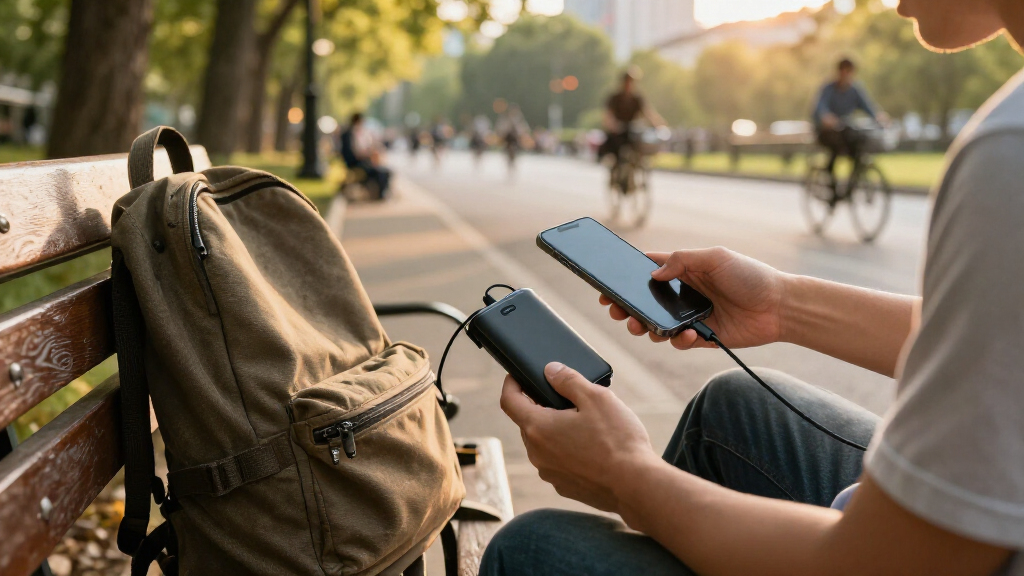
Portable power banks range from pocketable phone backups to high-capacity units built for laptops and longer trips. My best overall pick is the Anker Zolo 20,000mAh 30W, which balances useful capacity, a built-in USB-C cable, and manageable output for everyday carry. The INIU 10,000mAh 45W suits buyers who want a smaller, faster-charging option, while the Anker Prime 26,250mAh 300W is aimed at demanding multi-device use. The main tradeoff is between capacity and carry weight, with charging speed, port selection, and integrated cables shaping convenience. Read on for the full comparison and a pick matched to your devices and routine.

Get the latest gadgets delivered free with Prime
- Fast, free delivery on millions of items
- Prime Video, Amazon Music and more included
- Member-only deals all year
Complete the kit



Key Takeaways
- The Anker Zolo 20,000mAh 30W is the most balanced everyday option here: it pairs substantial phone-backup capacity with a built-in USB-C cable and moderate output.
- The INIU 10,000mAh 45W offers a more compact path to faster charging, but its lower capacity makes it less suited to multiple days away from an outlet.
- The Anker Prime 26,250mAh 300W stands apart for high-output use, while its size and capability are excessive for buyers charging only a phone.
- 50,000mAh and 60,000mAh models prioritize fewer outlet visits over easy everyday carry; their bulk may outweigh the capacity for commuters.
- Built-in cables reduce what you need to pack, but a detachable cable and clearly specified output can offer more flexibility as devices and charging needs change.
| Anker Zolo 20,000mAh 30W Power Bank with Built-In USB-C Cable |  | Best for Everyday High Capacity | Battery capacity: 20,000mAh | Maximum output: 30W | Input: 20W | VIEW LATEST PRICE | See Our Full Breakdown |
| INIU 10,000mAh 45W Fast-Charging Portable Charger |  | Best Compact Fast-Charging Pick | Battery capacity: 10,000mAh | Maximum output: 45W | Ports: 2 USB-C, 1 USB-A | VIEW LATEST PRICE | See Our Full Breakdown |
| Charmast 10,000mAh Portable Charger with Four Built-In Cables |  | Best for Shared Charging | Model: W1148 | Battery capacity: 10,000mAh | Built-in cables: 4 | VIEW LATEST PRICE | See Our Full Breakdown |
| Anker 20,000mAh Power Bank with Built-In USB-C Cable, 87W, Black |  | Best for High-Power Devices | Battery capacity: 20,000mAh | Output: 87W total; up to 65W to one device | Ports: 3: built-in USB-C cable, 1 USB-C, 1 USB-A | VIEW LATEST PRICE | See Our Full Breakdown |
| Anker PowerCore Slim 10000 USB-C Portable Charger |  | Best Lightweight Everyday Carry | Model: A1229 | Battery capacity: 10,000mAh | Ports: 1 USB-C, 1 USB-A | VIEW LATEST PRICE | See Our Full Breakdown |
| Anker Prime 26,250mAh 300W Power Bank |  | Best for High-Power Laptop Charging | Capacity: 26,250mAh (99.75Wh) | Maximum total output: 300W | Maximum single-port output: 140W | VIEW LATEST PRICE | See Our Full Breakdown |
| NOBIS 45W 20,000mAh Portable Charger |  | Best for Built-In Cable Convenience | Capacity: 20,000mAh | Maximum USB-C output: 45W | Maximum input: 45W | VIEW LATEST PRICE | See Our Full Breakdown |
| OHOVIV 50,000mAh Portable Charger, 22.5W Power Bank |  | Best for Long Trips Away From Outlets | Capacity: 50,000mAh | Maximum output: Up to 22.5W | USB-C input: 18W | VIEW LATEST PRICE | See Our Full Breakdown |
| Anker 25,000mAh Power Bank with 165W Output and Built-In Cables |  | Best for Multi-Device Travel | Capacity: 25,000mAh | Maximum total output: 165W | USB-C ports: 3, up to 100W each | VIEW LATEST PRICE | See Our Full Breakdown |
| Miady 2-Pack 10,000mAh Slim Portable Chargers |  | Best for Splitting Everyday Carry | Pack size: 2 power banks | Capacity: 10,000mAh each | Ports: Dual USB-A and USB-C | VIEW LATEST PRICE | See Our Full Breakdown |
| IAPOS 60,000mAh 22.5W Fast-Charging Power Bank with 3-in-1 Cable |  | Best for Extended Group Outings | Battery capacity: 60,000mAh | Maximum charging power: 22.5W | Ports: 2 USB-A, 1 USB-C | VIEW LATEST PRICE | See Our Full Breakdown |
| OHOVIV 50,000mAh Portable Charger with 4 Built-in Cables |  | Best for Charging a Full Device Kit | Battery capacity: 50,000mAh | Output: 22.5W | Built-in cables: 4: iPhone, USB-C, Micro-USB, USB-A | VIEW LATEST PRICE | See Our Full Breakdown |
| Moihosso 50000mAh Portable Charger with Built-In Cables |  | Best for USB-C and iOS Pairing | Battery capacity: 50,000mAh | Battery type: Lithium-ion | Charging power: 22.5W | VIEW LATEST PRICE | See Our Full Breakdown |
| Jackery Explorer 300 Portable Power Station, 292Wh |  | Best for Camping and AC-Powered Gear | Capacity: 292Wh | Battery chemistry: LiFePO4 | Peak output: 600W | VIEW LATEST PRICE | See Our Full Breakdown |
| INIU 20,000mAh 22.5W Portable Charger with Built-In USB-C Cable |  | Best Compact Built-In-Cable Pick | Battery capacity: 20,000mAh | Maximum output: 22.5W | Ports: 3 | VIEW LATEST PRICE | See Our Full Breakdown |
| portable power bank | Dimensions | Weight | Ports | Battery capacity |
|---|---|---|---|---|
| Anker Zolo 20,000mAh 30W Power | 4.72 × 2.89 × 1.24 inches | 365g (12.45oz) | 2 | 20,000mAh |
| INIU 10,000mAh 45W Fast-Chargi | — | — | 2 USB-C, 1 USB-A | 10,000mAh |
| Charmast 10,000mAh Portable Ch | 5.67 × 2.64 × 0.71 inches | 9.2oz (170g) | — | 10,000mAh |
| Anker 20,000mAh Power Bank wit | 6.22 × 2.91 × 1.02 inches | 15.2oz | 3: built-in USB-C cable, 1 USB-C, 1 USB-A | 20,000mAh |
| Anker PowerCore Slim 10000 USB | 6.01 × 0.61 × 2.82 inches | 8.48oz (172g) | 1 USB-C, 1 USB-A | 10,000mAh |
| Anker Prime 26,250mAh 300W Pow | 6.3 × 2.5 × 1.5 inches | 600g | 2 USB-C, 1 USB-A | — |
| NOBIS 45W 20,000mAh Portable C | 5.39 × 2.76 × 1.04 inches | 392g | 2 USB-A, 2 USB-C | — |
| OHOVIV 50,000mAh Portable Char | 5.38 × 2.75 × 1.6 inches | 0.65kg | 4 | — |
| Anker 25,000mAh Power Bank wit | — | — | — | — |
| Miady 2-Pack 10,000mAh Slim Po | 5.5 × 2.6 × 0.6 inches each | 7.68 oz each | Dual USB-A and USB-C | — |
| IAPOS 60,000mAh 22.5W Fast-Cha | 15 × 7.5 × 2.8 cm | 15.5 oz | 2 USB-A, 1 USB-C | 60,000mAh |
| OHOVIV 50,000mAh Portable Char | 5.82 × 2.83 × 1.18 inches | 1.07 lb (390 g) | — | 50,000mAh |
| Moihosso 50000mAh Portable Cha | 6.5 × 3.5 × 1 inches | — | 3 | 50,000mAh |
| Jackery Explorer 300 Portable | — | 7.5 lb in description; 7.1 lb in specifications | — | — |
| INIU 20,000mAh 22.5W Portable | 4.1 × 2.8 × 1.2 inches | 320 g | 3 | 20,000mAh |
More Details on Our Top Picks
Anker Zolo 20,000mAh 30W Power Bank with Built-In USB-C Cable
I’d choose the Anker Zolo when phone top-ups need to stretch across a long day, but laptop-level output is unnecessary. Its 20,000mAh capacity is double that of the 10,000mAh INIU charger, while its built-in USB-C cable means there’s one less cord to pack. Output reaches 30W, a practical fit for compatible phones and tablets, and ActiveShield 2.0 monitors temperature during charging. The tradeoff is portability: at 365g, it is heavier than the slim Anker PowerCore Slim 10000. Its listed recharge time of about five hours also means it takes planning to refill before another outing. I’d rank it for capacity and cable convenience, rather than for the lightest carry or the fastest charging of more demanding devices.
Pros:- 20,000mAh capacity suits longer days away from an outlet
- Built-in 5.98-inch USB-C cable reduces the need to pack a separate cord
- Up to 30W output supports fast charging for compatible devices
- ActiveShield 2.0 monitors temperature during charging
Cons:- At 365g, it weighs more than 10,000mAh slim options
- Listed recharge time is about five hours
Best for: Phone and tablet users who want substantial backup capacity and a charging cable ready to use on day trips
Not ideal for: Commuters prioritizing a light pocket carry or laptop users who need more output than 30W
- Battery capacity:20,000mAh
- Maximum output:30W
- Input:20W
- Ports:2
- Built-in cable:USB-C, 5.98 inches (15.2cm)
- Dimensions:4.72 × 2.89 × 1.24 inches
- Weight:365g (12.45oz)
- Warranty:18 months
Our verdict“Choose the Anker Zolo if you want 20,000mAh of phone and tablet backup with a cable built in and can accept the added weight.”
INIU 10,000mAh 45W Fast-Charging Portable Charger
The INIU 10,000mAh prioritizes charging speed and a compact carry over the longer runtime of the Anker Zolo’s 20,000mAh battery. Its 45W maximum output makes it the stronger fit for compatible devices that can use higher-wattage charging, while its three ports give a small group more connection options. A detachable braided USB-C cable is included, so the cable can be replaced or left behind when it is not needed. That flexibility comes with a nuisance: at just 0.4 feet, the cable is short for use away from the charger. And although three ports are available, the listed battery capacity is still 10,000mAh, which may run short on longer trips or when charging several devices. I’d pick it for a compact fast-charge kit, not as a substitute for a high-capacity travel bank.
Pros:- Up to 45W output suits compatible devices that benefit from faster charging
- Three output ports offer two USB-C connections and one USB-A connection
- Compact, lightweight design is suited to everyday travel
- Detachable braided USB-C cable can be removed or replaced
Cons:- 10,000mAh capacity may be limiting on extended trips
- Included 0.4-foot cable is short for charging at a distance
Best for: Travelers and commuters with compatible phones or tablets who value compact size and higher output over multi-day capacity
Not ideal for: People who need to recharge several devices repeatedly on extended trips or want a longer included cable
- Battery capacity:10,000mAh
- Maximum output:45W
- Ports:2 USB-C, 1 USB-A
- Included cable:Detachable braided USB-C, 0.4 ft
- Voltage:12V
- Amperage:3A
- Features:Flashlight and overcharge protection
- Support:3-year care and lifetime technical support
Our verdict“Pick the INIU if a compact charger with 45W output matters more to you than the Anker Zolo’s larger capacity.”
Charmast 10,000mAh Portable Charger with Four Built-In Cables
The Charmast W1148 is the lineup’s choice for carrying fewer separate cables: it has four built-in cables plus USB-C and USB-A ports, with capacity for up to six connected devices at once. That connection count sets it apart from the three-port INIU, especially when several people need a charge together. Its 9.2-ounce weight and slim profile help keep it travel-friendly, and three recharge input options add flexibility when refilling. The limit is how much power it can hold: 10,000mAh is modest if several devices need substantial charging, so the six-device figure describes connections rather than generous runtime for everyone. Built-in cables also offer less freedom to swap lengths or cable types than the INIU’s detachable lead. I’d choose Charmast for shared convenience, not heavy multi-device use.
Pros:- Four built-in cables reduce the number of separate cords to pack
- Up to six devices can connect at once
- Slim body weighs 9.2oz for a multi-connection charger
- Three recharge input options add flexibility
Cons:- 10,000mAh capacity can be stretched thin across several devices
- Built-in cables offer less flexibility than the INIU’s detachable cable
Best for: Travel companions or families who want one compact charger with several built-in cable connections for occasional top-ups
Not ideal for: Groups expecting repeated full charges for several devices or buyers who want to choose their own cable lengths
- Model:W1148
- Battery capacity:10,000mAh
- Built-in cables:4
- Additional output ports:1 USB-C, 2 USB-A
- Maximum simultaneous devices:6
- Recharge inputs:Built-in USB-C cable, built-in USB-A cable, Micro-USB
- Dimensions:5.67 × 2.64 × 0.71 inches
- Weight:9.2oz (170g)
Our verdict“Choose the Charmast for shared cable convenience and multiple connections, provided your group only needs modest top-ups.”
Anker 20,000mAh Power Bank with Built-In USB-C Cable, 87W, Black
For a portable bank that may need to charge a laptop as well as a phone, I’d favor this Anker 20,000mAh model over the 30W Anker Zolo. It can deliver up to 65W to one device and 87W across connected devices, giving compatible laptops more headroom while its three ports support a phone or accessory alongside. The built-in USB-C cable is rated for over 10,000 bends, and a compatible 65W charger can refill the bank in about 1.5 hours. Those capabilities make it more versatile for demanding gear, but the 15.2-ounce weight is a real cost for a portable setup. Also, the 87W total is shared when multiple devices are attached, so connected gear does not each receive that maximum. It suits a laptop bag better than a light pocket carry.
Pros:- Up to 65W to one device supports compatible laptop charging
- 87W total output and three ports allow multiple devices to connect
- Built-in USB-C cable is rated for over 10,000 bends
- Can recharge in about 1.5 hours with a 65W charger
Cons:- 15.2oz weight is substantial for everyday pocket carry
- 87W output is shared across connected devices
Best for: Laptop users who travel with a compatible USB-C computer and want one bank for it and smaller devices
Not ideal for: Phone-only users seeking a lighter everyday bank or buyers expecting 87W for each connected device
- Battery capacity:20,000mAh
- Output:87W total; up to 65W to one device
- Ports:3: built-in USB-C cable, 1 USB-C, 1 USB-A
- Recharge time:About 1.5 hours with a 65W charger
- Dimensions:6.22 × 2.91 × 1.02 inches
- Weight:15.2oz
- Battery cell type:Lithium polymer
- Warranty:18 months
Our verdict“Choose this Anker if you need laptop-capable output and can carry more weight than the 30W Zolo requires.”
Anker PowerCore Slim 10000 USB-C Portable Charger
At 8.48 ounces, the Anker PowerCore Slim 10000 makes the most sense when a charger needs to disappear into a small bag or commute kit. It is lighter than the Anker Zolo and Charmast, though its 10,000mAh capacity is half the Zolo’s. USB-C handles both input and output, and USB-A adds a connection for compatible older cables. The listed output is 5V / 3A, a more modest offering than the 45W INIU; I’d favor the INIU when faster charging is a priority. Scratch resistance and a 3.2-foot drop rating add reassurance for daily transport, but the slim design does not change the roughly five-hour, ten-minute recharge time. I’d pick this for uncomplicated everyday backup, not for rapid laptop charging or long trips away from an outlet.
Pros:- 8.48oz weight suits a light everyday carry
- 10,000mAh capacity provides a useful phone backup
- USB-C supports both recharging the bank and charging devices
- Scratch resistance and 3.2-foot drop durability suit regular transport
Cons:- 5V / 3A output is more modest than the 45W INIU
- Recharge takes about 5 hours and 10 minutes
Best for: Commuters who want a light, slim backup charger for a phone and prefer USB-C input and output
Not ideal for: Laptop users, travelers needing repeated charges, or anyone prioritizing higher output and faster recharging
- Model:A1229
- Battery capacity:10,000mAh
- Ports:1 USB-C, 1 USB-A
- USB-C function:Input and output
- Charging output:5V / 3A
- Recharge time:About 5 hours 10 minutes
- Dimensions:6.01 × 0.61 × 2.82 inches
- Weight:8.48oz (172g)
Our verdict“Choose the PowerCore Slim for a light, simple phone backup, and choose the INIU if higher output is more important.”
Anker Prime 26,250mAh 300W Power Bank
The Anker Prime 26,250mAh is the power bank in this group built for demanding laptop setups: it can deliver up to 140W from one port and 300W total across its three ports. That gives it more headroom for a high-draw laptop and accessories than the Anker 25,000mAh 165W model, while its 99.75Wh capacity stays within the stated TSA limit. The tradeoff is its focus on output over convenience: it weighs 600g, and reaching 140W requires a 5A cable. Dual USB-C input can accept up to 250W, useful when fast turnaround matters, but that speed depends on the charging setup. I’d choose it for power-hungry gear, not as my light everyday phone backup.
Pros:- Up to 140W output from one port for compatible high-power laptops
- 300W total output across two USB-C ports and one USB-A port
- Dual USB-C input supports up to 250W recharging
- 99.75Wh capacity is listed as TSA-approved
Cons:- Weighs 600g, adding substantial weight to a day bag
- A 5A cable is required for 140W output
- Charging performance varies by device and conditions
Best for: Laptop users who need high output for a demanding computer and several accessories while traveling
Not ideal for: Light-packers who mainly top up a phone, or buyers who want a small, low-weight everyday bank
- Capacity:26,250mAh (99.75Wh)
- Maximum total output:300W
- Maximum single-port output:140W
- Maximum dual-port input:250W
- Ports:2 USB-C, 1 USB-A
- Weight:600g
- Dimensions:6.3 × 2.5 × 1.5 inches
- Included accessories:3.3 ft 240W USB-C cable and travel pouch
Our verdict“Choose this for high-output laptop charging and fast recharging; skip it if low carry weight matters more than power.”
NOBIS 45W 20,000mAh Portable Charger
The NOBIS 20,000mAh pairs a useful midrange capacity with built-in cables, so it suits people who want several charging options without packing a cable for every device. Its 45W USB-C output is a step up from the 22.5W OHOVIV 50,000mAh bank for compatible phones and smaller devices, though it has far less stored capacity for repeated top-ups. Four ports and support for charging up to four devices make it a flexible shared charger, but simultaneous charging may divide available power. At 392g, it is also a sizeable carry for a bank of this capacity. I’d pick it for mixed-device trips where cable access matters more than maximum capacity or pocketability.
Pros:- Built-in cables reduce the need to pack separate charging leads
- 45W USB-C output and input support faster charging on compatible devices
- Four ports allow multiple devices to connect
- Digital display shows remaining battery
Cons:- 392g weight is substantial for a 20,000mAh bank
- Capacity is lower than the 50,000mAh OHOVIV option
- Available output may be shared when charging several devices
Best for: Travelers carrying a phone, tablet, and other small devices who value built-in cable access
Not ideal for: Buyers seeking a light pocket charger or enough capacity for many days away from an outlet
- Capacity:20,000mAh
- Maximum USB-C output:45W
- Maximum input:45W
- Charging protocols:PD 3.0, QC 4.0
- Ports:2 USB-A, 2 USB-C
- Weight:392g
- Dimensions:5.39 × 2.76 × 1.04 inches
- Recharge time:About 2 hours
Our verdict“Pick the NOBIS for convenient multi-device charging with built-in cables, provided its weight and midrange capacity suit your trip.”
OHOVIV 50,000mAh Portable Charger, 22.5W Power Bank
The OHOVIV 50,000mAh prioritizes stored energy over speed and easy travel. Its capacity is double the Anker 25,000mAh 165W bank, which may suit multi-day use when recharging from a wall outlet is difficult. But the OHOVIV’s 22.5W maximum output is far below the Anker’s 165W, so it is better matched to phones and smaller devices than demanding laptops. It can charge up to three devices at once and shows remaining battery on an LED display; the stated 0.65kg weight makes that capacity a noticeable load. The listing also says it is not allowed on airplanes, a major limit for travel plans. I’d reserve it for ground trips where capacity beats portability.
Pros:- 50,000mAh capacity for extended use between outlet visits
- Can charge up to three devices simultaneously
- LED display indicates remaining battery
- Includes safeguards against overcharging, overvoltage, overcurrent, and short circuits
Cons:- Listing states the power bank is not allowed on airplanes
- Weighs 0.65kg, which is heavy for a portable bank
- 22.5W output is limited for power-hungry devices
Best for: Campers and road trippers who need extended phone and small-device charging away from outlets
Not ideal for: Air travelers or laptop users who need high-wattage charging
- Capacity:50,000mAh
- Maximum output:Up to 22.5W
- USB-C input:18W
- Ports:4
- Simultaneous device charging:Up to 3 devices
- Weight:0.65kg
- Dimensions:5.38 × 2.75 × 1.6 inches
- Air travel:Listing states it is not allowed on airplanes
Our verdict“Choose it for high-capacity charging on ground trips; skip it if you need airline travel or fast laptop charging.”
Anker 25,000mAh Power Bank with 165W Output and Built-In Cables
With two built-in USB-C cables, three USB-C ports, and a USB-A port, this Anker makes charging several devices simpler when packing space is tight. Its 25,000mAh capacity and 165W total output give it a strong mix of endurance and power, though its 100W maximum per USB-C port puts it below the Anker Prime’s 140W single-port ceiling. That difference matters most for users with especially demanding laptops; for a broader mix of travel devices, the built-in leads are the practical advantage. It can recharge in about two hours with a 100W-or-higher charger, but that wall charger is not included. I’d choose it over the NOBIS when higher total output and carry-on compliance matter more than a display or four-device simplicity.
Pros:- Two built-in USB-C cables simplify packing
- 165W total output supports several connected devices
- 25,000mAh capacity provides substantial portable reserve
- Designed to meet the 100Wh airline carry-on limit
Cons:- Wall charger is not included
- Full-speed recharge requires a 100W-or-higher charger
- Maximum 100W per USB-C port is below the Anker Prime’s 140W single-port output
Best for: Frequent travelers who charge a laptop, phone, and other devices and want fewer loose cables
Not ideal for: Laptop users who need more than 100W from one USB-C port, or buyers without a suitable high-wattage wall charger
- Capacity:25,000mAh
- Maximum total output:165W
- USB-C ports:3, up to 100W each
- Total ports:4
- Built-in cables:2 USB-C cables
- Recharge time:About 2 hours with a 100W-or-higher charger
- Airline carry-on:Designed to meet the 100Wh limit
- Warranty:18 months
Our verdict“Choose this for cable-light travel with several devices; choose the Anker Prime if your laptop needs higher single-port output.”
Miady 2-Pack 10,000mAh Slim Portable Chargers
The Miady two-pack offers a different kind of flexibility: two separate 10,000mAh banks let a couple share, or let one person keep a backup in another bag. Each unit is slim at 0.6 inches thick, making it easier to slip beside a phone than the heavier NOBIS or OHOVIV banks. USB-C supports both input and output, and each bank can charge up to three devices at once according to the listing. The tradeoff is modest capacity per unit and limited charging detail: the supplied specs list 2.4A but no wattage, so I wouldn’t choose these for fast laptop charging. A Lightning cable is not included. This set fits everyday phone top-ups better than high-power or long-duration charging.
Pros:- Two separate power banks provide flexible sharing or backup placement
- Slim 0.6-inch profile suits bags and everyday carry
- USB-C supports both input and output
- Each unit can charge up to three devices at once
Cons:- Each bank has only 10,000mAh capacity
- Listed 2.4A output detail does not establish high-wattage fast charging
- Lightning cable is not included
Best for: Couples, commuters, or families who want two slim phone-charging banks to keep in separate bags
Not ideal for: Laptop users or people who need one bank with high capacity for a long stretch away from outlets
- Pack size:2 power banks
- Capacity:10,000mAh each
- Ports:Dual USB-A and USB-C
- Maximum devices charged at once:3 per bank
- Dimensions:5.5 × 2.6 × 0.6 inches each
- Weight:7.68 oz each
- Voltage:3.7V
- Included:2 power banks, 2 USB-C cables, user manual
Our verdict“Choose the Miady set for shared, slim everyday phone backup, but look elsewhere for high-output laptop charging or a single large reserve.”
IAPOS 60,000mAh 22.5W Fast-Charging Power Bank with 3-in-1 Cable
The 60,000mAh stated capacity and support for up to five devices make this IAPOS a better fit for group outings or long stretches away from an outlet than the INIU 20,000mAh, which is easier to carry but holds less power. Its USB-C, iOS, and Micro-USB cable connectors reduce the need to pack separate leads, while two USB-A ports and a USB-C port leave room for additional devices. The 22.5W output and battery percentage display help with quicker top-ups and charge planning. The tradeoff is portability: at 15.5 oz, it adds noticeable weight to a day bag, and an integrated cable is less adaptable if a cable is damaged or a device needs another connector. Choose it for shared, extended use; skip it for light everyday carry.
Pros:- 60,000mAh stated capacity suits extended use away from outlets
- Can charge up to five devices at once
- Integrated USB-C, iOS, and Micro-USB connectors reduce cable packing
- 22.5W output and a digital battery display help with charging and planning
Cons:- 15.5 oz weight is substantial for everyday carry
- Integrated cable offers less flexibility than carrying separate cables
- Its 22.5W output is lower than higher-output options in the roundup
Best for: Travel companions or outdoor groups who need one bank to top up several phones and devices over a long day
Not ideal for: Commuters seeking a light pocket power bank or buyers who prefer replaceable cables and flexible connector choices
- Battery capacity:60,000mAh
- Maximum charging power:22.5W
- Ports:2 USB-A, 1 USB-C
- Integrated cable connectors:USB-C, iOS, Micro-USB
- Simultaneous device charging:Up to 5 devices
- Dimensions:15 × 7.5 × 2.8 cm
- Weight:15.5 oz
- Display and protection:Digital display; overcharge, short-circuit, and temperature protection
Our verdict“Pick the IAPOS for group outings that call for high stated capacity and several charging connections, provided its weight is acceptable.”
OHOVIV 50,000mAh Portable Charger with 4 Built-in Cables
Four built-in cables, three additional ports, and support for up to six devices at once give this OHOVIV a distinct advantage when a family or travel group carries mixed devices. It is more connector-ready than the IAPOS 60,000mAh, whose integrated cable has three connector types but a lower stated simultaneous-device limit. The OHOVIV’s 50,000mAh capacity and 22.5W output balance shared charging with a digital display for checking the remaining charge. That flexibility comes with real bulk: at 1.07 lb, it is a bag-based charger rather than a pocket companion. The included cables also make the unit convenient, but the wall charger block is not included, so recharging it requires a compatible adapter. Choose it when multiple people need ports; skip it if you travel light.
Pros:- Four built-in cable types plus three ports cover a varied device kit
- Supports charging up to six devices at once
- 50,000mAh capacity is suited to extended shared use
- 22.5W output and LED display make charging status easy to check
Cons:- At 1.07 lb, it is heavy for daily carry
- Wall charger block is not included
- Four built-in cables leave less room for choosing or replacing individual leads
Best for: Families or travel groups carrying a mix of iOS, USB-C, and Micro-USB devices who want one shared charging hub
Not ideal for: Solo commuters or backpackers prioritizing low weight, and buyers who need a wall adapter included
- Battery capacity:50,000mAh
- Output:22.5W
- Built-in cables:4: iPhone, USB-C, Micro-USB, USB-A
- Charging ports:3: 2 USB-A, 1 USB-C
- Maximum devices charged at once:6
- Dimensions:5.82 × 2.83 × 1.18 inches
- Weight:1.07 lb (390 g)
- Display:LED digital display
- Battery cell type:Lithium polymer
Our verdict“Choose the OHOVIV when several people need to charge different devices from one bank and carrying its weight is acceptable.”
Moihosso 50000mAh Portable Charger with Built-In Cables
The Moihosso keeps its built-in cable selection focused: USB-C and iOS leads, plus an extra USB-C port, suit buyers who mainly carry those device types. That is a simpler setup than the OHOVIV 50,000mAh, which has four built-in cable types and can charge more devices simultaneously. Moihosso still offers a 50,000mAh stated capacity, 22.5W charging, an LED display, and a flashlight, so it can serve as a shared backup for a small device kit. Its 6.5 × 3.5-inch footprint is less convenient for a pocket than the INIU 20,000mAh, and fast charging applies only to compatible devices. The listed battery weight of 100 g may not represent the complete bank’s carry weight, so buyers should not rely on it as the total weight.
Pros:- Built-in USB-C and iOS cables reduce the need for separate leads
- 50,000mAh stated capacity supports extended backup use
- 22.5W charging is available for compatible devices
- LED battery display and emergency flashlight add practical utility
Cons:- 6.5 × 3.5-inch dimensions make it less pocket-friendly than the INIU 20,000mAh
- Only USB-C and iOS cable connectors are built in
- Fast charging depends on device compatibility, and the listed 100 g battery weight is not clearly the full unit weight
Best for: USB-C and iOS users who want built-in leads, a large stated capacity, and a flashlight for occasional emergencies
Not ideal for: Buyers carrying Micro-USB devices, seeking a genuinely pocket-sized bank, or needing a clearly stated total weight
- Battery capacity:50,000mAh
- Battery type:Lithium-ion
- Charging power:22.5W
- Ports:3
- Built-in cables:USB-C and iOS
- Dimensions:6.5 × 3.5 × 1 inches
- Listed battery weight:100 g
- Display and added feature:LED battery display and emergency flashlight
- Warranty:3-year replacement plan
Our verdict“Consider the Moihosso if your devices use USB-C or iOS and you want high stated capacity, but check its full carry weight before buying.”
Jackery Explorer 300 Portable Power Station, 292Wh
The Jackery Explorer 300 is a small portable power station rather than a pocket power bank: its two AC outlets and 292Wh capacity let it serve gear that USB-only banks such as the INIU 20,000mAh cannot power directly. USB-C PD, USB-A, and a car port add options for phones and other compatible devices, while the LiFePO4 battery is rated for over 4,000 cycles to 70% capacity. That makes it better suited to repeated camping or off-grid trips than a lightweight phone backup. The tradeoff is substantial carry weight at roughly seven pounds, and solar charging requires a compatible panel sold separately. The supplied weight figures also differ slightly: the description lists 7.5 lb, while specifications list 7.1 lb. This is for campsite power, not pocket portability.
Pros:- Two AC outlets can power compatible gear beyond USB devices
- 292Wh capacity with 300W rated output suits campsite use
- LiFePO4 battery is rated for over 4,000 cycles to 70% capacity
- USB-C PD, USB-A, and car port support several charging needs
Cons:- At about seven pounds, it is far heavier than a conventional portable power bank
- Compatible solar panel is sold separately
- Listed weight differs between the description and specifications
Best for: Campers and van travelers who need AC outlets, USB charging, and a car port in one portable power source
Not ideal for: People seeking a pocket power bank for phone top-ups or buyers who expect solar panels to come in the box
- Capacity:292Wh
- Battery chemistry:LiFePO4
- Peak output:600W
- AC outlets:2
- Other ports:1 USB-C PD (100W), 2 USB-A, 1 car port (120W)
- Weight:7.5 lb in description; 7.1 lb in specifications
- Solar charging:Approximately 80% in 2.8 hours with a 100W panel; panel not included
Our verdict“Choose the Jackery for camping when AC power and multiple outlet types matter more than pocketable size.”
INIU 20,000mAh 22.5W Portable Charger with Built-In USB-C Cable
Among the high-capacity banks in this batch, the INIU 20,000mAh is the more manageable choice for everyday carry: its 4.1 × 2.8-inch footprint is much smaller than the Moihosso 50,000mAh, though its capacity is lower. A built-in USB-C cable that doubles as a lanyard means one fewer lead to pack, and the three ports, flashlight, and digital display cover common travel needs. The 22.5W output is useful for compatible devices, but it is modest beside the higher-output Anker options in the wider roundup. At 320 g, it still has noticeable heft for its size, and a 5.4-hour recharge can leave it unavailable for much of an evening. It suits a daily bag better than a fast-recharge or ultralight setup.
Pros:- Smaller footprint than the 50,000mAh banks in this batch
- Built-in USB-C cable doubles as a lanyard
- 22.5W output, three ports, and a digital display support everyday use
- Includes a flashlight and overcharge protection
Cons:- 320 g is still substantial for a compact power bank
- 5.4-hour battery recharge is a long wait
- Lower capacity and output than larger or higher-output roundup options
Best for: Daily commuters and travelers who want a moderate-capacity bank with a built-in USB-C lead for compatible devices
Not ideal for: Buyers needing the longest multi-device backup, a very light pocket bank, or faster recharge turnaround
- Battery capacity:20,000mAh
- Maximum output:22.5W
- Ports:3
- Built-in cable:USB-C
- Battery charge time:5.4 hours
- Dimensions:4.1 × 2.8 × 1.2 inches
- Weight:320 g
- Battery cell type:Lithium polymer
- Warranty:3 years
Our verdict“Pick the INIU for everyday USB-C charging when you want a compact built-in cable and can accept its weight and recharge time.”

How We Picked
I compared these options by how well their capacity, output, and portability fit common power-bank jobs: topping up a phone during the day, charging several devices, or supplying more demanding electronics. I also weighed practical details such as built-in cable convenience, port flexibility, and whether the stated capability made sense for the product’s likely use. A larger capacity can mean fewer recharges, but it often comes with more weight and bulk, so I treated carry comfort as part of performance.
The order favors useful balance for the widest range of buyers, then moves toward more specialized strengths. Models with moderate capacity and accessible charging features rank ahead of products whose very high output or capacity is valuable to a narrower group. The Jackery Explorer 300 is included as a portable power station, giving buyers a larger format option, but it is not as pocketable as the power banks around it. Product descriptions provide the stated specifications; this comparison does not claim hands-on testing.
Factors to Consider When Choosing Portable Power Banks
Choosing a power bank is easier when I start with what I need to charge and how far I will carry it. A large capacity number alone does not tell me whether the unit is convenient or suitable for a laptop. These factors help match the battery to a real routine.
Match Capacity to Time Away From an Outlet
Capacity is most useful when I connect it to the length of a typical day or trip. A smaller bank can cover an emergency top-up without adding much to a bag, while a higher-capacity model makes more sense when several devices need power or outlets are scarce. Buyers often focus on the printed milliamp-hour figure and overlook that conversion losses mean the full rated capacity will not reach a device. Phone size, battery condition, and usage while charging also change how many top-ups a bank can provide. For air travel, check current airline rules for the battery’s watt-hour rating rather than assuming every large-capacity model is allowed. If most charging happens near home or work, carrying a very large bank every day may be needless weight.
Check Output Against the Device
Maximum output determines whether a bank can charge a device at its supported pace, but it does not make every charge faster. I would check both the device’s charging requirements and the bank’s per-port output, especially if I expect to use more than one port at once. A phone generally needs less power than a laptop, and a bank with a high total output may still divide that power among connected devices. USB-C Power Delivery support can matter for laptops and newer phones, while other devices may rely on different charging standards. Avoid paying for very high wattage if the devices you own cannot use it. When laptop charging is the goal, confirm the bank supports the laptop’s input needs and that its usable capacity will cover a meaningful session.
Treat Weight as Part of Capacity
The largest bank is not always the most useful one if it stays at home because it is uncomfortable to carry. I would think about where it will ride: a jacket pocket, a small day bag, or luggage on a longer trip. Higher capacity usually brings more bulk, and a rugged or multi-port design can add more. For everyday commuting, a lighter unit that covers the usual need may beat a larger model with spare capacity I rarely use. For camping or group travel, the extra weight can be worthwhile if it replaces repeated searches for outlets. Compare dimensions and weight alongside capacity before deciding.
Choose Between Built-In and Separate Cables
Integrated cables simplify packing and are ready when a device needs a charge, which can be especially handy for occasional use. Their tradeoff is reduced flexibility if the cable wears out, does not match a future device, or is too short for the situation. A separate cable adds one more item to remember but is easier to replace and lets me choose the length and connector. Multi-cable designs can serve several devices, though they may make the power bank bulkier. Check whether a built-in cable is intended for input charging as well as output, since that affects how the bank itself is replenished. A cable should be treated as a convenience feature, not proof that the bank will charge every device quickly.
Plan for Recharging the Bank
A high-capacity bank is only useful if I can replenish it on a practical schedule. Check the power bank’s own input rate and the charger needed to reach it; a slow input can leave a large unit unavailable for much of a day. Some models can accept power through USB-C, but the port’s input capability may differ from its output capability. If I own a suitable wall charger already, confirm that it can supply the required standard and wattage. Recharging overnight is easy for many routines, while frequent travelers may value faster input more. Do not assume the largest-capacity option is the best fit without checking how long it takes to recharge.
Know When a Power Station Makes More Sense
A traditional power bank is designed for portable device charging, while a power station can support a broader set of electronics and often has a much larger enclosure. That extra capability matters for camping, work away from mains power, or equipment that cannot charge over USB alone. It also changes the carrying equation: a station is better suited to a vehicle or base camp than a pocket or small commuter bag. Buyers should check the outlet types, continuous output, and device compatibility rather than comparing only battery capacity. If the need is just phones and earbuds, a standard power bank is simpler to carry. Choose a station when its added connections and sustained power solve a real need.
Frequently Asked Questions
How much capacity do I need for a weekend away?
Start with the devices you plan to charge and how often you use them, then add some reserve for navigation, photos, or streaming. A moderate-capacity bank can suit one phone and occasional earbuds charging if you can recharge it at your lodging. Multiple phones or several days without outlets may call for more capacity, but the added weight can be noticeable. Remember that rated capacity is not the same as energy delivered to your devices. If you fly, check the bank’s watt-hour rating against the airline’s current battery rules before packing it.
Can a portable power bank charge my laptop?
Some can, but capacity alone does not establish laptop compatibility. Check that the bank offers USB-C Power Delivery or another charging method your laptop supports, and compare its output with the laptop’s required input. A high-output model may charge a laptop, but using it for that task can consume much of its reserve. Also check how much power remains available when other ports are in use. For occasional phone charging, that laptop capability may add cost and weight without a practical benefit.
Are built-in cables a good choice for travel?
They can reduce packing clutter and make a quick charge easier when you are away from your bag. The tradeoff is that an integrated cable is harder to replace if it fails and may not suit every device you own. A built-in cable also does not guarantee the fastest charging speed, so check the supported output. If you travel with a mix of older and newer devices, carrying one adaptable cable may offer more flexibility. For a single compatible phone and a simple routine, an integrated cable can be a useful convenience.
Should I choose one large power bank or two smaller ones?
One larger bank simplifies charging and can provide a deeper reserve, while two smaller banks let you spread weight between bags or keep one available as a backup. Smaller units may also be easier to lend or use while the other recharges. The larger option can be more convenient if you regularly charge several devices in one place. Check whether your routine includes outlets during the day, because access to recharge changes how much capacity you need to carry. For airline travel, compare each battery’s watt-hour rating with current carrier rules, since the number of batteries and their ratings both matter.
When should I buy a portable power station instead of a power bank?
A power station makes sense when you need more than USB charging, a longer supply for several devices, or support for equipment used at a campsite or work site. Its larger size is easier to justify when it travels in a car or stays at a base camp. A standard power bank is usually easier to carry for commuting and phone charging. Before choosing a station, check its outlet types and output limits against the devices you intend to run. If every device charges by USB and you value compact carry, a regular power bank is likely the more practical format.
Conclusion
For most everyday buyers, I would start with the Anker Zolo 20,000mAh 30W: its capacity and built-in USB-C cable make a balanced combination for phone-focused carry. The Miady 2-Pack 10,000mAh is my best value-style choice for people who want two smaller banks to distribute or keep as backups, while the Anker Prime 26,250mAh 300W is the premium pick for demanding multi-device charging. Beginners who want a straightforward, compact option can look at the Anker PowerCore Slim 10000. For specific needs, the INIU 10,000mAh 45W favors compact fast charging, the 50,000mAh and 60,000mAh models favor extended capacity, and the Jackery Explorer 300 suits buyers who need a power station format. Choose based on the devices you charge and the weight you are willing to carry.
Fall Picks
fall essentials
As an affiliate, we earn on qualifying purchases.