
TL;DR
The Paleblue Voyager USB-C AA and AAA rechargeable batteries combine built-in USB-C charging with 1.5V output designed to work like alkaline cells. Review testing found capacity close to many NiMH batteries, though AA capacity trails some top performers and the cells cost more than NiMH alternatives. One radio-controlled clock was incompatible, and they must not be charged in a standard NiMH charger.
The updated Paleblue Voyager USB-C AA and AAA batteries pair built-in USB-C charging with 1.5V output, and independent capacity tests reported results close to many NiMH rechargeable cells. The review found they worked in nearly every tested device, but cost more than NiMH batteries and failed to operate one radio-controlled clock.

Get the latest gadgets delivered free with Prime
- Fast, free delivery on millions of items
- Prime Video, Amazon Music and more included
- Member-only deals all year
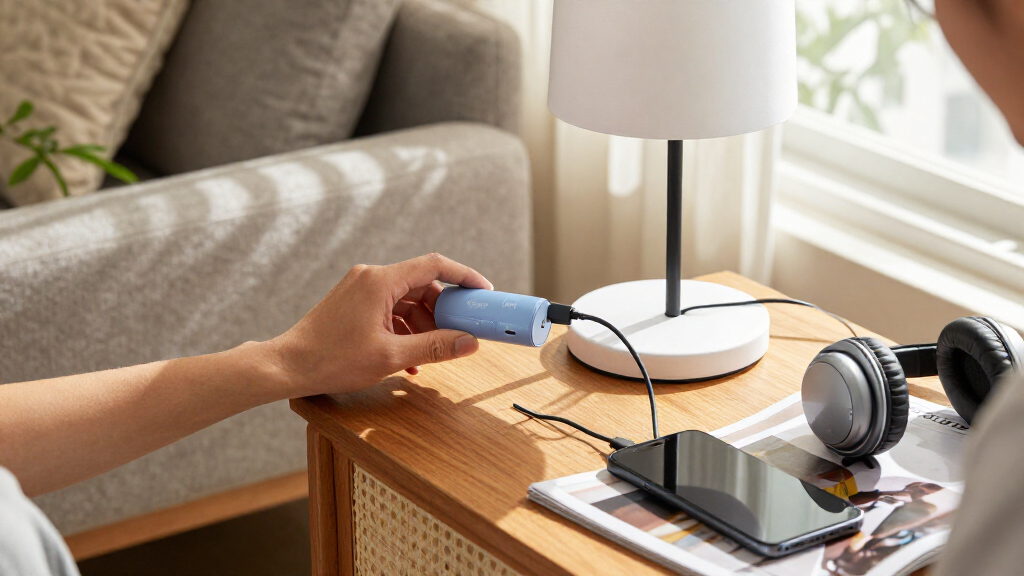
Each battery has a USB-C charging port built into its top, so users can charge the cells with the included four-way USB-C cable instead of putting them in a conventional charger. A carry case is included with each four-pack. The reviewer says the newer cable has USB-C connections at both ends, unlike the previous version’s USB-A charger end. A solid green indicator signals that charging is complete.
Paleblue rates the AAA cells at 750mAh and the AA cells at 2,200mAh, improvements of 150mAh and a similar increase over the preceding generation, respectively. The company claims more than 1,000 charge cycles for both sizes. Its stated charging times are 78 minutes for a full AAA charge and 126 minutes for a full AA charge; the company says the cells reach 80% in 60 and 94 minutes, respectively.
In testing with an XTAR VX4 battery tester, the reviewer measured average capacity of 777mAh for AAA and 2,252mAh for AA. The reviewer compared those results with 524mAh for the earlier Voyager AAA and 1,828mAh for the earlier AA. The tested AA result was below the cited Duracell Rechargeable AA cell, which measured 2,698mAh; for AAA, the cited Amazon Basics cell measured 847mAh.
Paleblue Voyager USB-C at home
These rechargeable AA and AAA cells combine built-in USB-C charging with 1.5V output. Review tests found capacity close to many NiMH batteries, with higher purchase prices and some compatibility limits.
What changes at home
Built-in charging and alkaline-style voltage may suit everyday devices that need 1.5V output.
USB-C on each cell
Charge through the battery’s built-in port with the included four-way cable, without a conventional charger.
Alkaline-style output
The 1.5V design may help in devices that reject the lower voltage of typical NiMH cells.
Capacity in context
Constant-drain testing found stronger results than the previous Voyager generation, while some cited competitors measured higher.
| Battery | Measured capacity |
|---|---|
| Voyager USB-C AAA | 777mAh |
| Earlier Voyager AAA | 524mAh |
| Voyager USB-C AA | 2,252mAh |
| Earlier Voyager AA | 1,828mAh |
| Cited Duracell Rechargeable AA | 2,698mAh |
| Cited Amazon Basics AAA | 847mAh |
Trade-offs for shoppers
Convenience and voltage come with higher upfront prices and no guarantee for every device.
- Built-in USB-C charging
- Worked in nearly all tested devices
- May retain charge better in storage than NiMH
- Costs more upfront than NiMH alternatives
- One radio-controlled clock was incompatible
- Real-world runtime and break-even point are not established
Use and charge safely
These are lithium-ion cells with electronics, not standard NiMH batteries.
Confirm its battery requirements; compatibility is not guaranteed for every AA- or AAA-powered product.
Use the built-in USB-C ports or a charger that supports lithium-ion cells.
A USB-C Alternative to Alkalines
The batteries’ 1.5V output and alkaline-style discharge curve are intended to help them work in devices that can reject the lower-voltage output of many NiMH rechargeables. The reviewer measured a starting voltage of 1.52V and reported that the cells worked in nearly all tested products. That could make them useful for households seeking rechargeable replacements for disposable AA and AAA batteries without giving up compatibility in some voltage-sensitive devices.
The built-in ports also remove the need for a separate charger during routine use, while the review says the cells hold their charge better than NiMH when left unused. That characteristic may suit low-drain devices such as clocks and remote controls, where a battery can sit for a long time. This is the reviewer’s assessment of the chemistry and use case, not a quantified long-term comparison from the reported capacity test.
Cost is a trade-off. The listed four-pack prices are £19.99 for AA batteries, also shown as $29.99, and £19.99 for AAA, also shown as $24.99. Those prices exceed equivalent NiMH and disposable alkaline sets at purchase. The review argues repeated recharging could make them cheaper than disposables over their service life, but that conclusion depends on actual usage, battery lifespan and local prices.
Products Worth Considering

Apple AirPods Pro 3 Wireless Earbuds with Active Noise Cancellation

Samsung Galaxy Tab S12+ 256GB Wi-Fi Android Tablet with Galaxy AI and S Pen, Gray

Logitech MX Master 4 for Mac
As an affiliate, we earn on qualifying purchases.
How the New Cells Compare
Earlier Paleblue regular-size rechargeable batteries used lithium-ion chemistry but, according to the review, fell behind NiMH options on capacity and were relatively expensive. The updated Voyager USB-C generation raises the rated capacity of both sizes while retaining integrated charging and 1.5V output. The reviewed range also includes C and D sizes, though the test results supplied here concern AA and AAA cells.
These batteries are lithium-ion cells with electronics intended to provide a steady 1.5V output, rather than standard NiMH cells, which are typically rated at 1.2V. That difference matters for both compatibility and charging: the source warns that a standard NiMH charger can damage the Paleblue batteries. Users who choose a separate charger need one that supports lithium-ion batteries. The review’s capacity measurements came from a constant-drain test, which does not reproduce every household use pattern or establish how long cells will last in a particular device.
“1000+ charge cycles”
— Paleblue, as quoted in the review
Compatibility and Lifespan Questions
The supplied review does not identify the radio-controlled clock that failed or explain why it was incompatible. It also does not provide a full list of tested devices, so the results cannot establish compatibility with every AA- or AAA-powered product. The reviewer reports that the batteries performed well in most tests, but that is not a guarantee for a specific device.
The 1,000-plus cycle figure comes from Paleblue; the source provides no independent long-term cycle test. The reported capacity figures come from constant-drain testing, and the material does not give a matched real-world runtime comparison across all battery types. The review suggests better charge retention during storage may benefit the Paleblue cells, but gives no measured storage period or quantified comparison for that claim.
Prices and availability can vary by market, and the source does not specify when or where the quoted prices were checked. It also does not give enough information to calculate a household’s break-even point against NiMH or disposable cells.
Check Fit Before Buying
There is no future product milestone or company announcement identified in the source. For shoppers considering the batteries, the practical next step is to check the device’s battery requirements and use pattern, then compare current local prices. Devices that need 1.5V alkaline-style output may be candidates, but the review’s clock exception shows that compatibility should not be assumed.
Owners should use the integrated USB-C ports or a charger explicitly designed for lithium-ion cells, not a standard NiMH charger. Further independent testing of storage retention, cycle life and runtime in specific devices would help clarify how the batteries perform over years of household use.
Key Questions
What is different about the Paleblue Voyager USB-C batteries?
They are AA and AAA lithium-ion rechargeable cells with built-in USB-C charging and a rated 1.5V output. Their design aims to match alkaline-battery voltage more closely than typical 1.2V NiMH rechargeables.
How much capacity did the review measure?
The reviewer measured an average of 777mAh for AAA and 2,252mAh for AA using an XTAR VX4 tester. These are constant-drain test results, not guaranteed runtimes in every device.
Can I charge them in a standard rechargeable-battery charger?
No. The source warns that a standard NiMH charger can damage these lithium-ion batteries. Use their USB-C ports or a separate charger that supports lithium-ion cells.
Will they work in every device that takes AA or AAA batteries?
No universal compatibility is established. The reviewer says they worked in nearly every tested device but not in one radio-controlled clock. Check a device’s requirements and test compatibility rather than assuming all products will work.
Are they cheaper than NiMH or disposable batteries?
The quoted purchase prices are higher than equivalent NiMH and alkaline sets. The reviewer says repeated recharging could make them more cost-effective than disposables over time, but the actual break-even point depends on usage, lifespan and current local prices.
Source: the-ambient.com