
To fix boomy bass quickly, start by placing your subwoofer in different spots using the 5-minute sub crawl. Play bass-heavy music and crawl around your room, listening for the tightest, most balanced sound. Once you find that spot, fine-tune the sub’s volume, phase, and crossover for clarity. Avoid common pitfalls like placing the sub near walls or corners. Keep exploring these tips to fully optimize your bass performance.
Key Takeaways
- Play bass-heavy music and crawl around your room to find areas with tight, balanced bass.
- Avoid corners and walls during placement to prevent resonances and boominess.
- Adjust subwoofer position based on your crawl results for optimal sound and minimal room boom.
- Fine-tune subwoofer settings like volume, crossover, and phase to reduce boominess.
- Use acoustic treatments like bass traps or panels in problem spots to control resonances and improve bass clarity.
How to Quickly Fix Boomy Bass With the Sub Crawl
If your subwoofer produces boomy bass, the sub crawl is a quick and effective way to fix it. Begin by placing the subwoofer on your main listening spot and play some familiar bass-heavy music. Then, slowly move the sub around the room, pausing every few inches to listen. This helps identify the best placement for even, tight bass. Proper subwoofer placement minimizes room acoustic treatment issues like standing waves or reflections that cause boomy sounds. Focus on spots where the bass sounds balanced and controlled. Once you find the ideal position, keep the sub there. Remember, adjusting placement is often enough to improve bass response without needing complex room treatments. This simple move can dramatically reduce boomy, uncontrolled bass. Additionally, understanding the importance of room acoustics can help you optimize your home theater setup for clearer and more detailed sound reproduction. Incorporating acoustic treatments such as bass traps or diffusers can further enhance sound quality when fine-tuning your setup. Being aware of room modes can also guide your placement choices to minimize resonances that contribute to boomy bass. Paying attention to speaker placement and how it interacts with the room’s acoustics can make a significant difference in sound clarity and bass control.
Get Your Subwoofer and Room Ready in a Few Minutes
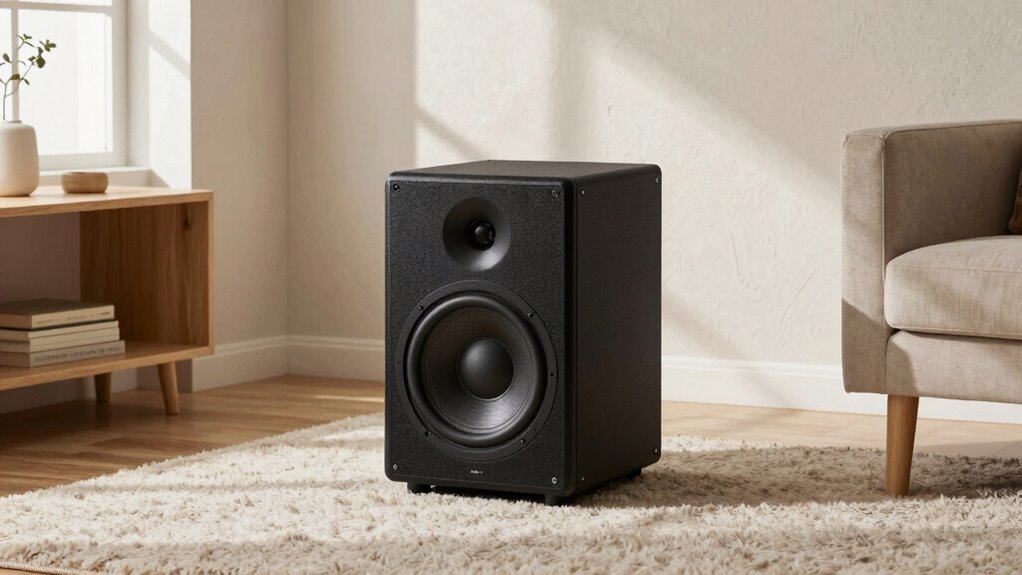
Getting your subwoofer and room ready doesn’t have to take long; with a few quick steps, you can optimize your setup for better bass performance. Start by adjusting your subwoofer placement, avoiding corners or walls that cause excessive resonance. Focus on finding a spot that minimizes bass boominess and enhances clarity. Pay attention to room acoustics—soft furnishings and rugs help absorb unwanted reflections, improving sound quality. You can also experiment with slight angle adjustments to reduce standing waves. These simple tweaks quickly improve bass response without extensive setup. Remember, small changes in placement and room acoustics considerations make a big difference in achieving tight, balanced bass. Incorporating sound treatment techniques can further enhance sound quality and reduce unwanted echoes. Using tools like room measurement apps or acoustic panels can help fine-tune your setup for optimal sound. Additionally, understanding the importance of speaker positioning can lead to more precise bass response. Being aware of soundproofing options can also prevent external noise from interfering with your listening experience. With minimal effort, your listening experience becomes richer and more precise.
How to Perform the 5-Minute Sub Crawl Technique

Once you’ve made initial adjustments to your subwoofer placement, the next step is to fine-tune its position through the 5-Minute Sub Crawl Technique. To do this, start by playing a familiar music track or bass-heavy scene. Then, crawl around your room on your hands and knees, listening carefully for the spot where the bass sounds most balanced and full. This method helps you identify the best subwoofer placement based on your room acoustics, rather than just theoretical positioning. Focus on areas where the bass feels tight and clear without boominess. Remember, this quick crawl is about testing different spots, so take your time moving around to find the sweet spot that delivers the most sound quality. Understanding room acoustics can further enhance your subwoofer setup for optimal bass performance. Being mindful of speaker placement can also significantly improve overall sound quality in your space, especially when considering room dynamics, which influence bass response. Additionally, paying attention to subwoofer positioning can help mitigate common issues like muddy or boomy bass in challenging room environments. Adjusting sound reflections by adding soft furnishings or acoustic panels can also support better bass clarity during your crawl.
Fine-Tune Your Subwoofer for Tight, Balanced Bass
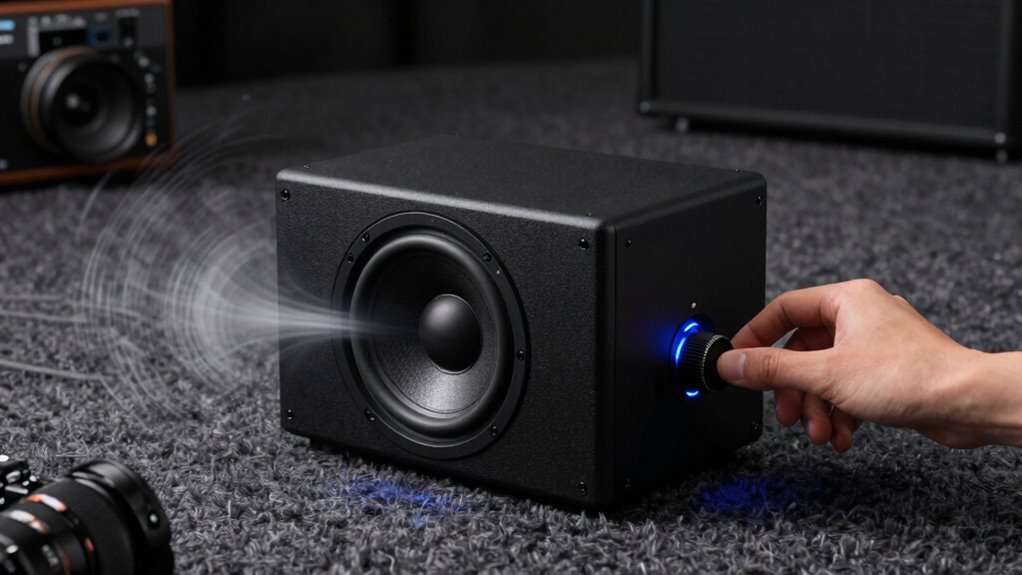
To achieve tight, balanced bass from your subwoofer, focus on fine-tuning its settings and placement with precision. Proper woofer placement can reduce boomy sounds and improve clarity. Pay attention to room acoustics, as reflective surfaces and corners may amplify bass unevenly. Adjust the volume, crossover, and phase controls to match your main speakers and room environment. Moving the subwoofer slightly can dramatically change sound quality—test different spots for ideal performance. Keep these factors in mind:
- Experiment with woofer placement to find the spot with the most balanced sound
- Use room acoustic treatments to minimize reflections and standing waves
- Fine-tune crossover and phase settings for seamless integration with your speakers
- Consider speaker placement and room layout to optimize bass response and overall sound quality
- Be aware of room acoustics to prevent bass issues caused by room reflections and standing waves. Understanding the room’s acoustic properties can help you make more informed placement decisions that enhance bass tightness and clarity. Additionally, employing acoustic panels or diffusers can further improve sound quality by reducing unwanted reflections and resonances.
Avoid Common Mistakes and Keep Your Bass Clear

Avoiding common mistakes is essential to maintain clear, tight bass and prevent muddiness or boomy sounds. One major mistake is ignoring phase cancellation, which occurs when subwoofer signals cancel out each other, causing weak or uneven bass. To prevent this, verify your subwoofer’s phase is correctly set, aligning it with your main speakers. Additionally, room modes can cause certain bass frequencies to resonate excessively, creating boomy spots. To avoid this, test different subwoofer placements and use bass traps or acoustic treatments to minimize these resonances. By paying attention to phase alignment and managing room modes, you can keep your bass tight, punchy, and clear, avoiding muddiness and achieving a balanced, professional sound. Understanding cost factors involved in leasing can also help you budget effectively for audio upgrades or equipment. Properly addressing room acoustics is crucial for consistent sound quality and avoiding unwanted bass issues. Furthermore, implementing room treatment techniques can significantly improve overall sound clarity by reducing unwanted reflections and standing waves. Additionally, considering acoustic measurement tools can help identify problem areas and optimize your setup more precisely.
Frequently Asked Questions
Can the Sub Crawl Method Fix All Types of Boomy Bass?
The sub crawl method can substantially reduce boomy bass, but it might not fix all types. It works best by optimizing subwoofer placement and improving room acoustics, helping you find the spot where bass sounds balanced. However, if your room has complex acoustics or large reflections, additional measures like acoustic panels or EQ adjustments may be necessary. So, while effective, it isn’t a universal fix for every boomy bass issue.
How Often Should I Perform the Sub Crawl for Optimal Results?
Think of your subwoofer like tuning a fine instrument—regular adjustments keep it sounding perfect. For ideal timing, perform the sub crawl every 1-2 months, especially if you notice boomy bass returning. Frequency recommendations depend on your space and listening habits. Keep an eye on your sound quality, and don’t hesitate to do the crawl more often if you detect persistent boominess, ensuring your bass stays balanced and clear.
Does Room Size Affect the Effectiveness of the Sub Crawl Technique?
Room size definitely impacts the effectiveness of the sub crawl technique. Larger rooms with poor acoustics may require more precise subwoofer placement to reduce boomy bass, while smaller spaces can benefit from simple adjustments. Focus on ideal subwoofer placement by experimenting within your room’s acoustics. Moving the sub around helps find the sweet spot, regardless of room size, ensuring your bass sounds balanced and clear after the crawl.
Are There Any Equipment Limitations When Using the Sub Crawl Method?
Equipment limitations can pose troubleshooting challenges when using the sub crawl method, especially if your subwoofer or receiver isn’t compatible or lacks adjustable settings. You might struggle to fine-tune bass response or face distortion issues. To overcome these challenges, verify your equipment supports necessary adjustments, like phase control or crossover settings, and consider upgrading outdated gear for better results. This helps you achieve clearer, balanced bass without the boomy sound.
Can I Combine the Sub Crawl With Other Calibration Methods?
Like blending colors on a palette, you can definitely combine the sub crawl with other calibration methods. This helps refine your speaker placement and optimize acoustics. Use the sub crawl to identify problem areas, then complement it with EQ adjustments or room treatments. Just guarantee your calibration tools don’t conflict, and test thoroughly to achieve smooth, boomy bass without overwhelming your space or sacrificing clarity.
Conclusion
By spending just five minutes on the sub crawl, you’ll notice your bass becomes clearer and more balanced—almost like the room itself is whispering the perfect sound. It’s funny how a simple move can transform your listening experience, proving that sometimes, the smallest adjustments make the biggest difference. So, don’t overlook this quick fix; your perfect bass tone might just be a crawl away, hiding right in your own room.