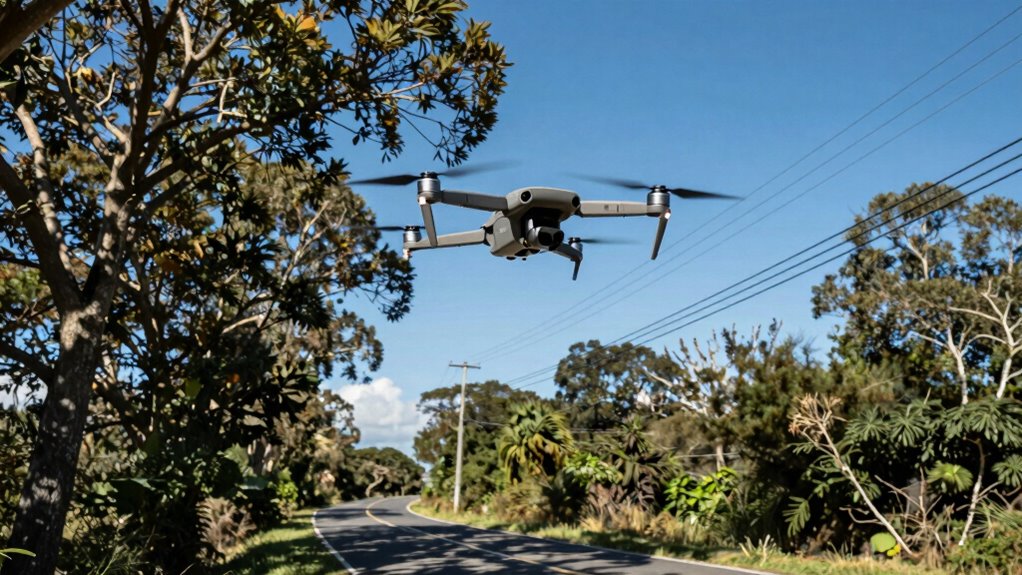

Obstacle avoidance might seem foolproof at first, but real-world challenges quickly expose its limits. Trees, wires, and environmental obstacles can block sensors or confuse algorithms, causing detection errors. Higher speeds give you less reaction time, making small inaccuracies more dangerous. Poor calibration or weak algorithms can lead to false alarms or missed obstacles, risking safety. If you want to understand how to improve reliability in tough conditions, there’s more to uncover below.

Get the latest gadgets delivered free with Prime
- Fast, free delivery on millions of items
- Prime Video, Amazon Music and more included
- Member-only deals all year
Key Takeaways
- Sensor calibration errors can lead to inaccurate obstacle detection, especially in complex environments with trees and wires.
- Algorithms may struggle to interpret signals correctly amid environmental clutter, causing false positives or missed obstacles.
- Increased vehicle speed reduces reaction time, amplifying the impact of sensor inaccuracies and system errors.
- Real-world challenges like obstructions and signal noise require robust algorithms and consistent sensor calibration.
- Regular testing and system refinement are essential to maintain obstacle avoidance reliability in diverse conditions.

Obstacle avoidance systems often seem foolproof when they rely solely on sensors and algorithms, but their effectiveness quickly diminishes when real-world challenges arise. You might think that advanced sensors and sophisticated algorithms guarantee safety, but in practice, issues like sensor calibration errors can cause significant problems. If sensors aren’t properly calibrated, they can produce inaccurate data, leading the system to misjudge distances or miss obstacles entirely. This calibration is vital because even a slight misalignment can result in the system either stopping too often or failing to act when it should. Ensuring sensors are precisely calibrated is a foundational step to improve obstacle detection accuracy.
Beyond calibration, the robustness of the underlying algorithms plays a key role. Many systems rely on algorithms designed to process sensor inputs and make real-time decisions. However, not all algorithms are equally resilient to unexpected environmental changes. When you face complex scenarios—like trees blocking signals, wires hanging low, or rapid changes in speed—the algorithms must adapt quickly and correctly. Weak algorithm robustness means the system may falter in these situations, leading to false positives or missed obstacles. To truly enhance safety, developers need to focus on making these algorithms more resilient, capable of filtering noise and handling ambiguous data without hesitation.
As you increase your vehicle’s speed, the challenge intensifies. The system has less time to react, and small inaccuracies in sensor data can have outsized consequences. High speeds diminish the margin for error, exposing the limitations of both sensor calibration and algorithm robustness. For example, a sensor misreading at high velocity might cause the vehicle to swerve unnecessarily or, worse, fail to stop in time. This is why it’s vital to regularly check sensor calibration and continuously refine algorithms to work effectively at all speeds, especially at the upper limits. Additionally, adaptive systems that can modify their responses based on changing conditions are essential to maintaining safety at high velocities.
Real-world environments are rarely tidy or predictable. Trees, wires, and other obstacles can obscure sensors or create confusing signals. You might think that obstacle avoidance systems are designed to handle these challenges, but they often struggle without proper calibration and robust algorithms. When sensors are miscalibrated or algorithms aren’t prepared for ambiguous inputs, the system’s reliability plummets. To improve performance, you must prioritize consistent sensor calibration, develop more resilient algorithms, and test these systems under diverse conditions. Only then can obstacle avoidance truly become a reliable safeguard, even amidst trees, hanging wires, and high-speed travel.
Additionally, understanding the importance of sensor calibration in maintaining obstacle detection accuracy is crucial for system reliability.
sensor calibration tools for obstacle avoidance systems
As an affiliate, we earn on qualifying purchases.
As an affiliate, we earn on qualifying purchases.
Frequently Asked Questions
How Do Obstacle Avoidance Systems Handle Moving Objects?
You might wonder how obstacle avoidance systems handle moving objects. They use dynamic object tracking to detect and predict the movement of such objects in real time. Sensor fusion combines data from multiple sensors, like cameras and radar, to improve accuracy and reliability. This way, your system adapts quickly, avoiding moving obstacles like cars or pedestrians, even at high speeds, ensuring safer navigation.
Can Obstacle Avoidance Be Disabled in Emergency Situations?
Yes, obstacle avoidance systems often include a manual override or emergency disable feature. If you’re in a situation where the system might hinder your response, you can activate this feature to take full control. Usually, this involves pressing a dedicated button or switch, allowing you to disable the system quickly. Always familiarize yourself with your vehicle’s emergency disable procedures to guarantee you can react promptly during critical moments.
What Are the Maintenance Requirements for Obstacle Sensors?
A stitch in time saves nine, so you should regularly maintain your obstacle sensors. You need to perform sensor calibration periodically to guarantee accuracy and keep an eye on system updates that enhance performance. Clean sensors from dirt and debris, and check for damage. Proper maintenance improves reliability and safety, especially when unexpected obstacles appear. Staying proactive ensures your system functions smoothly and avoids costly repairs down the line.
How Do Weather Conditions Affect Obstacle Detection Accuracy?
Weather conditions greatly impact obstacle detection accuracy. Rain, fog, and snow can interfere with sensor calibration, causing false readings or missed obstacles. Wet surfaces or debris can obscure sensors, reducing their effectiveness. High speeds increase the chance of sensor failure or delayed responses. To guarantee reliable performance, you need to regularly calibrate sensors, account for weather impact, and consider environmental factors that might affect obstacle detection during operation.
Are There Legal Restrictions on Using Obstacle Avoidance Technology?
Yes, there are legal restrictions on using obstacle avoidance technology. You need to guarantee legal compliance by following regulatory standards set by authorities like the FAA or local transportation agencies. Regulations often specify where and how you can deploy these systems, especially in public or shared spaces. Ignoring these rules risks fines, penalties, or safety issues, so always verify that your obstacle avoidance tech adheres to current legal and regulatory standards.
robust obstacle detection sensors for vehicles
As an affiliate, we earn on qualifying purchases.
As an affiliate, we earn on qualifying purchases.
Conclusion
Remember, even the best obstacle avoidance systems aren’t foolproof. Trees, wires, and speed can still catch you off guard. Stay alert, trust your instincts, and don’t rely solely on technology. As the saying goes, “Better safe than sorry,” so always keep your eyes open and be prepared for surprises. Technology can assist, but it’s your awareness that keeps you truly safe on the road. Stay cautious, stay safe.
high-speed obstacle avoidance systems
As an affiliate, we earn on qualifying purchases.
As an affiliate, we earn on qualifying purchases.
environmental noise filtering for sensors
As an affiliate, we earn on qualifying purchases.
As an affiliate, we earn on qualifying purchases.
Halloween Picks
halloween
As an affiliate, we earn on qualifying purchases.