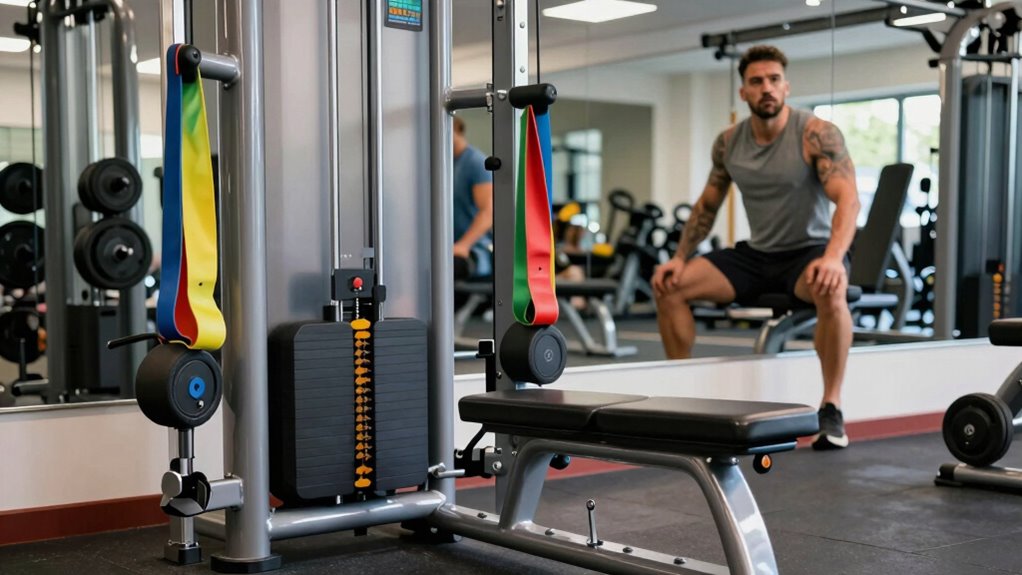

Many people buy home gym machines without understanding their workout split, which can lead to ineffective training and wasted money. They often choose equipment based on appearance or versatility rather than their specific muscle goals, neglecting the importance of targeted muscle isolation. Without knowing how to structure their split, they risk over-relying on generic machines and missing balanced progress. Keep going to discover how understanding your split can make your workouts more effective and your investments worthwhile.
Key Takeaways
- Consumers often purchase versatile machines without understanding their specific training split or targeted muscle groups.
- Many rely on equipment based on appearance or multifunctionality rather than suitability for their workout routine.
- Buyers tend to invest in all-in-one machines, neglecting the importance of muscle isolation and proper split planning.
- Lack of knowledge about their training split leads to selecting equipment that doesn’t support targeted or balanced muscle development.
- Proper understanding of workout split is essential to choose equipment that maximizes effectiveness and aligns with fitness goals.
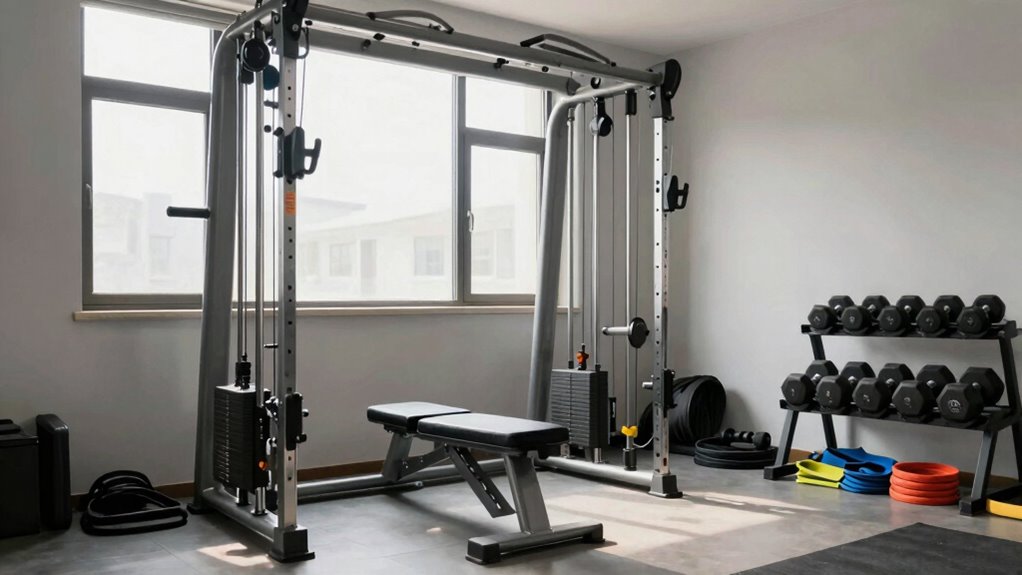
Many people rush to buy the latest home gym machine without first understanding their actual training split, thinking that a single piece of equipment will solve all their fitness needs. They see a shiny, multifunctional machine and believe it can handle everything from strength to cardio, but that’s not always true. If you want to make the most of your workouts, you need to regard your training split and how different exercises target specific muscle groups. Jumping into a purchase without this knowledge often leads to underwhelming results and wasted money.
Choosing the right equipment starts with understanding your training split and muscle targeting needs.
One common mistake is choosing equipment that claims to do everything at once. While equipment versatility is appealing, it can also be limiting if it doesn’t align with your goals. For example, a machine that offers various attachments might seem perfect, but if its design doesn’t support focused muscle isolation, you won’t be able to target specific muscles effectively. Muscle isolation is essential for building strength, correcting imbalances, or focusing on particular areas. Without equipment that allows for precise movement, your progress can stall or become uneven.
Understanding your workout split helps you decide which machine suits your needs. If you’re doing a push-pull-legs routine, for example, you might need a machine that emphasizes compound movements but also allows for targeted isolation exercises. A versatile machine might seem ideal, but if it doesn’t enable you to isolate muscles like your biceps or triceps effectively, it won’t fulfill your needs. Conversely, if your split involves more isolation work, you’ll want equipment that allows for controlled, specific movements. This way, you can focus on strengthening particular muscles without unnecessary complexity. Recognizing the importance of muscle activation and how different tools achieve it is key to effective training. Additionally, understanding training split principles helps you structure your workouts in a way that maximizes recovery and progress.
In addition, knowing your split helps you avoid the trap of over-reliance on a single piece of equipment. While one machine might seem like a holistic solution, it can’t replace the variety of exercises you get from different equipment types. Resistance bands, free weights, and dumbbells offer different angles and ranges of motion that machines often can’t replicate. By understanding your split, you can pick equipment that complements your routine and ensures you’re hitting your muscles from multiple angles, promoting balanced development. Moreover, an understanding of training splits can help you optimize your workout structure for better results.
Ultimately, investing in home gym equipment without understanding your training split is a mistake. It’s better to research what exercises you’ll be doing and the kind of equipment that supports muscle isolation and versatility. This approach ensures your workouts are effective, your muscles are targeted properly, and your investment pays off in real progress.
home gym muscle isolation machines
As an affiliate, we earn on qualifying purchases.
As an affiliate, we earn on qualifying purchases.
Frequently Asked Questions
How Do I Determine My Ideal Workout Split?
To determine your ideal workout split, start with progression planning and consider how your body responds to exercise variation. Think about your goals—whether strength, hypertrophy, or endurance—and tailor your routine accordingly. Experiment with different splits, like push-pull-legs or upper-lower, and track your progress. Adjust based on recovery and performance, ensuring you maintain variety and progressive overload to stay motivated and avoid plateaus.
What Are the Key Benefits of Understanding My Split First?
Knowing your workout split is like having a secret map to muscle targeting success. It helps you maximize exercise variety, ensuring each muscle group gets the right attention without overtraining. By understanding your split, you can craft a balanced routine that boosts progress and minimizes injury risk. This awareness keeps your training purposeful, efficient, and enjoyable, turning your home workouts into a strategic journey toward your fitness goals.
Can a Home Gym Machine Replace a Personalized Workout Plan?
A home gym machine can’t fully substitute a personalized workout plan because equipment variety and workout consistency matter. While a machine offers convenience, it often lacks the versatility to target all muscle groups effectively. A tailored plan ensures you’re working towards specific goals and maintaining consistency. Combining both—using your equipment wisely within a personalized routine—gives you the best chance to see real progress and avoid plateaus.
How Often Should I Change My Workout Split?
You should change your workout split every 6 to 8 weeks. This timing allows your muscles to recover and adapt, preventing plateaus. Regularly adjusting your split keeps training fresh and challenges different muscle groups, optimizing recovery and growth. By monitoring your muscle recovery and training frequency, you can identify when it’s time for a new split, ensuring continuous progress and reducing the risk of overtraining or burnout.
What Signs Indicate I Need to Modify My Training Split?
You should modify your training split if you notice signs of overtraining, like persistent fatigue or declining performance, which hinder muscle recovery. Also, if you stop seeing progress or feel unusually sore and exhausted, it’s time to adjust. Listening to your body is key—when recovery takes longer or you experience frequent injuries, changing your workout split helps prevent overtraining signs and promotes better muscle growth.
targeted strength training equipment
As an affiliate, we earn on qualifying purchases.
As an affiliate, we earn on qualifying purchases.
Conclusion
Just like a painter needs the right brushes before creating a masterpiece, you need to understand your split before choosing your home gym machine. Rushing into a purchase without clarity is like building a house on shifting sands—fragile and unsustainable. Take the time to learn your goals, then select equipment that supports your unique journey. Only then can you craft a workout sanctuary that truly elevates your strength and endurance, standing firm like a timeless monument.
home gym equipment for workout split
As an affiliate, we earn on qualifying purchases.
As an affiliate, we earn on qualifying purchases.
muscle-specific workout machines
As an affiliate, we earn on qualifying purchases.
As an affiliate, we earn on qualifying purchases.