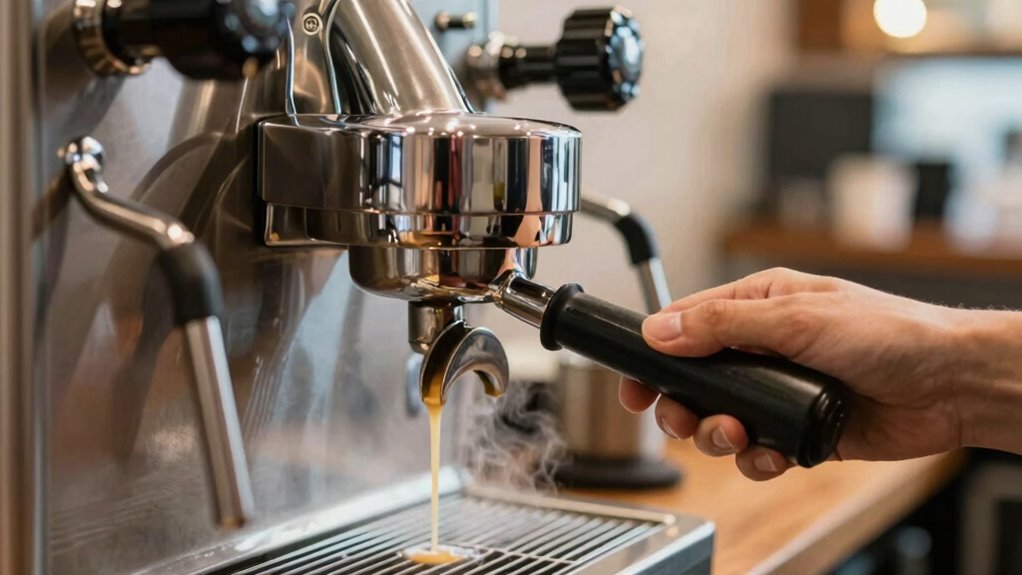

To keep your espresso machine alive for years, regularly descale it using the right products and techniques. Recognize mineral buildup by tasting changes, slow water flow, or visible scale. Use commercial descalers or natural solutions like vinegar or citric acid, and follow proper steps to remove deposits thoroughly. Descaling every 2-3 months, based on usage and water quality, boosts flavor and prolongs your machine’s life. If you want to master the process, keep exploring these expert tips.
Key Takeaways
- Follow manufacturer guidelines for descaling frequency based on water hardness and usage to prevent mineral buildup.
- Use effective descaling products or natural solutions like vinegar or citric acid for thorough cleaning.
- Regularly monitor signs like slow water flow, off-tastes, or visible scale to schedule timely descaling.
- Maintain external cleanliness and use filtered water daily to reduce internal mineral deposits.
- Ensure complete rinsing after descaling and troubleshoot persistent issues to prolong your espresso machine’s lifespan.
Why Descaling Is Essential for Your Espresso Machine
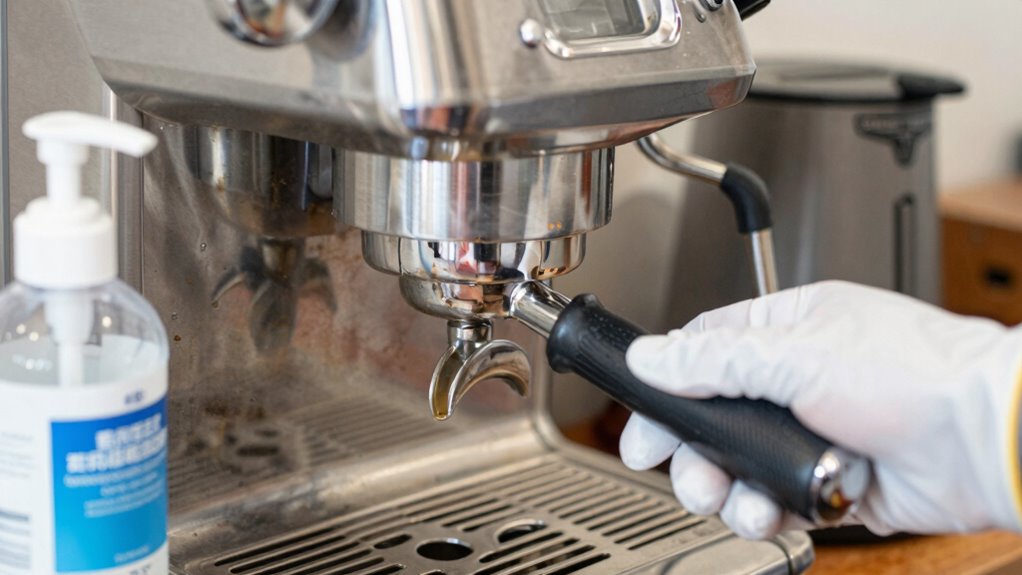
Over time, mineral deposits from hard water can build up inside your espresso machine, which can cause it to malfunction or produce poor-tasting coffee. These deposits often affect the brew temperature, making it harder to reach and maintain the ideal heat needed for a perfect shot. When water hardness is high, minerals like calcium and lime accumulate faster, reducing efficiency and causing blockages. This buildup can lead to inconsistent extraction, bitterness, and weak flavors. Regular descaling removes these deposits, ensuring your machine heats properly and maintains a steady brew temperature. Without descaling, mineral buildup hampers performance and shortens your espresso machine’s lifespan. Keeping it clean not only preserves flavor quality but also prevents costly repairs caused by mineral-related malfunctions. Using proper backup power during descaling or maintenance can help keep your espresso machine functioning smoothly without interruption. Additionally, incorporating proper water filtration can significantly reduce mineral buildup and extend the intervals between descaling. Monitoring your water hardness levels and adjusting your descaling frequency accordingly can further optimize your machine’s longevity and performance. Recognizing the importance of water hardness and monitoring it can help you better plan your maintenance routine for optimal results.
How Do You Recognize Mineral Buildup in Your Espresso Machine?

Mineral buildup in your espresso machine often shows through subtle changes in its performance and the quality of your coffee. You might notice scale formation affecting water flow or temperature. Here are three signs to watch for:
- Longer brewing times — mineral deposits can clog the water pathways, slowing down extraction.
- Inconsistent steam or hot water pressure — scale buildup hampers steam generation, reducing frothing power.
- Altered taste of your coffee — mineral deposits can affect water purity, producing off-flavors.
- Additionally, regular descaling helps prevent the accumulation of scale formation, keeping your machine functioning smoothly. Understanding the causes of mineral buildup can help you take preventative measures. Recognizing these early signs of mineral deposits helps prevent extensive scale buildup, ensuring your espresso remains flavorful and your machine stays in top shape. Paying attention to performance changes and practicing good maintenance routines can help you spot the signs of mineral deposits before they cause major issues, and consider descaling methods to maintain optimal operation.
What Are the Best Descaling Products for Espresso Machines?

Choosing the right descaling product is key to maintaining your espresso machine’s performance. You can opt for effective descaling formulas, natural cleaning alternatives, or commercial solutions depending on your preferences. Let’s explore which options work best for your needs. For example, understanding net worth can help you decide on investing in high-quality descaling products that ensure longevity and optimal performance. Additionally, considering the cost-effectiveness of different descaling options can help you make more sustainable choices that save money over time.
Effective Descaling Formulas
When it comes to effectively descaling your espresso machine, selecting the right products makes all the difference. The best descaling formulas depend on your water quality and how often you need to descale. For instance, if you have hard water, you’ll want stronger solutions that tackle mineral buildup. Here are top options:
- Vinegar Solution – Affordable and natural, great for light mineral deposits.
- Commercial Descaling Products – Designed specifically for espresso machines, often more effective for regular descaling.
- Lemon Juice & Citric Acid Mix – A natural alternative that works well with moderate water hardness.
- Understanding descaling frequency and choosing the right product can extend the lifespan of your espresso machine significantly.
Natural Cleaning Alternatives
Natural cleaning alternatives offer eco-friendly and chemical-free options for descaling your espresso machine. Vinegar and citric acid are popular choices, effectively removing mineral buildup without harsh chemicals. Using vinegar, you can run a mixture of equal parts water and vinegar through your machine to restore ideal performance, helping preserve the coffee aroma and bean freshness. Citric acid, a natural acid found in citrus fruits, is also gentle yet effective; dissolve a teaspoon in a liter of water and run it through the system. These methods not only clean your machine but also prevent flavor contamination, ensuring your coffee retains its rich aroma and fresh taste. Natural descaling solutions are safe, affordable, and environmentally friendly, making them a smart choice for maintaining your espresso machine’s longevity. Proper maintenance helps extend the lifespan of your appliance and keeps your coffee tasting great.
Commercial Descaling Products
To guarantee your espresso machine stays in top condition, using commercial descaling products can be highly effective. These products are specifically formulated to remove mineral buildup without harming your machine’s components, helping preserve coffee flavor and extend machine longevity. When choosing a descaler, consider these top options:
- Hoffmann’s Descaler – Known for fast, thorough descaling that maintains ideal flavor.
- Urnex Dezcal – A food-grade option trusted by professionals for gentle, efficient cleaning.
- De’Longhi Decalcifier – Designed for De’Longhi machines, ensuring compatibility and protection.
Using the right commercial descaling product will keep your espresso tasting fresh and your machine running smoothly for years. Incorporating regular maintenance routines—including descaling—can make the process feel less intimidating and more manageable, ensuring long-term performance. Additionally, understanding machine components and their susceptibility to mineral buildup can help you target your cleaning efforts more effectively. Regular descaling also prevents clogged internal parts, which can lead to more costly repairs if neglected. Properly maintaining your machine with these products can also help preserve the machine’s warranty and ensure consistent espresso quality over time.
Step-by-Step: How to Descale Your Espresso Machine Properly

Descaling your espresso machine is an essential maintenance step that helps guarantee peak performance and extends its lifespan. Start by making certain the water quality is suitable; use filtered water if possible to reduce mineral buildup. Turn off and unplug your machine, then remove the water reservoir. Fill it with a descaling solution or a mixture of equal parts water and white vinegar. Run the machine without a coffee pod, allowing the solution to pass through the system. After about 20 minutes, turn off the machine and let it sit for 15-30 minutes to dissolve mineral deposits. Rinse the reservoir thoroughly, refill with clean water, and run multiple cycles to flush out any remaining solution. Proper descaling maintains machine durability and ensures consistently great espresso. Regular descaling also prevents mineral buildup, which can damage internal components over time. Incorporating routine maintenance like descaling into your cleaning schedule will help keep your espresso machine functioning optimally for years. Additionally, choosing a high-quality descaling solution can improve the effectiveness of the process and protect your investment. Using proper descaling techniques can also prevent clogged valves, ensuring smooth operation with each brew.
How Often Should You Descale Your Espresso Equipment?
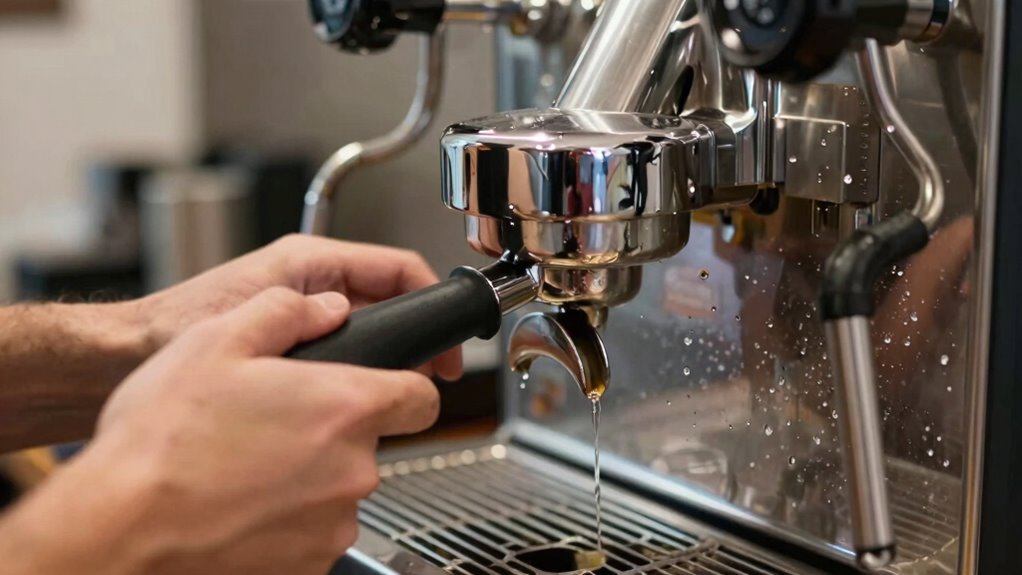
How often you need to descale your espresso machine depends on how frequently you use it and the water quality in your area. Look out for signs like decreased pressure or changes in taste, which indicate it’s time to descale. Always check your manufacturer’s recommendations to keep your equipment running smoothly. Additionally, using cleaning solutions designed specifically for espresso machines can help maintain optimal performance and extend the life of your device. Regularly monitoring your water hardness levels can also provide insight into how often descaling is necessary. Being aware of your water quality can help you develop a consistent descaling schedule tailored to your needs.
Frequency Based On Usage
The frequency at which you should descale your espresso machine largely depends on how often you use it. If your usage is high, mineral buildup happens faster, shortening your machine’s lifespan. Conversely, infrequent use can lead to stagnant water and scale accumulation. Consider these factors:
- Water quality: Hard water increases the need for more frequent descaling to prevent mineral deposits.
- Usage volume: Daily use requires descaling every 1-3 months, while occasional use might extend that to 3-6 months.
- Machine longevity: Regular descaling preserves your machine’s performance and durability, saving costs on repairs or replacements.
Signs You Need Descaling
As you track your espresso machine’s usage schedule, paying attention to specific signs can help you spot when descaling is overdue. One clear indicator is a change in water quality—if your shots taste off or the water flows slower, mineral deposits may be building up. Notice if your machine takes longer to heat or if the steam wand isn’t functioning as efficiently. These signs often point to mineral deposits accumulating inside the machine, hampering performance. Additionally, visible scale around the water reservoir or on the machine’s exterior suggests it’s time to descale. Regularly monitoring these signs guarantees you stay ahead of costly repairs and maintain ideal espresso quality. Don’t wait until performance drops; stay vigilant for these key clues.
Manufacturer Recommendations
Manufacturers’ recommendations provide a clear schedule for descaling your espresso machine, ensuring ideal performance and longevity. Depending on your water quality and usage, they typically advise descaling every 2 to 3 months. If your water is hard, you may need to descale more frequently. Following the recommended maintenance schedule helps prevent mineral buildup that can impair function. To determine your ideal frequency, consider these factors:
- Water hardness—hard water requires more frequent descaling.
- Usage volume—heavily used machines need regular attention.
- Manufacturer guidelines—always check the manual for specific advice.
Sticking to these recommendations keeps your machine running smoothly and extends its lifespan, saving you time and money in the long run.
Common Mistakes to Avoid When Descaling
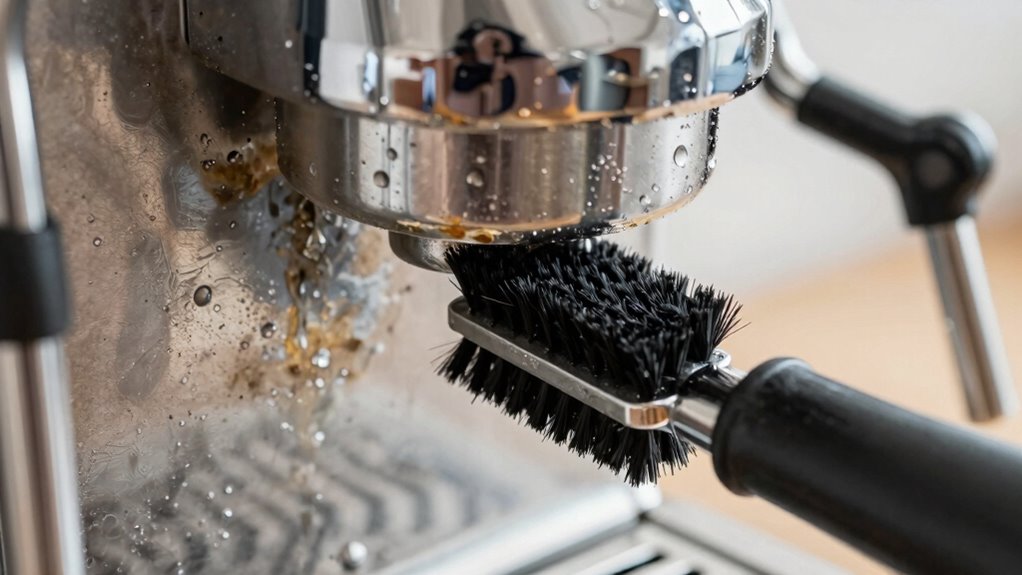
Have you ever hurried through the descaling process only to find your espresso machine still struggles to brew properly? One common mistake is ignoring water quality; using tap water high in minerals accelerates buildup and requires more frequent descaling. Rushing the process or skipping steps can leave residue behind, causing clogs and poor performance. Another mistake is neglecting proper descaling frequency—descaling too infrequently lets scale accumulate, harming your machine. Conversely, descaling too often isn’t necessary unless your water is very hard. Always follow manufacturer guidelines for timing based on your water hardness. Also, avoid mixing different descaling products or using harsh chemicals. Properly timed, thorough descaling guarantees your machine stays in top shape longer, delivering the best espresso every time.
Tips for Maintaining Your Espresso Machine Between Descalings
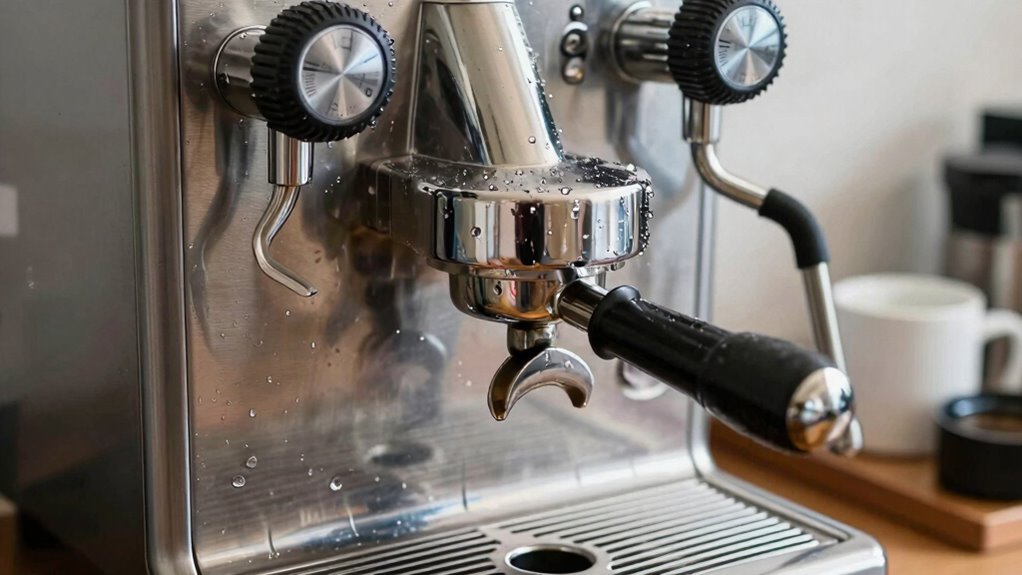
To keep your espresso machine running smoothly between descalings, make a habit of wiping down external surfaces regularly. Use filtered water daily to reduce mineral buildup and avoid unnecessary scaling. Also, check for leaks often to catch issues early and prevent damage.
Regularly Wipe External Surfaces
Regularly wiping down the external surfaces of your espresso machine helps keep it looking clean and functioning properly. External maintenance is key to preventing dust, coffee splashes, and grime from building up. For effective surface cleaning, follow these tips:
- Use a damp, soft cloth to wipe down all exterior parts daily, avoiding abrasive cleaners.
- Pay attention to buttons, knobs, and the steam wand, ensuring no residue remains.
- Dry surfaces thoroughly to prevent water spots and corrosion.
This routine not only maintains your machine’s appearance but also reduces the risk of dirt interfering with internal components. Consistent surface cleaning prolongs your machine’s life and keeps it operating smoothly between descalings. A clean exterior is a simple, essential step in overall espresso machine care.
Use Filtered Water Daily
Using filtered water daily is one of the simplest ways to protect your espresso machine from mineral buildup and internal damage. Poor water quality often contains minerals that can accumulate as deposits inside your machine, reducing efficiency and lifespan. By switching to filtered water, you minimize the risk of mineral deposits forming in the boiler and tubing, which can cause clogs and corrosion over time. This small change helps keep your machine’s internal components cleaner, ensuring better performance and flavor extraction. Consistently using filtered water also reduces the frequency of descaling, saving you time and effort. Remember, the cleaner the water you use, the healthier your espresso machine stays, and the longer it will serve you delicious coffee.
Check for Leaks Often
Since leaks can silently damage your espresso machine over time, it’s essential to check for them frequently. Regular leak detection helps prevent costly repairs and extends your machine’s lifespan. Start by inspecting seals for cracks or wear, as faulty seals are common leak sources. Next, look for water drips or pooling around the base or behind the machine, which signals hidden leaks. Finally, listen for hissing or dripping sounds during operation that could indicate internal leaks.
To stay ahead:
- Perform a thorough seal inspection monthly.
- Check for water pooling or drips daily.
- Test the machine’s pressure and listen for unusual noises.
Consistent leak detection keeps your espresso machine in top shape, ensuring smooth brewing and longevity.
Troubleshooting Descaling Problems and Persistent Issues

When descaling your espresso machine doesn’t resolve clogs or persistent mineral buildup, troubleshooting becomes essential. Mineral deposits can accumulate deep within the machine’s internal components, especially if your cleaning frequency is too low. First, double-check that you’ve thoroughly followed the descaling instructions, ensuring the solution reaches all parts of the system. If issues persist, consider performing a manual flush or using a soft brush to dislodge stubborn deposits. Sometimes, mineral buildup can be stubborn or uneven, requiring you to repeat the descaling process or use a different descaling product. Regular cleaning frequency helps prevent these issues, but if you notice persistent problems, it might be time to inspect for blockages or mineral buildup in hard-to-reach areas.
How Descaling Improves Your Coffee’s Taste and Extends Machine Life
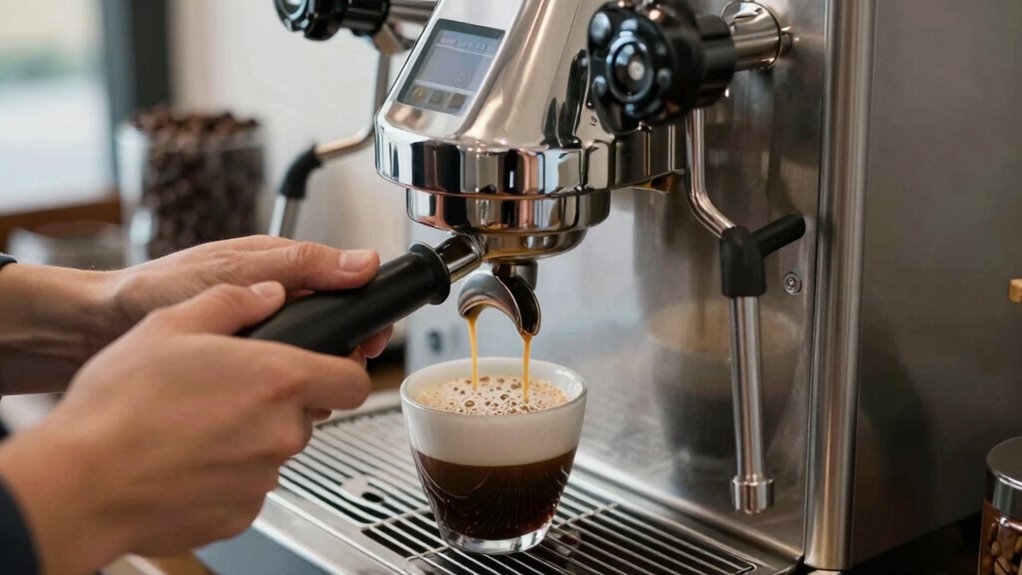
Regularly descaling your espresso machine not only keeps it running smoothly but also considerably enhances the flavor of your coffee. When mineral deposits build up due to water quality, they can cause a metallic or bitter taste. Removing these deposits improves water flow and temperature consistency, directly impacting your brew’s taste.
Here are three ways descaling benefits you:
- Improves flavor clarity – Eliminates mineral buildup that dulls coffee’s natural flavors.
- Enhances machine longevity – Prevents corrosion and damage caused by mineral deposits.
- Maintains peak performance – Ensures consistent water temperature and pressure for a perfect shot every time.
Expert Tips for Long-Term Espresso Machine Care

To keep your espresso machine in top condition over the years, consistent maintenance is essential. Pay attention to water quality, as hard water causes mineral deposits that can clog components and reduce performance. Use filtered water whenever possible to minimize mineral buildup. Regularly descale your machine based on water hardness and usage. Store your machine in a dry, clean place to prevent mold and corrosion. Check seals and gaskets annually for wear. Here’s a quick guide:
| Tip | Why it matters | When to do it |
|---|---|---|
| Use filtered water | Reduces mineral deposits | Every few months |
| Regular descaling | Prevents clogs and damage | Every 2-3 months |
| Clean water reservoir | Stops bacteria growth | Weekly |
| Inspect seals and gaskets | Maintains pressure and flavor | Annually |
| Store in a dry place | Avoids corrosion and mold | Always when not in use |
Frequently Asked Questions
Can Descaling Damage My Espresso Machine if Done Incorrectly?
Yes, if you don’t follow proper procedures, descaling can damage your espresso machine. Using the wrong cleaner, too much, or not rinsing thoroughly can harm internal parts and reduce machine longevity. To prevent this, stick to recommended cleaning frequency and descaling instructions. Proper descaling preserves your machine’s performance and ensures it stays in good shape for years to come. Always read your manufacturer’s guidelines for safe, effective descaling.
Are Natural or Homemade Descaling Solutions Effective and Safe?
Natural or homemade descaling solutions are effective and safe when used correctly, making DIY solutions a popular choice. You can use vinegar or lemon juice as chemical alternatives to commercial descalers, but guarantee you dilute them properly to prevent damage. Always follow your machine’s instructions and rinse thoroughly afterward. This way, you protect your espresso machine and keep it functioning at its best without risking harm from improper descaling.
How Can I Tell if My Descaling Process Was Successful?
Think of your descaling as a health check-up; if your machine runs smoothly and the water tastes fresh, the process was successful. You’ll notice improved machine safety and better espresso quality. To confirm, run a short brew cycle—if water flows without blockages or strange noises, and you haven’t needed frequent descales, then your descaling frequency is right. Regular maintenance keeps your espresso machine happy and in top shape.
Is Descaling Necessary for All Types of Espresso Machines?
Yes, descaling is necessary for most espresso machines because water quality affects machine longevity. Mineral buildup from hard water can clog parts and reduce performance. Regular descaling helps prevent damage, ensuring your machine runs smoothly and lasts longer. Even if your water isn’t very hard, occasional descaling is a good idea to maintain ideal brewing and protect your investment over time.
What Signs Indicate I Need to Replace Parts After Descaling?
If you notice leaks, strange noises, or inconsistent water flow after descaling, it’s time to contemplate replacing parts. Regular machine maintenance and adhering to recommended descaling frequency help prevent issues. Keep an eye on your machine’s performance, and don’t ignore signs of wear. Replacing worn parts ensures your espresso machine stays in top shape and prolongs its lifespan, making your daily coffee routine smoother.
Conclusion
By mastering descaling, you’re not just protecting your espresso machine—you’re revealing its full potential. Each session keeps it running smoothly, ensuring every sip is perfect. But what if you ignore those mineral deposits just a little longer? The risks grow, and your coffee’s quality could suffer. Stay vigilant, follow these steps, and keep your machine alive for years. Because in the end, the secret to great espresso might just depend on the next descaling—are you ready?