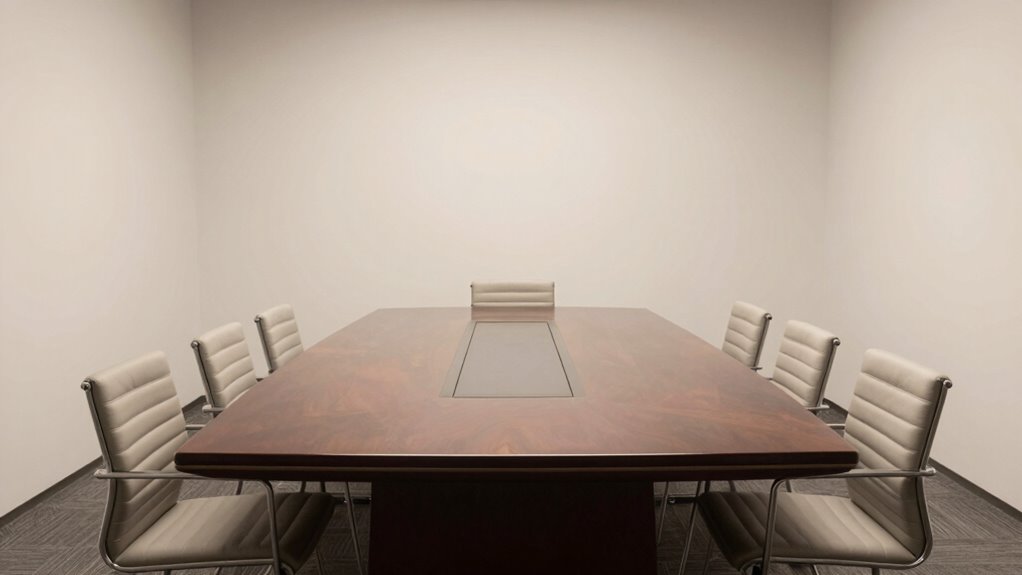
A conference table in a small room tends to dominate the space, making it feel more cramped and confined. When placed in the center, it visually overwhelms the room, reducing the sense of openness. Poor lighting and clutter can make the space seem even smaller by casting shadows or blocking pathways. Strategic furniture placement and lighting can help, but if you want to understand how to maximize your space, there’s more to explore on this topic.
Key Takeaways
- Large conference tables dominate small spaces, visually overwhelming and reducing perceived openness.
- Central placement of big tables blocks natural visual flow and makes the room feel cramped.
- Overly substantial furniture creates shadows and emphasizes boundaries, shrinking perceived space.
- Cluttered arrangements with chairs and accessories add to a crowded, confined atmosphere.
- Insufficient or poorly directed lighting can cast shadows, making the room seem even smaller.
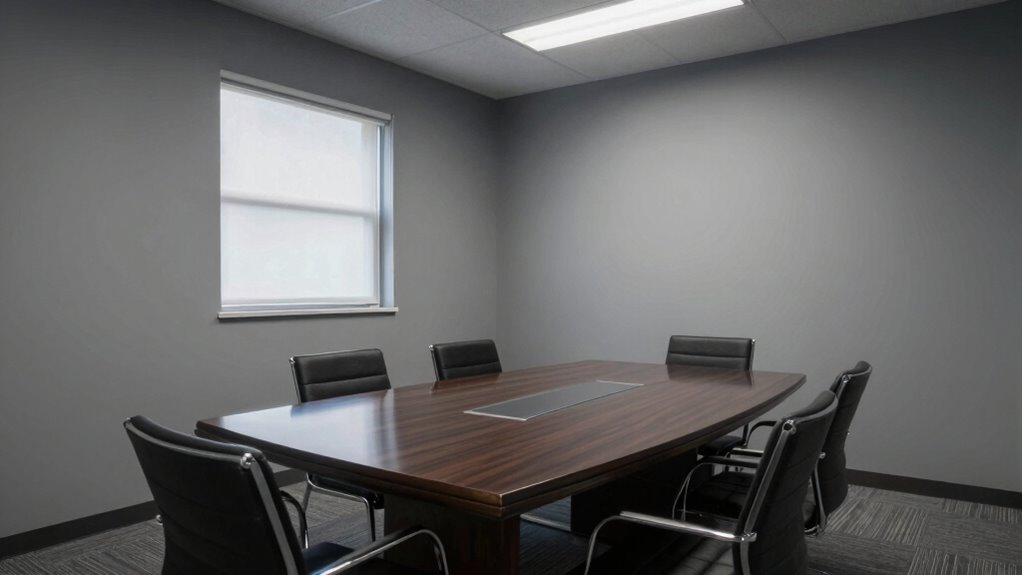
When you place a large conference table in a small room, it often emphasizes the space’s limitations rather than its potential. The size of the table can dominate the area, making the room feel cramped and confined. But it’s not just the table’s dimensions that contribute to this effect; the way you handle lighting effects and furniture placement also plays a vital role. If the lighting is too dim or uneven, it can cast shadows that make the room seem smaller and more enclosed. Conversely, bright, well-placed lighting opens up the space, but if it’s overly harsh or poorly directed, it can accentuate the room’s boundaries, emphasizing how tight the space really is. Proper lighting should be soft yet sufficient, evenly dispersed across the room, and free of glare that can make the space feel oppressive. Additionally, spatial perception can be influenced by subtle design choices, which can help create a more open feeling even in small rooms. For example, using visual illusions like certain furniture arrangements or reflective surfaces can further enhance the perception of space. Furniture placement is equally significant. When you position a large conference table smack in the center of a small room, you naturally reduce the visual flow and leave little room to breathe around it. This setup can make the space feel even more restricted, as your eye perceives the room as overwhelmed by the table rather than open and inviting. Instead, consider positioning the table closer to a wall or corner, which can create a sense of openness and make the room feel larger. You might also think about using smaller or more streamlined furniture pieces that complement the table without overpowering the space. Keeping pathways clear and avoiding clutter around the table helps maintain an airy, spacious feel. Additionally, the arrangement of other furniture and accessories influences the perception of size. Overcrowding the room with extra chairs, cabinets, or decorative items can make it feel cluttered and small. Instead, opt for minimalism—fewer pieces, more open space. Mirrors can also help, as they reflect light and create an illusion of depth, making the room appear larger than it really is. When you combine thoughtful furniture placement with strategic lighting effects, you can counteract the natural tendency of a large conference table to shrink the perceived space. This approach allows you to make the most of a small room, turning it into a functional, welcoming environment rather than a cramped, oppressive one.

Folding Conference Room Tables with Wheel -Modern Large Modular Conference Table,Stackable Flip Top Training Meeting Table,Space Saving,for Seminar,Office,Classroom(Walnut,63IN,2pack)
🏆【Space Saving Folding Conference Table 】: Say goodbye to bulky, space-consuming traditional conference room tables! Whether for startups,…
As an affiliate, we earn on qualifying purchases.
As an affiliate, we earn on qualifying purchases.
Frequently Asked Questions
How Can I Choose a Conference Table for a Small Room?
Choose a compact conference table that emphasizes color coordination to blend seamlessly with your room’s decor, creating a sense of openness. Look for ergonomic features like adjustable height and rounded edges to maximize comfort without clutter. Prioritize sleek designs and light finishes that reflect light and make your space feel larger. By focusing on these elements, you’ll find a table that enhances your small room’s functionality while maintaining a spacious feel.
Are There Space-Saving Conference Table Designs?
Yes, there are space-saving conference table designs. You should consider portable options that you can easily move and store when not in use. Modular configurations are also great because they let you customize the table size and shape based on your room’s available space. These designs maximize functionality without overwhelming your small room, making meetings more comfortable and efficient without sacrificing precious space.
What Materials Make Conference Tables Look Less Bulky?
Ironically, choosing materials like glass or sleek metal makes conference tables seem less bulky. Light material textures and neutral color schemes reflect more light, creating an illusion of openness. These choices help small rooms feel larger, as transparent or shiny surfaces don’t dominate the space. So, go for glass tops or slim metal frames with subtle hues to make your conference table blend seamlessly, enhancing roominess instead of shrinking it.
How Do I Maximize Space Around a Conference Table?
To maximize space around a conference table, keep the area clear of clutter and choose sleek, space-efficient furniture. Use decorative accents like wall art or plants to draw attention upward, creating an illusion of height and openness. Implement lighting strategies, such as wall-mounted fixtures or pendant lights, to brighten the room without taking up table space. These tips help make your small room feel larger while maintaining a professional, inviting atmosphere.
Can Conference Table Shape Influence Room Perception?
A round table opens up space, making the room feel larger and more inclusive, while a rectangular or square table can emphasize the room’s boundaries, making it seem smaller. Your choice of table shape influences room perception—curved edges soften the space, creating an airy feel, whereas sharp corners can make the room appear more confined. So, selecting the right table shape helps you manipulate how spacious your room feels.

Tribesigns 5FT Small Conference Table for 4 to 6, Modern Meeting Table with Strong Metal Frame for Office Meeting Conference Room
Exude Modern: The grey finish tabletop lends an air of modern to your conference room, impressing clients and…
As an affiliate, we earn on qualifying purchases.
As an affiliate, we earn on qualifying purchases.
Conclusion
So, next time you’re choosing a conference table, remember it can make a small room feel even tighter. But don’t let that discourage you—opt for sleek, lightweight designs or glass tables to create an open, airy vibe. With a few smart choices, you can make your space feel larger and more inviting, even if the room itself isn’t big. Small rooms can still feel spacious when you choose the right furniture.

43.3in-59in Extendable Round Conference Table for 4-6 People,Wooden Oval Meeting Room Table with Removable Leaves,Space Saving,Office Table with Storage Shelf for for Office Conference Room
Spacious and comfortable design: This round conference table adopts a retractable design. By adding an extension board in…
As an affiliate, we earn on qualifying purchases.
As an affiliate, we earn on qualifying purchases.
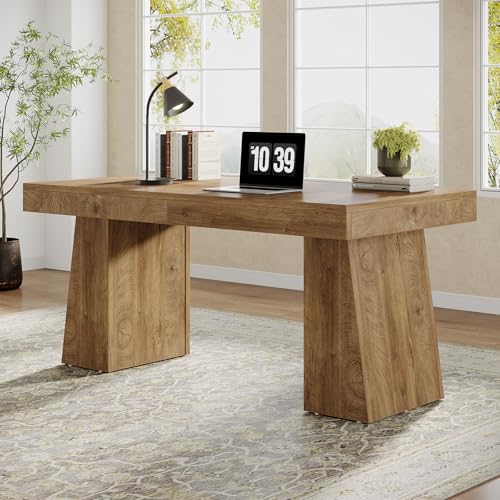
Tribesigns 55" Executive Desk, Wooden Office Desk with Double Pedestal, Modern Simple Computer Writing Table for Home Office, Light Brown
Sleek, Modern Design: A unique double-trapezoid base and minimalist desktop give this executive desk a sophisticated, professional presence…
As an affiliate, we earn on qualifying purchases.
As an affiliate, we earn on qualifying purchases.