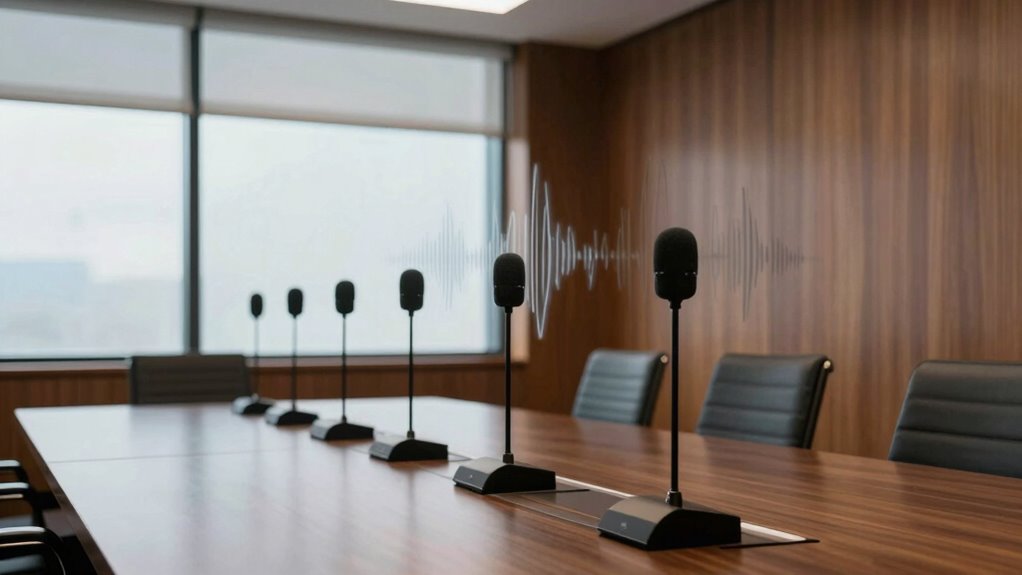

Conference mic arrays don’t fix bad room acoustics; instead, they reveal them clearly. They are designed to pick up sound in ideal conditions, but in poor acoustics, they amplify echoes and reverberations. Hard surfaces bounce reflections wildly, making it harder to distinguish speech. Echo cancellation features can struggle with complex reflections, sometimes distorting sound. To truly improve audio quality, addressing room materials and acoustics is essential—if you want better clarity, keep exploring what causes these issues.
Key Takeaways
- Microphone arrays amplify room reflections, revealing poor acoustics instead of masking them.
- They struggle in spaces with hard surfaces, increasing echo and reverberation issues.
- Effective echo cancellation relies on good room acoustics; bad environments hinder performance.
- Without acoustic treatment, microphone arrays can produce muddy, indistinct audio.
- Optimizing room acoustics is essential for microphone arrays to deliver clear, high-quality sound.
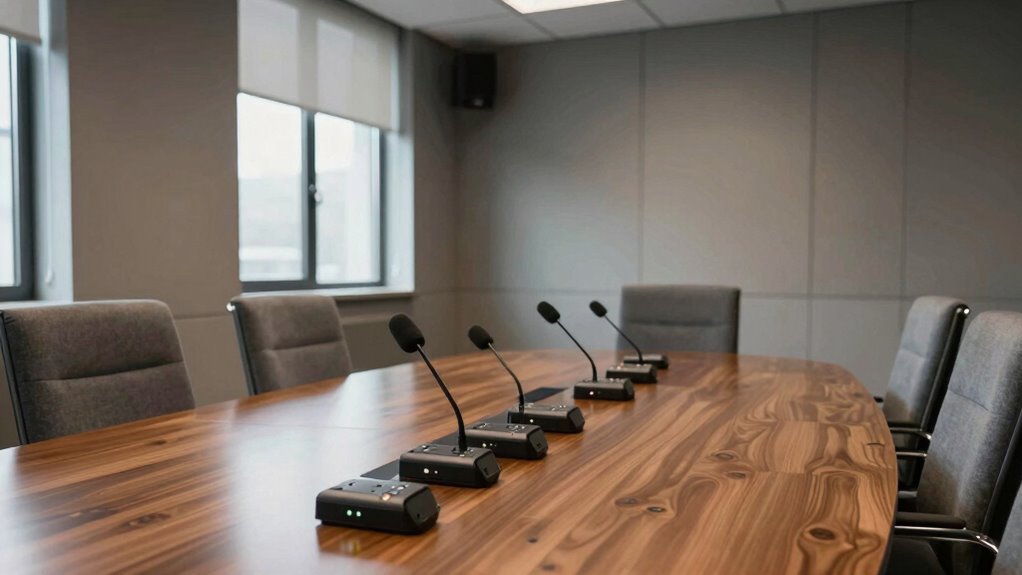
While conference microphone arrays can improve sound pickup in ideal conditions, they often reveal existing flaws in room acoustics instead of hiding them. When you set up these arrays in a space that’s not acoustically optimized, you might notice that they amplify your problems rather than fix them. Echoes and reverberations become more noticeable, making speech harder to understand rather than clearer. This is because microphone arrays, while advanced, are designed to pick up sound from specific directions and reduce ambient noise. But if the room’s acoustics are poor, these arrays will simply capture and amplify reflections and echoes, creating a muddy, indistinct audio experience.
Mic arrays reveal room flaws, amplifying echoes if acoustics aren’t optimized.
You might think that echo cancellation features in these systems would resolve this issue, but they only do so much. Echo cancellation algorithms are effective in removing predictable, delayed sound signals, but they struggle when reflections are complex or persistent. Instead of cleaning up your audio, the system may produce strange artifacts or cut out parts of speech altogether. What you’re left with is a distorted sound that hampers communication rather than enhances it. If your room has hard surfaces like glass or tile, the reflections bounce around wildly, overwhelming the system’s ability to differentiate between direct speech and echo. The result is a loss of sound clarity, making it hard for participants to focus or follow conversations.
To truly improve audio quality, you need to address the room’s acoustics directly. Properly treating the space with sound-absorbing panels, carpets, or acoustic ceiling tiles reduces reflections and echoes at their source. This creates a more controlled environment where microphone arrays can perform at their best. When the acoustics are optimized, echo cancellation works more effectively, and sound clarity improves dramatically. You’ll notice that speech sounds more natural, voices are more distinct, and the overall audio experience feels less fatiguing. Additionally, understanding the importance of room acoustics can help prevent costly equipment upgrades that don’t address the root issue. Recognizing the impact of room materials on sound behavior can guide better choices for acoustic treatment. Improving the room’s sound environment can significantly enhance the effectiveness of your conferencing setup without additional hardware.
In essence, conference mic arrays aren’t magic wands that fix poor acoustics. They’re tools that can enhance sound pickup when used in the right environment. But if you ignore room acoustics, you’ll only be exposing the limitations of your setup. Improving room acoustics isn’t just about better sound; it’s about making your entire conferencing system work as intended. Only then will you experience the full benefits of advanced microphone arrays—clear, intelligible communication that feels effortless.
Frequently Asked Questions
How Can I Improve Room Acoustics Without Changing the Layout?
You can improve room acoustics without changing the layout by adding sound absorption materials like acoustic panels or rugs to reduce echo and noise. Incorporate acoustic diffusion elements such as diffusers or textured surfaces to scatter sound waves evenly. These adjustments help balance sound quality, minimize reflections, and create a clearer environment for conversations and recordings, making your space more acoustically pleasant without rearranging furniture or structural changes.
What Are the Signs of Poor Room Acoustics During a Conference?
During a conference, you’ll notice echo issues that make speech hard to understand and reduce sound clarity. If speakers’ voices seem to bounce around or overlap, that’s a clear sign of poor room acoustics. You might also hear muffled or distorted audio, making it difficult for participants to follow the discussion. These signs indicate that the space needs acoustic treatment to improve sound quality and guarantee everyone can hear clearly.
Do Different Microphone Types Handle Acoustics Better?
You’ll find that different microphone types handle acoustics better, especially when considering their sensitivity and polar pattern. Directional mics, like cardioids, focus on sound sources and reject background noise, making them more resilient in tricky spaces. Omnidirectional mics pick up more room ambiance, which can amplify issues. So, choosing the right microphone type depends on your room’s acoustics and your need for clarity—sometimes, it’s a matter of hitting the right note.
How Do Room Acoustics Affect Overall Conference Audio Quality?
Room acoustics considerably impact your conference audio quality by causing sound reflections and echo, which can muddle clarity. When sound bounces off walls and surfaces, it creates echo that hampers speech intelligibility. Poor acoustics also make echo reduction difficult, leaving your audio distorted or hard to understand. So, even with advanced mic arrays, if your room doesn’t minimize sound reflection, your conference audio will suffer, reducing overall effectiveness.
Can Acoustic Treatments Be Hidden or Aesthetically Integrated?
Think of acoustic treatments as the hidden heroes of your conference room. Yes, concealed acoustic panels can seamlessly blend into your space, offering aesthetic soundproofing without sacrificing style. You can hide them behind walls, within ceiling tiles, or paint them to match decor, turning soundproofing into a design feature. With clever placement and design, you’ll improve sound quality while keeping your room looking sleek and professional.
Conclusion
You might think advanced mic arrays can fix poor room acoustics, but they really just highlight the problem. Instead of relying on technology alone, consider the room’s design and acoustics early on. Good sound quality isn’t about hiding flaws; it’s about addressing them head-on. When you understand this, you realize that investing in proper room treatment and layout creates a much clearer, more natural audio experience—proving that technology alone isn’t the answer.