
When you see the ‘AI PC’ label, you’re paying for a combination of hardware upgrades like specialized processors and increased RAM, along with advanced software features such as AI-driven voice recognition and image processing. These systems also rely on cloud services for updates and continuous improvements. The real value depends on how well hardware and software work together to boost performance and efficiency. Want to understand the hidden costs and what truly makes these machines stand out?

Get the latest gadgets delivered free — and shop member deals
- Fast, free delivery on millions of items
- Access to Prime Big Deal Days deals on October 6–7
- Prime Video, Amazon Music and more included
Key Takeaways
- You’re paying for specialized hardware like AI accelerators that boost processing speed for AI tasks.
- Software features with embedded AI improve user experience through enhanced recognition and automation.
- The integration of hardware and software enhances system responsiveness and enables real-time insights.
- Subscription services and cloud-based tools support ongoing AI updates and advanced capabilities.
- The value depends on how well hardware and software work together to meet your specific AI needs.
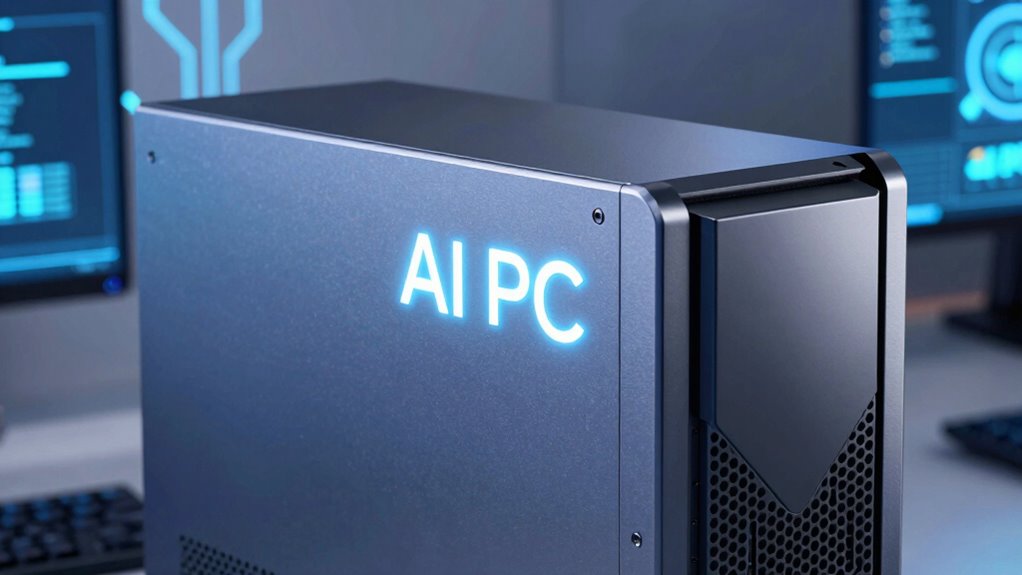
Have you ever wondered what exactly you’re paying for when you see the “AI PC” label on a computer? The label promises advanced features and smarter performance, but it’s worth digging into what that really means. At its core, an AI PC often involves hardware upgrades that enable it to handle artificial intelligence tasks more efficiently. These upgrades might include specialized processors, such as AI accelerators or neural processing units, which are designed to perform complex calculations faster than standard CPUs. You might also see increased RAM or faster storage options, all aimed at optimizing the machine’s ability to process large datasets and run AI-driven applications smoothly.
But hardware alone isn’t the whole story. The true value of an AI PC lies in its software integration. Manufacturers often embed AI algorithms directly into the operating system or specific applications, enabling features like smarter voice recognition, improved image processing, or more intuitive user interfaces. When you buy an AI PC, you’re paying not just for the physical components but for a seamless integration of software that leverages AI to make your experience more responsive and personalized. This integration often involves pre-installed AI tools or cloud-based services that work behind the scenes, constantly learning from your usage patterns to optimize performance and functionality.
It’s important to remember that an AI PC isn’t just about raw power; it’s about how well the hardware and software work together. You’re paying for a system that’s designed to adapt and improve over time, thanks to sophisticated software integration. This means your AI PC can automate routine tasks, enhance creative workflows, or provide real-time insights, all made possible by the combination of upgraded hardware and intelligent software. Additionally, the integration of specialized AI hardware components can significantly boost the system’s efficiency in processing AI tasks. Furthermore, the inclusion of proprietary AI frameworks or subscription-based cloud services** can also contribute to ongoing updates and enhancements, ensuring the machine remains effective over time. However, this also means that part of the cost covers proprietary AI frameworks or subscription-based cloud services that keep the machine’s AI capabilities** up-to-date and effective.
While the label might suggest cutting-edge technology, it’s essential to understand what you’re getting. Are the hardware upgrades substantial enough to support your needs? Does the software integration genuinely enhance your workflow or daily activities? These are questions to ask when evaluating an AI PC. Ultimately, you’re investing in a system that promises smarter operation, but the real value depends on how well the hardware and software work together to deliver those AI-driven features in practice.
As an affiliate, we earn on qualifying purchases.
Frequently Asked Questions
How Does the AI PC Label Impact Pricing?
The AI PC label boosts pricing perception by emphasizing advanced AI branding, making consumers think they’re getting cutting-edge technology. This label often justifies higher costs, as buyers associate AI features with superior performance. You might pay a premium for the AI branding, even if the actual specs don’t differ much from non-AI PCs. Ultimately, the label influences your perception of value, encouraging you to spend more on what seems like innovative technology.
Are AI PCS More Reliable Than Traditional PCS?
AI PCs aren’t necessarily more reliable than traditional PCs, but their AI integration offers benefits like smarter troubleshooting and adaptive performance. Reliability factors depend on the build quality, hardware components, and software management. While AI can predict and prevent issues, it’s not a guarantee of enhanced reliability. You need to evaluate how well the AI features are integrated and maintained, ensuring they complement rather than complicate your experience.
What Specific AI Features Are Included in an AI PC?
You get AI integration and hardware optimization in an AI PC. These features enable the system to learn and adapt to your usage, improving performance over time. AI integration includes smart algorithms that enhance tasks like gaming, video editing, and multitasking. Hardware optimization ensures your components work seamlessly together, providing faster response times and better efficiency. Fundamentally, you’re paying for a system designed to intelligently boost your computing experience.
Can I Upgrade an AI PC Later?
Yes, you can upgrade an AI PC later. About 65% of AI PCs are designed with hardware compatibility in mind, making upgrades feasible. You can improve performance by swapping out GPUs or adding RAM, depending on your system’s upgrade options. Just check your specific model’s compatibility and available slots before planning upgrades, ensuring you maximize your investment and keep your AI capabilities current over time.
How Long Does an AI PC Typically Last?
An AI PC typically lasts around 3 to 5 years, depending on how well you maintain it. With proper performance optimization and regular upgrades of AI hardware components, you can extend its lifespan. Staying current with software updates and replacing aging parts helps guarantee your AI PC continues to perform efficiently. Ultimately, the longevity depends on usage intensity and how well you care for the system over time.
As an affiliate, we earn on qualifying purchases.
Conclusion
So, next time you see that ‘AI PC’ label, ask yourself: are you really getting cutting-edge intelligence or just a clever marketing gimmick? It’s easy to get caught up in the hype, but understanding what you’re paying for helps you make smarter choices. Don’t settle for the label alone—dive deeper into the specs and features. After all, isn’t your investment worth more than just a catchy term?
voice recognition software for PC
As an affiliate, we earn on qualifying purchases.
As an affiliate, we earn on qualifying purchases.
As an affiliate, we earn on qualifying purchases.
Fall Picks
fall essentials
As an affiliate, we earn on qualifying purchases.