📊 Full opportunity report: HBM Ate The Fab on ThorstenMeyerAI.com — validation score, market gap, and execution plan.

Get the latest gadgets delivered free with Prime
- Fast, free delivery on millions of items
- Prime Video, Amazon Music and more included
- Member-only deals all year
TL;DR
High Bandwidth Memory (HBM) has become the primary driver of the global memory shortage, with production costs and demand soaring. This shift has led to supply constraints affecting GPUs and RAM modules worldwide.
High Bandwidth Memory (HBM) has become the dominant component in the memory industry, causing a worldwide shortage of RAM and impacting GPU supply chains. This development is confirmed by industry reports and manufacturer disclosures, highlighting a shift in manufacturing focus and market dynamics that directly affect consumers and tech companies.
In 2026, the HBM market has grown explosively, reaching an estimated $100 billion in revenue, up from $35 billion in 2025. SK Hynix leads with approximately 50-62% market share, and Nvidia accounts for roughly 90% of HBM supply, effectively making SK Hynix Nvidia’s dedicated memory supplier. The latest HBM4 generation, introduced in 2026, features data rates exceeding 10 gigabits per second and capacities up to 48GB per stack, with production fully ramped by June 2026, confirmed by Nvidia.
This intense focus on HBM’s production stems from its critical role in high-performance AI GPUs and accelerators, which require immense bandwidth. The manufacturing process is highly complex and wafer-intensive, with each HBM stack consuming three to four times the wafer area of standard DDR5 memory, leading to a significant reduction in overall memory supply. As demand for HBM surges, other memory types like DDR5 are being deprioritized, exacerbating the shortage of RAM for PCs and servers.
HBM ate the fab
The thing the factories make instead of your RAM is a tower of stacked memory bolted to every AI chip. In three years it went from niche part to the component that sets the price of nearly all the world’s memory — and now a chunk of its GPUs.
A tower, not a sheet
HBM stacks DRAM dies vertically, links them with thousands of through-silicon vias, and sits beside the GPU to deliver 5–10× the bandwidth of normal graphics memory. AI is bandwidth-bound — without it, the world’s most expensive silicon sits starved for data. But stacking is inefficient: one HBM bit eats 3–4× the wafer area of DDR5, and one defect can ruin a whole tower.
≈ 8 HBM stacks wrap every AI GPUThis isn’t artificial scarcity — AI really is bandwidth-bound, HBM really is the fix, and it really does eat 3–4× its weight in fab capacity. The discomfort is structural: one component, coupled to one customer’s demand, now sets the price of nearly all memory and a slice of GPUs. The market is now $35B → ~$100B by 2028, ~41% of all DRAM revenue (was 8% in 2023), and sold out through 2026. The one hope: with all three suppliers finally racing on HBM4, competition can add supply. The matching risk: if AI demand corrects, HBM is where it breaks first. Next: DDR5 now, DDR6 soon.
Impact of HBM’s Market Dominance on Global Memory Supply
The rise of HBM as the primary memory technology has shifted the focus of chip manufacturers, causing a shortage of RAM and GPU components worldwide. As HBM drives nearly half of all DRAM revenue and demand outpaces supply, consumers and industries relying on standard memory modules face delays and price increases. This trend underscores a fundamental change in the memory industry, with implications for the broader tech ecosystem, including AI development, gaming, and data centers.
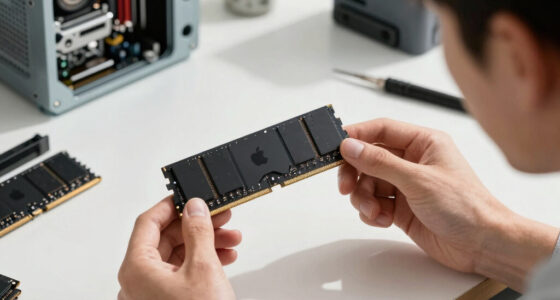
High Bandwidth Memory HBM4 modules
As an affiliate, we earn on qualifying purchases.
As an affiliate, we earn on qualifying purchases.
Evolution of HBM and Its Market Expansion
High Bandwidth Memory was initially a niche product but has rapidly become essential for AI and high-performance computing. The technology’s complexity and manufacturing challenges mean only a few companies can produce it at scale. SK Hynix led the early development, with Samsung and Micron catching up in recent years. The qualification of all three suppliers for Nvidia’s Rubin platform in June 2026 marked a milestone, confirming a three-way supply chain that is now fully operational, but also intensifying demand for wafers and driving up prices.
“Our qualification of all three HBM suppliers for Rubin ensures robust supply, but the demand remains extremely high.”
— Nvidia spokesperson
As an affiliate, we earn on qualifying purchases.
Unresolved Aspects of the HBM Shortage and Future Supply
It is still unclear how much additional capacity will be added to meet growing demand beyond 2026, and whether new manufacturing innovations can improve yields for complex HBM stacks. The impact on non-HBM memory markets, such as DDR5, remains uncertain as manufacturers prioritize HBM production. Additionally, the long-term effects on pricing and availability for consumers are still developing.
As an affiliate, we earn on qualifying purchases.
Next Steps in HBM Production and Market Dynamics
Manufacturers are expected to increase HBM capacity through 2027–2028, with new generations like HBM4E entering production. Industry analysts anticipate ongoing supply constraints for standard RAM and GPUs until additional capacity is brought online. Market prices for both HBM and traditional memory modules are likely to remain high until supply stabilizes, with further technological advances potentially easing shortages in the future.
As an affiliate, we earn on qualifying purchases.
Key Questions
Why is HBM causing a shortage of RAM modules?
Because HBM manufacturing consumes significantly more wafers and yields are lower, producing HBM reduces the overall capacity available for standard RAM modules, leading to shortages.
Which companies are leading in HBM production?
SK Hynix currently leads the market, followed by Samsung and Micron, with all three qualifying their latest HBM generations for major platforms like Nvidia’s Rubin.
How will the HBM shortage affect consumers and gamers?
Expect delays and higher prices for RAM modules and GPUs, as manufacturers prioritize HBM production for AI and data center applications.
Is the HBM shortage temporary?
It is uncertain; while capacity is expanding, complex manufacturing and high demand suggest shortages may persist into 2027 unless new technological solutions emerge.
Source: ThorstenMeyerAI.com
Columbus Day / Indigenous Peoples' Day Picks
long weekend sales
As an affiliate, we earn on qualifying purchases.