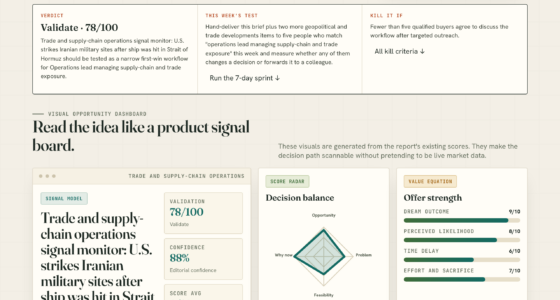

📊 Full opportunity report: Data: The One Thing You Can’t Rent on ThorstenMeyerAI.com — validation score, market gap, and execution plan.

Get the latest gadgets delivered free with Prime
- Fast, free delivery on millions of items
- Prime Video, Amazon Music and more included
- Member-only deals all year
TL;DR
The industry shift from renting compute to securing unique data marks a new phase in AI development. Data scarcity and fencing are creating barriers for newcomers, favoring established players with access to verified, proprietary information.
In 2026, the AI industry has shifted focus from renting compute resources to securing a scarce, unrentable asset: verified human data. This development marks a fundamental change in how models are trained and who can participate, as data fencing, licensing, and expertise become the new battlegrounds.
Recent industry actions, including Anthropic’s $1.5 billion settlement over copyright claims and ongoing legal cases involving major publishers, confirm that free scraping of data is ending. Instead, a market-based licensing regime is forming, creating high entry barriers for startups and favoring large incumbents with deep pockets.
Simultaneously, the industry is increasingly relying on proprietary, human-verified data—such as expert annotations and specialized datasets—since synthetic data and web scraping are no longer sufficient for training high-quality models. This shift is driven by the exhaustion of publicly available high-quality text, estimated to be fully utilized between 2026 and 2032.
Furthermore, access to rare, high-value data—like combat drone footage or domain-specific expert annotations—becomes a strategic asset, often protected by non-disclosure agreements and licensing, making data ownership and control critical for competitive advantage.
Data: The One Thing You Can’t Rent
The free part of “all human knowledge” is running out. As compute and models commoditize, the corpus you can’t replicate becomes the moat — so data is being fenced, priced, and, in places, treated as a national asset.
Data was supposed to be the abundant input. It’s the scarce one. It’s also the chokepoint you can actually own — so guard your proprietary data, and don’t hand it to a provider who can become your competitor (the lesson everyone fled Scale to learn). Nations: license it like Ukraine — keep the model, keep the leverage.
Implications of Data Fencing for AI Industry Dynamics
This shift signifies a move toward a more concentrated industry where large firms with proprietary data and expertise dominate, potentially stifling innovation from smaller players and startups. The end of free data scraping and the rise of licensing and fencing also raises questions about data accessibility, fairness, and the future of open AI research.
Moreover, the increasing importance of verified, human-generated data underscores the value of expertise and specialized knowledge, transforming data from a commodity into a strategic asset and a source of competitive advantage.
human-verified data annotation services
As an affiliate, we earn on qualifying purchases.
As an affiliate, we earn on qualifying purchases.
Evolution of Data Scarcity and Industry Responses
Historically, AI training relied heavily on freely accessible web data, with companies scraping publicly available text and images. However, as models grew larger and more sophisticated, the available high-quality data became scarce. Industry estimates suggest that the public internet holds around 300 trillion tokens of high-quality text, which is nearing full utilization by 2026. This has prompted a shift toward synthetic data and more selective data acquisition.
Legal actions, such as Anthropic’s settlement and ongoing cases involving publishers like The New York Times, have formalized the end of free scraping, establishing licensing regimes that favor well-funded firms. Simultaneously, the demand for expert-labeled data has surged, as models move from simple classification tasks to reasoning and domain-specific understanding, requiring expensive human input.
This transition reflects a broader industry trend: data is no longer a freely available resource but a fenced, monetized asset essential for maintaining competitive advantage.
“Anthropic’s $1.5 billion settlement confirms that illegally obtained data is no longer acceptable, setting a precedent for licensed data use.”
— Legal expert familiar with copyright law
As an affiliate, we earn on qualifying purchases.
Unclear Future of Open Data and Smaller Players
It remains uncertain how open data initiatives or smaller startups will adapt to the increasing fencing and licensing regimes. The impact of potential regulatory changes and new data-sharing agreements on industry competition is still developing.
Additionally, the long-term effects of relying on synthetic data and proprietary datasets for model robustness and generalization are not yet fully understood.
licensed proprietary data for machine learning
As an affiliate, we earn on qualifying purchases.
As an affiliate, we earn on qualifying purchases.
Next Steps in Data Market Evolution and Industry Consolidation
In the coming months, expect further legal rulings and licensing agreements to shape data access policies. Large firms will likely continue consolidating proprietary datasets, while startups seek alternative strategies, such as partnerships or niche data collection.
Research into synthetic data quality and methods for verifying its accuracy will also intensify, as the industry balances data scarcity with model performance needs.
As an affiliate, we earn on qualifying purchases.
Key Questions
Why can’t data be rented like compute resources?
Data is inherently unique and often protected by copyright, licensing, or confidentiality agreements, making it impossible to simply rent or lease it like hardware or compute power.
How does data fencing affect new entrants in AI development?
Data fencing creates high barriers to entry by restricting access to proprietary, verified datasets, favoring established firms with the resources to acquire or develop such data.
What role does expert-labeled data play in current AI training?
Expert-labeled data provides high-quality, domain-specific information necessary for advanced reasoning models, making it a highly valuable and strategic asset.
Will open data initiatives continue to grow?
It is uncertain; legal and economic barriers are increasing, but some open data projects may persist or evolve through public-private partnerships or regulatory support.
What are the risks of relying on synthetic data?
Synthetic data can introduce errors or biases that are hard to verify, potentially leading to model collapse or reduced reliability in certain domains.
Source: ThorstenMeyerAI.com
Halloween Picks
halloween
As an affiliate, we earn on qualifying purchases.