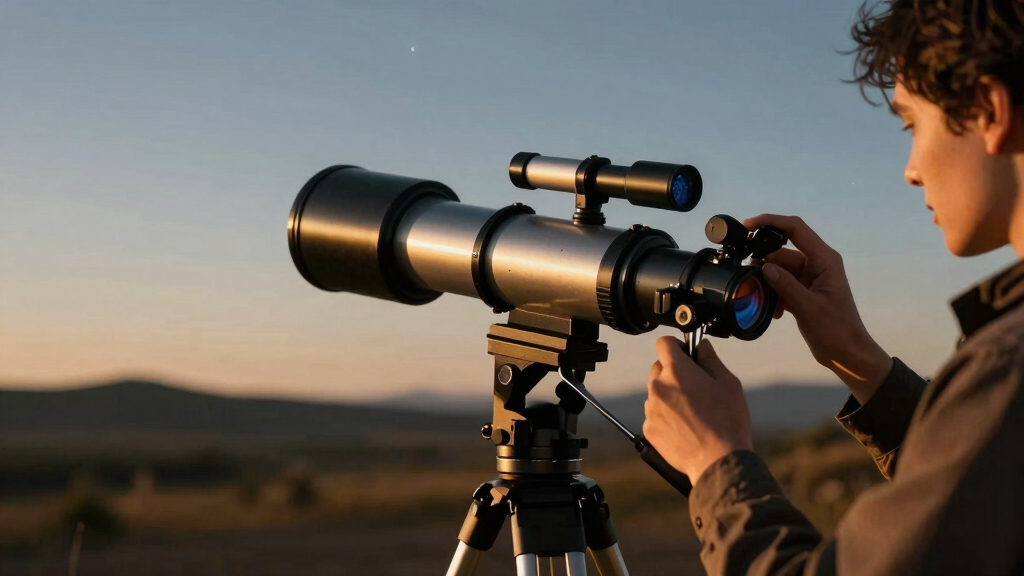

Finding the best astrophotography telescope involves balancing performance, ease of use, and budget. The SVBONY SV550 Triplet APO stands out for its high-quality optical design, ideal for serious hobbyists seeking crisp, detailed images. Meanwhile, the Celestron StarSense Explorer DX 130AZ offers a user-friendly experience perfect for newcomers exploring astrophotography for the first time. For those ready to invest in a more advanced setup, the Celestron CGX-L 14″ Schmidt-Cassegrain provides exceptional light-gathering power, but at a significantly higher cost and complexity. The main tradeoffs in this category revolve around balancing image quality, ease of setup, and budget constraints. Keep reading for a detailed breakdown of these options, helping you find the right fit for your astrophotography ambitions.

Get the latest gadgets delivered free with Prime
- Fast, free delivery on millions of items
- Prime Video, Amazon Music and more included
- Member-only deals all year
Complete the kit



Key Takeaways
- The top-ranked picks combine optical quality with user-friendly features, making them suitable for both beginners and experienced astrophotographers.
- High aperture and focal length are key factors for capturing detailed deep-sky images, but they often come with increased size and price.
- Automation, such as auto-GOTO and smartphone integration, greatly simplifies the process of locating and framing celestial objects.
- Budget options tend to focus on portability and ease of use, sacrificing some image resolution and stability compared to premium models.
- Choosing the right mount and camera compatibility is as important as the telescope itself, especially for long-exposure astrophotography.
| SVBONY SV550 Triplet APO Telescope, 122mm F7 ED Glass Refractor for Astrophotography and Observation |  | Best Overall for Deep Sky and Astrophotography | Aperture: 122mm | Focal Ratio: F7 | Focal Length: 854mm | VIEW LATEST PRICE | See Our Full Breakdown |
| Celestron StarSense Explorer DX 130AZ Smartphone Guided Newtonian Telescope |  | Best for Beginners and Guided Stargazing | Telescope Type: Newtonian reflector | Aperture: 130mm | Mount Type: Altazimuth | VIEW LATEST PRICE | See Our Full Breakdown |
| Celestron CGX-L 14″ Schmidt-Cassegrain Computerized Telescope |  | Best for Serious Deep Sky Imaging and Advanced Observation | Objective Lens Diameter: 14 inches | Focal Length: 3910mm | Mount Type: Equatorial | VIEW LATEST PRICE | See Our Full Breakdown |
| Dwarflab Dwarf Mini Smart Telescope – Portable Astronomy Telescope with App Control and Auto GOTO |  | Best for Travel and Quick Setup | Weight: 1.85 lbs | Objective Lens Diameter: 30 mm | Focal Length: 150 mm | VIEW LATEST PRICE | See Our Full Breakdown |
| Celestron NexStar 8SE Computerized Telescope – Schmidt-Cassegrain |  | Best for Intermediate and Versatile Use | Aperture: 8 inches | Optics: Schmidt-Cassegrain | Mount: Automated GoTo | VIEW LATEST PRICE | See Our Full Breakdown |
| SVBONY SV503 102ED F7 Telescope Bundle with SV225 Alt-Azimuth Mount for Astrophotography and Observation |  | Best Overall for Versatile Wide-Field Imaging | Objective Diameter: 102mm | Focal Ratio: F7 | Focal Length: 714mm | VIEW LATEST PRICE | See Our Full Breakdown |
| MEEZAA 150EQ Newtonian Reflector Telescope for Adults and Beginners |  | Best Value for Large Aperture and Deep-Sky Imaging | Aperture: 150mm | Focal Length: 650mm | Eyepieces: 25mm & 10mm | VIEW LATEST PRICE | See Our Full Breakdown |
| SVBONY SV555 APO Astrophotography Refractor Telescope |  | Best for High-Precision Deep-Sky Imaging | Optical Tube Length: 24.3 centimeters | Objective Lens Diameter: 54mm | Weight: 3.8 kg | VIEW LATEST PRICE | See Our Full Breakdown |
| SV555 54mm f/4.5 APO Astrograph Set for Deep Sky Astrophotography with SV405CC Cooled Camera, SV241 Telescope Power Adapter, SV226 Filter Drawer, SV220 Dual-Band Nebula Filter |  | Best for Portable Deep-Sky Imaging with Complete Accessories | Focal Length: 54mm | Aperture: f/4.5 | Camera Compatibility: SV405CC cooled | VIEW LATEST PRICE | See Our Full Breakdown |
| Celestron AstroMaster 130EQ Telescope for Beginners |  | Best for Entry-Level Visual Observation and Basic Astrophotography | Optical Diameter: 130mm | Focal Length: 650mm | Mount Type: German equatorial | VIEW LATEST PRICE | See Our Full Breakdown |
| Smart Telescope with Auto-Focus and Dual Screens |  | Best for Portable Astrophotography and Versatile Observation | Aperture: 80mm | Focal Length: 300mm | Magnification: up to 350X | VIEW LATEST PRICE | See Our Full Breakdown |
| Celestron Advanced VX 8″ Schmidt-Cassegrain Computerized EQ Telescope |  | Best for Serious Amateur Astrophotographers and Visual Enthusiasts | Aperture: 8 inches | Focal Length: 2032mm | Eyepiece Magnification: 102x | VIEW LATEST PRICE | See Our Full Breakdown |
| Celestron StarSense Explorer LT 114AZ Newtonian Smartphone Guided Telescope |  | Best for Beginner-Friendly, App-Guided Astronomy | Telescope Type: Newtonian reflector | Aperture: 114mm | Mount Type: Altazimuth | VIEW LATEST PRICE | See Our Full Breakdown |
| Dwarflab Dwarf 3 Smart Telescope, App-Controlled Astrophotography Camera |  | Best for Portable, User-Friendly Astrophotography | Focus Type: Auto Focus | Finderscope: Straight-Through | Compatible Devices: Smartphone, Laptop, PC | VIEW LATEST PRICE | See Our Full Breakdown |
| astrophotography telescope | Focal Length | Aperture | Weight | Focus Type |
|---|---|---|---|---|
| SVBONY SV550 Triplet APO Teles | 854mm | 122mm | 6.4 kg | Manual |
| Celestron StarSense Explorer D | — | 130mm | — | — |
| Celestron CGX-L 14" Schmidt-Ca | 3910mm | — | 250 pounds | Manual |
| Dwarflab Dwarf Mini Smart Tele | 150 mm | — | 1.85 lbs | Manual-and-Auto |
| Celestron NexStar 8SE Computer | — | 8 inches | — | — |
| SVBONY SV503 102ED F7 Telescop | 714mm | — | 2.34kg | Manual |
| MEEZAA 150EQ Newtonian Reflect | 650mm | 150mm | — | — |
| SVBONY SV555 APO Astrophotogra | 44mm | 54mm | 3.8 kg | Manual |
| SV555 54mm f/4.5 APO Astrograp | 54mm | f/4.5 | Approximately 90g lighter than previous models | — |
| Celestron AstroMaster 130EQ Te | 650mm | — | 17 lbs | — |
| Smart Telescope with Auto-Focu | 300mm | 80mm | — | Auto Focus |
| Celestron Advanced VX 8" Schmi | 2032mm | 8 inches | — | — |
| Celestron StarSense Explorer L | — | 114mm | — | — |
| Dwarflab Dwarf 3 Smart Telesco | — | — | 2.28 kg | Auto Focus |
More Details on Our Top Picks
SVBONY SV550 Triplet APO Telescope, 122mm F7 ED Glass Refractor for Astrophotography and Observation
The SVBONY SV550 stands out for its high-quality ED glass triplet lens, which effectively reduces chromatic aberration—crucial for capturing sharp, color-accurate deep-sky images. Compared with the Celestron NexStar 8SE, this refractor offers better optical clarity in a more compact form, though it trades some of the portability for weight, weighing 6.4 kg. Its dual-speed focuser provides precise control, making fine adjustments easier during astrophotography sessions. However, assembly and alignment are necessary, and its weight might limit quick setup for travel. This pick makes the most sense for dedicated astrophotographers who value image quality and portability but are prepared for some initial setup effort.
Pros:- High-quality ED glass reduces chromatic aberration
- Compact, lightweight design ideal for travel
- Dual-speed focuser allows fine focusing adjustments
Cons:- Relatively heavy for frequent transport
- Requires assembly and alignment for optimal performance
Best for: Astrophotographers seeking a high-quality, portable refractor for deep sky imaging and observation
Not ideal for: Beginners or casual stargazers who prefer plug-and-play setups with minimal assembly
- Aperture:122mm
- Focal Ratio:F7
- Focal Length:854mm
- Optical Tube Length:28.1 inches
- Weight:6.4 kg
- Mount:Equatorial
- Focus Type:Manual
- Field of View:1.67 degrees
- Exit Pupil Diameter:50 millimeters
Our verdict“This telescope is best suited for experienced astrophotographers who want high optical quality in a portable package.”
Celestron StarSense Explorer DX 130AZ Smartphone Guided Newtonian Telescope
The Celestron StarSense Explorer DX 130AZ makes astrophotography and deep-sky viewing approachable through its innovative smartphone-guided system. Unlike the manual-focused SVBONY SV550, this telescope leverages your phone’s sky recognition technology to help locate celestial objects accurately, making it ideal for newcomers. Its 130mm aperture delivers bright images of planets, the Moon, and some deep-sky objects, with the included 10mm and 25mm eyepieces providing versatility. However, it relies on a compatible smartphone for full functionality, and manual tracking is less precise than motorized mounts like the CGX-L. This choice is perfect for hobbyists new to astronomy who want an easy, guided experience without investing in complex mounts or accessories.
Pros:- Sky recognition technology simplifies object location
- Bright, detailed views of planetary and lunar features
- Includes multiple eyepieces and a sturdy tripod
Cons:- Dependent on a compatible smartphone for full features
- Manual tracking less precise than motorized systems
Best for: Beginner astronomers seeking an easy-to-use, smartphone-guided telescope
Not ideal for: Advanced users or those interested in serious astrophotography, due to limited tracking capabilities
- Telescope Type:Newtonian reflector
- Aperture:130mm
- Mount Type:Altazimuth
- Eyepieces:10mm and 25mm
- Finderscope:Red dot
- Tripod:Full-height
- Compatibility:Android 12+ and iOS 18+
Our verdict“This telescope is excellent for beginners who want guided stargazing with decent deep-sky capability without complex equipment.”
Celestron CGX-L 14″ Schmidt-Cassegrain Computerized Telescope
The Celestron CGX-L 14″ offers a massive aperture paired with a premium StarBright XLT coating, making it ideal for astrophotographers and astronomers ready to handle more complex setups. Its 14-inch lens gathers significantly more light than the smaller SVBONY SV550 or the NexStar 8SE, revealing finer details in deep-sky objects. The computerized equatorial mount with precise tracking and remote operation capabilities surpass the NexStar 8SE’s manual mount, though at the cost of increased weight and complexity. This model is less suitable for casual use due to its 250-pound weight and steep learning curve, but it excels in producing high-resolution images for dedicated astrophotographers willing to manage a substantial setup. It’s a clear upgrade for those who want ultimate image detail and astrophotography control.
Pros:- Large 14-inch aperture for detailed deep-sky imaging
- StarBright XLT coatings for superior image clarity
- Automated mount with precise tracking and remote operation
Cons:- Extremely heavy and requires a dedicated setup space
- Complex to operate for beginners, with a high learning curve
Best for: Experienced astrophotographers seeking high-resolution deep-sky imaging with substantial aperture
Not ideal for: Casual hobbyists or those with limited space and budget, because of its weight and complexity
- Objective Lens Diameter:14 inches
- Focal Length:3910mm
- Mount Type:Equatorial
- Focus Type:Manual
- Finderscope:9×50
- Weight:250 pounds
- Additional Features:Larger worm wheels, remote operation
Our verdict“This telescope is best suited for advanced astrophotographers demanding high image resolution and extensive control capabilities.”
Dwarflab Dwarf Mini Smart Telescope – Portable Astronomy Telescope with App Control and Auto GOTO
The Dwarflab Dwarf Mini impresses with its ultra-lightweight design, weighing just 1.9 pounds, making it perfect for outdoor adventures like hiking or camping. Its 30mm objective is modest compared to larger models like the SVBONY SV550 or Celestron NexStar 8SE, limiting detailed views but excelling in portability and convenience. The integrated app control, auto GOTO, and 360° pivot make setup straightforward, especially for users who prefer quick, on-the-go stargazing. While its small aperture restricts deep-sky imaging quality, it compensates with advanced imaging capabilities for a portable device. This is an excellent choice for casual observers and travelers eager to explore the stars without bulky equipment, though serious astrophotographers may find its optics limiting.
Pros:- Extremely lightweight and portable for outdoor use
- Smartphone app with auto GOTO and interactive star maps
- Manual and auto focus options with advanced imaging features
Cons:- Limited objective lens size restricts detailed viewing
- Requires batteries, which may need frequent replacement
Best for: Travelers and outdoor enthusiasts wanting an easy, portable astrophotography option
Not ideal for: Deep-sky astrophotographers or those needing high-detail imaging, due to limited aperture
- Weight:1.85 lbs
- Objective Lens Diameter:30 mm
- Focal Length:150 mm
- Mount:Altazimuth and Equatorial
- Focus Type:Manual-and-Auto
- Power Source:Battery
Our verdict“This telescope is ideal for those who prioritize portability and quick setup over deep-sky imaging details.”
Celestron NexStar 8SE Computerized Telescope – Schmidt-Cassegrain
The Celestron NexStar 8SE balances powerful optics with user-friendly automation, making it a favorite among intermediate astronomers. Its 8-inch Schmidt-Cassegrain lens offers impressive light-gathering ability for detailed lunar, planetary, and deep-sky views, comparable to the more expensive CGX-L but in a more portable package. The automated GoTo mount simplifies object finding and tracking, with SkyAlign technology aiding quick setup. While not as massive as the 14-inch CGX-L, the 8SE’s compact design and straightforward operation make it a practical upgrade from beginner scopes like the StarSense Explorer DX 130AZ. The main tradeoff involves initial setup complexity and the cost relative to basic models, but this telescope provides a solid step-up for enthusiasts ready to expand their observing or astrophotography skills.
Pros:- 8-inch aperture for detailed lunar and planetary views
- Automated GoTo with SkyAlign technology for easy object location
- Compact and portable for its class
Cons:- Setup and alignment can be complex for novices
- Higher price point compared to manual beginner models
Best for: Intermediate astronomers seeking a portable yet powerful telescope with automated tracking
Not ideal for: Complete beginners or those seeking ultra-lightweight travel options, due to its size and setup requirements
- Aperture:8 inches
- Optics:Schmidt-Cassegrain
- Mount:Automated GoTo
- Object Database:40,000+
- Warranty:2 years
Our verdict“This telescope fits those looking for a versatile, automated system that significantly elevates observing and astrophotography capabilities without overwhelming complexity.”
SVBONY SV503 102ED F7 Telescope Bundle with SV225 Alt-Azimuth Mount for Astrophotography and Observation
The SVBONY SV503 102ED F7 stands out for its combination of bright, wide-field images and portability, making it an excellent choice for amateur astrophotographers seeking quality without complexity. Compared with the SV555 APO Refractor, it offers a larger aperture at a more affordable price, though it lacks the advanced flat-field correction for large sensors. Its lightweight design and achromatic lens reduce chromatic aberration, providing crisp images for both observation and astrophotography. The included alt-azimuth mount is simple to operate but limits long-exposure astrophotography, making it less ideal for advanced astrophotographers. This pick is best suited for those starting out or hobbyists who want a reliable, portable scope for quick imaging sessions and casual observation. However, those looking for serious deep-sky astrophotography with long exposures should consider more specialized mounts and scopes.
Pros:- Bright and clear wide-field images with minimal chromatic aberration
- Lightweight, portable, and easy to transport
- High-quality achromatic doublet lens with multi-layer coatings
- Includes a versatile alt-azimuth mount for quick setup
Cons:- Manual focus may require frequent adjustments during imaging
- Limited to visual observation and short-exposure astrophotography
- No included accessories like eyepieces or carrying case
Best for: Beginners and hobbyists who want a portable, high-quality wide-field astrophotography setup
Not ideal for: Advanced astrophotographers aiming for long-exposure deep-sky imaging with specialized mounts and accessories
- Objective Diameter:102mm
- Focal Ratio:F7
- Focal Length:714mm
- Mount:Altazimuth
- Focus Type:Manual
- Weight:2.34kg
Our verdict“This telescope makes the most sense for beginners or casual users seeking a portable, quality instrument for wide-field astrophotography and observation.”
MEEZAA 150EQ Newtonian Reflector Telescope for Adults and Beginners
The MEEZAA 150EQ offers a large 150mm aperture paired with a stable German equatorial mount, making it ideal for those eager to explore deep-sky objects. Compared to the Celestron AstroMaster 130EQ, it provides significantly brighter images and higher detail, especially for galaxies and nebulae, thanks to its larger aperture. Its sturdy stainless-steel tripod ensures smooth tracking, though the initial assembly can be time-consuming for newcomers. The included eyepieces cover a broad magnification range, allowing versatile observing, but manual tracking can be challenging without experience. This scope suits beginners who want a substantial upgrade for astrophotography or detailed visual observation and are comfortable with setup. It’s less suited for users seeking a simple, grab-and-go solution or automated tracking features.
Pros:- Large 150mm aperture yields bright, detailed deep-sky images
- Sturdy German equatorial mount tracks objects smoothly
- Comprehensive accessory package for immediate use
- Portable with carry bag for travel
Cons:- Assembly can be time-consuming and complex for newcomers
- Heavy tripod may be cumbersome for some users
- Manual tracking requires some skill for long exposures
Best for: Beginners and intermediate users wanting a powerful, large-aperture reflector for deep-sky imaging and detailed observation
Not ideal for: Users seeking a quick, auto-tracking astrophotography setup or ultra-light portability
- Aperture:150mm
- Focal Length:650mm
- Eyepieces:25mm & 10mm
- Mount:German Equatorial
- Tripod Material:Stainless steel
- Optical Tube Length:65 centimeters
Our verdict“This telescope is perfect for beginners who want a substantial, upgradeable deep-sky instrument with solid tracking capabilities.”
SVBONY SV555 APO Astrophotography Refractor Telescope
The SVBONY SV555 APO excels in delivering ultra-sharp, flat-field images thanks to its Petzval triplet lens, making it a top choice for serious astrophotographers. Compared to the SV503 102ED, it offers superior image quality with reduced chromatic aberration, especially when imaging large sensors. The adjustable aperture from F4.5 to F22 provides versatility for different targets, from wide-field nebulae to planetary detail. Its compatibility with ZWO EAF mount kits allows precise focusing, a key advantage over basic manual scopes. The main tradeoff is its weight—at 3.8 kg, it’s less portable—and its complex setup may challenge newcomers. This scope is ideal for experienced astrophotographers seeking high-precision, flat-field images. Less suitable for casual users or those new to astrophotography.
Pros:- Superior Petzval triplet lens for sharp, aberration-free images
- Wide adjustable aperture from F4.5 to F22 for versatility
- Includes EAF focus kit for precise, repeatable focusing
- Full-frame sensor compatibility
Cons:- Relatively heavy at 3.8 kg, reducing portability
- Requires additional accessories for optimal use
- Complex setup process for beginners
Best for: Advanced amateurs and professionals focused on high-quality deep-sky astrophotography
Not ideal for: Beginners or users seeking a lightweight, plug-and-play scope for casual use
- Optical Tube Length:24.3 centimeters
- Objective Lens Diameter:54mm
- Weight:3.8 kg
- Focal Length:44mm
- Aperture:54mm
- Focus Type:Manual
Our verdict“This scope is best suited for dedicated astrophotographers demanding high image quality and flat-field correction.”
SV555 54mm f/4.5 APO Astrograph Set for Deep Sky Astrophotography with SV405CC Cooled Camera, SV241 Telescope Power Adapter, SV226 Filter Drawer, SV220 Dual-Band Nebula Filter
The SV555 Astrograph Set offers a compact, lightweight solution tailored for astrophotographers focusing on nebulae, galaxies, and star clusters. Its 54mm f/4.5 APO lens delivers bright, high-contrast images with excellent focus precision, especially when paired with the included SV405CC cooled camera. Compared to larger, more complex setups like the Celestron CGX-L 14″, this set prioritizes portability and ease of use, making it ideal for travel. The comprehensive accessory kit, including filters and a power hub, enhances imaging quality and convenience. The main drawback is that this system is limited to deep-sky targets and requires additional equipment for full imaging sessions. It’s perfect for dedicated hobbyists who want a portable, ready-to-use astrophotography kit.
Pros:- Lightweight and portable for travel and fieldwork
- High-quality APO lens with excellent focus control
- Includes cooled camera and filters for high-contrast images
- Versatile power adapter with multiple outputs
Cons:- Additional accessories needed for full imaging
- Limited to deep-sky targets, not suitable for planetary imaging
- Learning curve for setup and operation
Best for: Travel-focused astrophotographers seeking a complete, portable deep-sky imaging setup
Not ideal for: Users interested in planetary imaging or those preferring automated, all-in-one systems
- Focal Length:54mm
- Aperture:f/4.5
- Camera Compatibility:SV405CC cooled
- Filter Drawer:SV226
- Power Adapter:SV241
- Weight:Approximately 90g lighter than previous models
Our verdict“This astrograph set is ideal for dedicated deep-sky imagers who prioritize portability and comprehensive accessories.”
Celestron AstroMaster 130EQ Telescope for Beginners
The Celestron AstroMaster 130EQ provides a straightforward, user-friendly platform for newcomers interested in visual astronomy and casual astrophotography. Its 130mm primary mirror captures bright images of the Moon, planets, and some deep-sky objects, especially when compared to smaller beginner scopes. The German equatorial mount offers decent manual tracking, but it lacks the automation found in more advanced models like the Celestron CGX-L 14″, making long-exposure astrophotography more challenging. Its simple setup and included accessories make it accessible for families or first-time users, but high-magnification imaging without additional equipment is limited. This scope is ideal for beginners wanting a reliable, affordable introduction to astronomy but not suited for serious deep-sky astrophotography.
Pros:- Easy to set up with minimal tools required
- Stable mount with smooth manual controls
- Includes useful accessories like multiple eyepieces
- Lightweight and portable for backyard use
Cons:- Manual tracking can be difficult for precise long-exposure imaging
- Limited high-magnification options without extra equipment
- Assembly instructions could be clearer for first-timers
Best for: Beginners and families looking for an easy-to-assemble telescope for visual astronomy and occasional imaging
Not ideal for: Advanced users aiming for long-exposure astrophotography or high-magnification planetary imaging
- Optical Diameter:130mm
- Focal Length:650mm
- Mount Type:German equatorial
- Eyepieces Included:20mm, 10mm
- Magnification:33x, 65x
- Weight:17 lbs
Our verdict“This telescope offers a reliable, beginner-friendly package for casual astronomers and families interested in visual observation and basic astrophotography.”
Smart Telescope with Auto-Focus and Dual Screens
This compact digital telescope stands out for its high-quality 4K imaging and dual screens, making it perfect for enthusiasts who want instant visual feedback and easy photo capture. Compared with the Celestron StarSense Explorer LT 114AZ, it offers superior imaging resolution but falls short in build robustness and stability, especially for extended outdoor use. Its integrated screens and support for external devices make it highly versatile, but setup complexity could challenge beginners. The limited info on durability and included accessories suggests it’s best for casual outdoor use rather than heavy-duty astrophotography.
Pros:- High-resolution 4K imaging for stellar detail
- Dual screens enable real-time observation and easy photo capture
- Portable size perfect for outdoor adventures
Cons:- Limited details on build quality and weather resistance
- Setup might be complicated for users new to astrophotography
Best for: Nature lovers and casual astrophotographers seeking portability and instant image sharing
Not ideal for: Serious astrophotographers needing rugged gear or long exposure capabilities, as durability and stability are uncertain
- Aperture:80mm
- Focal Length:300mm
- Magnification:up to 350X
- Sensor Resolution:4K
- Battery Capacity:4500mAh
- Focus Type:Auto Focus
- Mount:Equatorial
- Item Dimensions:1.31″D x 0.62″W x 0.39″H
Our verdict“This pick is best suited for hobbyists who want quick, high-quality imaging in a portable package.”
Celestron Advanced VX 8″ Schmidt-Cassegrain Computerized EQ Telescope
Compared with the smaller, portable options like the Dwarflab Dwarf 3, the Celestron Advanced VX 8″ offers a much larger aperture that captures brighter, more detailed images of deep-sky objects. Its computerized GoTo mount with an extensive object database simplifies tracking and reduces manual effort, but the setup process can be daunting for beginners unfamiliar with equatorial mounts. While less portable and heavier than the StarSense Explorer LT 114AZ, this telescope excels in providing stable, high-quality images suitable for serious astrophotography. The tradeoff is its higher price and complexity, which might be overkill for casual stargazers.
Pros:- Large 8-inch aperture delivers bright, detailed images
- Computerized GoTo mount simplifies object tracking
- Sturdy build ensures stability for astrophotography
Cons:- Setup can be complex and time-consuming
- Heavy and less portable for outdoor trips
Best for: Intermediate to advanced amateur astronomers seeking high-resolution imaging and precise tracking
Not ideal for: Beginners or those needing a lightweight, easy-to-assemble telescope for casual moon gazing
- Aperture:8 inches
- Focal Length:2032mm
- Eyepiece Magnification:102x
- Mount Type:German Equatorial
- Included Accessories:6×30 finderscope, 25mm eyepiece
- Weight Capacity:30 lbs
- Warranty:2 years
Our verdict“This telescope is ideal for dedicated amateurs ready to invest in high-quality imaging and detailed celestial observation.”
Celestron StarSense Explorer LT 114AZ Newtonian Smartphone Guided Telescope
This entry-level telescope makes a compelling case for newcomers, thanks to its smartphone app that guides you to celestial objects via sky recognition technology. Its 114mm aperture provides bright views of the Moon and planets, comparable to the Dwarflab Dwarf 3 in terms of visual quality, but with a simpler, app-based navigation system. However, its manual altazimuth mount and reliance on compatible smartphones mean it’s less suited for precise tracking or astrophotography. The setup is straightforward, making it a great starter, but device compatibility limits its flexibility for more advanced users.
Pros:- Smartphone app with sky recognition simplifies object location
- Bright, detailed views of Moon, planets, and deep sky
- Includes multiple eyepieces and a full-height tripod
Cons:- Requires a compatible smartphone with specific OS versions
- Manual mount may lack stability for precise tracking
Best for: Beginners and casual observers who want an easy, guided start in astronomy
Not ideal for: Experienced astrophotographers or users with incompatible smartphones seeking advanced tracking or imaging features
- Telescope Type:Newtonian reflector
- Aperture:114mm
- Mount Type:Altazimuth
- Eyepieces Included:10mm and 25mm
- Compatibility:Android 12+, iOS 18+
- Warranty:2 years
Our verdict“This telescope makes the most sense for beginners who want straightforward guidance and decent imaging without complex setup.”
Dwarflab Dwarf 3 Smart Telescope, App-Controlled Astrophotography Camera
This lightweight, portable telescope emphasizes ease of use with its smart auto-tracking, 4K clarity, and dual lenses for day and night imaging. Compared to the Celestron Advanced VX 8″, it offers less aperture and raw image detail but excels in outdoor portability and simplicity, making it suitable for quick shoots and outdoor adventures. Its app-driven controls and cloud processing appeal to beginners and hobbyists who want to capture images without heavy gear, though limited battery life and device compatibility could hinder longer sessions. It’s a flexible choice for those prioritizing mobility and straightforward operation over ultimate detail.
Pros:- Highly portable and lightweight for outdoor use
- Dual lenses enable day and night imaging versatility
- Smart auto-tracking with 4K clarity enhances astrophotography
Cons:- Requires compatible devices and app setup
- Limited battery life may restrict longer sessions
Best for: Outdoor enthusiasts and beginners seeking a lightweight, all-in-one astrophotography solution
Not ideal for: Advanced astrophotographers needing high precision, long exposures, or rugged outdoor durability
- Focus Type:Auto Focus
- Finderscope:Straight-Through
- Compatible Devices:Smartphone, Laptop, PC
- Objective Lens Diameter:35mm
- Item Dimensions:2.56″D x 8.74″W x 5.59″H
- Weight:2.28 kg
Our verdict“This device is perfect for casual astrophotographers who want quick, quality images while on the go.”

How We Picked
The selection process prioritized optical performance, ease of use, and value for both beginner and advanced users. We evaluated each telescope’s aperture, focal length, and optical quality to determine its suitability for astrophotography. Usability features like auto-alignment, app control, and mount stability were also key factors, as they directly impact the user experience and image quality. Price-to-performance ratios helped differentiate models, ensuring that each pick offers clear advantages for its intended user. The ranking reflects a balance between affordability, technical capability, and ease of setup, aiming to guide a broad range of astrophotographers effectively.Factors to Consider When Choosing Best Astrophotography Telescope
Choosing the best astrophotography telescope requires understanding several core factors. These considerations help ensure that your investment aligns with your skill level, target objects, and budget, preventing common pitfalls like overpaying for features you won’t use or selecting a setup that’s too complex to manage. A thoughtful approach to these factors results in a more satisfying and productive astrophotography experience.Optical Quality and Aperture
The optical quality of a telescope directly determines the clarity and detail of your images. Aperture size is crucial because it controls how much light the telescope collects—larger apertures reveal fainter objects and finer details. However, bigger telescopes tend to be heavier and more expensive, so balancing size and budget is essential. For serious deep-sky photography, an aperture of at least 130mm is recommended, while smaller scopes can still perform well for bright objects like planets and the moon.
Mount Type and Stability
The mount is the foundation of your astrophotography setup. Equatorial mounts are preferred for long exposures because they track celestial objects smoothly, reducing star trailing. A sturdy, vibration-free mount enhances image sharpness and overall ease of use. Affordable alt-azimuth mounts may work for short exposures or beginner setups but limit long-exposure capabilities. Investing in a reliable mount pays off with better image quality and easier calibration, especially for advanced astrophotography.
Automation and User-Friendliness
Features like auto-GOTO and smartphone integration greatly simplify locating and framing objects, especially for beginners. Automated alignment routines save time and reduce frustration, allowing more focus on capturing images rather than troubleshooting. However, these features increase the cost and complexity, so consider your comfort level with technology. For those new to astrophotography, a telescope with intuitive controls and app support can make a significant difference in the learning curve.
Budget and Additional Equipment
Your budget influences not just the telescope but also the necessary accessories like cameras, filters, and mounts. Cheaper telescopes may require additional upgrades to reach acceptable astrophotography performance, ultimately increasing total costs. Conversely, investing in a more capable telescope can reduce the need for future upgrades. Be mindful of the total investment needed to achieve your desired results, and consider whether your budget aligns with your long-term goals.
Portability and Space Requirements
If space or transportability is a concern, compact and lightweight telescopes may be appealing, but they often sacrifice some image quality or light-gathering power. Larger, more powerful scopes tend to be bulkier and more challenging to set up, which can be discouraging for casual users or those with limited storage space. Weigh your willingness to handle a bigger setup against your desire for high-quality images and deeper sky access.
Frequently Asked Questions
Is a larger aperture always better for astrophotography?
While larger apertures generally gather more light and reveal more detail, they also come with increased cost, size, and weight. A larger aperture can improve deep-sky imaging, but only if the mount and camera are capable of supporting and fully utilizing that size. For beginners or casual users, a smaller aperture with good optical quality can deliver excellent results without the logistical challenges of larger scopes.
Can I do astrophotography with a standard DSLR camera on any telescope?
Most telescopes are compatible with DSLR cameras, but you should check for proper mounting options and whether the telescope has a suitable focal length for your imaging goals. A dedicated astrophotography scope with a flat-field corrector or a shorter focal length can improve image quality and ease of capturing wide-field images. Be prepared to invest in adapters, filters, and possibly a tracking mount to get the best results.
Is automation necessary for good astrophotography?
Automation features like auto-GOTO and computerized mounts significantly reduce the learning curve, especially for long exposures. They help quickly locate celestial objects and maintain precise tracking, which is vital for clear images. While manual setups are possible, automation saves time and frustration, making astrophotography more accessible for enthusiasts at all levels.
How much should I budget for a beginner astrophotography setup?
For beginners, a budget of around $500-$1,000 can provide a decent starter telescope with basic astrophotography capabilities. However, to achieve more serious results, especially with deep-sky objects, investing $1,500 or more in a quality scope, mount, and camera can provide noticeably better images. Remember to allocate part of your budget to necessary accessories like filters, power supplies, and software.
What are common mistakes to avoid when choosing an astrophotography telescope?
One common mistake is prioritizing aperture size without considering mount stability and tracking accuracy, which can negate the benefits of a large scope. Another is choosing a telescope that’s too complex for your skill level, leading to frustration. Lastly, neglecting the total cost of accessories and upgrades can result in underestimating the total investment needed to produce quality images.
Conclusion
For those new to astrophotography, the Celestron StarSense Explorer DX 130AZ offers an intuitive experience at an approachable price. Serious hobbyists aiming for detailed deep-sky images will find the SVBONY SV550 Triplet APO or the Celestron CGX-L 14″ Schmidt-Cassegrain compelling, depending on their budget. If you seek a high-end, all-in-one system, the Celestron Advanced VX 8″ Schmidt-Cassegrain strikes a balance between performance and usability. Ultimately, your choice should align with your experience level, target objects, and how much you’re willing to invest—each type of buyer benefits from a tailored setup that meets their specific needs.
As an affiliate, we earn on qualifying purchases.Fall Picks
fall essentials