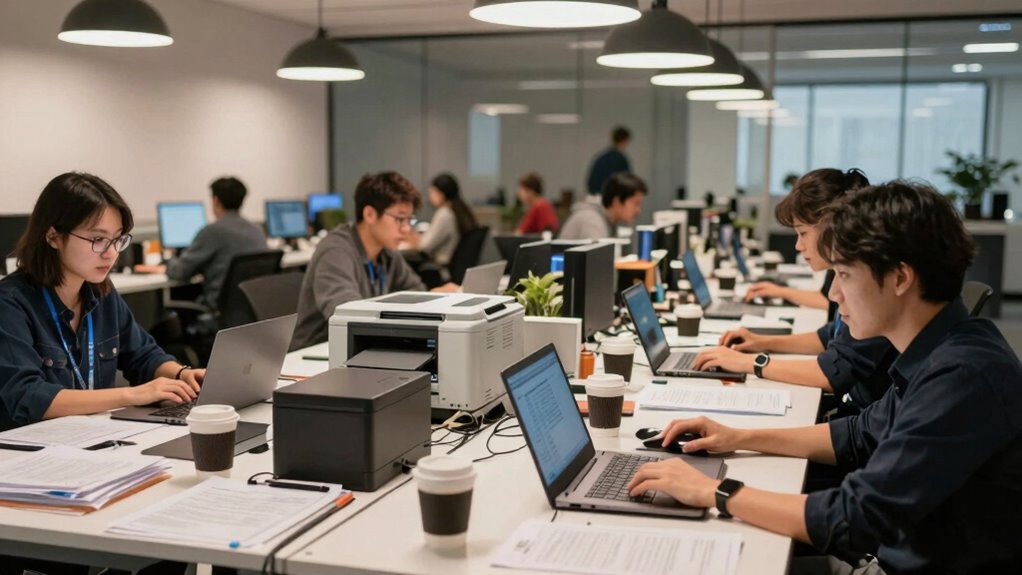

Open office noise isn’t random; it comes from specific sources like employee chatter, phone calls, and meetings. The open layout allows sound waves to travel freely, creating a noisy environment. Conversations and discussions often overlap, adding to the chaos. Without physical barriers, sounds spread easily across the space. If you want to understand how design and technology can help reduce this noise, keep exploring these causes and solutions.

Get the latest gadgets delivered free with Prime
- Fast, free delivery on millions of items
- Prime Video, Amazon Music and more included
- Member-only deals all year
Key Takeaways
- Employee chatter, phone calls, and meetings create consistent sources of noise in open offices.
- Lack of physical barriers allows sound waves to travel freely, amplifying noise levels.
- Open layouts form “sound corridors,” spreading conversations and increasing overall noise.
- Absence of acoustic materials causes sound reflection and reverberation, elevating noise discomfort.
- Noise mitigation technologies like sound masking and headphones help reduce perceived noise.
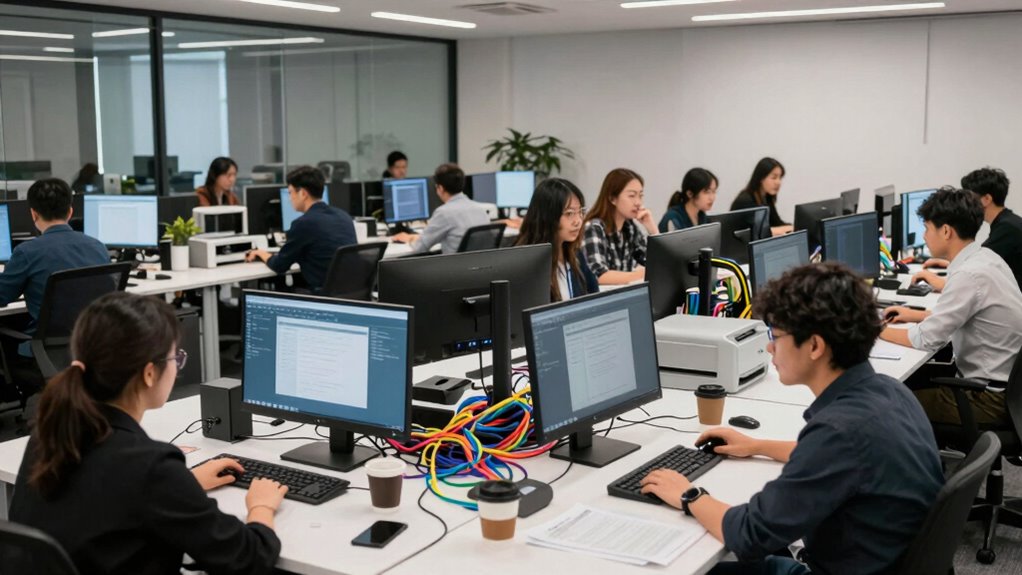
Open office environments are designed to promote collaboration, but they often come with a notable downside: noise. The constant hum of activity can make it difficult to concentrate, especially when trying to focus on complex tasks. While it might seem like noise is just a random background sound, it’s actually caused by specific factors that you can identify and, in some cases, control. Understanding what contributes to open office noise helps you manage your environment better and find ways to stay productive despite the chaos.
Open office noise stems from specific, identifiable factors you can control to improve focus and productivity.
One of the primary culprits is employee chatter. Conversations, phone calls, and meetings all generate noise that travels easily across open spaces. When multiple discussions happen simultaneously, the sound becomes overwhelming, making it hard to tune out distractions. This is especially true in environments where employees tend to speak loudly or where group discussions happen without designated quiet zones. You might notice that some areas are noisier than others—not because of their size, but because of the volume and frequency of employee chatter happening there.
Another factor that considerably impacts noise levels is the lack of physical barriers. Without walls or partitions, sound waves travel freely, amplifying the noise. This setup creates a ripple effect; a conversation in one corner can be heard across the room, adding to the overall din. The open layout, while fostering teamwork, inadvertently turns into a sound corridor that amplifies every spoken word, phone ringing, or keyboard clacking. Additionally, the design of the workspace can influence how sound propagates, either mitigating or worsening the noise issue. Incorporating acoustic design principles can be a key step toward creating a more comfortable environment.
To combat this, many workplaces turn to sound masking technologies. Sound masking involves introducing a consistent, ambient background noise—often a gentle hum or white noise—that helps drown out distracting sounds like employee chatter. By raising a subtle audio barrier, sound masking makes conversations less intrusive and helps you focus better. It doesn’t eliminate noise but makes it less noticeable, which can profoundly improve concentration and reduce stress.
Moreover, the design of the workspace itself influences noise levels. Incorporating sound-absorbing materials like carpets, acoustic panels, or fabric partitions can significantly reduce sound reflection and transmission, creating a quieter environment. These materials absorb sound waves, preventing them from bouncing around and amplifying noise in the space. Recognizing and utilizing these materials effectively can make a noticeable difference in noise levels.
Ultimately, open office noise isn’t just random; it’s a product of the environment’s design, the natural human tendency to talk, and the way sound travels without barriers. Recognizing these causes allows you to take steps—whether it’s requesting sound masking, using noise-canceling headphones, or finding quieter zones—to better manage your workspace. The more you understand the sources of noise, the better you can adapt and maintain your productivity amidst the lively buzz of an open office.
sound masking machine for office
As an affiliate, we earn on qualifying purchases.
As an affiliate, we earn on qualifying purchases.
Frequently Asked Questions
How Can I Measure Noise Levels in an Open Office?
You can measure noise levels in an open office by using sound level meters or noise measurement apps on your smartphone. Sound level meters provide precise readings, while apps are convenient and easy to use. Simply position the device at your workspace, turn it on, and record the decibel levels. This helps identify noisy areas and determine if the environment exceeds recommended sound levels for productivity and comfort.
What Are the Best Noise-Canceling Solutions for Open Offices?
The best noise-canceling solutions for open offices include soundproof partitions and wireless headphones. Soundproof partitions block out distracting sounds between workstations, creating a quieter environment. Wireless headphones, especially noise-canceling models, allow you to focus and reduce ambient noise without tethering you to your desk. Combining these solutions provides an effective way to manage noise, boost productivity, and maintain a comfortable workspace in bustling open offices.
Do Office Layout Changes Reduce Noise Effectively?
Yes, office layout changes can reduce noise effectively. By incorporating acoustic panels strategically and optimizing the layout, you create sound barriers that absorb or deflect noise, improving overall acoustics. Rearranging workspaces to minimize noise hotspots and adding quiet zones helps manage sound levels. These adjustments, combined with acoustic panels, make your open office less disruptive, fostering a more focused and comfortable environment for everyone.
How Does Employee Behavior Influence Office Noise?
Imagine your office as a symphony, where each employee’s behavior influences the overall harmony. Your communication style and noise awareness directly affect office noise levels. When employees chat loudly or ignore quiet zones, they disrupt others’ focus. But if everyone stays mindful of noise, it’s like tuning instruments—creating a more productive environment. Your role in encouraging respectful communication helps keep the noise balanced, fostering better concentration for all.
Are There Specific Times When Noise Levels Peak?
You’ll notice noise levels peak during busy hours, especially around lunchtime and late afternoons when everyone’s most active. During peak hours, conversations, phone calls, and collaborative efforts increase, raising noise levels. To maintain focus, you should utilize quiet zones, which are designated areas for silence or minimal noise. Being aware of these times helps you plan tasks requiring concentration and avoid disruptions during the busiest periods.
As an affiliate, we earn on qualifying purchases.
Conclusion
Next time you hear that constant hum or sudden chatter, remember it’s not just random noise—it’s the heartbeat of the open office ecosystem. Like thunderstorms brewing in a distant sky, these sounds rise from shared spaces, whispers of collaboration and distraction intertwined. By understanding their roots, you can navigate this symphony more easily, tuning in to the melodies that matter and filtering out the background noise. Embrace the rhythm, and turn chaos into your own harmonious workspace.
noise cancelling headphones for work
As an affiliate, we earn on qualifying purchases.
As an affiliate, we earn on qualifying purchases.
sound absorbing office partitions
As an affiliate, we earn on qualifying purchases.
As an affiliate, we earn on qualifying purchases.
Fall Picks
fall essentials
As an affiliate, we earn on qualifying purchases.