📊 Full opportunity report: What Coaches Should Know About Benchmarking Young Athletes on IdeaNavigator AI — validation score, market gap, and execution plan.

Get the latest gadgets delivered free with Prime
- Fast, free delivery on millions of items
- Prime Video, Amazon Music and more included
- Member-only deals all year
TL;DR
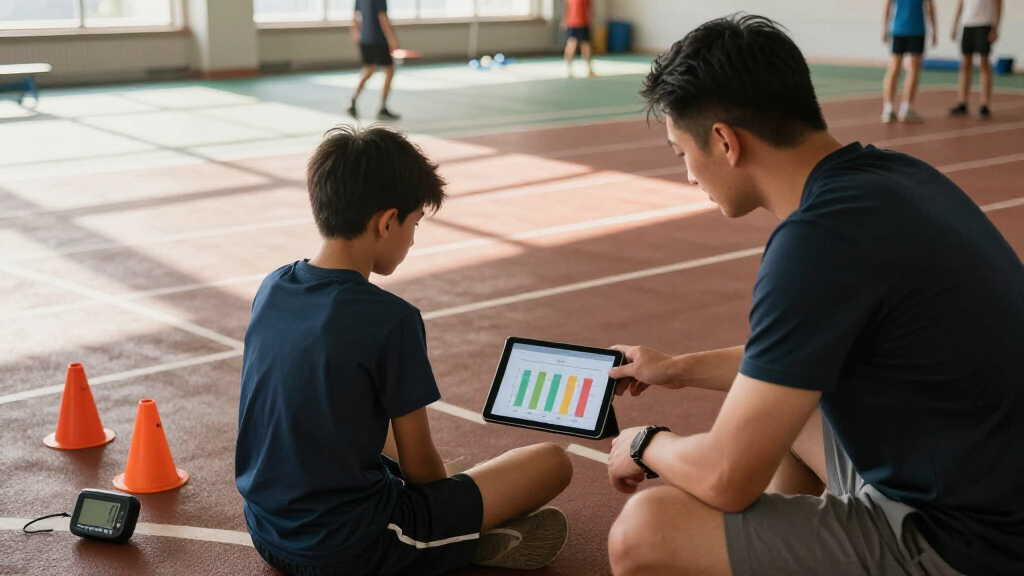
IdeaNavigator AI proposes testing a phone-based form-grading app for young athletes, starting with baseball hitting and families whose children practice without private coaches. The proposal calls for certified coaches to compare the app’s assessments with their own across 100 children; no pilot results or validated accuracy figures are provided.
IdeaNavigator AI has proposed testing a phone-based app that grades young athletes’ movements against reference mechanics, with an initial baseball hitting pilot assessed by certified coaches. The proposal targets families whose children practice without a private coach, but it reports no completed trial, accuracy results or evidence of injury reduction.
The suggested first version would let a parent or athlete film a repetition, then compare the child’s movement with a reference profile for the skill. It would grade selected checkpoints—such as hip rotation, release angle or stride—and offer one drill aimed at the largest identified gap. The proposal describes this as a focused initial workflow, not a validated product.
For an initial test, the proposal recommends limiting the app to baseball hitting and asking certified coaches to review its grades against their own assessments for 100 children. It does not specify how the children would be recruited, what ages or experience levels they would represent, how agreement would be measured, or what results would count as a successful test.
The proposed customer is the parent of a young athlete practicing without a private coach. The business model outlined is a family subscription for each sport, with a separate coach tier for team use. These are product and pricing concepts; no subscription price, launch date or commercial availability is given.
Testing App Grades Against Coaches
The proposal addresses a practical coaching gap: parents may see a child repeat a movement but lack the expertise to identify a technical issue or suggest a useful correction. If phone-based feedback proves reliable, it could offer families more structured practice guidance between lessons and give coaches a way to support athletes outside scheduled sessions.
That value depends on whether the app’s feedback is accurate, understandable and appropriate for a growing athlete. A grade that misreads a movement could direct practice toward the wrong adjustment. A reference drawn from professional mechanics also needs to account for differences in age, body size, skill level and individual technique. The proposed coach audit is therefore a test of whether the app’s judgments match human assessments—not proof that a particular movement is ideal for every child.
The idea also raises a distinction between technical feedback and health outcomes. The proposal identifies injury risk as a concern when movement flaws go unnoticed, but supplies no evidence that its suggested app would prevent injuries. Families and coaches would need that claim tested separately from whether the software can identify selected checkpoints.
Products Worth Considering

Sony WH-1000XM5 Premium Noise Cancelling Wireless Headphones, Midnight Blue

Logitech MX Master 4 Ergonomic Wireless Mouse with Haptic Feedback, Graphite

Bose Lifestyle Ultra Wireless Home Speaker
As an affiliate, we earn on qualifying purchases.
From Phone Video to Practice Feedback
The concept rests on the use of pose-estimation software, which analyzes images or video to estimate body positions and movement. IdeaNavigator AI says such models can now run on phones with accuracy sufficient for comparisons to reference motion profiles. The material offers no named model, measured accuracy figure, independent study or test conditions, so that statement remains a claim behind the proposal, not a reported finding from this planned pilot.
The proposed workflow is deliberately narrow: capture a rep, grade a few checkpoints and prescribe one drill per session. That scope could make an early test easier to evaluate than a general-purpose app covering many sports and skills. The proposal does not describe how the reference mechanics would be selected, whether they would be based on multiple athletes, or how the system would handle camera angle, clothing, lighting and inconsistent recording.
IdeaNavigator AI frames the potential alternative against private coaching priced at $75 to $150 per session. No location, date range or pricing survey is supplied for that estimate. The figure provides context for the proposed family subscription model, but it should not be treated as a universal coaching rate.
Accuracy and Safety Still Untested
No pilot findings are available, and the proposal does not identify a product, development team, participating coaches or date for testing. It is also unclear how coaches would score each child, whether they would review video without seeing the app’s grade, or how disagreements between reviewers would be handled.
The material does not provide evidence for its claims about phone-model accuracy, nor does it show that professional reference mechanics translate appropriately to children. It gives no information about privacy and handling of children’s video, parental consent, data retention or whether footage would be used to improve the system. Those matters would need clear answers before families could assess the app’s suitability.
Finally, the proposed checks focus on movement mechanics. They do not establish that the app could diagnose an injury, replace a coach or clinician, or reduce injury risk. The distinction between practice feedback and medical guidance remains important, and no medical function is specified.
A 100-Child Coach Review
The next proposed milestone is a baseball hitting pilot involving 100 children, with certified coaches comparing their assessments with the app’s grades. A useful report would explain the participants’ ages and experience, the skills and checkpoints tested, the scoring method, and how often coach and app judgments agreed. It would also describe limitations, including situations where video quality or individual technique made a grade unreliable.
After that test, developers would need to show whether the feedback helps athletes make a suitable change during practice and whether the drills are practical for families to follow. The proposal does not set out those follow-up measures, a timeline or a decision threshold for expanding beyond baseball. Until testing is reported, the app remains a product concept with a suggested validation plan, rather than a demonstrated coaching tool.
Source: IdeaNavigator AI
Key Questions
Has the proposed app been tested with young athletes?
The proposal does not report a completed test or results. It recommends a future baseball hitting pilot with 100 children, reviewed by certified coaches.
What would the app assess?
The suggested app would compare video with reference mechanics and grade selected checkpoints, including examples such as hip rotation, release angle and stride. The exact baseball checkpoints are not specified.
Would the app replace a private coach?
That has not been established. The concept is aimed at practice feedback for families without private coaching, and its proposed pilot would compare app grades with certified coaches’ assessments.
Does the proposal show that the app can prevent injuries?
No. It raises injury risk as a concern but provides no results showing injury prevention. The suggested test focuses on comparing form assessments.
What happens after the suggested pilot?
No later steps or timetable are specified. The proposed first test would need to report how coach assessments compare with the app’s grades before any broader rollout could be evaluated.
Source: IdeaNavigator AI