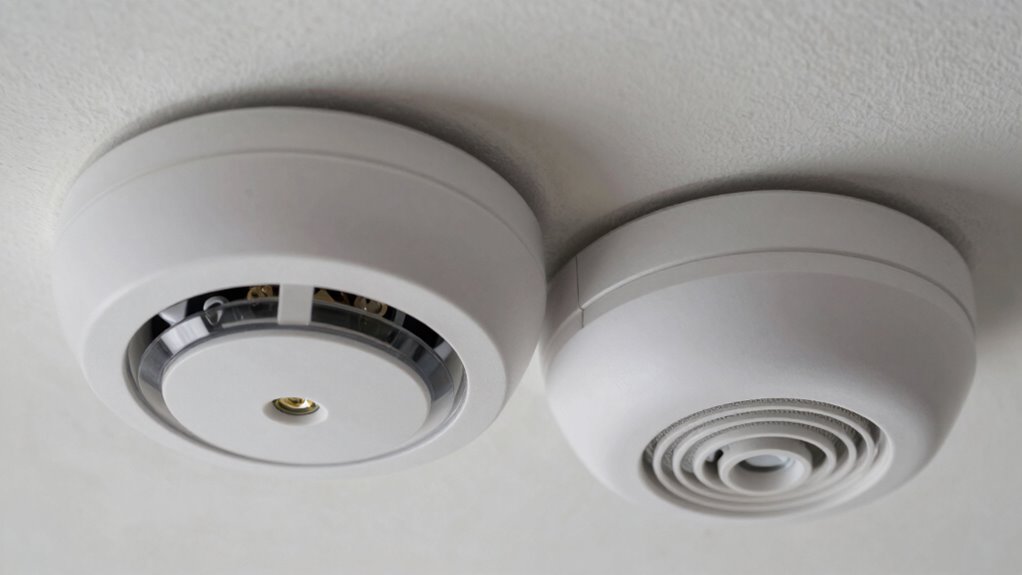

Smart smoke detectors use two main types of technology to keep you safe: photoelectric and ionization. Photoelectric detectors sense smoke by detecting scattered light, making them good at catching slow, smoky fires. Ionization detectors react quickly to rapid, flaming fires by sensing disruptions in electrical flow caused by smoke particles. Some smart detectors include both sensors for better safety, and understanding how each works helps you choose the right alarm. Keep exploring to learn more about making your home safer.
Key Takeaways
- Photoelectric detectors use light to detect smoky fires, ideal for slow, smoldering fires and reduce false alarms from cooking or steam.
- Ionization detectors use radioactive material to sense fast-flaming fires, responding quickly to small, rapidly spreading flames.
- Many smart detectors combine both types for comprehensive fire detection and can send alerts to your phone or voice devices.
- Proper placement and regular maintenance are essential for all detectors to ensure reliable, timely fire warnings.
- Smart smoke detectors enhance safety with features like wireless alerts, voice notifications, and remote monitoring for quick response.
What Are Photoelectric and Ionization Smoke Detectors?

Understanding the differences between photoelectric and ionization smoke detectors can help you choose the right fire safety device for your home. Both types meet fire alarm standards, but they detect smoke differently. Photoelectric detectors use a light source and a sensor; when smoke enters, it scatters the light, triggering the alarm. Ionization detectors contain a small amount of radioactive material that detects changes in electrical current caused by smoke particles. Proper detector placement is key—photoelectric models are better for smoldering fires, often placed in bedrooms and living areas, while ionization detectors work well in kitchens or garages. Additionally, smoke detection mechanisms vary in sensitivity and response time depending on the type, which can influence your safety strategy. Knowing these differences ensures you install the most effective smoke detectors, providing reliable early warning and keeping your home safe. For example, detection sensitivity can vary based on the internal components, affecting how quickly a detector responds to different fire types. Furthermore, understanding fire detection technology helps you select detectors that best match your specific safety needs. To maximize safety, consider smart smoke detectors that integrate with home automation systems for enhanced monitoring and alerts.
How Do Photoelectric Smoke Detectors Detect Smoke?
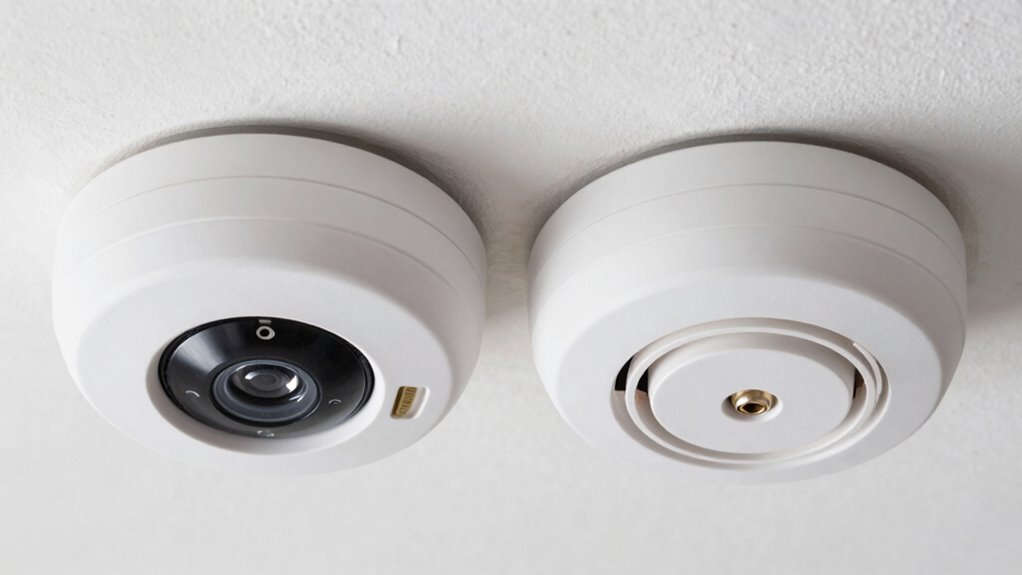
Have you ever wondered how photoelectric smoke detectors sense smoke? When smoke enters the detector, it scatters light from an internal LED onto a sensor. Normally, the light stays focused away from the sensor, but when smoke particles are present, they scatter the light into the sensor’s path. This triggers the alarm, alerting you to potential danger. Many photoelectric detectors are designed for alarm system integration, making them compatible with smart home setups. Battery life considerations are also important; since these detectors rely on small batteries, choosing models with long-lasting power helps ensure continuous protection without frequent replacements. This simple yet effective mechanism provides quick detection of smoldering fires, helping keep you safe. Photoelectric technology is particularly effective at detecting slow, smoky fires, making it a reliable choice for home safety. Navigation and mapping features in some advanced detectors can enhance their placement and reliability in your home.
How Do Ionization Smoke Detectors Detect Smoke?
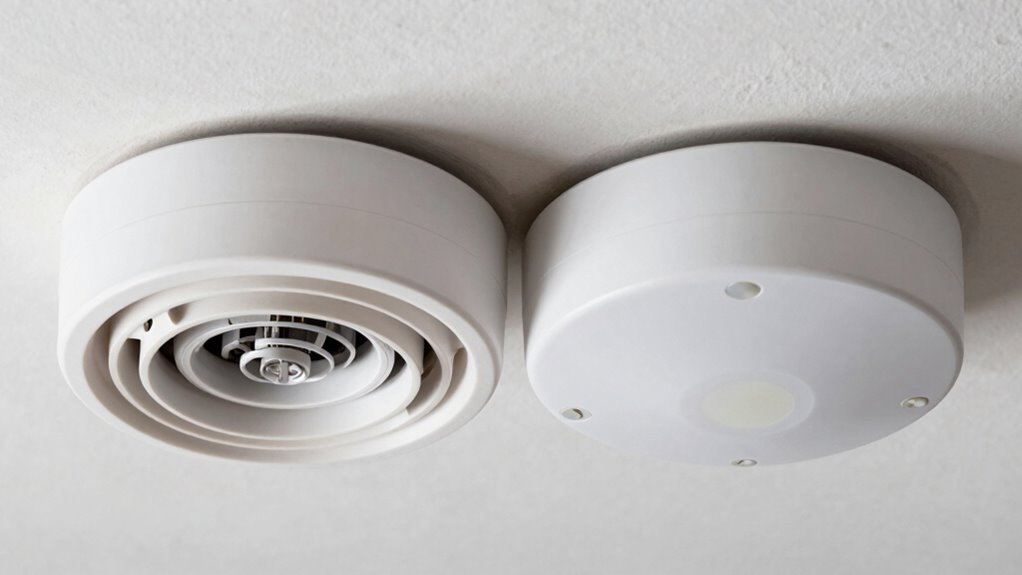
Ionization smoke detectors use a small chamber with electrically charged plates to sense smoke. When particles enter the chamber, they disrupt the electrical current, signaling a fire. This detection method helps you identify fast-flaming fires quickly. Affiliate disclosure and privacy policies ensure transparency and user control over data and advertising preferences. Understanding how these detectors work can help you choose the right safety device for your home or business, especially considering the digital revolution impacting safety technology today.
Ionization Chamber Functionality
Ionization smoke detectors work by using a small amount of radioactive material to create a continuous electrical current within a specialized chamber. This ionization chamber contains two plates that form part of an electrical circuit. When smoke particles enter the chamber, they disrupt the ionization process, reducing the current flow. This drop signals the alarm to sound. The design of the ionization chamber makes the detector highly sensitive to even tiny smoke particles, which is why it’s effective at detecting fast-flaming fires. Your detector’s detection sensitivity depends on how quickly it responds to changes in the ionization process caused by smoke. As smoke enters the chamber, the ionization process is interrupted, triggering the alarm. This method guarantees rapid detection of certain types of fires, providing vital early warning.
Smoke Particle Detection Method
When smoke particles enter the detector’s chamber, they interfere with the flow of ions created by the radioactive material. This disruption triggers a change in the electrical current, alerting you to potential fire. Ionization smoke detectors are often equipped with wireless connectivity, allowing you to receive alerts remotely. They typically have a long battery life, making them reliable over years without frequent replacement. The table below compares key features:
| Feature | Details |
|---|---|
| Wireless | Enables remote alerts and app control |
| Battery Life | Usually lasts 1-10 years, depending on use |
| Smoke Detection | Sensitive to fast-flaming fires |
Understanding this detection method helps you appreciate how ionization sensors quickly identify smoke, ensuring your safety with minimal maintenance. Ionization sensors are designed to detect the tiny particles produced by flaming fires, making them especially effective in certain fire scenarios. Additionally, these detectors often include alarm indicators that provide clear alerts to prompt immediate action. Recognizing the importance of fire safety technology can help you make informed choices for your home or workplace.
Which Smoke Detector Is Safer and More Effective for Your Home?
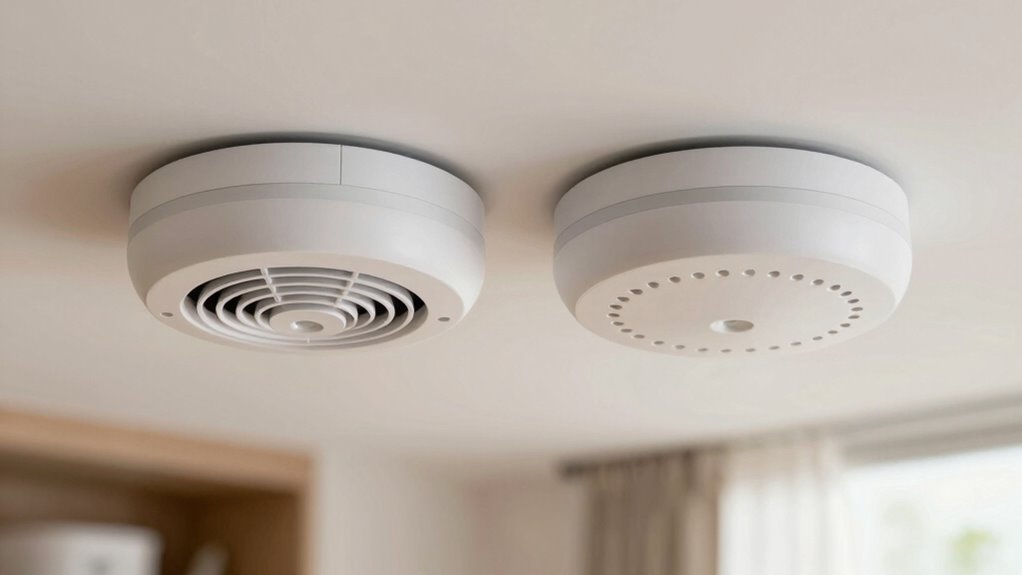
Choosing the safest and most effective smoke detector for your home depends on understanding the differences between types. Wireless connectivity allows your detectors to communicate seamlessly, providing instant alerts on your phone and reducing the risk of missed alarms. When selecting a detector, consider battery life; longer-lasting batteries mean fewer replacements and consistent protection. Ionization detectors are quick to sense fast flaming fires, while photoelectric models excel at detecting smoldering fires. For maximum safety, many experts recommend dual-sensor detectors that combine both technologies. A smart detector with wireless connectivity and a reliable battery ensures you’re alerted promptly, even if you’re not home. Understanding the importance of fire detection technology helps you make informed choices for your safety. Ultimately, selecting a detector that balances safety features, connectivity, and battery longevity keeps your home better protected.
What Are the Pros and Cons of Photoelectric Smoke Detectors?
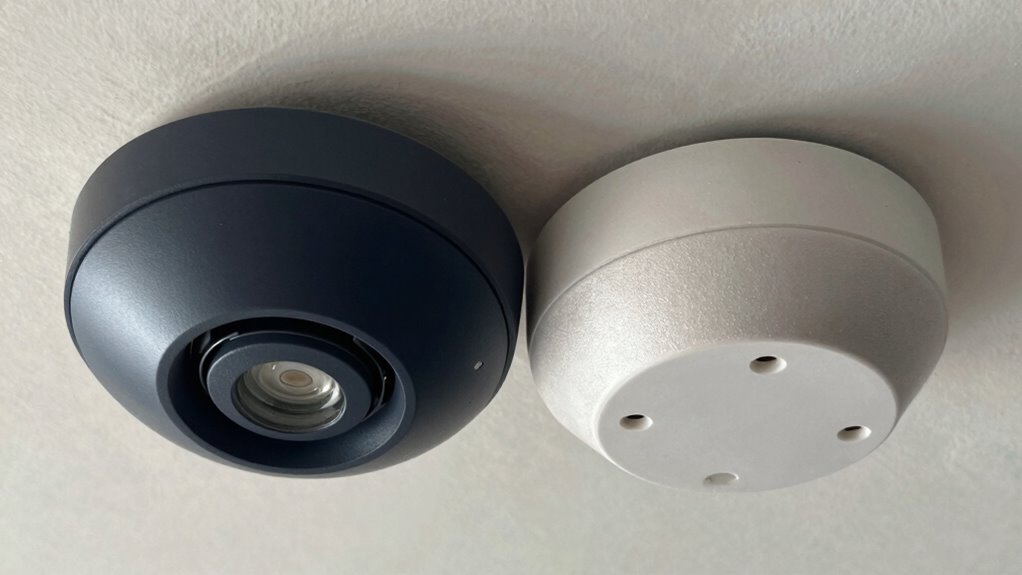
Photoelectric smoke detectors offer several advantages that make them a popular choice for many homeowners. They’re especially effective at detecting smoldering fires with their light-based technology, reducing false alarms from cooking or steam. When installing, choose locations away from kitchens and bathrooms to avoid nuisance alarms, and follow installation tips like mounting on the ceiling or high on the wall for best coverage. Maintenance requirements are minimal; you should test the detector monthly and replace batteries annually. Cleaning the unit with a soft brush helps keep it functioning properly. Keep in mind that while photoelectric detectors are excellent for slow, smoky fires, they might not respond as quickly to fast, flaming fires compared to ionization models. Overall, they’re low-maintenance and reliable when properly installed. Understanding the specific fire detection technologies can help you choose the best detector for your needs. Additionally, choosing appropriate placement can significantly enhance their effectiveness in your home. Proper installation techniques ensure optimal performance and safety.
What Are the Advantages and Disadvantages of Ionization Smoke Detectors?
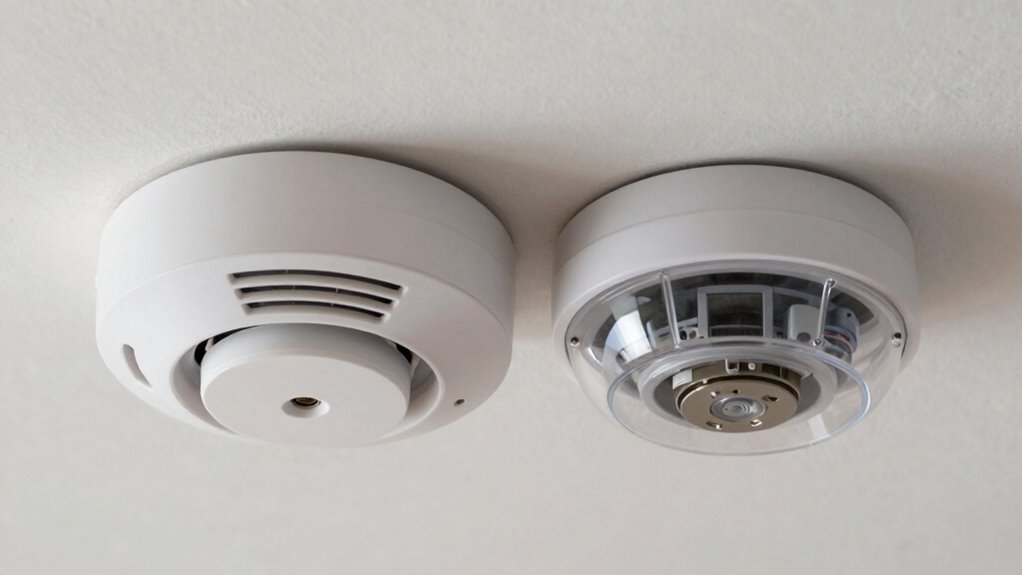
Ionization smoke detectors are another common option, and they work differently from photoelectric models by using a small amount of radioactive material to detect smoke particles. One advantage is their quick response to flaming fires, which produce smaller smoke particles. However, they tend to have shorter battery life, meaning you’ll need to replace batteries more often. Cost considerations also come into play, as ionization detectors are typically cheaper upfront. But, because they may need more frequent battery changes, long-term costs can add up. Additionally, they’re less effective at detecting slow, smoldering fires compared to photoelectric models. Overall, ionization detectors are affordable and responsive to certain fires, but you should weigh their shorter battery life and limitations in detecting specific smoke types when choosing your alarm.
Do Smart Smoke Detectors Use Both Technologies?

Many smart smoke detectors combine both ionization and photoelectric technologies to provide more all-encompassing fire detection. This dual sensor technology enhances safety by addressing the limitations of each method individually. With combined detection methods, these detectors can quickly identify fast-flaming fires and slow-smoldering fires, reducing false alarms and increasing reliability. When one sensor detects smoke, the detector triggers an alert, ensuring you’re promptly informed of potential danger. Smart features like app notifications and voice alerts further improve your response time. Not all smart smoke detectors use both technologies, but those that do offer a more extensive safety net for your home. This dual sensor approach balances sensitivity and accuracy, making it a popular choice for modern safety systems. Incorporating holistic safety strategies like dual sensors can significantly improve overall home safety.
How to Choose the Right Smoke Detector for Your Home
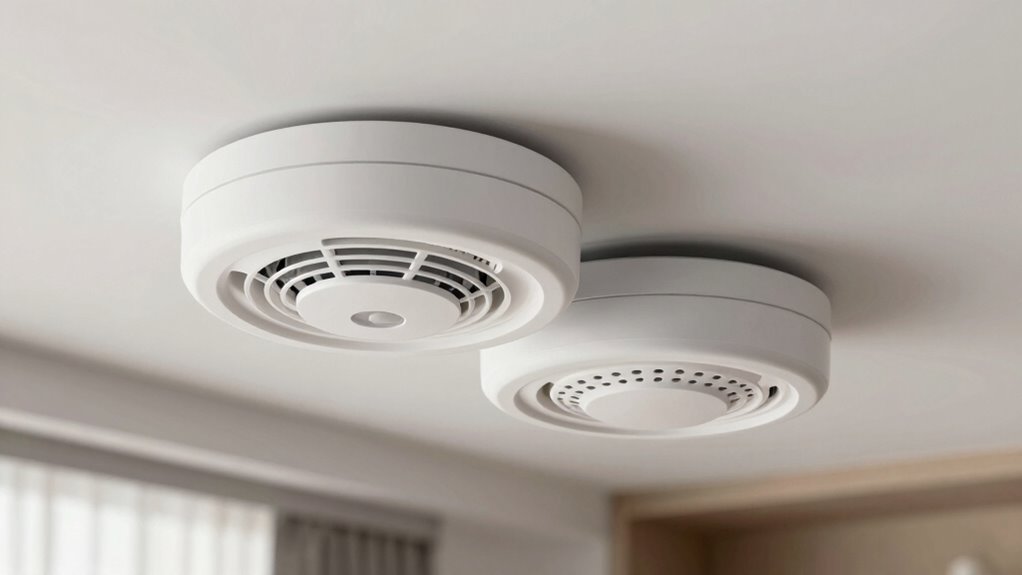
Choosing the right smoke detector for your home involves understanding your specific safety needs and the features available. Consider the installation locations carefully; place detectors on every level, near bedrooms, and in the kitchen, but avoid areas with high humidity or dust. Battery maintenance is vital—regularly check and replace batteries to guarantee the detector works when needed. Decide between photoelectric and ionization types based on your home’s risks, or opt for smart detectors that combine both. Keep in mind that early detection can save lives, so choose models with easy-to-maintain batteries and clear alerts. Proper placement and consistent battery care are essential to maintaining a reliable safety system that protects you and your loved ones effectively. Understanding regulatory considerations is also important to ensure your smoke detectors meet local safety standards. Additionally, understanding common smoke detector problems can help you troubleshoot issues and ensure your system remains functional over time. Regularly testing your detectors and being aware of fire safety regulations can further enhance your home’s safety measures. Being familiar with backup power options can also help maintain detector functionality during outages.
Frequently Asked Questions
Can Smart Smoke Detectors Differentiate Between Types of Smoke?
Yes, smart smoke detectors can differentiate between types of smoke using advanced smoke detection technology. They analyze sensor calibration data to identify whether smoke is from a smoldering fire or flaming flames. This allows you to receive more accurate alerts, reducing false alarms. By continuously monitoring sensor calibration, smart detectors guarantee you get timely warnings tailored to the specific smoke type, helping you stay safe and informed.
How Often Should I Test My Smart Smoke Detectors?
You should test your smart smoke detectors once a month to guarantee they’re working properly. Regular testing helps catch any issues early, especially if battery maintenance is needed. Replace batteries at least once a year or if the device indicates low power. Consistent testing and battery checks keep your smart smoke detector reliable, giving you peace of mind that it will alert you in an emergency.
Do Smart Smoke Detectors Require Wi-Fi to Function?
Do smart smoke detectors need Wi-Fi to work? Not always. They typically rely on wireless connectivity for features like alerts and app control, but many models can still detect smoke and sound alarms without Wi-Fi. Just keep in mind, this may affect how often they update or send notifications. Check your device’s battery life and connectivity options—if Wi-Fi drops, your detector can still keep you safe, but some features might be limited.
Are Smart Smoke Detectors Compatible With Home Automation Systems?
Yes, smart smoke detectors are compatible with home automation systems. They use wireless connectivity like Wi-Fi or Zigbee, allowing you to control or monitor them via a home automation hub or app. Many also work with voice assistants like Alexa or Google Assistant, so you can get alerts or silence alarms through voice commands. This integration makes your home safer and more convenient by keeping you connected and in control.
What Is the Lifespan of a Smart Smoke Detector?
Your smart smoke detector typically lasts about 8 to 10 years. While the device’s sensor durability guarantees long-term safety, you’ll need to replace the batteries annually or when they drain. Juxtapose its solid lifespan with the frequent need for battery changes, and you’ll see how maintaining your detector’s lifespan involves both understanding its longevity and staying on top of battery replacements. This balance keeps your home safe and alert.
Conclusion
So, now that you’re armed with the scoop on photoelectric and ionization smoke detectors, you can confidently choose the perfect guardian for your home—preferably one that won’t nag you with false alarms or overlook a real fire. After all, who needs a smoke detector that’s more drama queen than lifesaver? Make your pick wisely, and sleep soundly knowing your home’s safety is genuinely covered—without the unnecessary theatrics.