
📊 Full opportunity report: How Manufacturing Data Supports Made-in-USA Claims on IdeaNavigator AI — validation score, market gap, and execution plan.

Get the latest gadgets delivered free with Prime
- Fast, free delivery on millions of items
- Prime Video, Amazon Music and more included
- Member-only deals all year
TL;DR
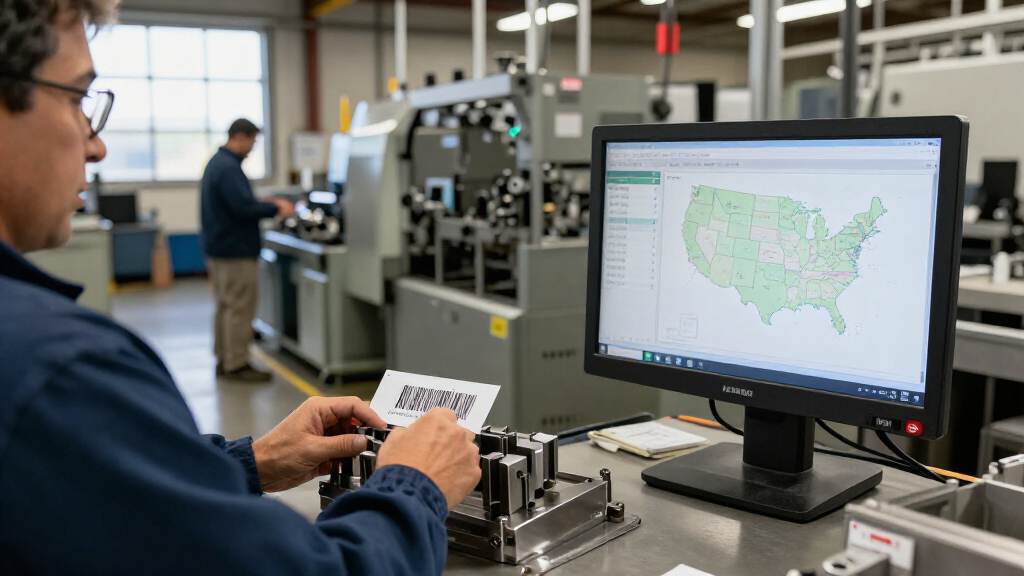
IdeaNavigator AI describes a proposed software workflow that links each product SKU to bills of materials, supplier affidavits and assembly locations, then flags changes that could affect U.S.-origin claims. The proposal also cites an April 2026 FTC enforcement sweep, but provides no details identifying the sweep’s scope, penalties or individual actions.
IdeaNavigator AI proposes a compliance workflow connecting consumer products’ bills of materials, supplier affidavits and assembly locations to their Made-in-USA claims, with alerts when supplier changes may affect those claims. The proposal targets brands that print origin statements on packaging. It describes a product concept and validation plan—not a launched service or an independently verified enforcement action.
According to the IdeaNavigator AI proposal, the system would maintain a substantiation file for each stock-keeping unit (SKU), linking each product to its bill of materials, supplier affidavits and assembly location. A dashboard would assign a red, yellow or green status to claims across product lines, helping compliance or operations teams identify records that need review before marketing materials are printed or shipped.
The proposal also describes monitoring supplier changes through webhooks—notifications sent when connected systems record an update. A supplier change would prompt the system to flag affected product claims and alert compliance staff. IdeaNavigator AI says the concept is intended to reduce reliance on evidence scattered across email threads and receipts, but does not specify which supplier systems it would connect to or how records would be verified.
IdeaNavigator AI suggests an annual subscription priced by brand or SKU count, with an audit-response module sold separately. To test demand, the proposal recommends offering a fixed-fee substantiation audit to 15 brands that already print U.S.-origin claims, then measuring how many convert to an ongoing monitoring subscription. The proposal reports no completed tests, customer commitments, pricing figures or product launch.
How Manufacturing Data Supports Made-in-USA Claims
IdeaNavigator AI proposes linking product records and supplier changes to origin claims. The concept is a proposed workflow, not a launched or validated service.
Records behind each claim
The proposed system would keep supporting records connected to each product.
Connect each SKU to its bill of materials, supplier affidavits and assembly location.
Flag changes that may affect a product’s origin claim and alert compliance staff.
Help teams identify records to check before packaging or advertising is printed or shipped.
What the workflow could help with
Product-level records
A separate file for each SKU could make supporting documents easier for teams to find and reconcile.
Change alerts
Supplier updates could prompt a review when facts behind a claim may have changed.
Better documentation
Organized records could help brands document how they arrived at a claim, but do not prove it is legally valid.
How demand would be tested
The proposal recommends a paid audit as an initial test of interest in ongoing monitoring.
Invite 15 brands already using U.S.-origin claims to take a fixed-fee audit.
Track how many audit customers sign up for a monitoring subscription.
No completed test, customer commitments or results are reported.
What remains unclear
- No launch or working alerts are reported.
- Connected supplier systems and record verification methods are unspecified.
- Status colors would be screening signals, not legal determinations.
- The proposal cites an April 2026 enforcement sweep.
- It provides no agency notice, cases, named companies or penalties.
- The sweep’s scope and outcome cannot be established from the material.
Keeping Product Claims Current
Origin statements on packaging depend on facts about how a product is made and where its inputs come from. When a supplier changes, records are incomplete or a product’s manufacturing arrangement shifts, a brand may need to reassess whether its existing claim remains supportable. IdeaNavigator AI’s proposal argues that a linked record system could make those changes easier to spot than files held separately by purchasing, operations and legal teams.
The proposal treats substantiation as an ongoing process rather than a one-time paperwork exercise. SKU-level tracking could help teams distinguish between product lines instead of relying on a general company-level file, while change alerts could prompt review before packaging or advertising is released. These are proposed benefits, not demonstrated performance results: IdeaNavigator AI provides no evidence that the software has reduced errors, inquiry response times or legal exposure.
For consumers, such a system could improve a company’s internal ability to document how it arrived at an origin claim. It would not, by itself, prove that a claim is legally valid or guarantee that a product was made in the United States. The underlying evidence and applicable rules would still need to be evaluated by the brand and, where appropriate, its advisers.
Products Worth Considering

DJI Mini 4K Drone with 4K UHD Camera

Logitech MX Mechanical Wireless Illuminated Keyboard, Tactile Quiet, Graphite

Bose SoundLink Max Portable Bluetooth Speaker, Black
As an affiliate, we earn on qualifying purchases.
The Records Behind Origin Claims
IdeaNavigator AI frames the problem as a gap between packaging language and the records that support it. A brand may have supplier declarations, component information and assembly details, but those records can be difficult to reconcile when they sit in separate systems or email chains. The proposal also notes that a supplier’s move to a different factory could change facts relevant to a particular product, even if the brand’s packaging has not changed.
IdeaNavigator AI says the proposal is timed in response to an FTC enforcement sweep on origin claims in April 2026, which it characterizes as making a previously dormant paperwork obligation an active legal exposure. That description comes from the proposal. The material provides no FTC announcement, enforcement cases, named companies, penalties or applicable legal standard, so the asserted sweep and its consequences cannot be independently detailed here.
The proposal presents a potential product opportunity, not a report of a regulatory decision or a finding about any particular company. It identifies consumer brands with origin claims on packaging as intended users and compliance or operations staff as likely buyers. The proposed fixed-fee audits would test whether those teams see enough value in organized records and monitoring to pay for a continuing subscription.
Enforcement Details Still Missing
The scale and specifics of the FTC activity cited by IdeaNavigator AI are unclear. Its proposal gives April 2026 as the timing of an enforcement sweep but does not link to an agency notice, identify enforcement actions, describe penalties or say which claims are under review. It also does not establish whether the sweep has resulted in final findings or which companies have been affected.
IdeaNavigator AI describes the software as an MVP concept. The proposal names no developer or release date and provides no technical specification, pricing, customer list or evidence that supplier-change alerts have been built or tested. It also leaves open how the system would handle incomplete affidavits, conflicting records, suppliers outside connected platforms and changes that are not entered into a digital system.
Finally, a red-yellow-green label would be an internal screening tool, not a substitute for a legal determination. The proposal does not define the criteria for each status or explain how users would confirm that documents are current and accurate. It also does not report whether the proposed 15-brand validation test will occur or what conversion rate would count as evidence of demand.
Testing Demand With Brand Audits
IdeaNavigator AI proposes offering fixed-fee substantiation audits to 15 brands already using Made-in-USA claims. The test would measure whether audit customers sign up for ongoing monitoring, providing an initial indication of demand for the subscription model. The proposal gives no schedule or results, and the sample would not by itself establish broad market demand.
If developed, the product would need to demonstrate that it can reliably connect product records, identify relevant supplier changes and route alerts to staff before claims are published. Further reporting would also need to verify the cited FTC activity against agency records and establish which specific obligations or enforcement risks apply. Until those details emerge, the proposal remains a potential compliance tool rather than evidence of a new regulatory requirement or a proven solution.
Source: IdeaNavigator AI proposal
Key Questions
What is the proposed product?
IdeaNavigator AI proposes a system linking each product SKU to its bill of materials, supplier affidavits and assembly location, then flagging records or changes that may affect an origin claim.
Has the software launched?
No launch is reported in IdeaNavigator AI’s material. It describes an MVP concept and a proposed customer test, not a product shown to be available or in use.
What did the FTC do in April 2026?
IdeaNavigator AI’s proposal refers to an FTC enforcement sweep on origin claims in April 2026. It provides no agency notice, cases, named penalties or other details to independently establish the sweep’s scope or outcome.
Would a green status prove a claim is valid?
No. The proposal describes a status indicator as an internal review aid, not a guarantee. The accuracy and legal support for a claim would still depend on the evidence and applicable requirements.
Source: IdeaNavigator AI