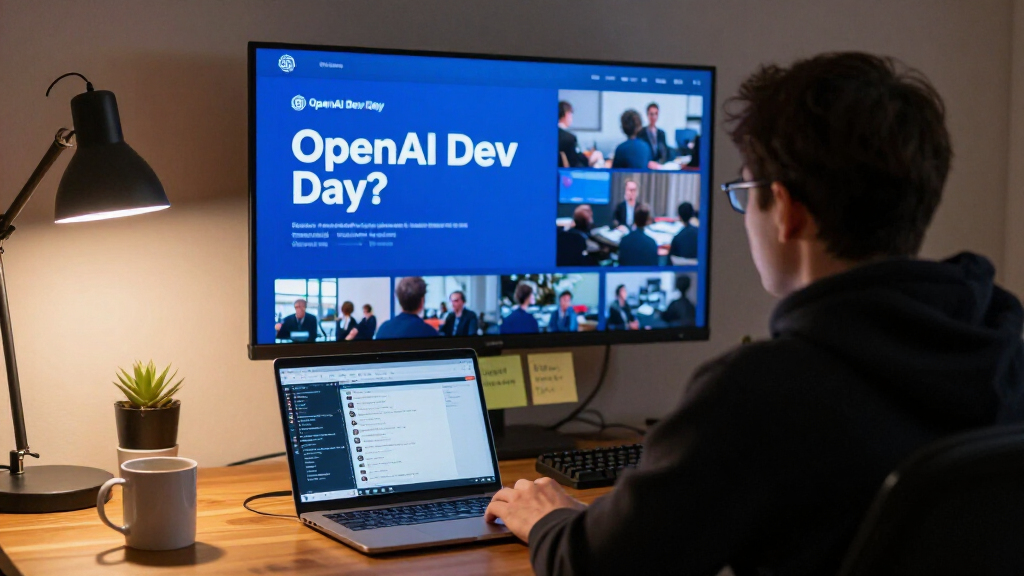

🔍 Read the full analysis: A Clear-Eyed Recap Of OpenAI Dev Day 2026 on ThorstenMeyerAI.com

Get the latest gadgets delivered free — and shop member deals
- Fast, free delivery on millions of items
- Access to Prime Big Deal Days deals on October 6–7
- Prime Video, Amazon Music and more included
TL;DR
At DevDay on 29 September 2026, OpenAI announced more than 20 products and features positioning ChatGPT as an agent platform for its 1.2 billion weekly users. The headline items: always-on Dots agents powered by GPT-6 Astra, a major plugin expansion, a Decisions API in limited preview, computer use in the Agents API, Sign in with ChatGPT, and the cheaper GPT-6.1 Sol model.
OpenAI used its DevDay on 29 September 2026 to reposition itself from a chatbot maker into an agent platform company, announcing more than 20 products and features and pitching ChatGPT as a shared surface for humans and agents, with 1.2 billion weekly users. The announcements with the largest practical impact for developers and businesses were Dots, OpenAI’s persistent personal agents; a rebuilt plugin ecosystem; a Decisions API in limited preview; computer use in the Agents API; and Sign in with ChatGPT with 16 launch partners.
Dots are OpenAI’s biggest consumer bet: always-on agents powered by GPT-6 Astra, each with its own cloud computer and browser, able to reach over 4,000 apps through plugins. A dot works toward a user’s goals around the clock, learns preferences over time, and can keep several projects moving at once. Access starts with Pro and Business Premium plans in eligible markets, with Enterprise, Edu and Healthcare available through an admin-enabled beta that is off by default. The first dot is included in the plan; chatting with it does not count toward usage limits, but tasks it starts in Codex or ChatGPT Work do.
Control mechanisms are a central design constraint. Each dot runs on its own cloud computer, dots can use saved passwords without exposing them to the model, and background “proactive research” is limited to read-only tools. Custom Rules let users allow, require approval for, or block specific actions, while an Activity View shows background work and monitoring can pause or stop a dot. OpenAI still warns that dots can make mistakes, and certain sensitive tasks such as changing a password always stay with the user.
The plugin ecosystem was upgraded across the board: plugin extensions that live inside the ChatGPT sidebar, a new Plugin Creator and submission flow, improved discovery, Sites that host plugins with per-user data and permissions, and support for the proposed MCP Events specification that lets plugins trigger automations. An OpenAI Marketplace lets eligible enterprise customers spend part of their OpenAI commitment with 32 launch partners, including Figma, Adobe, Salesforce, ServiceNow, Harvey, CrowdStrike and Baseten. Separately, the Decisions API applies GPT-6 Luna to narrow, repetitive choices, returning selections from a finite answer list defined by the developer; it is in limited preview. The Agents API now supports computer use, with OpenAI running the Codex harness, and Sign in with ChatGPT lets users carry their existing plan into 16 launch partners.
OpenAI DevDay 2026 at a glance
The five launches that matter, plus Sol
The rest of the slate
Collaboration
ChatGPT SpacelivePagesliveCollaborative slidesnext few weeksTeams and Team Taskslive@ChatGPT in Slack and TeamsliveMeetings pluginbeta, macOSShareable profilesliveCodex
Codex CloudliveCLI refreshvoice, /agentsCode ReviewliveCodex Security CloudlivePlans, enterprise, speed
Pro 500$500, 25× PlusUltrafastAstra now, Sol soonPrivate IntelligencePrivate Inference this fallBedrock Managed Agentsruns in AWSOpenAI Marketplace32 partners, applyWhy Plugin Distribution Now Decides Revenue
The strategic shift matters because distribution moves from apps to plugins. Since dots reach over 4,000 apps through the plugin ecosystem, plugin visibility determines which businesses get work from agents. OpenAI’s own framing, in commentary material from the event, is that an agent picks a business by outcome, not by brand: the customer asks for a result, ChatGPT understands the job, and the business’s plugin is selected — meaning a business can be “hired” before the customer knows its name. For developers and sellers, the practical questions become why a plugin was selected or ignored, which points to measuring intent, activation and completion.
The model announcements also change the economics of building on OpenAI. GPT-6.1 Sol offers near-Astra intelligence at one-fifth of Astra’s token prices, according to OpenAI, lowering the cost of running agents at scale. Sign in with ChatGPT makes a free core app with paid upsells workable, since users bring their existing plan with them. For enterprises, specialist dots — agents with their own identity, credentials and IT-provisioned hardware — open a path to delegating defined responsibilities in procurement, invoice processing, email marketing, customer support and commercial contracting.
From Chatbot to Platform in One Keynote
DevDay has historically been where OpenAI shows its developer roadmap, but this year’s event framed ChatGPT itself as an operating surface for agents rather than a conversational product. The pitch of ChatGPT as a shared surface for humans and agents, reaching 1.2 billion weekly users, positions OpenAI against other agent ecosystems rather than only other chatbots.
Signals in the developer docs reinforce that positioning: they include conversion specifications for restaurant reservations, quote requests and product checkout, and — more tellingly — a guide for submitting a Claude Code plugin, suggesting OpenAI wants to accept skills built for competing agent ecosystems. A planned Microsoft Agent 365 integration for governance signals the enterprise direction for specialist dots. Figma and Adobe demonstrated plugin extension integrations during the event.
“An agent picks a business by outcome, not by brand.”
— Event commentary material
Open Questions After the Keynote
Several things remain unclear. The Decisions API is in limited preview with a broad release promised but not dated in the available material. OpenAI’s vision of teams of dots working together is described as a future direction, not a shipped capability. Pricing for additional dots, extra speed and higher monthly output per dot is described only at the level of future options — concrete figures were not in the announcements.
Real-world reliability of dots is also unproven beyond OpenAI’s own examples and a small number of early-tester anecdotes, such as a dot that noticed an uninvoiced publication, prepared an invoice and sent it after approval. Whether proactive agents perform safely at scale across 1.2 billion weekly users — and how plugin selection actually behaves in practice — will only become clear as rollout widens beyond Pro, Business Premium and admin-enabled enterprise betas.
Rollout Milestones to Watch
In the near term, watch for the broad release of the Decisions API, the arrival of texting as a channel for dots (voice calls work today), and expansion of dot access beyond Pro and Business Premium into broader Enterprise, Edu and Healthcare availability. The OpenAI Marketplace footprint — currently 32 launch partners — is likely to grow, and the guide for submitting Claude Code plugins suggests an influx of plugins ported from other ecosystems.
Further out, OpenAI has said it envisions teams of dots collaborating, and the planned Microsoft Agent 365 integration for specialist-dot governance is a milestone for enterprise adoption. Developers and businesses building plugins should monitor discovery ranking behavior and the MCP Events specification’s progression from proposal to standard.
Key Questions
What are Dots in OpenAI’s DevDay 2026 announcements?
Dots are always-on personal agents powered by GPT-6 Astra. Each dot runs on its own cloud computer with a browser, connects to over 4,000 apps through plugins, and works toward your goals continuously. They are available now for Pro and Business Premium users in eligible markets, with the first dot included in the plan.
What is the Decisions API?
The Decisions API applies GPT-6 Luna to narrow, repetitive decisions. You define questions with a finite list of allowed answers, send text or images as context, and receive a selection your app can use to classify content, route requests or choose an agent’s next action. It is currently in limited preview.
What is GPT-6.1 Sol and how does its pricing compare?
According to OpenAI, GPT-6.1 Sol delivers near-Astra intelligence at one-fifth of Astra’s token prices, making it a cheaper option for running agent workloads at scale.
Why do plugins matter so much in this announcement?
Plugins are now the way into ChatGPT, Codex and dots, reaching 4,000-plus apps. Because agents select businesses by outcome rather than brand, plugin distribution effectively decides which businesses receive work from agents — making visibility and conversion measurement a new competitive battleground.
What safeguards exist for always-on Dots?
Each dot runs on an isolated cloud computer, saved passwords are used without being exposed to the model, and background research is limited to read-only tools. Custom Rules allow users to block or require approval for specific actions, an Activity View shows background work, and sensitive tasks like password changes always stay with the user. OpenAI still cautions that dots can make mistakes.
Source: ThorstenMeyerAI.com
Fall Picks
fall essentials
As an affiliate, we earn on qualifying purchases.