📊 Full opportunity report: An Empty Tracker For Advisors Working With Trusts on IdeaNavigator AI — validation score, market gap, and execution plan.

Get the latest gadgets delivered free — and shop member deals
- Fast, free delivery on millions of items
- Access to Prime Big Deal Days deals on October 6–7
- Prime Video, Amazon Music and more included
TL;DR
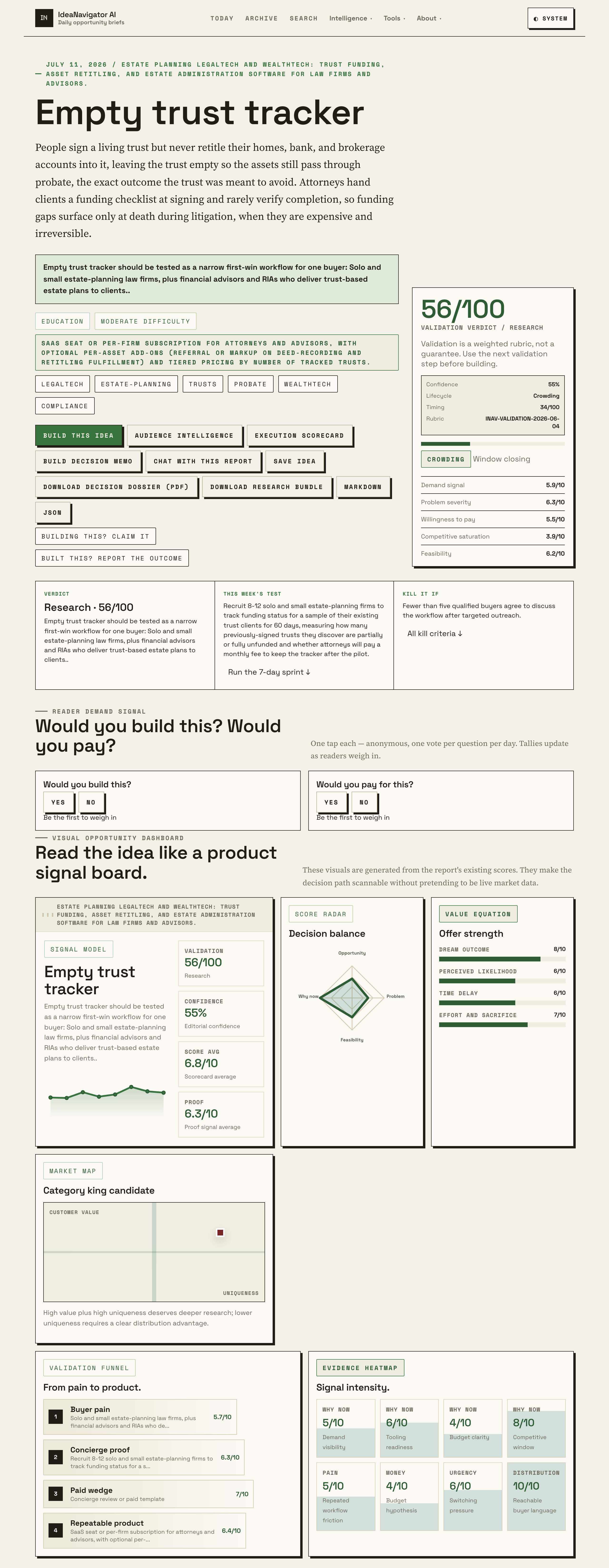
IdeaNavigator AI has proposed testing a client-by-client tracker to help law firms and financial advisors monitor whether clients have moved assets into their living trusts. The concept is at the proposal stage; a suggested 60-day pilot would test how often existing trusts are unfunded and whether firms would pay for tracking.
IdeaNavigator AI has proposed testing a trust funding tracker for solo and small estate-planning firms, financial advisors and registered investment advisers. The proposed tool would let firms track whether clients have retitled assets into their living trusts, addressing a gap that can leave a signed trust without the assets it is meant to manage.
The proposed tracker would give each trust a checklist covering real estate, bank and brokerage accounts, retirement assets, business interests and beneficiary designations. Staff could mark each item pending, in progress or confirmed funded, attach supporting documents such as a recorded deed or updated account statement, and send reminders to clients.
A firm dashboard would show the share of each trust’s listed assets marked funded, allowing attorneys or advisors to identify records that appear incomplete. The proposal describes subscriptions charged per firm or seat, with possible tiered pricing by the number of trusts tracked. It also suggests optional fees or referrals for deed recording and retitling services.
To assess demand, the proposal calls for recruiting 8 to 12 solo and small firms to track a sample of existing client trusts for 60 days. The pilot would measure how many signed trusts are found to be partly or fully unfunded and whether participating attorneys would pay a monthly fee after the trial. No participating firms, pilot results or commercial launch details are identified.
The Work After Signing
The concept targets a gap between preparing estate-planning documents and carrying out the actions those documents require. A client may sign a living trust yet leave a home or financial account in their own name. If assets are not transferred or otherwise properly directed, the trust may not govern them as intended, and the estate may face probate for assets left outside the trust. The consequences depend on the asset, the plan and applicable law.
For firms, a shared tracker could make follow-up visible across a client list instead of relying on a checklist handed over at signing. That could help staff ask about incomplete transfers while clients can still act. The proposal does not establish that a tracker would prevent probate, verify legal ownership on its own or replace an attorney’s review of each client’s plan.
The commercial question is also unresolved. The proposal points to subscriptions and optional fulfillment services as possible revenue, but it provides no customer interviews, pricing tests or evidence that firms will pay. The suggested pilot is designed to test both the prevalence of funding gaps among participating clients and buyers’ willingness to keep using the product.
Why Trust Funding Is a Separate Step
A living trust is a legal arrangement intended to hold or manage assets under its terms. Signing the trust document does not, by itself, transfer every asset into it. Real estate may require a deed, while financial institutions may have their own processes for changing account ownership or recording trust details. Some assets, including retirement accounts, can involve beneficiary designations and tax or legal considerations that require individual advice.
The proposal says trust funding remains a manual, fragmented process that document-drafting software does not close. It also cites an estimate that about 11% of Americans hold a trust, but gives no survey name, date or methodology for that figure. Separately, it describes per-deed funding services priced from $250 as evidence of a paid market; no providers or pricing sources are specified.
These points are presented as rationale for exploring the product, not as independently verified market findings. The proposal places the idea within estate-planning legal technology and wealth technology, where firms and advisors may offer estate-planning services alongside other client work.
Demand and Funding Rules Unclear
No pilot or product launch is confirmed in the available proposal. It does not name participating firms, report results, specify a launch schedule or show that customers have agreed to pay. The suggested 60-day test remains a plan for validation rather than evidence of demand.
The proposal also does not explain how the tracker would validate that an asset was properly transferred, how it would handle sensitive financial records, or how staff would distinguish an incomplete transfer from one that is not appropriate for a particular asset. The cited trust-adoption estimate lacks its underlying source details. Until those points are addressed, the likely accuracy, legal value and commercial prospects of the product remain unknown.
A Pilot Would Test Firm Demand
The proposed next step is to recruit 8 to 12 firms for a 60-day pilot using a sample of their existing trust clients. The test would count trusts found partly or fully unfunded and ask whether attorneys are willing to pay a recurring fee to keep the tracker.
No date or recruitment process is provided. A pilot report would need to clarify how participating firms define and confirm funded status, what evidence they collect, and whether tracking changes client follow-through. Until those results are available, the tracker remains an unvalidated product proposal.
Source: IdeaNavigator AI
Key Questions
What is the proposed trust funding tracker?
It is a proposed tool for firms to track whether clients have moved or directed assets into a living trust. Each asset would have a status, supporting documents and, where needed, a reminder.
Who is the tracker intended for?
The proposal targets solo and small estate-planning law firms, financial advisors and registered investment advisers that provide trust-based estate plans.
Has the tracker launched?
No launch is reported. The proposal recommends a 60-day pilot with 8 to 12 firms, but does not say that recruitment has started or that firms have signed on.
What would the pilot measure?
It would measure how many previously signed trusts in a sample are partly or fully unfunded and whether attorneys would pay a monthly fee to keep using the tracker.
Does signing a trust automatically put assets into it?
No. Some assets may require separate steps, such as changing a deed or account ownership. The steps depend on the asset and the client’s plan, so the proposal’s tracker would record progress rather than replace legal advice.
Source: IdeaNavigator AI
Fall Picks
fall essentials
As an affiliate, we earn on qualifying purchases.