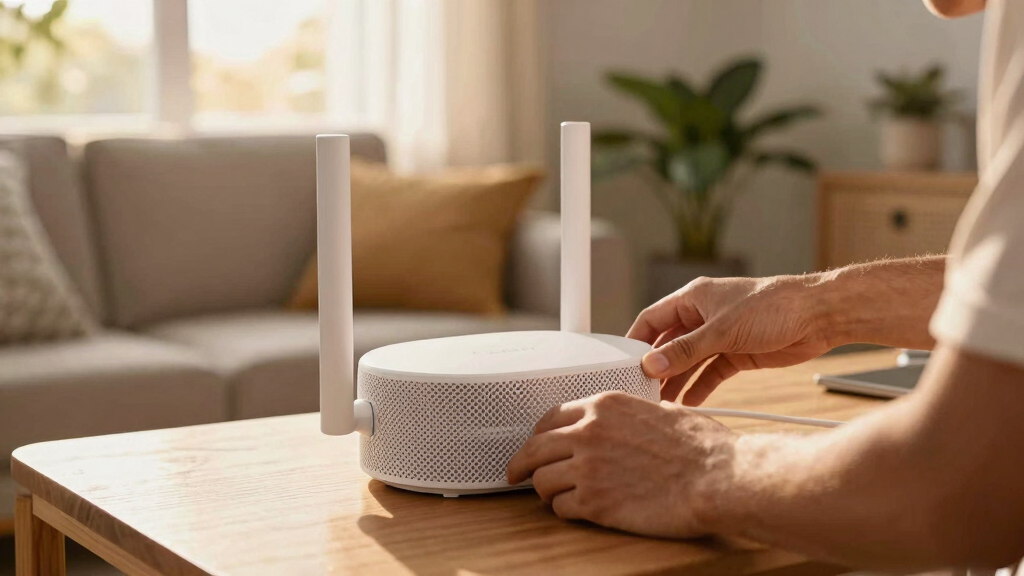
If you’re searching for the best enterprise mesh wifi system in 2026, you’re likely balancing coverage, speed, and scalability. The top systems today deliver robust performance suited for large offices, campuses, or multi-building setups, but they vary significantly in features and pricing. The TP-Link Deco XE70 Pro stands out for its WiFi 6E support and affordability, while the NETGEAR Orbi 970 Series offers cutting-edge WiFi 7 technology for high-demand environments. Navigating these options involves tradeoffs: higher performance often comes with increased complexity or cost. Continue reading for a detailed breakdown of each system’s strengths and weaknesses to help you make an informed decision.

Get the latest gadgets delivered free with Prime
- Fast, free delivery on millions of items
- Prime Video, Amazon Music and more included
- Member-only deals all year
Complete the kit



Key Takeaways
- WiFi 7 systems generally outperform WiFi 6E in speed and device capacity, but they come at a higher cost and slightly increased complexity.
- Coverage scalability varies; larger setups benefit from systems with higher mesh node capacities and easy expandability.
- Security and management features are increasingly important for enterprise environments—look for systems with robust admin controls.
- Price tends to correlate with advanced features; budget-conscious buyers might prioritize core performance over extras.
- Ease of deployment and ongoing maintenance are often overlooked but crucial for enterprise settings, especially for teams without dedicated IT staff.
| TP-Link Deco XE70 Pro AXE4900 Tri-Band WiFi 6E Mesh System – 2-Pack |  | Best Overall for High-Speed, Wide Coverage | Wi-Fi Standard: Wi-Fi 6E | Bands: Tri-band (2.4 GHz, 5 GHz, 6 GHz) | Max Wi-Fi Speed: 4.9 Gbps | VIEW LATEST PRICE | See Our Full Breakdown |
| NETGEAR Orbi 970 Series Quad-Band WiFi 7 Mesh Network System (RBE973S), Router + 2 Satellite Extenders |  | Best for Maximum Speed and Large-Scale Coverage | Wireless Standard: WiFi 7 | Max Speed: 27Gbps | Coverage: Up to 10,000 sq. ft. | VIEW LATEST PRICE | See Our Full Breakdown |
| TP-Link Deco X55 AX3000 WiFi 6 Mesh System (3-Pack) |  | Best for Balanced Performance and Cost-Effective Coverage | Wi-Fi Standard: Wi-Fi 6 (AX3000) | Coverage: 6500 sq ft | Number of Units: 3 | VIEW LATEST PRICE | See Our Full Breakdown |
| NETGEAR Orbi 370 Series WiFi 7 Mesh System, 3 Pack, Up to 6,000 sq ft |  | Best for Easy Setup and Compatibility with Existing Devices | Coverage: Up to 6,000 sq ft | Number of Devices Supported: 70 | WiFi Technology: WiFi 7 | VIEW LATEST PRICE | See Our Full Breakdown |
| eero 7 Dual-Band Mesh Wi-Fi 7 Router (3-Pack) |  | Best for Future-Proofing and Easy Management | Wi-Fi Standard: Wi-Fi 7 | Number of Radios: 2; dual-band | Supported Channels: 2.4 GHz and 5 GHz | VIEW LATEST PRICE | See Our Full Breakdown |
| Deco 7 Pro Tri-Band WiFi 7 BE10000 Whole Home Mesh System 6-Stream 10 Gbps |  | Best Overall for Ultra-Fast, Extensive Coverage | Coverage: 7,600 sq.ft. | Wi-Fi Speed: up to 10 Gbps | Wi-Fi Bands: Tri-band (6 GHz, 5 GHz, 2.4 GHz) | VIEW LATEST PRICE | See Our Full Breakdown |
| NETGEAR Orbi 770 Series WiFi 7 Mesh System, 3 Pack |  | Best for Seamless Large Home Coverage and Speed | Coverage: Up to 8,000 sq ft | Number of Units: 3 (1 router + 2 satellites) | WiFi Technology: WiFi 7 | VIEW LATEST PRICE | See Our Full Breakdown |
| eero Max 7 Mesh Wi-Fi System (3-Pack) |  | Best for High Device Capacity and Smart Home Integration | Coverage: 7,500 sq ft. | Device Capacity: 750+ devices | Ethernet Ports: 2 x 10 Gigabit ports per unit | VIEW LATEST PRICE | See Our Full Breakdown |
| TP-Link Deco 7 BE23 Dual-Band WiFi 7 Mesh System (3-Pack) |  | Best for Cost-Effective Reliable Coverage | Wi-Fi Technology: Wi-Fi 7 | Speed: up to 3.6 Gbps | Coverage: up to 6,500 sq.ft. | VIEW LATEST PRICE | See Our Full Breakdown |
| NETGEAR Orbi 970 Series WiFi 7 Mesh System, 3 Pack | | Best for Premium Coverage and Speed up to 27 Gbps | Coverage: 10,000 sq ft | Number of Units: 3 (1 router + 2 satellites) | WiFi Standard: WiFi 7 | VIEW LATEST PRICE | See Our Full Breakdown |
| enterprise mesh wifi system | Coverage |
|---|---|
| TP-Link Deco XE70 Pro AXE4900 | Up to 5,500 sq. ft. |
| NETGEAR Orbi 970 Series Quad-B | Up to 10,000 sq. ft. |
| TP-Link Deco X55 AX3000 WiFi 6 | 6500 sq ft |
| NETGEAR Orbi 370 Series WiFi 7 | Up to 6,000 sq ft |
| eero 7 Dual-Band Mesh Wi-Fi 7 | Up to 6,000 sq ft |
| Deco 7 Pro Tri-Band WiFi 7 BE1 | 7,600 sq.ft. |
| NETGEAR Orbi 770 Series WiFi 7 | Up to 8,000 sq ft |
| eero Max 7 Mesh Wi-Fi System | 7,500 sq ft. |
| TP-Link Deco 7 BE23 Dual-Band | up to 6,500 sq.ft. |
| NETGEAR Orbi 970 Series WiFi 7 | 10,000 sq ft |
More Details on Our Top Picks
TP-Link Deco XE70 Pro AXE4900 Tri-Band WiFi 6E Mesh System – 2-Pack
This system stands out for supporting Wi-Fi 6E, which offers faster speeds and less congestion, making it ideal for busy environments with many devices. Compared with the NETGEAR Orbi 970 Series, the XE70 Pro provides slightly lower maximum speeds but excels in covering up to 5,500 sq. ft. seamlessly. Its ability to connect up to 200 devices smoothly makes it a versatile choice for smart homes and offices. The easy setup via the Deco app simplifies deployment, although the premium price might be a barrier for budget-conscious users. The 2.5 Gbps ports facilitate fast wired connections, boosting overall network performance. However, this system requires a compatible internet provider for best results and may be overkill for smaller spaces.
Pros:- Supports Wi-Fi 6E for congestion-free, ultra-fast connectivity
- Seamless mesh coverage up to 5,500 sq. ft.
- Handles up to 200 devices simultaneously
Cons:- Premium price point may be prohibitive for some budgets
- Requires compatible internet service provider to unlock full potential
Best for: Large enterprises or smart office environments needing extensive coverage and high device capacity
Not ideal for: Small offices or homes with modest internet needs, due to its high price and over-spec features
- Wi-Fi Standard:Wi-Fi 6E
- Bands:Tri-band (2.4 GHz, 5 GHz, 6 GHz)
- Max Wi-Fi Speed:4.9 Gbps
- Coverage:Up to 5,500 sq. ft.
- Device Capacity:Up to 200 devices
- Ports:2.5 Gbps WAN/LAN, 2 Gigabit LAN ports per unit
Our verdict“This pick is best for large-scale deployments demanding top-tier speed and extensive coverage, despite its higher cost.”
NETGEAR Orbi 970 Series Quad-Band WiFi 7 Mesh Network System (RBE973S), Router + 2 Satellite Extenders
Designed for those who need blazing-fast speeds and expansive coverage, the NETGEAR Orbi 970 Series supports WiFi 7 with speeds up to 27Gbps, far surpassing most competitors like the TP-Link Deco X55. Its quad-band technology with dedicated backhaul ensures reliable connections even in large, complex spaces. Covering up to 10,000 sq. ft., it supports around 200 devices, making it ideal for enterprise-level setups or large multi-user environments. The six Gigabit ports, including a 10 Gbps port, facilitate high-speed wired connections. While the high cost and need for compatible devices might deter smaller businesses, this system’s security features, including NETGEAR Armor, add significant value for security-conscious organizations.
Pros:- Unmatched WiFi 7 speeds up to 27Gbps
- Enormous coverage up to 10,000 sq. ft.
- Supports up to 200 devices with reliable backhaul
Cons:- High price point limits accessibility
- Requires compatible devices to fully leverage WiFi 7 speeds
Best for: Large enterprises and tech-forward offices needing ultra-fast speeds and extensive coverage
Not ideal for: Small businesses or budgets that cannot accommodate the high price and advanced setup complexity
- Wireless Standard:WiFi 7
- Max Speed:27Gbps
- Coverage:Up to 10,000 sq. ft.
- Number of Devices Supported:200
- Number of Ports:6
- Port Speed:10 Gbps
Our verdict“Best suited for large organizations demanding the fastest WiFi technology and broad coverage, despite its premium cost.”
TP-Link Deco X55 AX3000 WiFi 6 Mesh System (3-Pack)
The TP-Link Deco X55 offers a solid balance of coverage, device support, and ease of setup, making it a practical choice for medium-sized offices or smart homes. It provides up to 6,500 sq. ft. of Wi-Fi 6 coverage, supporting 150 devices — enough for most enterprise environments with moderate connectivity needs. Its AI-driven mesh technology simplifies management and ensures stable performance across multiple units. Unlike the NETGEAR Orbi 370, which supports WiFi 7, the X55 relies on Wi-Fi 6 but still delivers reliable, high-speed connectivity. The system’s Ethernet ports support backhaul and wired connections, adding flexibility. However, it requires a separate modem, and its price, while reasonable, might be less competitive than some budget options.
Pros:- Supports Wi-Fi 6 for reliable, future-proof connectivity
- Coverage up to 6,500 sq. ft. with 3-pack units
- Supports up to 150 devices simultaneously
Cons:- No WiFi 7 support, limiting future maximum speeds
- Requires a separate modem for internet connection
Best for: Mid-sized enterprises or offices seeking reliable Wi-Fi 6 coverage without the premium price of WiFi 7 systems
Not ideal for: Large companies needing ultra-high speeds or extensive device capacity beyond 150 devices
- Wi-Fi Standard:Wi-Fi 6 (AX3000)
- Coverage:6500 sq ft
- Number of Units:3
- Ethernet Ports per Unit:3
- Supports Ethernet Backhaul:Yes
- Maximum Devices:150
Our verdict“Ideal for organizations needing dependable Wi-Fi 6 coverage at a reasonable price point, but not for those seeking cutting-edge WiFi 7 speeds.”
NETGEAR Orbi 370 Series WiFi 7 Mesh System, 3 Pack, Up to 6,000 sq ft
The NETGEAR Orbi 370 Series provides a straightforward, reliable WiFi 7 mesh solution with coverage up to 6,000 sq. ft., making it suitable for mid-to-large homes or offices. Its support for WiFi 7 speeds up to 5 Gbps is impressive, especially when compared to WiFi 6 systems like the TP-Link Deco X55. The system’s simple setup via the Orbi app appeals to less technical users who want quick deployment. Although full security features require a subscription, the system’s compatibility with WiFi 5 and 6 devices ensures future-proofing without immediate upgrades. Its performance varies based on home layout, and the price might be higher than entry-level options.
Pros:- Supports WiFi 7 speeds up to 5 Gbps
- Covers up to 6,000 sq. ft.
- Easy, guided setup via the Orbi app
Cons:- Subscription required for full security features
- Performance may vary with home environment
Best for: Users seeking easy setup and reliable WiFi 7 coverage in medium-sized spaces
Not ideal for: Budget-conscious buyers or those needing extensive security features without a subscription
- Coverage:Up to 6,000 sq ft
- Number of Devices Supported:70
- WiFi Technology:WiFi 7
- Maximum Speed:5 Gbps
- Number of Units:3 (1 router + 2 satellites)
- Security:Advanced Router Protection, NETGEAR Armor free trial
Our verdict“A solid choice for those wanting simple setup and WiFi 7 performance without extensive configuration, but at a higher price point.”
eero 7 Dual-Band Mesh Wi-Fi 7 Router (3-Pack)
The eero 7 offers a compelling mix of WiFi 7 technology, supporting over 120 devices and providing coverage up to 6,000 sq. ft. for a future-proof network. Its dual-band radios support advanced MIMO and channel widths, ensuring high-speed connections. Unlike some systems, eero emphasizes ease of management with a clean app interface that simplifies network setup for less technical users. Its backward compatibility with previous eero models means existing users can upgrade gradually. While the WiFi 7 support promises high future speeds, actual maximum throughput depends on compatible devices. The security features are solid but optional via subscription, and setup can be straightforward for most users.
Pros:- Supports WiFi 7 for future-proof high-speed connectivity
- Coverage up to 6,000 sq. ft.
- Supports over 120 devices
Cons:- Requires subscription for advanced security features
- Pricing details are not specified, could be higher
Best for: Organizations planning to upgrade gradually to WiFi 7 with simple management and reliable future-proof coverage
Not ideal for: Organizations seeking the highest possible speeds now or needing extensive security without additional subscriptions
- Wi-Fi Standard:Wi-Fi 7
- Number of Radios:2; dual-band
- Supported Channels:2.4 GHz and 5 GHz
- Maximum Devices:120
- Coverage:Up to 6,000 sq ft
- Security:WPA3 and WPA2, optional subscription
Our verdict“Ideal for organizations seeking a manageable, future-ready WiFi 7 mesh system with easy setup, though at a potentially higher cost.”
Deco 7 Pro Tri-Band WiFi 7 BE10000 Whole Home Mesh System 6-Stream 10 Gbps
The Deco 7 Pro BE10000 stands out for its expansive coverage of up to 7,600 sq.ft. and support for over 200 devices, making it ideal for large enterprise environments. Its tri-band Wi-Fi 7 offers speeds up to 10 Gbps, surpassing many competitors like the NETGEAR Orbi 770 Series, which maxes out at 11 Gbps but with slightly less coverage. The system’s four 2.5 Gbps ports add flexibility for high-speed wired connections, yet it requires a separate modem, which could complicate setups for some users. Advanced security via TP-Link HomeShield enhances network protection, but the array of features might overwhelm non-technical staff. Overall, this pick is best suited for organizations needing broad coverage and ultra-fast speeds, willing to manage a slightly complex setup.
Pros:- Extensive coverage of up to 7,600 sq.ft. for large spaces
- Supports Wi-Fi 7 speeds up to 10 Gbps for demanding applications
- Handles over 200 devices simultaneously without performance dips
- Easy management via the Deco app
Cons:- Requires a separate modem for internet connection
- Advanced features may be complex for non-technical users
- Performance varies with obstacles and device placement
Best for: Large enterprises or multi-tenant offices requiring extensive coverage and high device capacity
Not ideal for: Small businesses or home offices with simple networking needs, as its advanced features and setup complexity may be unnecessary
- Coverage:7,600 sq.ft.
- Wi-Fi Speed:up to 10 Gbps
- Wi-Fi Bands:Tri-band (6 GHz, 5 GHz, 2.4 GHz)
- Number of Devices Supported:over 200
- Ports:Four 2.5 Gbps WAN/LAN ports, USB 3.0
- Network Security:TP-Link HomeShield
Our verdict“This system excels for large, device-heavy environments needing robust, high-speed coverage with manageable complexity.”
NETGEAR Orbi 770 Series WiFi 7 Mesh System, 3 Pack
The NETGEAR Orbi 770 Series offers up to 8,000 sq ft of coverage with a 3-unit system, making it ideal for sprawling multi-story homes. Its WiFi 7 speeds up to 11 Gbps are competitive with the Deco 7 Pro BE10000 but with a focus on ease of expansion, thanks to the modular satellite setup. Its user-friendly Orbi app simplifies management, while built-in security features add peace of mind—though a subscription for full Armor security can add ongoing cost. The system’s coverage and speed make it perfect for households with high bandwidth demands, but the price might be a barrier for some. For users needing a reliable, scalable solution that covers large residences without dead zones, this system deserves consideration.
Pros:- Up to 8,000 sq ft. coverage for large homes
- Supports WiFi 7 speeds up to 11 Gbps
- Expandable coverage with additional satellites
- Easy setup and management via the Orbi app
Cons:- Requires subscription for full Armor security
- Coverage can vary based on home layout
- Price may be high for budget-conscious buyers
Best for: Homeowners with large, multi-story properties requiring reliable, fast Wi-Fi
Not ideal for: Small apartments or offices where extensive coverage and multi-gigabit speeds are unnecessary or too expensive
- Coverage:Up to 8,000 sq ft
- Number of Units:3 (1 router + 2 satellites)
- WiFi Technology:WiFi 7
- Speed:Up to 11 Gbps
- Device Support:Up to 100 devices
- Expandable Coverage:Yes
Our verdict“This system fits large, multi-level homes needing fast, reliable Wi-Fi with easy expansion options.”
eero Max 7 Mesh Wi-Fi System (3-Pack)
The eero Max 7 delivers fast wired and wireless speeds with Wi-Fi 7, supporting up to 7,500 sq. ft. of coverage and over 750 devices—making it suitable for smart offices or tech-heavy environments. Its two 10 Gigabit Ethernet ports per unit ensure high-speed wired backhaul, outperforming many rivals that lack multi-gigabit options. The setup process is streamlined through the eero app, and its smart home integration adds convenience. However, the need for a subscription to access advanced security features like eero Plus adds ongoing costs. While its device capacity and speed are impressive, the higher price point and limited details about multi-gigabit backhaul speeds may deter some. This pick is best for organizations with numerous connected devices and a focus on future-proofing.
Pros:- Supports up to 750+ devices for busy networks
- Fast wired and wireless speeds with Wi-Fi 7
- Includes 2 x 10 Gigabit Ethernet ports per unit
- Easy setup with the eero app and smart home compatibility
Cons:- Requires subscription for advanced security
- Higher price for the 3-pack system
- Limited info on multi-gigabit backhaul performance
Best for: Enterprises or offices with extensive device counts and smart home integrations
Not ideal for: Small businesses or users seeking an entirely self-contained system without ongoing subscriptions
- Coverage:7,500 sq ft.
- Device Capacity:750+ devices
- Ethernet Ports:2 x 10 Gigabit ports per unit
- Wi-Fi Technology:Wi-Fi 7
- Security:Optional eero Plus subscription
- Warranty:3 years
Our verdict“Best suited for large, device-dense environments needing high-speed, future-ready connectivity with smart home features.”
TP-Link Deco 7 BE23 Dual-Band WiFi 7 Mesh System (3-Pack)
The TP-Link Deco 7 BE23 provides solid Wi-Fi 7 speeds up to 3.6 Gbps and covers up to 6,500 sq.ft., making it a compelling choice for cost-conscious organizations. Its dual-band setup simplifies connectivity while supporting over 150 devices, slightly fewer than the more expensive options like the NETGEAR Orbi 970. The four high-gain antennas enhance signal strength, but the system requires a compatible modem, adding to setup complexity for non-technical users. Security features like WPA3 and HomeShield are included, though some advanced security options require a subscription. This system strikes a balance between affordability and performance, suitable for small to medium-sized setups not needing the highest speeds or coverage.
Pros:- Supports Wi-Fi 7 speeds up to 3.6 Gbps
- Coverage up to 6,500 sq.ft. with 3 nodes
- Supports over 150 devices simultaneously
- Includes security with HomeShield and WPA3
Cons:- Requires compatible modem for internet access
- Higher price compared to basic routers
- Setup can be complex for non-tech users
Best for: Small to medium enterprises seeking reliable Wi-Fi 7 coverage at a lower price point
Not ideal for: Large enterprises or high-density environments where maximum speed and coverage are mandatory
- Wi-Fi Technology:Wi-Fi 7
- Speed:up to 3.6 Gbps
- Coverage:up to 6,500 sq.ft.
- Number of Nodes:3
- Supported Devices:over 150
- Security:HomeShield, WPA3
Our verdict“Ideal for organizations that need dependable Wi-Fi 7 coverage on a budget without sacrificing key features.”
NETGEAR Orbi 970 Series WiFi 7 Mesh System, 3 Pack
The NETGEAR Orbi 970 Series offers expansive coverage up to 10,000 sq ft. with speeds reaching an astonishing 27 Gbps, far surpassing most competitors like the Deco 7 Pro. Its three-unit system, including a powerful router and satellites, ensures seamless connectivity for large homes or enterprises. The inclusion of a 10 Gig internet port, as well as multi-Gig LAN ports, supports high-bandwidth activities—ideal for demanding applications like 4K streaming or high-frequency trading. Its management app simplifies setup, and security features like NETGEAR Armor provide enterprise-grade protection. The primary drawback is the high price, which may be prohibitive for some, and the need for a compatible internet plan to fully leverage its capabilities. For organizations seeking top-tier performance and coverage, this system is a compelling option.
Pros:- Coverage up to 10,000 sq ft for large spaces
- Supports speeds up to 27 Gbps for demanding applications
- Includes 10 Gigabit internet port and multi-Gig LAN ports
- Advanced security features with Armor and Router Protection
Cons:- Premium price point
- Requires compatible internet plan for full speed
- Coverage varies based on home layout
Best for: Large, high-demand environments needing maximum throughput and extensive coverage
Not ideal for: Small offices or budgets that cannot accommodate premium prices, or simpler setups with fewer devices
- Coverage:10,000 sq ft
- Number of Units:3 (1 router + 2 satellites)
- WiFi Standard:WiFi 7
- Max Speed:27 Gbps
- Wired Ports:10 Gbps internet, multi-Gig LAN
- Device Capacity:Up to 200 devices
Our verdict“This system is best suited for large, high-performance networks where speed and coverage are paramount, and budget is flexible.”

How We Picked
These products were evaluated based on a combination of performance benchmarks, scalability, security features, ease of deployment, and value for money. Systems designed specifically for enterprise environments must handle high device densities with stable connections, which is why high throughput and low latency are prioritized. We also considered the flexibility of management tools, security protocols, and the ability to expand coverage seamlessly. The ranking reflects a balance between cutting-edge technology and practical usability for business use, ensuring each pick serves a distinct niche within enterprise networking.Factors to Consider When Choosing Best Enterprise Mesh Wifi System
Choosing the best enterprise mesh WiFi system involves several key considerations. Beyond raw speed, factors like scalability, security, ease of management, and compatibility with existing infrastructure play vital roles. A system that works perfectly in a small office might fall short in a sprawling campus or multi-building environment. Being aware of common pitfalls—such as underestimating coverage needs or overpaying for features unnecessary in your setting—can prevent costly mistakes. This guide highlights the most important factors to focus on, helping you align your purchase with your specific business requirements.Coverage and Scalability
For enterprise setups, coverage is often the most critical factor. You need a system capable of handling large areas without dead zones. Many systems allow adding nodes to expand coverage, but not all are equally straightforward or cost-effective. Consider your current layout and future growth—investing in a scalable system now can save headaches later. Be cautious of systems with limited expansion options or those that require complex reconfiguration, which can increase maintenance time and costs.
Performance and Speed
High throughput and low latency are essential for enterprise applications, especially when supporting multiple users and bandwidth-intensive tasks. WiFi 7 systems generally outperform WiFi 6E, but compatibility with existing devices and the actual performance in real-world conditions matter more. Look for features like multi-gig ports, advanced MU-MIMO, and support for simultaneous device streams. Don’t assume the fastest tech always equals better value—evaluate whether your environment truly benefits from the latest standards.
Security and Management
Security features like enterprise-grade encryption, VLAN support, and centralized management are non-negotiable in business settings. Systems with robust admin controls allow for easy policy enforcement and device management across multiple locations. Avoid systems lacking comprehensive security protocols or those that require complex manual updates. Management interfaces should be intuitive, enabling IT teams or even non-technical staff to oversee the network efficiently without risking misconfigurations.
Ease of Deployment and Maintenance
Enterprise systems should be straightforward to install and scale, especially if dedicated IT resources are limited. Features like cloud management, auto-configuration, and remote troubleshooting can significantly reduce setup time and ongoing maintenance. Be wary of solutions that demand extensive manual setup or specialized knowledge, as these can lead to higher long-term costs and potential downtime. A user-friendly management interface often translates into better reliability and quicker issue resolution.
Cost and Total Value
While initial investment is a key factor, total cost of ownership—including ongoing maintenance, upgrades, and support—should influence your choice. Higher-end systems with WiFi 7, advanced security, and extensive scalability tend to be more expensive but offer greater long-term value. Conversely, more affordable options might suffice for smaller setups but could limit growth or performance in demanding enterprise environments. Finding a balanced solution that meets your current needs without overspending is the key to making a smart investment.
Frequently Asked Questions
Can I upgrade my existing network to a mesh system without replacing all devices?
Yes, many enterprise mesh WiFi systems are designed to be compatible with existing network infrastructure. Upgrading typically involves replacing or supplementing your current router and access points with mesh nodes that support the same standards. However, compatibility depends on the specific system and your current hardware, so it’s important to check whether your existing devices support the necessary protocols. Upgrading can often be done incrementally, minimizing downtime and avoiding a complete overhaul.
How much coverage can I realistically expect from an enterprise mesh system?
Coverage varies widely depending on the system and environment. High-end systems can often cover several thousand square feet per node, and multiple nodes can extend coverage to large campuses or multi-building complexes. However, physical obstructions, interference, and building materials can significantly impact signal strength. To get an accurate picture, consider both your current space and future expansion plans, and choose a system that allows flexible scaling with minimal disruption.
Is WiFi 7 worth the extra cost for my enterprise network?
WiFi 7 offers notable improvements in speed, capacity, and latency, making it attractive for high-demand enterprise environments. If your organization relies on real-time applications, large data transfers, or supports a massive number of devices, investing in WiFi 7 can provide a tangible benefit. However, for smaller or less demanding setups, WiFi 6E or earlier standards may suffice at a lower cost. Consider your current and future bandwidth needs, as well as device compatibility, before opting for the latest standard.
What security features should I prioritize in an enterprise mesh system?
Security is paramount in enterprise networks. Look for systems that support enterprise-grade encryption protocols like WPA3, VLAN segmentation, and advanced threat detection. Features such as centralized management, regular firmware updates, and user access controls help maintain a secure environment. Additionally, support for intrusion prevention systems and compatibility with your existing security infrastructure can provide extra layers of protection. Investing in a system with comprehensive security controls will safeguard sensitive data and ensure regulatory compliance.
How important is management software for enterprise mesh systems?
Management software is a critical component of enterprise mesh WiFi, as it simplifies deployment, configuration, and ongoing maintenance. Cloud-based management platforms enable remote monitoring and troubleshooting, reducing the need for on-site IT intervention. Intuitive dashboards and automation features help prevent issues before they impact your network. A good management system can also facilitate seamless updates and policy enforcement across multiple locations, making it an essential feature for scalable, reliable enterprise networks.
Conclusion
The best overall choice for most enterprises is the NETGEAR Orbi 970 Series WiFi 7 Mesh Network System, thanks to its cutting-edge WiFi 7 technology and expansive coverage. For those prioritizing value, the TP-Link Deco XE70 Pro offers robust performance at a more accessible price point. Organizations seeking premium features and future-proofing will find the Deco 7 Pro Tri-Band WiFi 7 a compelling option. Beginners or smaller setups may prefer the eero Max 7 Mesh Wi-Fi System for its ease of use and straightforward installation. Ultimately, your choice should align with your coverage needs, security requirements, and budget constraints.
As an affiliate, we earn on qualifying purchases.Halloween Picks
halloween