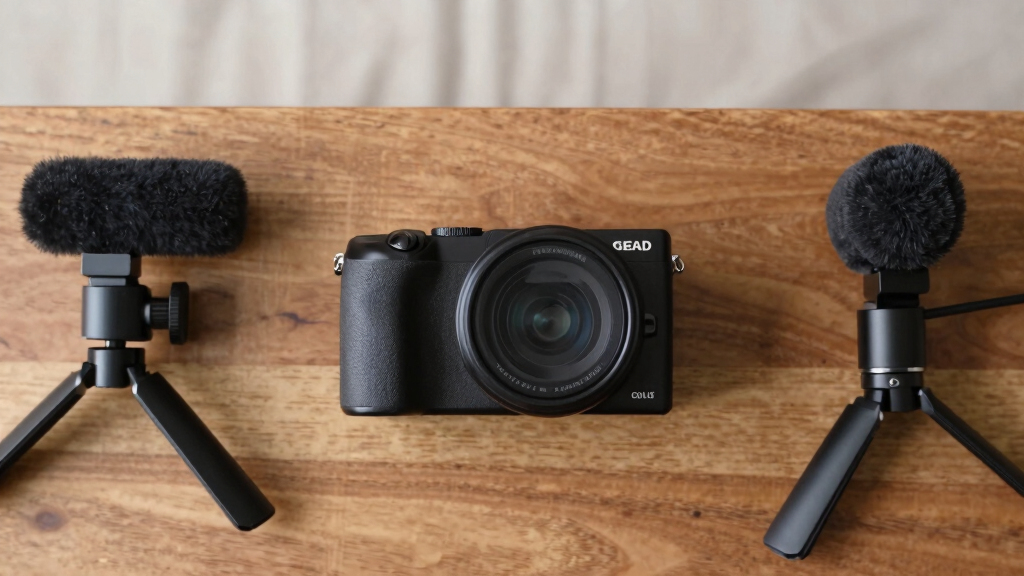

If you’re searching for the best mirrorless vlogging camera in 2026, you’re facing a crowded market with many capable options. The Sony Alpha a6400 offers a compact design with excellent autofocus, ideal for on-the-go shooting. The Sony ZV-E10 excels for creators needing lightweight gear combined with advanced video features. Canon’s EOS R50 V provides a user-friendly interface with versatile recording modes, perfect for those starting out. Each has unique strengths, but the main tradeoffs revolve around features like stabilization, battery life, and lens flexibility. Below, I break down the top choices to help you choose the best fit for your vlogging style and budget.

Get the latest gadgets delivered free — and shop member deals
- Fast, free delivery on millions of items
- Access to Prime Big Deal Days deals on October 6–7
- Prime Video, Amazon Music and more included
Complete the kit



Key Takeaways
- The Sony Alpha a6400 is best for those prioritizing autofocus and compactness but lacks stabilization.
- The Sony ZV-E10 is ideal for lightweight, professional-quality videos with excellent live streaming features.
- The Canon EOS R50 V offers user-friendly controls and versatile recording options for creators wanting an easy start.
- Lens flexibility varies, with some models including zoom lenses and others requiring additional investment.
- Battery life and stabilization are common tradeoffs across these models, impacting extended shooting sessions.
| Sony Alpha a6400 Mirrorless Camera with 16-50mm Lens |  | Best Overall for Versatile Vlogging and Photography | Sensor: 20.1MP stacked CMOS | Lens: 16-50mm, E Mount | Autofocus: Real-Time Eye AF | VIEW LATEST PRICE | See Our Full Breakdown |
| Sony ZV-E10 Mirrorless Camera with 16-50mm Lens & Accessories Bundle |  | Best for Lightweight Content Creation and Live Streaming | Sensor: 24.2 MP APS-C Exmor CMOS | Lens: 16-50mm f/3.5-5.6 OSS | Video Recording: 4K at 30p | VIEW LATEST PRICE | See Our Full Breakdown |
| Canon EOS R50 V Mirrorless Camera (Body Only) |  | Best for User-Friendly Controls and Creative Flexibility | Sensor: 24.2 MP APS-C CMOS | Processor: DIGIC X | Video Recording: 4K up to 59.94p | VIEW LATEST PRICE | See Our Full Breakdown |
| Canon EOS R50 V Mirrorless Camera with 14-30mm Lens Bundle |  | Best for Vloggers and Creators Who Value Flexibility and Articulating Screens | Sensor: 24.2 MP APS-C CMOS | Lens: Canon RF-S 14-30mm f/4-6.3 IS STM | Video Resolution: 4K at 30p | VIEW LATEST PRICE | See Our Full Breakdown |
| Sony ZV-E10 APS-C Mirrorless Camera with 16-50mm Lens Black |  | Best for Professional-Grade Vlogging with Live Streaming | Sensor Type: APS-C CMOS | Sensor Size: 24.2 MP | Maximum Shutter Speed: 1/4000 seconds | VIEW LATEST PRICE | See Our Full Breakdown |
| mirrorless vlogging camera | Sensor | Lens | Connectivity |
|---|---|---|---|
| Sony Alpha a6400 Mirrorless Ca | 20.1MP stacked CMOS | 16-50mm, E Mount | — |
| Sony ZV-E10 Mirrorless Camera | 24.2 MP APS-C Exmor CMOS | 16-50mm f/3.5-5.6 OSS | Wi-Fi, Bluetooth, USB-C |
| Canon EOS R50 V Mirrorless Cam | 24.2 MP APS-C CMOS | — | — |
| Canon EOS R50 V Mirrorless Cam | 24.2 MP APS-C CMOS | Canon RF-S 14-30mm f/4-6.3 IS STM | USB-C |
| Sony ZV-E10 APS-C Mirrorless C | — | — | Bluetooth, Micro HDMI, Wi-Fi |
More Details on Our Top Picks
Sony Alpha a6400 Mirrorless Camera with 16-50mm Lens
The Sony Alpha a6400 stands out for its high-resolution 20.1MP sensor and lightning-fast autofocus, making it excellent for capturing detailed videos and sharp images. Its tiltable LCD screen simplifies framing, especially for those recording themselves. Compared with the ZV-E10, it offers slightly better still image quality but falls short on stabilization, which is common in Sony’s non-IBIS models. Its compact size and robust autofocus make it a top pick for creators who value flexibility and quality, but the limited battery life and absence of in-body stabilization mean you’ll need extra accessories for extended shoots. This camera is perfect for creators who want a reliable all-rounder that handles both photography and video well.
Pros:- High-resolution 20.1MP sensor for detailed imagery
- Fast, real-time eye autofocus for sharp videos
- 4K recording with versatile movie features
- Tiltable LCD screen for easy self-recording
Cons:- No in-body image stabilization
- Limited battery life for prolonged sessions
- No built-in flash
Best for: Vloggers seeking a versatile camera for both high-quality video and stills
Not ideal for: Vloggers who need built-in stabilization for handheld shots or extended shooting sessions without external gear
- Sensor:20.1MP stacked CMOS
- Lens:16-50mm, E Mount
- Autofocus:Real-Time Eye AF
- Video:4K
- Frame Rate:Up to 11 fps
- Display:Tiltable LCD
Our verdict“A balanced choice for creators wanting high-quality images and videos in a compact package, despite lacking stabilization.”
Sony ZV-E10 Mirrorless Camera with 16-50mm Lens & Accessories Bundle
The Sony ZV-E10 is tailored for creators who prioritize portability without sacrificing video quality. Its 24.2MP APS-C sensor delivers crisp images, and the included bundle makes it ready for immediate use, especially for travel or on-the-go vlogging. Its 4K video at 30p offers professional quality, though it falls short of higher frame rates or in-body stabilization, which can be limiting for handheld shooting. Compared to the a6400, the ZV-E10 is lighter and easier to carry, making it more suitable for spontaneous shoots. However, the limited 30p 4K and reliance on lens stabilization mean it’s less ideal for very active or extended handheld filming. This model is perfect for vloggers who want a portable system with a focus on streaming and quick setup.
Pros:- High-resolution 24.2MP sensor for sharp images
- Lightweight and portable at just over 340g
- 4K video with advanced gamma options
- Includes accessories for immediate vlogging use
Cons:- Limited to 30p in 4K recording
- No in-body stabilization—relies on lens stabilization
- Battery life may be limited in prolonged use
Best for: Travel vloggers and content creators prioritizing portability and streaming capabilities
Not ideal for: Vloggers needing advanced stabilization or recording at higher frame rates for slow-motion
- Sensor:24.2 MP APS-C Exmor CMOS
- Lens:16-50mm f/3.5-5.6 OSS
- Video Recording:4K at 30p
- Weight:Just over 340 g
- Connectivity:Wi-Fi, Bluetooth, USB-C
Our verdict“An excellent lightweight option for creators who need mobility and streaming, despite some limitations in stabilization and higher frame rate recording.”
Canon EOS R50 V Mirrorless Camera (Body Only)
The Canon EOS R50 V offers a flexible platform for creators, especially those new to mirrorless systems. Its 24.2MP APS-C sensor produces detailed images, and the new interface simplifies complex settings. The camera’s standout feature is its versatile 4K recording up to 59.94p, suitable for slow-motion and cinematic shots, along with advanced autofocus that tracks subjects effectively. It’s particularly attractive for those who prefer a dedicated body with additional lenses, as it’s sold body-only. Compared with the Sony options, the EOS R50 V emphasizes user-friendliness over compactness, which might appeal to creators who want a straightforward setup but are willing to invest in lenses and accessories. Its limited info on battery life and lack of stabilization may impact longer shoots without extra gear.
Pros:- High-resolution 24.2MP sensor for detailed imagery
- Versatile 4K recording up to 59.94p
- Effective autofocus with subject detection
- User-friendly interface and customizable controls
Cons:- Body-only model necessitates additional lens purchases
- Limited info on battery endurance
- No built-in flash
Best for: Beginners and creators wanting an easy-to-use camera with versatile video modes
Not ideal for: Vloggers seeking a compact, all-in-one solution without additional lens investment
- Sensor:24.2 MP APS-C CMOS
- Processor:DIGIC X
- Video Recording:4K up to 59.94p
- Autofocus:Dual Pixel CMOS AF II
- Features:Vertical video tripod mount, multiple recording modes
Our verdict“A great choice for beginners who want a flexible, easy-to-operate camera with impressive video options, provided they’re prepared to buy lenses separately.”
Canon EOS R50 V Mirrorless Camera with 14-30mm Lens Bundle
The Canon EOS R50 V with 14-30mm kit lens combines high-quality imaging with a fully articulating screen, making it highly adaptable for vlogging. Its 24.2MP APS-C sensor and DIGIC X processor deliver sharp images and smooth 4K videos at 30p. The fully articulating screen is a major advantage for creators who shoot themselves or need different angles. Autofocus with eye, face, and subject detection adds to its convenience. Compared with the body-only version, this bundle offers excellent value for creators starting out or those who need a versatile, portable system. The aperture range and limited zoom may be less suited for low-light environments or distant shots, but for close-up vlogging, it excels.
Pros:- High-quality 24.2MP sensor
- Fully articulating flip screen for creative angles
- Autofocus with eye, face, and subject detection
- Includes a wide-angle 14-30mm lens with stabilization
Cons:- Limited zoom range with the included lens
- Aperture f/4-6.3 may challenge low-light shooting
- No built-in flash
Best for: Vloggers seeking a compact, versatile camera with a fully articulating screen and included lens
Not ideal for: Creators needing extensive zoom range or working mainly in low-light conditions
- Sensor:24.2 MP APS-C CMOS
- Lens:Canon RF-S 14-30mm f/4-6.3 IS STM
- Video Resolution:4K at 30p
- Image Stabilization:Yes
- Connectivity:USB-C
Our verdict“An excellent all-in-one vlogging setup for creators who want flexibility, portability, and a dependable autofocus system.”
Sony ZV-E10 APS-C Mirrorless Camera with 16-50mm Lens Black
The Sony ZV-E10 is purpose-built for vlogging and content creation, featuring a 24.2MP APS-C sensor that produces crisp, detailed images. Its flip-out LCD is perfect for framing shots and recording oneself. The camera excels in live streaming, thanks to its multiple connectivity options and simple setup via USB. Its autofocus system with Real-Time Eye and Tracking makes it a favorite for dynamic shots, though the absence of in-body stabilization can be a drawback for handheld shooting without lens stabilization. Compared with the a6400, it’s lighter, more streamlined, and tailored toward creators who prioritize streaming and ease of use over rugged build or extensive photo features. It’s a strong pick for professional creators who need a reliable, portable solution for both video and streaming.
Pros:- 24.2MP APS-C sensor for sharp images
- Flip-out LCD for easy self-recording
- Real-Time Eye AF and Tracking for dynamic subjects
- Supports live streaming directly via USB
Cons:- No in-body stabilization
- Limited high frame rate recording options
- Weight slightly heavier for extended handheld use
Best for: Vloggers who need a dedicated streaming camera combined with high-quality video and audio
Not ideal for: Vloggers desiring in-body stabilization or shooting in very active environments without lens stabilization
- Sensor Type:APS-C CMOS
- Sensor Size:24.2 MP
- Maximum Shutter Speed:1/4000 seconds
- Video Resolution:1080p, 4K
- Connectivity:Bluetooth, Micro HDMI, Wi-Fi
Our verdict“A highly capable, creator-focused camera best suited for those who prioritize streaming and high-quality video on the move.”

How We Picked
In selecting the best mirrorless vlogging cameras for 2026, I prioritized models that balance video and photo capabilities, compactness, and user-friendly features. I compared sensor quality, autofocus performance, video resolution, and screen articulation—crucial for vlogging. I also considered bundle options, portability, and real-world usability for creators on the move. Tradeoffs like battery life, stabilization, and lens compatibility were key factors in differentiating these models, ensuring each choice serves a distinct audience with specific needs.
| mirrorless vlogging camera | Connectivity |
|---|---|
| Sony Alpha a6400 Mirrorless Ca | — |
| Sony ZV-E10 Mirrorless Camera | Wi-Fi, Bluetooth, USB-C |
| Canon EOS R50 V Mirrorless Cam | — |
| Canon EOS R50 V Mirrorless Cam | USB-C |
| Sony ZV-E10 APS-C Mirrorless C | Bluetooth, Micro HDMI, Wi-Fi |
Factors to Consider When Choosing Best Mirrorless Vlogging Camera
Selecting the best mirrorless vlogging camera depends on your specific needs—whether it’s portability, video quality, or ease of use. Key factors include sensor size, autofocus performance, stabilization, lens options, and screen articulation. Understanding these features helps narrow down choices that fit your content style and budget.
Sensor Size and Image Quality
The sensor size directly impacts image sharpness and low-light performance. APS-C sensors are a sweet spot, offering excellent quality in a compact form. Larger sensors like full-frame provide even better quality but at a bigger size and higher cost, which might be unnecessary for most vloggers. The models reviewed all feature APS-C sensors, balancing quality and portability.
Autofocus and Video Features
Fast, reliable autofocus with eye and subject tracking is vital for engaging vlogs, especially when filming yourself. 4K recording is increasingly standard, but frame rate options and stabilization can vary. In-body stabilization is a plus but often comes with higher price tags or larger bodies. The models here offer a mix, with the Sony ZV-E10 and Canon R50 providing impressive autofocus, while stabilization remains a common tradeoff.
Articulating Screens and Portability
A fully articulating screen makes framing yourself easier, especially for solo creators. Portability also matters; lightweight cameras like the ZV-E10 excel on the move, whereas bulkier bodies may limit spontaneous shooting. Think about your filming environment—if you vlog casually or travel often, a compact, articulating-screen camera should be a priority.
Battery Life and Accessories
Extended shooting sessions demand good battery life or options for quick recharging. External microphones, lenses, and stabilization gear might also be necessary, especially for professional-quality content. Many models lack in-body stabilization, so investing in stabilized lenses or gimbals could be worthwhile depending on your shooting style.
Frequently Asked Questions
What is the best mirrorless camera for beginners vlogging?
The Canon EOS R50 V body-only version is an excellent choice for beginners due to its user-friendly interface, versatile 4K recording, and affordability. Its simplified controls and effective autofocus help new creators produce professional-looking videos without overwhelming complexity.
Which camera offers the best autofocus for vlogging?
The Sony ZV-E10 and Sony a6400 both excel in autofocus, with real-time eye tracking and subject detection. However, the ZV-E10 is tailored more explicitly for creators who need reliable focus during live movements or dynamic shots, making it slightly more suited for fast-paced vlogging scenarios.
Do these cameras have in-body stabilization?
Most models listed, including the Sony a6400, Canon R50, and the bundle version of the R50, lack in-body stabilization. The Sony ZV-E10 relies on lens stabilization, which is sufficient for most handheld shots but may limit smooth footage during vigorous movement. If stabilization is vital, consider adding gimbals or using lenses with optical stabilization.
What should I consider when choosing a lens for vlogging?
For vlogging, a lens with a wide aperture (f/1.8 to f/4) helps in low-light conditions and creates a pleasing background blur. A zoom lens, like the 16-50mm or 14-30mm included in some bundles, offers versatility for different angles. Ensure the lens is lightweight and compatible with your camera body for comfortable handheld shooting.
How important is screen articulation in a vlogging camera?
Screen articulation is highly beneficial for solo creators, allowing you to frame yourself easily and monitor shots while filming. Fully articulating screens are especially useful for selfies, tutorials, and creative angles, making them a key feature for effective vlogging setups.
Conclusion
For creators new to vlogging or those seeking a straightforward, budget-friendly option, the Canon EOS R50 V body-only offers simplicity and flexibility. Content creators who prioritize portability and live streaming will find the Sony ZV-E10 an excellent fit, especially with its lightweight design and streaming features. If autofocus and versatility are your main priorities, the Sony Alpha a6400 balances high performance with a compact form. For those wanting a complete kit that includes a versatile lens and articulating screen, the Canon EOS R50 V bundle provides an all-in-one solution. Ultimately, your choice should reflect your vlogging style, preferred features, and budget constraints.
Fall Picks
fall essentials
As an affiliate, we earn on qualifying purchases.