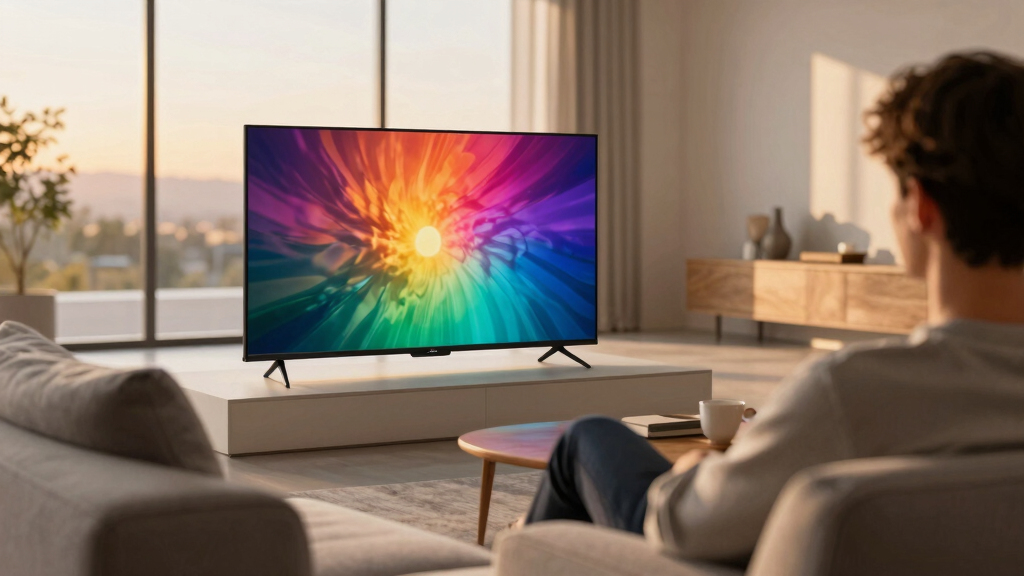

Shopping for 4K OLED smart TVs means choosing between three genuinely different approaches to the same display technology: LG’s OLED evo panels with AI processing, Samsung’s QD-OLED lineup tuned for brightness and gaming, and Panasonic’s filmmaker-first picture philosophy. My top pick overall is the LG 65-Inch C6 Series (OLED65C6PUA), because it pairs the newest OLED evo panel with Dolby Vision, Dolby Atmos, and AI Super Upscaling in a size that fits most living rooms. If budget matters most, the Samsung 55-Inch S85F delivers core OLED contrast at a friendlier price, while the Panasonic Z8 77-inch is the standout home-cinema choice. The main tradeoffs you’ll face are size versus price, peak brightness versus color accuracy, and gaming features versus movie-focused processing. Keep reading for the full breakdown of all eight models.

Get the latest gadgets delivered free with Prime
- Fast, free delivery on millions of items
- Prime Video, Amazon Music and more included
- Member-only deals all year
Key Takeaways
- The LG C6 at 65 inches earned the top spot because it’s the only 2026 model in this lineup with a next-gen OLED evo panel, Dolby Vision, Dolby Atmos, and AI Super Upscaling all together — the most complete package rather than the best at any single thing.
- Samsung dominates this lineup with five entries across three tiers (S85F, S90F, S90H), which means the real decision within Samsung‘s range is tier-based: the S85F sacrifices peak brightness and the 144Hz Motion Xcelerator, while the S90F/S90H keep them.
- Size is the biggest hidden differentiator: the 42-inch LG C5 and 48-inch Samsung S90F are desk-and-dorm OLEDs, while the 77-inch Panasonic Z8 and Samsung S85F assume a dedicated viewing room with proper seating distance.
- Gamers should shortlist the Samsung S90F models first — the 144Hz Motion Xcelerator and NQ4 AI Gen3 upscaling are reserved for that tier, and the 48-inch version makes it affordable for PC gamers who don’t need a 65-inch panel.
- The Panasonic Z8 is the only Fire TV platform entry in the group, while every Samsung runs Tizen and both LGs run webOS — your streaming-platform preference may eliminate half the lineup before picture quality even enters the conversation.


| 4K OLED smart TV | Screen Size | Processor | Resolution | Refresh Rate |
|---|---|---|---|---|
| Panasonic Z8 Series 77-inch OL | 77 inches | HCX Pro AI Processor MKII | 4K Ultra HD | 144Hz |
| LG 42-Inch OLED evo AI 4K C5 S | 42 inches | Alpha 9 AI Processor Gen8 | 4K Ultra HD | Up to 144Hz |
| Samsung 65-Inch Class OLED S90 | 65 inches | NQ4 AI Gen3 with 128 neural networks | 4K UHD | 144Hz with Motion Xcelerator |
| Samsung 48-Inch Class S90F 4K | 48 inches | NQ4 Gen3 AI Processor | 4K UHD | 144Hz |
| LG 65-Inch Class OLED evo AI 4 | 65 inches | Alpha 11 AI Processor Gen3 (dual AI engine) | 4K OLED evo | 165Hz |
| Samsung 55-Inch Class OLED 4K | 55 inches | NQ4 AI Gen2 | — | — |
| Samsung 65-Inch Class S90H Ser | 65 inches | NQ4 AI Gen3 (128 neural networks) | 4K | 120Hz (up to 165Hz with PC) |
| Samsung 77-Inch Class OLED 4K | 77 inches | NQ4 AI Gen2 | — | — |
More Details on Our Top Picks
Panasonic Z8 Series 77-inch OLED 4K Ultra HD Smart Fire TV
Of everything in this lineup, the Panasonic Z8 leans hardest into the cinematic living room idea. Its HCX Pro AI Processor MKII and support for both Dolby Vision IQ and HDR10+ mean it plays nicely with every major streaming studio’s HDR preference — a flexibility the Samsung S90F can’t match, since Samsung skips Dolby Vision entirely. The 77-inch panel also fills a space in a way the 65-inch LG C6 simply can’t, and Dolby Atmos with 360 Soundscape Pro makes the built-in audio genuinely usable without a soundbar.
The tradeoff is friction. Fire TV is less polished than LG’s webOS, the massive footprint demands a big room and a big budget, and newcomers may find the calibration options overwhelming rather than empowering.
Pros:- Supports both Dolby Vision IQ and HDR10+ for full HDR format coverage
- 144Hz panel with HDMI 2.1, VRR, and both G-Sync and FreeSync certification
- 360 Soundscape Pro Atmos audio that genuinely replaces a soundbar
- Fire TV integration consolidates streaming and voice control out of the box
Cons:- Premium pricing puts it out of reach for value-focused buyers
- 77-inch footprint overwhelms small and medium rooms
- Fire TV platform is less refined than webOS or Tizen for everyday navigation
Best for: Movie enthusiasts with a dedicated media room who want theater-grade HDR flexibility and big-screen immersion in one package
Not ideal for: Apartment dwellers or casual streamers — 77 inches is impractical in small rooms and the feature depth is overkill
- Screen Size:77 inches
- Resolution:4K Ultra HD
- HDR Formats:HDR10, HDR10+, Dolby Vision, HLG
- Refresh Rate:144Hz
- Sound:Dolby Atmos, 360 Soundscape Pro
- Gaming Features:HDMI 2.1, VRR, AMD FreeSync Premium, NVIDIA G-SYNC, Game Mode Extreme
- Smart Platform:Fire TV
- Processor:HCX Pro AI Processor MKII
Our verdict“Buy the Z8 if you want a do-everything home theater centerpiece and have the room and budget for 77 inches of OLED.”
LG 42-Inch OLED evo AI 4K C5 Series Smart TV (OLED42C5PUA, 2025)
The LG C5 at 42 inches is the rare OLED that fits where OLEDs usually can’t: a bedroom, a dorm, or a desk. Its 0.1ms response time and 144Hz refresh rate make it a standout monitor-class gaming display — something the much larger Panasonic Z8 can’t realistically be, since nobody desks-mounts 77 inches. Four HDMI 2.1 ports is generous at this size, and the Alpha 9 Gen8 processor’s AI upscaling keeps sub-4K content from looking soft on a panel you sit close to.
The compromise is physical: 42 inches delivers the OLED blacks but not the scale, and pushing console or PC graphics at 4K/144Hz is a tall order for most rigs. Compared with the 48-inch Samsung S90F, you give up six inches to gain Dolby Vision support and a smarter, more personalizable webOS experience.
Pros:- 0.1ms response time and 144Hz refresh rate ideal for fast-paced gaming
- Four HDMI 2.1 inputs for console, PC, and streaming devices simultaneously
- Self-lit OLED pixels deliver deep blacks even in bright rooms
- Alpha 9 Gen8 AI upscaling improves non-4K sources noticeably at close viewing distances
Cons:- 42-inch size limits immersion for movies and sports
- webOS includes ads and sponsored content in the interface
- OLED brightness trails QD-OLED rivals like Samsung’s S90F series in sunlit rooms
Best for: PC gamers and bedroom streamers who want true OLED contrast and 144Hz speed in a small-footprint panel
Not ideal for: Living-room buyers — 42 inches underdelivers as a primary household TV in most spaces
- Screen Size:42 inches
- Resolution:4K Ultra HD
- Panel Type:OLED evo with self-lit pixels
- Refresh Rate:Up to 144Hz
- Response Time:0.1ms
- HDR Formats:Dolby Vision, HDR10, HLG
- Gaming Features:NVIDIA G-Sync, AMD FreeSync Premium, VRR, Game Dashboard & Optimizer
- Processor:Alpha 9 AI Processor Gen8
- Smart Platform:webOS with AI Search and Concierge
Our verdict“The C5 is the smart pick if you want monitor-grade responsiveness and OLED quality without dedicating a wall to it.”
Samsung 65-Inch Class OLED S90F 4K Smart TV (2025 Model)
Samsung’s 65-inch S90F earns its spot through processing muscle: the NQ4 AI Gen3 processor runs 128 neural networks to upscale, brighten, and smooth everything on screen. That matters most for live sports, where the AI-driven ball tracking and motion smoothing reduce the blur that plagues cheaper panels — a sharper fast-motion result than the LG C5 delivers at this size. Samsung’s QD-OLED heritage also gives it a brightness advantage, which helps in daytime viewing rooms where standard OLED can wash out.
The honest downside is HDR format politics: no Dolby Vision means some streaming content falls back to HDR10+, where the Panasonic Z8 and LG C6 both flex wider coverage. Alexa and Google voice support partially offset Tizen’s ad-heavy home screen, but not entirely.
Pros:- 128-network AI upscaling makes HD and older content look genuinely sharper
- Motion Xcelerator with 4K 144Hz VRR gaming keeps fast action clean
- Strong brightness performance for an OLED in sunlit rooms
- Alexa built in with flexible voice assistant options
Cons:- No Dolby Vision support limits HDR playback options
- Tizen interface serves ads and recommendations prominently
- AI processing is aggressive by default and needs tuning for accurate picture
Best for: Sports fans and bright-room viewers who prioritize motion clarity and punchy brightness over Dolby Vision
Not ideal for: Cinephiles invested in Dolby Vision content — HDR10+ alone leaves gaps in streaming compatibility
- Screen Size:65 inches
- Resolution:4K UHD
- Processor:NQ4 AI Gen3 with 128 neural networks
- Refresh Rate:144Hz with Motion Xcelerator
- HDR Support:HDR10+ with AI HDR-like upscaling
- Gaming Features:VRR up to 4K 144Hz
- Voice Assistant:Alexa built-in
- Smart Platform:Samsung Tizen
Our verdict“The S90F is the choice when your priority is crisp, bright, blur-free action over format-maximalist home theater.”
Samsung 48-Inch Class S90F 4K UHD Smart TV (2025 Model, 48S90F)
The 48-inch S90F splits the difference between the 42-inch LG C5 and the 65-inch S90F, and that middle position is its whole argument. You get the same NQ4 AI processor and 144Hz Motion Xcelerator as its larger sibling in a panel that still works on a desk or in a smaller den, and Samsung’s Upscaling Pro does real work on cable, older consoles, and compressed streams. Compared with the LG C5, the advantage is brightness and AI motion handling; the cost is the same missing Dolby Vision that defines Samsung’s lineup.
This option makes the most sense for a secondary gaming setup or a bedroom where 42 feels small but 65 feels absurd. Buyers wanting a main living-room TV should step up in size instead.
Pros:- Same NQ4 Gen3 AI processor and 144Hz capability as Samsung’s larger OLEDs
- Upscaling Pro noticeably cleans up sub-4K and streamed content
- 48-inch size works for desktop, wall, or small-room setups
- Alexa built in with a well-stocked app ecosystem
Cons:- No Dolby Vision support, unlike the LG and Panasonic options here
- Smaller OLED panels carry a price-per-inch premium
- Setup and settings menus can overwhelm non-technical users
Best for: Console and PC gamers in bedrooms or dens who want a bigger canvas than a monitor without a 65-inch commitment
Not ideal for: Primary living-room buyers — 48 inches is a compromise size that neither immerses nor saves much space
- Model:48S90F
- Screen Size:48 inches
- Resolution:4K UHD
- Processor:NQ4 Gen3 AI Processor
- Refresh Rate:144Hz
- Key Features:Upscaling Pro, HDR+, Motion Xcelerator, Alexa built-in
Our verdict“A sensible middle path for gamers who found 42 inches too small and 65 too big, provided Dolby Vision isn’t a dealbreaker.”
LG 65-Inch Class OLED evo AI 4K C6 Series Smart TV (OLED65C6PUA, 2026)
If one TV in this group has to be the default recommendation, the LG C6 is it. The a11 AI Processor Gen3’s dual AI engine and Brightness Booster close LG’s traditional brightness gap with the Samsung S90F while keeping the self-lit-pixel contrast Samsung can’t fully replicate, and Dolby Vision, Atmos, and Filmmaker Mode with Ambient Light Sensing give it the most complete home-theater toolkit at its size. The 165Hz refresh rate actually out-specs every other panel here, including the gaming-focused 48-inch S90F.
Where it gives ground is scale and price: the Panasonic Z8 offers a bigger, more audio-forward cinematic package, and the C6’s AI features — Gemini and Copilot integration, personalized wizards — add interface complexity some buyers will never touch. OLED Care mitigates burn-in worries but doesn’t eliminate them for static-content heavy users.
Pros:- 165Hz refresh rate is the fastest in this lineup for competitive gaming
- Brightness Booster plus a11 processor narrows the gap with QD-OLED rivals
- Full Dolby Vision, Atmos, and Filmmaker Mode coverage for cinephile-grade playback
- webOS 2026 with Gemini and Copilot plus 400+ free LG Channels
Cons:- Flagship features command a premium over the 2025 C5 and S90F
- Aggressive AI assistant integration adds interface clutter
- OLED burn-in remains a consideration for static-content-heavy viewing habits
Best for: Buyers who want a single 65-inch TV that handles movies, sports, and competitive gaming at a high level without specializing in any one
Not ideal for: Maximum-size seekers and heavy static-content viewers — 65 inches is merely average now, and burn-in risk persists for news or HUD-heavy use
- Screen Size:65 inches
- Resolution:4K OLED evo
- Processor:Alpha 11 AI Processor Gen3 (dual AI engine)
- Refresh Rate:165Hz
- HDR Formats:Dolby Vision, HDR10
- Gaming Features:NVIDIA G-Sync, AMD FreeSync Premium, 0.1ms response time
- Smart Platform:webOS 2026 with Google Gemini & Microsoft Copilot
- Extras:OLED Care, Wow Orchestra, Alexa compatible
Our verdict“The C6 is the safest no-compromise pick: fast enough for gamers, accurate enough for film fans, and bright enough for everyday rooms.”
Samsung 55-Inch Class OLED 4K S85F Series Smart TV (2025 Model)
The S85F at 55 inches is the sweet spot in Samsung’s OLED lineup for buyers who want premium picture processing without paying for flagship extras. Its NQ4 AI Gen2 processor handles upscaling well, and Pantone-validated color means skin tones and gradients look accurate out of the box rather than oversaturated. Compared with the step-up Samsung S90H, this model skips the matte Glare Free screen and the Gen3 chip’s 128 neural networks, so reflections in a bright room will be more noticeable. But unlike the LG C5 at 42 inches, it offers enough screen real estate for a proper living-room cinema feel. The tradeoff is straightforward: you give up peak gaming performance and anti-glare coating in exchange for a cleaner price and a slimmer contour design.
Pros:- Pantone-validated color accuracy for realistic, factory-tuned picture quality
- NQ4 AI Gen2 neural upscaling makes lower-resolution streaming content look sharper
- Slim contour design that sits flush in modern interiors
- Object Tracking Sound Lite with Dolby Atmos adds directional audio without a soundbar
Cons:- Glossy screen picks up reflections in bright rooms, unlike the glare-free S90H
- Full feature set depends on a compatible Alexa smart home setup
Best for: Movie and streaming fans in medium-sized rooms who want accurate colors and AI upscaling without flagship pricing
Not ideal for: Console or PC gamers — the S85F lacks the 144Hz-plus refresh rates and G-Sync support of the S90H and S90F models
- Screen Size:55 inches
- Series:S85F
- Model Year:2025
- Processor:NQ4 AI Gen2
- Sound:Object Tracking Sound Lite, Dolby Atmos
- Color Technology:Color Booster Pro, Pantone Validated
- Voice Assistant:Alexa Built-in
Our verdict“A well-balanced 55-inch OLED for viewers who prioritize color accuracy and design over gaming performance.”
Samsung 65-Inch Class S90H Series, OLED, 4K, Smart TV, 2026 Model
If gaming is the reason you’re buying an OLED, the S90H is the clear pick in this lineup. Its Ultimate Gaming Pack pairs Motion Xcelerator 165Hz with NVIDIA G-Sync and AMD FreeSync Premium Pro, which means tear-free, low-latency play that neither the S85F nor the LG C6 can match at this refresh tier — though note the full 165Hz mode requires a connected PC with a capable graphics card. The Glare Free matte finish is the other headline: it genuinely changes where you can place the TV, killing reflections that would ruin a glossy panel like the 55-inch S85F. The NQ4 AI Gen3 processor with 128 neural networks also upgrades older non-HDR content convincingly. What you give up is simplicity — this is a feature-dense, enthusiast-oriented set that casual viewers may never fully exploit.
Pros:- Motion Xcelerator 165Hz with G-Sync and FreeSync Premium Pro for ultra-smooth, tear-free gaming
- Glare Free matte screen eliminates reflections in bright rooms
- NQ4 AI Gen3 processor with 128 neural networks upscales and remasters older content to near-HDR quality
- 2,000-nit peak brightness with OLED HDR+ for strong contrast even in daylight
Cons:- Full 165Hz performance only works with PC-connected games and a supported graphics card
- Feature-heavy platform has a steeper learning curve than simpler sets like the LG C5
Best for: PC and console gamers with capable hardware who want maximum refresh rates and tear-free play in a bright room
Not ideal for: Casual streamers on a budget — most of what you’re paying for (165Hz, G-Sync) goes unused without gaming hardware
- Screen Size:65 inches
- Series:S90H (2026)
- Resolution:4K
- Processor:NQ4 AI Gen3 (128 neural networks)
- Refresh Rate:120Hz (up to 165Hz with PC)
- Peak Brightness:2000 nits, OLED HDR+
- Screen Finish:Matte (Glare Free)
- HDR Format:HDR10+, HLG
- Audio:2.1CH, 40W, Dolby Atmos, Object Tracking Sound
Our verdict“The gamer’s OLED in this roundup — worth it only if your hardware can actually push 165Hz.”
Samsung 77-Inch Class OLED 4K S85F Series Smart TV (2025 Model)
The 77-inch S85F exists for one buyer: someone who wants a wall-dominating OLED without stepping up to flagship pricing. It shares the same NQ4 AI Gen2 processor and Pantone-validated color as its 55-inch sibling, so picture quality is familiar — the difference is scale, which transforms sports and nature documentaries. Compared with the Panasonic Z8 at 77 inches, Samsung’s platform is smoother for smart home users thanks to built-in Alexa, though Panasonic traditionally edges out Samsung for Hollywood-grade color tuning. Against the S90H at 65 inches, you trade the glare-free matte finish and gaming headroom for ten extra inches of self-lit OLED real estate. Be honest about your space: at this size, seating needs to be roughly nine feet back, and the glossy panel wants a room you can dim.
Pros:- Massive 77-inch self-lit OLED canvas that makes 4K detail genuinely visible
- Pantone-validated colors and Color Booster Pro for natural, accurate images
- Object Tracking Sound Lite with Dolby Atmos fills large rooms without extra speakers
- Same elegant contour design as the smaller S85F, scaled without losing the slim profile
Cons:- Glossy screen reflects light, problematic in bright or windowed rooms
- Preset-heavy smart platform takes time to tune for a big-screen theater setup
- Lacks the higher refresh and anti-glare tech of the similarly priced S90H
Best for: Home theater builders with large rooms and controlled lighting who want maximum OLED screen size at a mid-tier price
Not ideal for: Apartments or bedrooms — the 77-inch panel overwhelms small spaces and its glossy screen fights window light
- Screen Size:77 inches
- Series:S85F
- Model Year:2025
- Processor:NQ4 AI Gen2
- Sound:Object Tracking Sound Lite with Dolby Atmos
- Color Technology:Color Booster Pro, Pantone Validated
- Design:Contour Design
- Voice Assistant:Alexa Built-in
Our verdict“The biggest mainstream OLED value here — choose it when screen size matters more than gaming specs.”

How We Picked
I evaluated each TV through the lens that actually separates 4K OLED models from one another: panel generation and processing, size-to-room fit, gaming capabilities, smart platform, and value positioning within its own brand family. Because five of the eight models are Samsungs, I paid close attention to how the S85F, S90F, and S90H tiers differ — a mid-tier Samsung is often a better buy than an entry-tier model at a larger size, and vice versa. Panel brightness, motion handling, and HDR format support mattered most for movie and sport viewing, while refresh rate and input features decided the gaming rankings.
The ranking also reflects generational positioning: 2026 models like the LG C6 and Samsung S90H carry newer processing that should stay relevant longer, while 2025 models compete primarily on value. I discounted any feature that doesn’t change the viewing experience — cosmetic bezel design and bundled remotes, for example — and weighted decisions a buyer can’t undo after purchase, like screen size and smart platform, more heavily than ones they can, like picture-mode tuning. Every pick below has real drawbacks, and I state them plainly, because a roundup where everything sounds great helps nobody choose.
| 4K OLED smart TV | Gaming Features | Smart Platform |
|---|---|---|
| Panasonic Z8 Series 77-inch OL | HDMI 2.1, VRR, AMD FreeSync Premium, NVIDIA G-SYNC, Game Mode Extreme | Fire TV |
| LG 42-Inch OLED evo AI 4K C5 S | NVIDIA G-Sync, AMD FreeSync Premium, VRR, Game Dashboard & Optimizer | webOS with AI Search and Concierge |
| Samsung 65-Inch Class OLED S90 | VRR up to 4K 144Hz | Samsung Tizen |
| Samsung 48-Inch Class S90F 4K | — | — |
| LG 65-Inch Class OLED evo AI 4 | NVIDIA G-Sync, AMD FreeSync Premium, 0.1ms response time | webOS 2026 with Google Gemini & Microsoft Copilot |
| Samsung 55-Inch Class OLED 4K | — | — |
| Samsung 65-Inch Class S90H Ser | — | — |
| Samsung 77-Inch Class OLED 4K | — | — |
Factors to Consider When Choosing 4K OLED Smart TVs
Before committing to any of the eight models above, step back and think about the decisions that shape an OLED purchase more than spec sheets do. These are the factors I’d weigh first — and the mistakes I see buyers make most often.Size: The Decision You Can’t Undo
Screen size is the single most consequential choice in this roundup, and it’s the one buyers most often get wrong in both directions. A 42-inch or 48-inch OLED is a desk, bedroom, or small-apartment screen — buying one for a living room with a 10-foot viewing distance will leave you underwhelmed by a panel technology built for immersive contrast. At the other extreme, a 77-inch TV needs roughly 8 to 12 feet of seating distance and a wall or stand that can physically support it; measure your space, including depth for a stand, before you fall in love with a big panel. A useful rule: viewing distance in feet divided by 1.5 gives a rough minimum screen size in inches for a cinematic feel. The 55 to 65-inch range covered by the Samsung S85F, S90F, S90H, and LG C6 fits the widest range of rooms, which is part of why my top pick sits there. Don’t let a modest price gap talk you into a size that doesn’t fit your room — the best panel in the wrong size is a worse buy than a good panel in the right one.
Panel Tier Matters More Than Brand
Buyers often pick a brand first and a tier second, which is backwards. Within Samsung’s lineup alone, the S85F, S90F, and S90H use different panel treatments and processors: stepping up a tier buys you higher peak brightness, the NQ4 AI Gen3 processor with Upscaling Pro, and the 144Hz Motion Xcelerator. The same logic applies to LG, where the C-series OLED evo panel differs meaningfully from older or entry OLED designs in brightness headroom and heat management. A mid-tier set from a strong lineup frequently outperforms a stripped-down model from a flagship line. When comparing prices, compare within-brand tiers first to understand what the step-up actually buys, then compare across brands at the same tier. This is how the rankings in this roundup were built — and it’s the fastest way to avoid overpaying for a badge.
HDR Formats: Dolby Vision Is Still a Real Dividing Line
This is a quiet but persistent tradeoff: Samsung TVs do not support Dolby Vision, while the LG and Panasonic models here do. If your streaming diet is heavy on Netflix, Disney+, and Apple TV+ originals — most of which are mastered in Dolby Vision — an LG or Panasonic will render dynamic scene-by-scene HDR the way the creators intended. Samsung argues its HDR10+ processing narrows the gap, and for HDR10+ content (common on Amazon Prime Video) its sets perform well, but the format support simply isn’t symmetric. Buyers who don’t care about format logos and mostly watch sports, YouTube, or cable won’t notice the difference. The mistake to avoid is assuming every “HDR” label means the same experience — the format your favorite services actually use should steer this part of your decision more than marketing counts of HDR badges on the box.
Gaming Features: Buy the Refresh Rate You’ll Actually Use
If you own a PS5, Xbox Series X, or a gaming PC, the 144Hz Motion Xcelerator on Samsung’s S90F and S90H tiers is a genuine differentiator, not a spec-sheet flex — smoother motion in fast games is immediately visible. But if your console is older, or your gaming is occasional, paying a tier premium for high refresh features you’ll never enable is wasted money; the S85F and LG C-series handle 4K/120Hz gaming perfectly well for most players. PC gamers are a special case: the 48-inch and 42-inch models in this lineup exist largely for them, doubling as monitors where OLED’s per-pixel contrast gives LCD monitors real competition. Also check input count and location if you wall-mount — side-facing HDMI ports matter more than most buyers realize until the wall bracket is up. Match the gaming tier to your hardware, not to forum enthusiasm.
Smart Platform: You Live With It Every Day
The smart platform is the interface you’ll touch every single time you turn the TV on, and in this roundup you’re choosing among three very different ones: LG’s webOS, Samsung’s Tizen, and Amazon’s Fire TV on the Panasonic. They differ in app layout, voice assistant integration, advertising load, and how aggressively they promote content over your own inputs. If your household is deep in the Alexa ecosystem, the Panasonic Z8’s Fire TV integration is frictionless; Alexa-built-in models like the Samsung S90F sit somewhere in the middle. If you already own devices from one ecosystem — a Galaxy phone, an LG soundbar, Fire Sticks on other TVs — staying within that ecosystem buys you genuine conveniences like casting and unified control. Test-drive the interface in a store if you can; a beautiful panel behind a sluggish, ad-heavy menu is a daily annoyance no picture mode can fix.
OLED Care and Longevity: What to Expect
Modern OLED panels have largely moved past the burn-in panic of earlier generations, thanks to pixel refresh cycles, logo-dimming, and better heat management — but the technology still rewards certain habits. If your household leaves a news channel, sports ticker, or game HUD on screen for many hours daily, week after week, static-image retention remains a real (if small) risk; heavy static-content viewers should weigh that against LCD alternatives. All the models here include automatic compensation features, and leaving them enabled costs nothing. Brightness is the other longevity-adjacent factor: OLEDs run dimmer than the brightest QLEDs, so a very sun-drenched living room with uncontrolled daylight may challenge even the S90-tier panels — plan curtains or placement accordingly. Used sensibly, any of these eight sets should deliver a decade of viewing, so buy the panel that fits your room and habits rather than the one with the scariest spec list.
Frequently Asked Questions
Should I buy the LG C6 or the Samsung S90H if both are 2026 models in the 65-inch size?
These are the two newest sets in the lineup and the choice comes down to content and gaming priorities. The LG C6 supports Dolby Vision, which matters if you stream a lot of movie and prestige-TV content mastered in that format, and its OLED evo panel with AI Super Upscaling is tuned for cinematic accuracy. The Samsung S90H counters with the NQ4 AI Gen3 processor, HDR10+ processing, and the 144Hz Motion Xcelerator, making it the stronger pick for gaming and bright-room viewing. If movie nights dominate, lean LG; if a PS5 or gaming PC is connected most evenings, lean Samsung. Neither is a wrong answer — they’re optimized for different households.
Is the Samsung S90F worth the step up over the S85F?
For most buyers, yes — the step up buys things you’ll notice daily rather than niche extras. The S90F adds the NQ4 AI Gen3 processor with Upscaling Pro, which visibly cleans up non-4K sources like cable, streaming at lower bitrates, and older media libraries — and most households watch plenty of that content. It also carries the 144Hz Motion Xcelerator, which benefits both fast-motion sports and gaming. The S85F remains a smart buy if you feed the TV almost exclusively native 4K streaming, sit closer than average (where upscale flaws are more visible anyway is the opposite — so reconsider), or simply want OLED contrast at the lowest entry price. My advice: if the price gap between the two tiers is modest at your chosen size, take the S90F; if it’s large, the S85F won’t embarrass itself.
Can a 42-inch or 48-inch OLED really work as a main TV?
It depends entirely on your room, and this is where honest sizing advice saves regret. A 42-inch LG C5 or 48-inch Samsung S90F is genuinely excellent as a bedroom TV, a den or dorm screen, or a large desk monitor for gaming — OLED’s contrast makes small screens feel more immersive than their size suggests. As a primary living-room TV viewed from more than about seven feet, though, either will feel small, and no picture quality can compensate for that. The sweet spot these compact models occupy is the buyer who wants flagship-tier OLED performance in a space where 65 inches is physically or financially out of reach. If you’re torn, err one size up — buyers rarely regret a bigger screen, but frequently regret a smaller one.
What does the Panasonic Z8’s Fire TV platform change compared with LG and Samsung sets?
The Panasonic Z8 is the only set in this lineup running Amazon’s Fire TV, while the LGs run webOS and the Samsungs run Tizen — and the platform shapes your daily experience more than most buyers expect. Fire TV integrates Alexa deeply, surfaces Amazon content prominently, and behaves exactly like a Fire Stick built in, which is a plus if you already use Alexa speakers or other Fire TV devices around the house. The tradeoff is a more advertising-heavy, content-first interface than webOS, and Panasonic’s smart features historically trail LG and Samsung in polish. Picture-wise, the Z8 leans toward filmmaker-accurate color and comes in a large 77-inch size, so it’s really aimed at the movie-first household. Choose it for the panel and Fire TV fit — not for the smart interface alone.
Do I need a soundbar with any of these TVs?
Yes, for anything beyond casual viewing — built-in TV speakers remain the weakest link on every model in this roundup, including the premium tiers. The LG C6 is the best starting point without one thanks to Dolby Atmos processing and the Wow Orchestra feature, which lets the TV’s speakers work alongside a compatible LG soundbar. The Samsung sets pair naturally with Samsung soundbars via Q-Symphony-style integration, which is worth factoring in if you plan an audio upgrade. A sensible approach: budget for at least a basic soundbar alongside any OLED purchase, and prefer an audio brand that matches your TV brand to unlock those combined-speaker features. If audio quality is a top-three priority for you, the LG C6 plus an LG Atmos bar is the most coherent pairing in this group.
Conclusion
The right pick here depends less on which TV is “best” and more on which one matches your room, content, and budget. For best overall, I’d point most buyers to the LG 65-Inch C6 Series — it combines the newest OLED evo panel, Dolby Vision, Dolby Atmos, and AI Super Upscaling in the most universally sensible size. For best value, the Samsung 55-Inch S85F delivers the core OLED experience — per-pixel contrast, deep blacks, clean 4K playback — without paying for gaming and processing extras you may never use. The Samsung 65-Inch S90H takes the best premium slot for buyers who want 2026-generation processing and gaming performance in a big-screen flagship, with the Panasonic Z8 77-inch as the alternative premium choice for movie-first, Fire-TV households. For beginners and small-space buyers, the 42-inch LG C5 is the easiest entry into OLED — small, capable, and forgiving — while the 48-inch Samsung S90F is the specific pick for PC gamers wanting an OLED monitor. And if you want one set that balances everything at a mainstream size with strong gaming credentials, the Samsung 65-Inch S90F is the safe middle path. Size first, platform second, panel tier third — follow that order and any of these eight will serve you well.
Halloween Picks
halloween
As an affiliate, we earn on qualifying purchases.