The best AR glasses for most buyers are the VITURE Beast XR/AR Glasses, whose 1200p display and 58° field of view make a compelling all-around combination on paper. For a more immersive view, the RayNeo GT Max pairs a 59° field of view with 120Hz and native 3DoF, while the VITURE Luma Ultra XR adds 6DoF tracking and hand gestures for spatial interaction. The main tradeoffs are display size and clarity versus fit, tracking capability, device compatibility, and how much setup you are willing to manage. Some glasses work primarily as personal screens, while others offer more spatial features; those categories are not interchangeable. Read on for the full comparison and guidance on which kind fits your needs.

Get the latest gadgets delivered free with Prime
- Fast, free delivery on millions of items
- Prime Video, Amazon Music and more included
- Member-only deals all year
Complete the kit



Key Takeaways
- Tracking is a major dividing line: The VITURE Luma Ultra models list 6DoF, while several XREAL and RayNeo options specify native 3DoF; those labels describe different levels of movement tracking, not simply better or worse image quality.
- Wide field of view does not tell the whole story: The RayNeo GT Max lists 59° and the VITURE Beast 58°, but fit and display alignment still affect how much of that view is useful to an individual wearer.
- Refresh rate and resolution serve different priorities: Several picks list 120Hz, while the VITURE Beast and Luma Ultra models list 1200p; buyers should match motion smoothness and image detail to their main content.
- Vision adjustment can reduce accessory dependence: The Denash V50 and VITURE Pro 2 list adjustable myopia correction, a feature worth checking against your prescription and eyewear needs before buying.
- Large virtual-screen claims are not direct quality rankings: XREAL, RayNeo, and VITURE models advertise different virtual screen sizes, but comfort, compatibility, and tracking matter more than the largest stated diagonal alone.
| VITURE Beast XR/AR Glasses, 1200p, 58° FOV |  | Best for a Wide, Adjustable View | Display: Sony Micro-OLED | Resolution: 1200p per eye | Virtual screen: Up to 174 inches | VIEW LATEST PRICE | See Our Full Breakdown |
| RayNeo Air 4 Pro AR/XR Glasses with HDR10 Display and Bang & Olufsen Audio |  | Best for HDR Video and Built-In Audio | Display: 201-inch virtual display with HDR10 | Refresh rate: 120 Hz | Processor: Vision 4000 | VIEW LATEST PRICE | See Our Full Breakdown |
| XREAL One Pro AR Glasses with X1 Chip, 3DoF Tracking, 57° FOV, 120Hz FHD Display, M (57–66mm IPD) |  | Best for Responsive Native Tracking | Chip: XREAL X1 | Display: Sony Micro-OLED, 1920 × 1080 | Refresh rate: 120 Hz | VIEW LATEST PRICE | See Our Full Breakdown |
| XREAL 1 Pro+ AR Glasses with 171-Inch Spatial Display |  | Best for Real-Time 3D Conversion | Display: OLED, 1920 × 1080 | Virtual screen: 171 inches | Refresh rate: 120 Hz | VIEW LATEST PRICE | See Our Full Breakdown |
| VITURE Luma Ultra XR Glasses, 1200p, 1500 nits, 120Hz, 6DoF |  | Best for Brightness and Workspace Features | Display panel: Sony Micro-OLED | Resolution: 1200p | Virtual screen: 152 inches | VIEW LATEST PRICE | See Our Full Breakdown |
| VITURE Luma Ultra AR Glasses, 1200p, 6DoF, Hand Gesture Support, 52° FOV, 1500 Nits |  | Best for Spatial AR | Display: 1200p Sony micro-OLED | Refresh rate: 120Hz | Field of view: 52° | VIEW LATEST PRICE | See Our Full Breakdown |
| Denash V50 AR Glasses with 1080p OLED Display and Adjustable Myopia Correction |  | Best for Adjustable Myopia Correction | Display: OLED, 1920 × 1080 | Refresh rate: 60Hz | Brightness: 3000 nits | VIEW LATEST PRICE | See Our Full Breakdown |
| Rokid Max 2 AR Glasses, Black |  | Best Lightweight Display Glasses | Display: Micro-OLED | Virtual screen: 215 inches at 6 meters | Field of view: 50° | VIEW LATEST PRICE | See Our Full Breakdown |
| Maverick Sport Augmented Reality AR Glasses |  | Best for Outdoor Activity Data | Display: Sony OLED | Battery life: Up to 10 hours | Water and dust protection: IP55 | VIEW LATEST PRICE | See Our Full Breakdown |
| XREAL One Pro AR Glasses with X1 Chip, 171-Inch 120Hz FHD Display and Native 3DoF | 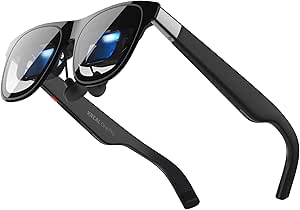 | Best for Native 3DoF Tracking | Chip: XREAL X1 | Tracking: Native 3DoF; optional 6DoF with XREAL Eye | Display: Sony 0.55-inch Micro-OLED | VIEW LATEST PRICE | See Our Full Breakdown |
| RayNeo GT Max AR Glasses, 59° Wide Field of View, 120 Hz, Native 3DoF, 267-Inch Virtual Screen | 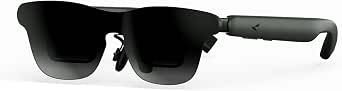 | Best for a Wide, Spatial Entertainment Screen | Field of view: 59° | Refresh rate: 120 Hz | Tracking: Native 3DoF | VIEW LATEST PRICE | See Our Full Breakdown |
| XREAL a01+ AR Glasses with 147-Inch Virtual Display |  | Best for Lightweight Everyday Viewing | Virtual display size: 147 inches | Display: Dual Micro-OLED | Resolution: 1920 × 1080 per eye | VIEW LATEST PRICE | See Our Full Breakdown |
| RayNeo Air 3s AR/XR Glasses with 201-Inch FHD HueView Display |  | Best for Colorful, High-Refresh Viewing | Display: FHD HueView | Virtual screen size: 201 inches | Refresh rate: 120 Hz | VIEW LATEST PRICE | See Our Full Breakdown |
| VITURE Pro 2 XR Glasses with 120Hz Display and Adjustable Myopia Correction |  | Best for Myopia Adjustment Without Prescription Inserts | Display: Sony Micro-OLED | Resolution: 1080p | Refresh rate: 120 Hz | VIEW LATEST PRICE | See Our Full Breakdown |
| XREAL 1S AR Glasses with X1 Chip and Native 3DoF |  | Best for Native Spatial Viewing Modes | Connectivity: USB-C DisplayPort | Field of view: 52° | Display: OLED | VIEW LATEST PRICE | See Our Full Breakdown |
| AR glasse | Display | Refresh rate | Field of view | Connectivity |
|---|---|---|---|---|
| VITURE Beast XR/AR Glasses | Sony Micro-OLED | 120 Hz | 58° | — |
| RayNeo Air 4 Pro AR/XR Glasses | 201-inch virtual display with HDR10 | 120 Hz | — | USB Type-C |
| XREAL One Pro AR Glasses with | Sony Micro-OLED, 1920 × 1080 | 120 Hz | 57° | USB-C video input |
| XREAL 1 Pro+ AR Glasses with 1 | OLED, 1920 × 1080 | 120 Hz | 57° | — |
| VITURE Luma Ultra XR Glasses | — | Up to 120 Hz | 52° | — |
| VITURE Luma Ultra AR Glasses | 1200p Sony micro-OLED | 120Hz | 52° | — |
| Denash V50 AR Glasses with 108 | OLED, 1920 × 1080 | 60Hz | — | USB-C with DisplayPort support |
| Rokid Max 2 AR Glasses | Micro-OLED | 120Hz | 50° | USB-C |
| Maverick Sport Augmented Reali | Sony OLED | — | — | Strava sync; Garmin radar integration |
| XREAL One Pro AR Glasses with | Sony 0.55-inch Micro-OLED | Up to 120Hz | 57° | — |
| RayNeo GT Max AR Glasses | — | 120 Hz | 59° | — |
| XREAL a01+ AR Glasses with 147 | Dual Micro-OLED | — | — | USB-C DisplayPort |
| RayNeo Air 3s AR/XR Glasses wi | FHD HueView | 120 Hz | — | USB |
| VITURE Pro 2 XR Glasses with 1 | Sony Micro-OLED | 120 Hz | 50 degrees | USB-C video output |
| XREAL 1S AR Glasses with X1 Ch | OLED | Up to 120 Hz | 52° | USB-C DisplayPort |
More Details on Our Top Picks
VITURE Beast XR/AR Glasses, 1200p, 58° FOV
The VITURE Beast stands out for pairing a wider 58° field of view with 1200p-per-eye Micro-OLED displays and built-in 3DoF tracking. That broader view can make games and virtual screens feel less boxed in than the XREAL One Pro, whose listed field of view is 57°. Its 120Hz refresh rate suits fast-moving content, while electrochromic dimming and Auto Transparency give you more control as lighting changes. Adjustable arms, interchangeable nose pads, and a prescription-ready frame add useful fit flexibility.
The tradeoff is that the glasses depend on a compatible device for content and SpaceWalker features; they are not a standalone display system. Fit also has defined iPD ranges, so buyers outside those ranges may need another option. I’d pick the Beast for a wide, polished personal screen, but the XREAL One Pro has a clearer path to optional 6DoF anchoring with its XREAL Eye accessory.
Pros:- 1200p-per-eye Sony Micro-OLED displays with a 120Hz refresh rate
- 58° field of view is wider than the listed 57° on the XREAL One Pro
- Built-in 3DoF tracking, adjustable screen modes, and electrochromic dimming
- Adjustable arms, interchangeable nose pads, and prescription-ready design
Cons:- Requires a compatible device for content and SpaceWalker features
- Fit options are limited to the listed iPD ranges
Best for: USB-C device owners who want a wide virtual screen, 120Hz viewing, and adjustable dimming in a prescription-ready frame.
Not ideal for: Buyers seeking standalone operation or whose iPD falls outside the listed regular and large fit ranges.
- Display:Sony Micro-OLED
- Resolution:1200p per eye
- Virtual screen:Up to 174 inches
- Field of view:58°
- Refresh rate:120 Hz
- Peak brightness:1250 nits
- Tracking:Built-in 3DoF
- Weight and frame:88 g; aluminum-magnesium alloy
- Compatibility:SpaceWalker for iOS, Android, macOS, and Windows
Our verdict“Choose the VITURE Beast if you want a wide, high-refresh virtual display with built-in 3DoF and flexible dimming, and already have a compatible source device.”
RayNeo Air 4 Pro AR/XR Glasses with HDR10 Display and Bang & Olufsen Audio
The RayNeo Air 4 Pro is the lineup’s clearest pick for buyers focused on video and sound. Its HDR10 display, Vision 4000 SDR-to-HDR upscaling, and 120Hz refresh rate are aimed at making films and games look more vivid and fluid without requiring a separate audio accessory. Four open-ear speakers tuned by Bang & Olufsen provide spatial audio while leaving you aware of nearby sounds. Compared with the VITURE Beast, RayNeo puts more emphasis on image processing and integrated audio than on listed tracking features or fit adjustments.
The simple USB-C connection works with a broad range of listed phones, computers, and gaming devices, but the source must support the connection. There is no internal battery, so the glasses draw power through the connected device. Buyers wanting more focused sound need the separately sold Sound Tube, and the supplied specs do not list spatial tracking. I’d choose this for plug-in entertainment; the XREAL One Pro is a better match when native 3DoF matters more.
Pros:- HDR10 display with Vision 4000 SDR-to-HDR upscaling
- 120Hz refresh rate for video and gaming
- Four open-ear speakers tuned by Bang & Olufsen
- USB-C connection supports a range of listed phones, computers, and gaming devices
Cons:- Requires a compatible USB-C source and has no internal battery
- Sound Tube for more focused audio is sold separately
- No tracking feature is listed in the supplied specifications
Best for: Viewers and handheld gamers with compatible USB-C devices who want HDR processing and integrated open-ear spatial audio.
Not ideal for: Buyers who need standalone battery-powered use, built-in spatial tracking, or focused audio without an added accessory.
- Display:201-inch virtual display with HDR10
- Refresh rate:120 Hz
- Processor:Vision 4000
- Audio:Four open-ear speakers tuned by Bang & Olufsen
- Connectivity:USB Type-C
- Compatible devices:iPhone 15/16/17, Android devices, MacBook, iPad, Steam Deck, PS5, and Switch 2
- Weight:2.72 ounces
- Power:No internal battery
Our verdict“Pick the RayNeo Air 4 Pro for HDR-focused viewing and built-in spatial audio, but choose the XREAL One Pro if native 3DoF is a priority.”
XREAL One Pro AR Glasses with X1 Chip, 3DoF Tracking, 57° FOV, 120Hz FHD Display, M (57–66mm IPD)
The XREAL One Pro earns its place for buyers who want spatial tracking built into the glasses rather than relying on an external accessory for basic 3DoF. Its X1 chip handles native tracking with 3ms motion-to-photon latency, a useful combination when keeping a virtual screen anchored matters during gaming or viewing. The 1080p Micro-OLED display runs at 120Hz across a 57° field of view. Compared with the XREAL 1 Pro+, this model’s supplied details make its low tracking latency and optional XREAL Eye upgrade path especially clear.
REAL 3D can add depth to compatible content, while adjustable arms, three nose-pad sizes, and software IPD adjustment offer several ways to refine fit. Its key limitation is that 6DoF spatial anchoring requires the optional XREAL Eye; native tracking alone is 3DoF. The M fit is specified for 57–66mm IPD, and some HDMI sources need an added Beam or adapter. I’d choose it over the RayNeo Air 4 Pro for tracking, not as a standalone device or a water-resistant option.
Pros:- X1 chip provides native 3DoF tracking with 3ms motion-to-photon latency
- 1080p Sony Micro-OLED display with a 120Hz refresh rate
- REAL 3D mode can add depth to compatible games, movies, apps, and photos
- Adjustable arms, three nose-pad sizes, and software IPD adjustment
Cons:- 6DoF spatial anchoring requires the optional XREAL Eye
- Some HDMI devices need an additional Beam or adapter
- Not water resistant
Best for: Mobile gamers and personal-screen users who want native 3DoF tracking, low stated motion latency, and USB-C video input.
Not ideal for: Buyers who need built-in 6DoF, water resistance, or a fit outside the specified 57–66mm M-size IPD range.
- Chip:XREAL X1
- Display:Sony Micro-OLED, 1920 × 1080
- Refresh rate:120 Hz
- Field of view:57°
- Virtual screen:171 inches
- Tracking:Native 3DoF; 6DoF spatial anchoring with optional XREAL Eye
- Motion-to-photon latency:3 ms
- IPD fit:57–66 mm (M size)
- Connectivity:USB-C video input
Our verdict“Choose the XREAL One Pro for responsive native 3DoF and fit adjustment, while accounting for the optional accessory needed for 6DoF.”
XREAL 1 Pro+ AR Glasses with 171-Inch Spatial Display
The XREAL 1 Pro+ is the strongest fit here for buyers who want ordinary supported content converted into a 3D view. Its real-time 3D conversion works with supported photos, videos, livestreams, and games at up to 60fps, adding a distinct use beyond the standard 120Hz virtual screen. The X1 chip also provides native 3DoF tracking, while up to 1200 nits of brightness and three-level electrochromic dimming offer control over the view in different lighting. Against the XREAL One Pro, this model foregrounds conversion and dimming rather than a stated 3ms tracking latency.
The 171-inch virtual display and 57° field of view align with the One Pro’s listed screen dimensions, so the choice comes down more to features than scale. 6DoF anchoring still requires the optional XREAL Eye, and the listed IPD fit is limited to 57–66mm. The supplied data also gives a 0.47kg weight, a figure buyers may want to verify against current product documentation before deciding. I’d favor it for 3D conversion, not for broader fit coverage.
Pros:- Converts supported content to 3D at up to 60fps
- Native 3DoF tracking through the built-in X1 chip
- Up to 1200-nit brightness and three-level electrochromic dimming
- 120Hz refresh rate and a 171-inch virtual display
Cons:- 6DoF spatial anchoring requires the optional XREAL Eye
- Listed IPD fit is limited to 57–66 mm
- Supplied product data lists a 0.47 kg weight
Best for: Viewers and gamers with supported content who want real-time 3D conversion alongside native 3DoF and dimming controls.
Not ideal for: Buyers who need built-in 6DoF, a fit outside 57–66mm IPD, or a product with less uncertainty around listed weight.
- Display:OLED, 1920 × 1080
- Virtual screen:171 inches
- Refresh rate:120 Hz
- Brightness:Up to 1200 nits
- Field of view:57°
- Clarity:39 PPD
- Tracking:Native 3DoF; optional XREAL Eye for 6DoF spatial anchoring
- 3D conversion:Up to 60 fps
- IPD fit:57–66 mm
Our verdict“Choose the XREAL 1 Pro+ if real-time 3D conversion is more compelling than the One Pro’s stated low-latency tracking details.”
VITURE Luma Ultra XR Glasses, 1200p, 1500 nits, 120Hz, 6DoF
The VITURE Luma Ultra combines a bright 1200p Sony Micro-OLED display with SpaceWalker features for users who want more than a single fixed screen. Its 1500-nit brightness is the highest stated figure among these five picks, and up to 120Hz refresh keeps games and video fluid. SpaceWalker supports multi-screen workspaces on compatible platforms, making this a more work-oriented choice than the RayNeo Air 4 Pro, which puts more emphasis on HDR video and built-in spatial audio. HARMAN-tuned open-ear sound also lets you hear content without sealing off your surroundings.
The headline 6DoF and hand-gesture controls need the VITURE Pro Neckband; without it, tracking is 3DoF through SpaceWalker on supported platforms. That dependency, plus feature differences by device, operating system, app, and connection method, makes compatibility checks part of the buying decision. Some consoles and HDMI sources also need a compatible dock. I’d select it for brightness and workspace flexibility, but skip it if full spatial tracking must work straight out of the box.
Pros:- 1200p Sony Micro-OLED display with up to 120Hz refresh
- 1500-nit listed brightness
- SpaceWalker supports multi-screen workspaces on compatible platforms
- HARMAN-tuned open-ear audio
Cons:- Full 6DoF tracking and gesture control require the VITURE Pro Neckband
- Feature support varies by device, operating system, app, and connection method
- Some consoles and HDMI devices require a compatible VITURE dock
Best for: Remote workers and handheld gamers with compatible USB-C video-output devices who want a bright display, open-ear audio, and SpaceWalker workspace tools.
Not ideal for: Buyers who expect built-in full 6DoF and gesture control without the Pro Neckband or who need simple compatibility across every console and HDMI source.
- Display panel:Sony Micro-OLED
- Resolution:1200p
- Virtual screen:152 inches
- Brightness:1500 nits
- Refresh rate:Up to 120 Hz
- Field of view:52°
- Tracking:3DoF via SpaceWalker on supported platforms; full 6DoF requires VITURE Pro Neckband
- Audio:HARMAN-tuned open-ear audio
- Cameras:Front RGB camera and dual depth cameras
Our verdict“Choose the VITURE Luma Ultra for a bright personal screen and workspace features, provided you’re comfortable with its accessory and compatibility limits.”
VITURE Luma Ultra AR Glasses, 1200p, 6DoF, Hand Gesture Support, 52° FOV, 1500 Nits
The VITURE Luma Ultra is the spatial-first pick here: its cameras support 6DoF tracking, while its 1200p Sony micro-OLED display, 120Hz refresh rate, and 1500-nit peak brightness also suit immersive video and games. Compared with the XREAL One Pro, which has native 3DoF but needs an optional accessory for 6DoF, the Luma Ultra builds spatial tracking into the glasses. SpaceWalker adds multi-screen work modes and 2D-to-3D conversion, giving it a broader workspace angle than display-focused options. The tradeoff is that hand gestures require the VITURE Pro Neckband, so that interaction is not self-contained. Fit may also rule it out for people outside its 58–70 mm IPD range, and its adapter is currently intended for charging rather than adding display connectivity.
Pros:- 1200p Sony micro-OLED display with 120Hz refresh rate and up to 1500 nits peak brightness
- Triple-camera system supports 6DoF tracking
- SpaceWalker offers multi-screen modes and real-time 2D-to-3D conversion
- Electrochromic film and built-in myopia adjustment up to -4.0D
Cons:- Hand gesture support requires the VITURE Pro Neckband
- Stated 58–70 mm IPD range may not fit every wearer
- XR USB-C Adapter Pro is currently intended for charging only
Best for: Buyers who want spatial tracking and multi-screen workflows in glasses, and whose IPD falls within the 58–70 mm range
Not ideal for: Shoppers who expect hand gestures without an extra neckband, or whose IPD is outside the stated range
- Display:1200p Sony micro-OLED
- Refresh rate:120Hz
- Field of view:52°
- Peak brightness:1500 nits
- Spatial tracking:6DoF
- Virtual screen:Up to 152 inches
- IPD range:58–70 mm
- Myopia adjustment:Up to -4.0D
- Compatibility:iPhone, Android, Mac, PC, Nintendo Switch and Switch 2
Our verdict“Choose the Luma Ultra if built-in 6DoF and spatial work features matter more to you than a self-contained gesture setup.”
Denash V50 AR Glasses with 1080p OLED Display and Adjustable Myopia Correction
The Denash V50 is a straightforward screen-mirroring option for buyers who value built-in vision adjustment over spatial features. Its 0 to -6.0D diopter range goes farther than the VITURE Luma Ultra’s stated -4.0D adjustment, while the 1080p OLED panel, speakers, and 3.5 mm headphone support cover familiar movie and gaming use. The claimed 400-inch virtual screen is specified at 10 meters, so it describes a distant projection scale rather than a guarantee of a larger or sharper image in every setup. Unlike the Luma Ultra or XREAL One Pro, the V50’s listed features do not include spatial tracking or multi-screen software. It also needs a USB-C port with DisplayPort output; a charging-only USB-C connection will not suffice.
Pros:- Built-in diopter adjustment from 0 to -6.0D
- 1080p OLED display with listed brightness of 3000 nits
- Built-in dual speakers and a 3.5 mm headphone option
- Low listed power consumption of 1.5 W
Cons:- Requires a compatible USB-C device with DisplayPort output
- 60Hz refresh rate is below the 120Hz offered by the VITURE Luma Ultra and XREAL One Pro
- No spatial tracking or multi-screen features are listed
Best for: USB-C DisplayPort users with mild-to-moderate myopia who want adjustable correction for watching video or gaming
Not ideal for: Buyers seeking 3DoF or 6DoF tracking, or anyone whose phone or computer lacks USB-C DisplayPort video output
- Display:OLED, 1920 × 1080
- Refresh rate:60Hz
- Brightness:3000 nits
- Virtual screen:400 inches at 10 meters
- Myopia adjustment:0 to -6.0D
- Connectivity:USB-C with DisplayPort support
- Audio:Built-in dual speakers; 3.5 mm headphone support
- Power consumption:1.5 W
Our verdict“Pick the V50 if adjustable myopia correction and basic screen mirroring matter more than high refresh rates or spatial AR features.”
Rokid Max 2 AR Glasses, Black
At a listed 75 g, the Rokid Max 2 makes a case for buyers who want a large virtual screen without stepping up to the spatial capabilities of the VITURE Luma Ultra or XREAL One Pro. Its micro-OLED display runs at 120Hz with a 50° field of view, and the adjustable myopia dial plus interchangeable nose pads offer useful fit flexibility. The design is simpler than the Luma Ultra’s camera-based 6DoF setup: this model is powered by a connected USB-C device and is described around screen mirroring, not spatial anchoring. Its brightness tops out at 600 nits, below the Luma Ultra’s listed 1500 nits. The myopia dial also does not address astigmatism or presbyopia, and compatibility varies by device.
Pros:- Lightweight listed design at 75 g
- Micro-OLED display with 120Hz refresh rate and 50° field of view
- Adjustable myopia dial and interchangeable nose pads
- USB-C power means no internal battery is needed
Cons:- Does not support astigmatism or presbyopia correction
- Maximum 600-nit brightness is lower than the VITURE Luma Ultra’s listed peak
- Requires a compatible USB-C device for power and screen mirroring
Best for: Travelers and handheld gaming users who want lightweight, USB-C-powered display glasses with 120Hz playback and adjustable fit
Not ideal for: People who need astigmatism or presbyopia correction, or buyers seeking 6DoF spatial anchoring
- Display:Micro-OLED
- Virtual screen:215 inches at 6 meters
- Field of view:50°
- Refresh rate:120Hz
- Maximum brightness:600 nits
- Connectivity:USB-C
- Weight:75 g
- Myopia adjustment:Up to 600 diopters, as listed
Our verdict“Choose the Max 2 for a lightweight personal display, but look to the Luma Ultra or XREAL One Pro for listed spatial tracking features.”
Maverick Sport Augmented Reality AR Glasses
The Maverick Sport is the outlier in this group: it is built to put activity information in view, rather than act as a private cinema screen. For runners, cyclists, golfers, and drivers, its stated up-to-10-hour battery life, IP55 protection, Strava sync, and Garmin radar integration point toward outdoor sessions where checking a phone is inconvenient. That makes it a different purchase from display-first glasses such as the Rokid Max 2, which emphasizes a large virtual screen and 120Hz video. The Maverick’s tradeoff is a curated app lineup rather than broad third-party compatibility, and the supplied details do not specify display resolution, field of view, or brightness. Buyers should choose it for supported heads-up data, not as a general-purpose AR monitor.
Pros:- Designed for activity data in golf, cycling, running, driving, and walking
- Listed battery life of up to 10 hours
- IP55 protection against dust and water jets
- Strava sync and Garmin radar integration are listed
Cons:- Limited app ecosystem compared with general-purpose display glasses
- Display resolution, field of view, and brightness are not specified in the supplied product data
- Curated apps may not suit buyers seeking broad third-party compatibility
Best for: Cyclists, runners, golfers, and walkers who want supported performance or navigation data visible during activity
Not ideal for: Movie watchers, mobile gamers, and buyers who need a broad app ecosystem or detailed display specifications before choosing
- Display:Sony OLED
- Battery life:Up to 10 hours
- Water and dust protection:IP55
- Connectivity:Strava sync; Garmin radar integration
- Included apps:E-Sport, E-Drive, E-Walk, E-Translate
- Use cases:Golf, cycling, running, driving, walking
Our verdict“Choose the Maverick Sport for supported outdoor activity data, not for the large entertainment display offered by the Rokid Max 2.”
XREAL One Pro AR Glasses with X1 Chip, 171-Inch 120Hz FHD Display and Native 3DoF
The XREAL One Pro is the most balanced pick here for buyers who want a screen that can stay positioned in space without adding a tracking accessory. Its X1 chip provides native 3DoF, and the 120Hz Sony Micro-OLED display, 57° field of view, and up-to-700-nit brightness make it a strong display-first alternative to the camera-based 6DoF VITURE Luma Ultra. The distinction matters: XREAL supplies rotational tracking on its own, while 6DoF anchoring requires the optional XREAL Eye. Bose-tuned audio, electrochromic dimming, adjustable arms, and two IPD sizes add flexibility, though HDMI-only devices may need a Beam or adapter. Choose this over the Luma Ultra if native 3DoF is enough and you prefer not to depend on an add-on for that feature.
Pros:- Native 3DoF tracking powered by the X1 chip
- Sony Micro-OLED display with 120Hz refresh rate and 57° field of view
- Electrochromic dimming and adjustable fit with two IPD size options
- Bose-tuned audio
Cons:- 6DoF spatial anchoring requires the optional XREAL Eye
- Some HDMI-output devices require an additional Beam or adapter
- USB-C compatibility requires video output from the connected device
Best for: USB-C video-output users who want a high-refresh virtual display with native 3DoF and adjustable lens tint
Not ideal for: Buyers who need built-in 6DoF anchoring, or whose video source requires an adapter they do not want to add
- Chip:XREAL X1
- Tracking:Native 3DoF; optional 6DoF with XREAL Eye
- Display:Sony 0.55-inch Micro-OLED
- Refresh rate:Up to 120Hz
- Field of view:57°
- Virtual screen:171 inches
- Brightness:Up to 700 nits
- IPD sizes:M: 57–66 mm; L: 66–75 mm
- Audio:Tuned by Bose
Our verdict“Choose the XREAL One Pro if native 3DoF and a wide, high-refresh display suit you better than the Luma Ultra’s built-in 6DoF setup.”
RayNeo GT Max AR Glasses, 59° Wide Field of View, 120 Hz, Native 3DoF, 267-Inch Virtual Screen
The RayNeo GT Max is the strongest fit here for viewers who want a broad virtual screen with spatial positioning, rather than a simple fixed display. Its 59° field of view gives the 267-inch virtual screen more room than the narrower VITURE Pro 2, while native 3DoF lets the viewing position stay anchored as you move your head. The entertainment pitch is especially compelling with the Pocket TV Pro, which enables Dolby Vision support; that pairing is a dependency, not a feature to assume works on its own. AI-assisted SDR-to-HDR processing is also limited to supported content. Compared with the XREAL 1S, the GT Max emphasizes a wide screen and Dolby Vision pairing, while the XREAL offers more named viewing modes. I’d choose RayNeo for immersive viewing, not for buyers seeking the most self-contained feature set.
Pros:- 59° field of view supports a broad virtual-screen view.
- Native 3DoF tracking anchors the screen spatially.
- 267-inch virtual screen is suited to immersive video viewing.
- Dolby Vision is supported with Pocket TV Pro, and supported SDR content can receive AI-assisted HDR processing.
Cons:- Dolby Vision depends on using the Pocket TV Pro.
- AI-assisted SDR-to-HDR processing applies only to supported content.
- The supplied information does not specify resolution or device compatibility.
Best for: Movie and streaming viewers who want a wide, anchored virtual screen and are prepared to pair the glasses with the Pocket TV Pro for Dolby Vision.
Not ideal for: Buyers who want Dolby Vision without an additional device, or who need confirmed support for a particular phone, console, or computer.
- Field of view:59°
- Refresh rate:120 Hz
- Tracking:Native 3DoF
- Virtual screen size:267 inches
- Dolby Vision:Supported with Pocket TV Pro
- SDR-to-HDR processing:AI-assisted for supported content
Our verdict“Choose the RayNeo GT Max for a wide, spatially anchored entertainment screen, especially if you plan to use it with the Pocket TV Pro.”
XREAL a01+ AR Glasses with 147-Inch Virtual Display
The XREAL a01+ keeps the proposition straightforward: a lightweight pair of glasses, a large private display, and a single USB-C DisplayPort connection that also supplies power. At 62 g, it is lighter than the RayNeo Air 3s listed here, and flexible temples plus three nose-pad sizes give buyers practical ways to adjust the fit. Its dual 1080p Micro-OLED panels, HDR10 support, and up-to-1600-nit brightness make it a more balanced pick for portable viewing than a model chosen mainly for spatial features, such as the XREAL 1S with native 3DoF. The tradeoff is a smaller 147-inch virtual display and no tracking claim in the supplied specs. Device compatibility also needs checking: some phones and Switch models need an adapter, and prescription lenses are separate.
Pros:- Lightweight 62 g frame with flexible temples and three nose-pad sizes.
- Dual 1920 × 1080 Micro-OLED panels support HDR10.
- Up to 1600 nits brightness is specified.
- USB-C DisplayPort carries video and power, with built-in directional speakers.
Cons:- Some Switch models and older Lightning iPhones require an adapter.
- Prescription lenses are sold separately.
- Not water resistant, and the virtual display is smaller than the RayNeo GT Max’s.
Best for: USB-C DisplayPort laptop and phone users who want lightweight glasses for video or a second screen, with fit adjustments for longer sessions.
Not ideal for: Nintendo Switch, Switch 2, or older Lightning iPhone owners who want a direct connection, and buyers who need built-in prescription lenses or water resistance.
- Virtual display size:147 inches
- Display:Dual Micro-OLED
- Resolution:1920 × 1080 per eye
- Maximum brightness:1600 nits
- Connectivity:USB-C DisplayPort
- Weight:62 g
- Audio:Built-in directional speakers
- Water resistance:Not water resistant
Our verdict“Pick the XREAL a01+ for lightweight, uncomplicated viewing from a compatible USB-C DisplayPort device, rather than for spatial tracking or a maximum-size screen.”
RayNeo Air 3s AR/XR Glasses with 201-Inch FHD HueView Display
For buyers who put image character and smooth motion ahead of spatial anchoring, the RayNeo Air 3s makes a clear case. Its 201-inch FHD HueView display pairs a 120 Hz refresh rate with a stated 98% DCI-P3 color gamut and 200,000:1 contrast ratio—specs aimed at vivid video and responsive-looking gameplay. The XREAL a01+ is lighter at 62 g and has a similarly straightforward USB-C approach, but the Air 3s offers a larger stated screen and higher refresh rate. It also brings stepless brightness control and multiple dimming methods, giving viewers more control over the image. Those advantages do not make it a spatial-tracking pick: the listed specs do not include 3DoF. RayNeo recommends a 10-minute break after every 30 minutes of use, and the glasses are not water resistant.
Pros:- 201-inch FHD HueView display with a 120 Hz refresh rate.
- 98% DCI-P3 color gamut and 200,000:1 contrast ratio are specified.
- Stepless brightness control and 3840 Hz DC dimming plus PWM dimming.
- Built-in speakers use a dual opposing acoustic chamber design.
Cons:- No native 3DoF tracking is listed, unlike the RayNeo GT Max and XREAL 1S.
- Not water resistant.
- The manufacturer recommends a 10-minute break after every 30 minutes of use.
Best for: Movie and game viewers who value vivid color, a 120 Hz display, and USB-connected compatibility across supported phones, computers, and consoles.
Not ideal for: Buyers who want native spatial anchoring, water resistance, or long uninterrupted viewing without following the maker’s recommended breaks.
- Display:FHD HueView
- Virtual screen size:201 inches
- Refresh rate:120 Hz
- Color gamut:98% DCI-P3
- Contrast ratio:200,000:1
- Dimming:3840 Hz DC dimming and PWM dimming
- Connectivity:USB
- Weight:2.88 ounces
- Compatible devices:Personal computers, current iPhone models, Android phones, Mac, Nintendo Switch, and PS5
Our verdict“Choose the RayNeo Air 3s for vivid, high-refresh video and gaming, but look to the RayNeo GT Max or XREAL 1S if spatial anchoring matters more.”
VITURE Pro 2 XR Glasses with 120Hz Display and Adjustable Myopia Correction
The VITURE Pro 2 has a standout practical advantage for buyers with nearsightedness: independent 0 to -5.00D myopia dials in each eye. That can remove the need to buy prescription inserts for users whose correction falls within that range. Its 63 g frame, seven nose-pad sizes, and removable lens shade add useful fit and viewing options, while Sony Micro-OLED panels deliver 1080p imagery at 120 Hz. Against the XREAL a01+, the VITURE offers built-in myopia adjustment and more nose-pad choices, though the XREAL lists a slightly lighter weight and higher peak brightness. It is not the spatial-screen specialist here: the RayNeo GT Max and XREAL 1S list native 3DoF, while the Pro 2’s supplied specs focus on display and fit. Some setups need separate accessories, and warmth during use may bother some wearers.
Pros:- Independent myopia adjustment from 0 to -5.00D per eye.
- Sony Micro-OLED display with 1080p resolution and 120 Hz refresh rate.
- Seven nose-pad sizes and a removable lens shade support fit and viewing adjustments.
- Lightweight 63 g frame.
Cons:- Some devices and setups require compatible accessories sold separately.
- Not compatible with iPhone Air or iPhone e-series.
- May feel warm during use and does not list native 3DoF tracking.
Best for: Nearsighted users with a correction between 0 and -5.00D in each eye who want a 120 Hz private display without relying on prescription inserts.
Not ideal for: Buyers who need correction beyond -5.00D, want native 3DoF tracking, or use an incompatible phone such as the iPhone Air or iPhone e-series.
- Display:Sony Micro-OLED
- Resolution:1080p
- Refresh rate:120 Hz
- Virtual screen size:146 inches
- Peak brightness:1600 nits
- Field of view:50 degrees
- Myopia adjustment:0 to -5.00D per eye
- Weight:63 g
- Connectivity:USB-C video output
Our verdict“The VITURE Pro 2 is the most compelling choice for nearsighted buyers within its dial range who prioritize fit and a smooth display over native spatial tracking.”
XREAL 1S AR Glasses with X1 Chip and Native 3DoF
The XREAL 1S stands apart from the display-first options by putting spatial control at the center. Its X1 chip supports native 3DoF without requiring an app or setup, and its 3 ms motion-to-photon latency at 120 Hz is aimed at keeping head movement and screen response closely aligned. The multiple viewing modes—including anchored, ultrawide, and Real 3D—make it more flexible than the RayNeo Air 3s, whose supplied specs emphasize color, dimming, and video performance instead. XREAL also claims a virtual screen up to 500 inches, the largest listed in this batch, though screen size alone does not tell the whole story of viewing comfort or image quality. A USB-C DisplayPort device is required, and 6DoF anchoring needs the separate XREAL Eye accessory.
Pros:- Native 3DoF viewing works without an app or setup.
- Multiple modes include 0DoF follow, 3DoF anchor, Ultrawide, Real 3D, and Side-View.
- Up to 500-inch virtual screen and up to 120 Hz OLED display.
- On-device brightness, color temperature, tint, and screen-distance adjustments.
Cons:- Requires a USB-C device with DisplayPort support.
- 6DoF spatial anchoring requires the separate XREAL Eye accessory.
- Real 3D is specified at up to 30 fps, with 90–100 ms latency.
Best for: USB-C DisplayPort users who want native 3DoF, several screen-positioning modes, and the option to experiment with ultrawide or Real 3D viewing.
Not ideal for: Buyers whose device lacks USB-C DisplayPort output, or anyone who expects 6DoF anchoring without purchasing the separate XREAL Eye accessory.
- Connectivity:USB-C DisplayPort
- Field of view:52°
- Display:OLED
- Maximum resolution:1920 × 1200
- Refresh rate:Up to 120 Hz
- Virtual screen size:Up to 500 inches
- 3DoF motion-to-photon latency:3 ms at 120 Hz
- Audio:Open-ear audio co-developed with Bose
- 6DoF support:Available with separate XREAL Eye accessory
Our verdict“Choose the XREAL 1S if native 3DoF and varied spatial viewing modes matter more than the RayNeo Air 3s’s color-focused specs.”

How We Picked
I ranked these glasses around the questions that shape a real purchase: how clear and smooth the display is, how much spatial tracking the product specifies, how easily a buyer can wear it for extended viewing, and whether its stated features suit common uses such as gaming, video, or hands-free viewing. I also weighed practical differentiators like adjustable myopia correction, field of view, hand-gesture support, and the amount of setup implied by the feature set. Product names and listed specifications are not proof of equivalent performance, so I treat claims such as virtual-screen size as points for comparison rather than direct measures of image quality.
The order favors models with a strong balance of display, tracking, and usability rather than one headline specification. The VITURE Beast leads as a broad-use pick based on its stated 1200p resolution and 58° field of view; the RayNeo GT Max and VITURE Luma Ultra options rise for buyers prioritizing native tracking or spatial interaction. Models with narrower stated feature sets, less detail in the supplied specifications, or a more specialized use case rank lower—not because they cannot suit a buyer, but because the available information gives less reason to choose them over more versatile alternatives. I would verify device compatibility, fit, and prescription support before purchase, since those can outweigh the ranking.
Factors to Consider When Choosing Best AR Glasses
Choosing AR glasses is less about finding the biggest virtual screen claim and more about matching the glasses to your devices, vision, and viewing habits. I would settle these practical questions before comparing model names, because a mismatch in any one area can make a feature-rich pair frustrating to use.
Decide Whether You Need a Personal Screen or Spatial Interaction
Some glasses are primarily designed to place a large display in front of you, while models listing 3DoF or 6DoF add spatial tracking that can keep a virtual screen anchored as you move. These are different use cases: a movie viewer may benefit more from a comfortable, stable image than from extra tracking modes, while someone exploring spatial apps may value tracking and gesture support. Do not assume that a product described as AR provides the same spatial capabilities as another. Check which tracking features work with your intended device and apps, not just what appears in the product title. Paying for tracking you will rarely use can be a poor trade, but relying on a basic display model for spatial tasks can be equally disappointing.
Match the Glasses to Your Source Device
Before comparing resolution, check how the glasses connect to the phone, computer, handheld, or console you plan to use. Connector shape alone does not guarantee that a device sends compatible video, and some setups may need an adapter or supported host hardware. Buyers often focus on the glasses and leave compatibility until after purchase, when a missing video output can become the main obstacle. Look for clear support information for your exact device and intended apps, including any limits on power, audio, or display modes. If you switch between several devices, a model with a simple, repeatable connection routine may be more useful than one with a longer feature list.
Choose Image Specs for Your Content, Not the Headline
Resolution, refresh rate, field of view, brightness, and virtual-screen size describe different aspects of viewing. Higher refresh rates can matter more for fast-moving games, while resolution and optical alignment play a larger role in fine text and detailed video. A wider field of view can make the image feel less boxed in, but the perceived benefit depends on how the glasses sit on your face and whether the image remains clear across the viewing area. Treat advertised virtual-screen diagonals as an estimate of apparent scale, not as a promise of a particular cinema-like experience. If you mainly watch films, prioritize comfortable viewing and stable image quality over a specification that does not improve your regular content.
Treat Fit and Vision Support as Core Requirements
Even a sharp display can be hard to use if the glasses do not sit at the right angle or distance for your eyes. Nose pads, frame shape, weight distribution, and adjustability can affect whether the image stays clear and whether pressure builds during longer sessions. Buyers who wear prescription lenses should check whether the model supports inserts, adjustable myopia correction, or their preferred eyewear arrangement; a listed correction range may not cover every prescription. Do not assume that a correction feature replaces a proper fit check or suits astigmatism and other vision needs. If possible, confirm the return policy and prescription details before committing, since comfort and optical alignment are personal.
Pay More Only for Features You Will Use
Premium features can add real value when they solve a regular problem: 6DoF tracking for spatial experiences, gesture input for hands-free control, or vision adjustment that reduces dependence on separate lenses. They add less value if your main goal is plugging into a device for occasional video viewing. A common mistake is buying the most advanced specification set without checking whether the required apps and devices support those features. Compare the complete setup, including cables, adapters, prescription accessories, and any companion hardware, rather than judging the glasses alone. For a first pair, a straightforward display experience can be a better choice than a more capable model with controls and modes you will not use.
Think About Session Length and Everyday Handling
AR glasses can be convenient for travel or shared spaces, but everyday usefulness depends on more than display performance. Consider whether you can put them on quickly, adjust them without fuss, manage cables, and carry them safely alongside your other devices. Long viewing sessions make pressure points, heat, and easy access to controls more noticeable than a short product demonstration would suggest. Buyers who plan to use glasses in public should also think about audio leakage, awareness of their surroundings, and whether the design feels appropriate for that setting. A model that fits your routine may serve you better than one with stronger headline specifications but more setup friction.
Frequently Asked Questions
Are AR glasses with native 3DoF enough for watching movies and gaming?
They can be, but native 3DoF is not a requirement for every viewing setup. It can help keep a virtual screen positioned as your head moves, which some people prefer for gaming or extended viewing. For watching a film as a fixed personal display, image comfort, fit, and compatibility may matter more. Check whether the feature works with your source device and the content you plan to use, since tracking labels do not guarantee support across every app. If your use is mostly video, compare the simpler display-focused options as well as tracked models.
Should I choose 6DoF glasses over 3DoF glasses?
Choose based on the experiences you expect to use, not on the larger number alone. 6DoF adds movement tracking in more directions and can suit spatial applications that respond to movement through an environment. 3DoF can be sufficient when the goal is to view a virtual screen that responds to head rotation. Support from your device and apps still matters, and a feature may be of little use if your preferred content does not use it. If you mainly want a personal screen for media, weigh fit and display quality before paying extra for more tracking.
Can I use AR glasses if I wear prescription glasses?
Often, but the right setup depends on the frame and your prescription. Some models list adjustable myopia correction, while others may require prescription inserts or a compatible way to wear your regular glasses. Confirm the supported correction range and whether it addresses your specific needs; a myopia adjustment may not cover every vision condition. Also check whether your frames fit comfortably under or alongside the glasses, since a technically compatible setup can still feel cumbersome. If vision support is a deciding factor, verify the details for the exact model before ordering.
Does a larger advertised virtual screen mean a better AR glasses display?
No. A virtual-screen diagonal describes apparent screen size and does not by itself tell you how sharp, bright, or comfortable the image will look. Field of view, optical alignment, resolution, and the way the glasses fit all affect the viewing result. A large image can feel less useful if its edges are difficult to see or the display does not align well with your eyes. Compare the specifications that match your content, then treat screen-size claims as one part of the decision rather than a final verdict.
What should I check before buying AR glasses for a phone or handheld?
Confirm that your exact device can output video through the connection the glasses require; a matching port does not always mean compatible display output. Check whether you need an adapter, a separate power source, or a companion device, and whether your games or apps support the intended display mode. Consider how the cable will sit while you hold or carry the device, since that can affect comfort in regular use. If you plan to switch between a phone and handheld, look for clear support for both rather than assuming one connection setup covers every source. Compatibility information should take priority over a virtual-screen claim.
Conclusion
For the broadest balance of listed display specifications, I would start with the VITURE Beast XR/AR Glasses as the best overall pick. Buyers seeking a more spatial experience should compare the VITURE Luma Ultra XR for 6DoF and gesture support with the RayNeo GT Max for native 3DoF and a wide stated field of view; these are my premium-feature choices, depending on the use case. For a value-minded buyer, I would look at the RayNeo Air 3s as a simpler display-focused option, while checking its compatibility and fit against the more feature-rich models. The VITURE Pro 2 or Denash V50 make the most sense for beginners who want listed adjustable myopia correction, provided the correction suits their prescription. If you need 6DoF specifically, shortlist the Luma Ultra models; if you want a high-refresh-rate personal display, compare the XREAL and RayNeo 120Hz options. My final choice would be the pair that works with your devices and vision first, then offers the tracking and display features you will actually use.