

Get the latest gadgets delivered free — and shop member deals
- Fast, free delivery on millions of items
- Access to Prime Big Deal Days deals on October 6–7
- Prime Video, Amazon Music and more included
Complete the kit



Key Takeaways
- High-capacity unified memory (128GB+) is the primary differentiator for serious local AI workloads, separating premium mini PCs from standard desktops.
- AMD Ryzen AI Max+ processors dominate the high-end mini PC market, offering superior NPU performance compared to many Intel Core Ultra alternatives in this specific list.
- Thermal design is critical; smaller form factors like the GMKtec EVO-X2 require careful attention to sustained load performance versus burst performance.
- Integrated graphics on these AI chips are sufficient for creative acceleration but often lack the raw power of dedicated discrete GPUs for heavy 3D rendering.
- Price-to-performance ratios vary wildly, with some 1TB configurations offering better value for light AI tasks than over-specced 2TB models.
| BOSGAME M5 Mini PC |  | Best High-Capacity Workstation | Processor: AMD Ryzen AI Max+ 395 (16 cores/32 threads) | Memory: 128GB LPDDR5X-8000 (Unified) | Graphics: Integrated AMD Radeon 8060S (40 CU) | VIEW LATEST PRICE | See Our Full Breakdown |
| MINISFORUM AI X1 Pro-370 Mini PC | 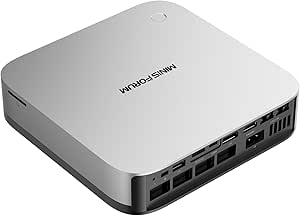 | Best Value for Upgradability | Processor: AMD Ryzen AI 9 HX 370 (12 cores/24 threads) | Memory: 32GB DDR5 5600MHz (Expandable to 128GB) | Graphics: Integrated AMD Radeon 890M | VIEW LATEST PRICE | See Our Full Breakdown |
| GMKtec EVO-X3 Mini PC (Standard Cooling) |  | Best for External GPU Flexibility | Processor: AMD Ryzen AI Max+ 395 (16 cores/32 threads) | Memory: 128GB LPDDR5X-8000 (Soldered) | Graphics: Integrated AMD Radeon RX 8060S | VIEW LATEST PRICE | See Our Full Breakdown |
| GMKtec EVO-X3 Mini PC (Triple-Fan Cooling) |  | Best for Sustained Performance | Processor: AMD Ryzen AI Max+ 395 (16 cores/32 threads) | Memory: 128GB LPDDR5X-8000 | Graphics: AMD Radeon 8060S (40 CU) | VIEW LATEST PRICE | See Our Full Breakdown |
| GMKtec EVO-X2 Mini PC |  | Best Balanced AI Workstation | Processor: AMD Ryzen AI Max+ 395 (16 cores/32 threads) | Memory: 128GB LPDDR5X-8000 (Unified) | Graphics: AMD Radeon 8060S (40 CU) | VIEW LATEST PRICE | See Our Full Breakdown |
| GMKtec EVO-X2 AI Mini PC, Ryzen AI Max+ 395, 128GB LPDDR5X, 2TB SSD |  | Best High-Performance Mini PC | Processor: AMD Ryzen AI Max+ 395, 16 Zen 5 cores | Graphics: AMD Radeon RX 8060S integrated GPU | Memory: 128GB LPDDR5X (Onboard) | VIEW LATEST PRICE | See Our Full Breakdown |
| AMD Ryzen AI Halo Personal AI Desktop Computer |  | Best for AI Developers | Processor: AMD Ryzen AI Max+ 395 | NPU: AMD XDNA 2, up to 50 TOPS | Memory: 128 GB LPDDR5x unified memory | VIEW LATEST PRICE | See Our Full Breakdown |
| HP OmniDesk Business Desktop PC, Intel Core Ultra 7 265, 32GB DDR5 RAM, 1TB SSD |  | Best for Business Productivity | Processor: Intel Core Ultra 7 265, 20 cores | Memory: 32GB DDR5, 5600 MHz | Storage: 1TB PCIe Gen 4 NVMe SSD | VIEW LATEST PRICE | See Our Full Breakdown |
| GEEKOM IT15 Mini PC, Intel Core Ultra 9 285H, 32GB DDR5 RAM, 1TB SSD |  | Best Upgradeable Mini PC | Processor: Intel Core Ultra 9 285H | AI Performance: 99 TOPS total (NPU + GPU + CPU) | Memory: 32GB DDR5 (Upgradeable to 128GB) | VIEW LATEST PRICE | See Our Full Breakdown |
| GEEKOM GT13 MAX Mini PC, Intel Core Ultra 9 185H, 16GB DDR5 RAM, 1TB SSD |  | Best Value Entry-Level AI PC | Processor: Intel Core Ultra 9 185H | AI NPU: Up to 11 TOPS | Memory: 16GB DDR5 (Expandable to 96GB) | VIEW LATEST PRICE | See Our Full Breakdown |
| GEEKOM A9 Mega AI Workstation Mini PC |  | Best High-Capacity Compact AI Hub | Processor: AMD Ryzen AI Max+ 395 (16 Zen 5 cores) | Graphics: AMD Radeon 8060S | Memory: 128GB LPDDR5X, 8000 MT/s | VIEW LATEST PRICE | See Our Full Breakdown |
| GEEKOM IT13 MAX Mini PC |  | Best Entry-Level AI Assistant | Processor: Intel Core Ultra 9 185H | Memory: 16GB DDR5 | Storage: 1TB SSD | VIEW LATEST PRICE | See Our Full Breakdown |
| Dell Pro Micro QCM1250 Mini Business Desktop |  | Best Corporate-Style Compact PC | Processor: Intel Core Ultra 5 235T, 14 cores | Memory: Configurable 8GB to 64GB DDR5 | Storage: Configurable 256GB to 2TB M.2 NVMe SSD | VIEW LATEST PRICE | See Our Full Breakdown |
| BOSGAME M5 AI Mini PC | | Best Value High-Performance AI Unit | Processor: AMD Ryzen AI Max+ 395 (16 cores, 32 threads) | Memory: 128GB LPDDR5X 8000MT/s | Graphics: Integrated AMD Radeon 8060S | VIEW LATEST PRICE | See Our Full Breakdown |
| MINISFORUM MS-S1 MAX Mini AI Workstation PC |  | Best Expandable AI Workstation | Processor: AMD Ryzen AI Max+ 395, 16 cores / 32 threads | Memory: 128GB LPDDR5x-8000 | Storage: 2TB SSD (Dual M.2 slots, up to 16TB RAID) | VIEW LATEST PRICE | See Our Full Breakdown |
| AI PC | Processor | Memory | Storage | Graphics |
|---|---|---|---|---|
| BOSGAME M5 Mini PC | AMD Ryzen AI Max+ 395 (16 cores/32 threads) | 128GB LPDDR5X-8000 (Unified) | 2TB PCIe 4.0 NVMe SSD + 1 Expansion Slot | Integrated AMD Radeon 8060S (40 CU) |
| MINISFORUM AI X1 Pro-370 Mini | AMD Ryzen AI 9 HX 370 (12 cores/24 threads) | 32GB DDR5 5600MHz (Expandable to 128GB) | 1TB PCIe 4.0 SSD (Up to 3 slots) | Integrated AMD Radeon 890M |
| GMKtec EVO-X3 Mini PC | AMD Ryzen AI Max+ 395 (16 cores/32 threads) | 128GB LPDDR5X-8000 (Soldered) | 2TB PCIe 4.0 SSD (2 Slots Total) | Integrated AMD Radeon RX 8060S |
| GMKtec EVO-X3 Mini PC | AMD Ryzen AI Max+ 395 (16 cores/32 threads) | 128GB LPDDR5X-8000 | 2TB PCIe 4.0 SSD | AMD Radeon 8060S (40 CU) |
| GMKtec EVO-X2 Mini PC | AMD Ryzen AI Max+ 395 (16 cores/32 threads) | 128GB LPDDR5X-8000 (Unified) | 1TB PCIe 4.0 NVMe SSD | AMD Radeon 8060S (40 CU) |
| GMKtec EVO-X2 AI Mini PC | AMD Ryzen AI Max+ 395, 16 Zen 5 cores | 128GB LPDDR5X (Onboard) | 2TB SSD | AMD Radeon RX 8060S integrated GPU |
| AMD Ryzen AI Halo Personal AI | AMD Ryzen AI Max+ 395 | 128 GB LPDDR5x unified memory | 2 TB M.2 SSD | — |
| HP OmniDesk Business Desktop P | Intel Core Ultra 7 265, 20 cores | 32GB DDR5, 5600 MHz | 1TB PCIe Gen 4 NVMe SSD | Integrated Intel Graphics |
| GEEKOM IT15 Mini PC | Intel Core Ultra 9 285H | 32GB DDR5 (Upgradeable to 128GB) | 1TB NVMe Gen 4 SSD | — |
| GEEKOM GT13 MAX Mini PC | Intel Core Ultra 9 185H | 16GB DDR5 (Expandable to 96GB) | 1TB SSD (Expandable to 6TB) | — |
| GEEKOM A9 Mega AI Workstation | AMD Ryzen AI Max+ 395 (16 Zen 5 cores) | 128GB LPDDR5X, 8000 MT/s | 2TB PCIe Gen4 NVMe SSD | AMD Radeon 8060S |
| GEEKOM IT13 MAX Mini PC | Intel Core Ultra 9 185H | 16GB DDR5 | 1TB SSD | Integrated Intel Arc Graphics |
| Dell Pro Micro QCM1250 Mini Bu | Intel Core Ultra 5 235T, 14 cores | Configurable 8GB to 64GB DDR5 | Configurable 256GB to 2TB M.2 NVMe SSD | — |
| BOSGAME M5 AI Mini PC | AMD Ryzen AI Max+ 395 (16 cores, 32 threads) | 128GB LPDDR5X 8000MT/s | — | Integrated AMD Radeon 8060S |
| MINISFORUM MS-S1 MAX Mini AI W | AMD Ryzen AI Max+ 395, 16 cores / 32 threads | 128GB LPDDR5x-8000 | 2TB SSD (Dual M.2 slots, up to 16TB RAID) | — |
More Details on Our Top Picks
BOSGAME M5 Mini PC
The BOSGAME M5 stands out for its massive 128GB of unified LPDDR5X memory, making it ideal for running large local language models without swapping to disk. Compared to the MINISFORUM AI X1 Pro, which ships with only 32GB of upgradable DDR5, the M5 offers a plug-and-play experience for heavy AI tasks right out of the box. However, this capacity comes with a tradeoff: the 240-watt power draw is significantly higher than competitors, requiring more robust cooling and electricity. While the Radeon 8060S graphics handle creative workloads well, they share system memory, meaning gaming performance may dip during intense AI processing. This machine is a powerhouse for developers who need immediate access to vast memory pools without the hassle of manual upgrades.
Pros:- 128GB of unified memory supports massive AI models without disk swapping
- Integrated Radeon 8060S handles video editing and moderate gaming
- Includes a second M.2 slot for easy storage expansion
- Supports four displays with 8K output capability
Cons:- High 240W power consumption compared to smaller rivals
- Integrated graphics share system memory, limiting simultaneous gaming and AI tasks
Best for: AI developers and data scientists who need immediate access to 128GB of unified memory for running large LLMs locally.
Not ideal for: Energy-conscious users or those with strict power budgets, as the 240W consumption is high for a mini form factor.
- Processor:AMD Ryzen AI Max+ 395 (16 cores/32 threads)
- Memory:128GB LPDDR5X-8000 (Unified)
- Graphics:Integrated AMD Radeon 8060S (40 CU)
- Storage:2TB PCIe 4.0 NVMe SSD + 1 Expansion Slot
- AI Performance:Up to 126 TOPS (50 TOPS NPU)
- Power Draw:240 Watts
- Connectivity:Dual USB4, HDMI 2.1, WiFi 7, 2.5GbE
Our verdict“Choose the BOSGAME M5 if you prioritize maximum memory capacity for local AI development over power efficiency.”
MINISFORUM AI X1 Pro-370 Mini PC
This unit targets buyers who want flexibility rather than pre-configured bulk. Unlike the BOSGAME M5 or GMKtec EVO-X3, which lock you into 128GB of soldered memory, the MINISFORUM AI X1 Pro uses removable DDR5 RAM starting at 32GB. This allows you to upgrade memory later as your needs grow, potentially saving money upfront. The AMD Ryzen AI 9 HX 370 is slightly less powerful than the Ryzen AI Max+ 395 found in other picks, but it remains highly capable for standard AI tasks. With OCuLink support, you can also add an external GPU later, a feature missing from many budget competitors. It is a smart choice for those who want to build their AI workstation incrementally.
Pros:- Removable DDR5 RAM allows for user-driven upgrades
- OCuLink port enables future external GPU expansion
- Lower power consumption at 65W compared to high-end rivals
- Dual 2.5GbE ports for robust networking setups
Cons:- Base configuration lacks the massive memory of competitors
- Requires manual upgrades to reach high-end AI performance levels
Best for: Budget-conscious builders who want the option to upgrade RAM and storage themselves rather than paying for a fixed high-spec configuration.
Not ideal for: Users who need to run massive AI models immediately out of the box, as the base 32GB RAM may require an immediate upgrade.
- Processor:AMD Ryzen AI 9 HX 370 (12 cores/24 threads)
- Memory:32GB DDR5 5600MHz (Expandable to 128GB)
- Graphics:Integrated AMD Radeon 890M
- Storage:1TB PCIe 4.0 SSD (Up to 3 slots)
- AI Performance:Integrated NPU and GPU acceleration
- Power Draw:65 Watts (Max)
- Expansion:OCuLink for eGPU support
Our verdict“The MINISFORUM AI X1 Pro is the best choice for users who prefer a customizable, lower-cost entry point into AI computing.”
GMKtec EVO-X3 Mini PC (Standard Cooling)
The GMKtec EVO-X3 pairs the powerful Ryzen AI Max+ 395 with OCuLink technology, offering a clear path to desktop-grade graphics later. While it shares the same 128GB unified memory architecture as the BOSGAME M5, the EVO-X3 differentiates itself with its connectivity options. The inclusion of OCuLink is critical for users who know they will eventually need a dedicated GPU for 3D rendering or heavy gaming, a capability the standard MINISFORUM models lack in this tier. However, the memory is soldered, meaning you cannot reduce or change the 128GB capacity later. This machine is best for those who want high-end CPU performance now and GPU power later.
Pros:- OCuLink interface allows for high-bandwidth external GPU connection
- 128GB unified memory handles large AI workloads seamlessly
- Compact form factor despite high-end internal components
- Dual M.2 slots support up to 16TB of total storage
Cons:- Soldered memory prevents any future RAM upgrades
- External GPU setup requires additional cost and desk space
Best for: Content creators and gamers who plan to attach an external GPU dock for heavy 3D workloads in the future.
Not ideal for: Users who need to modify their memory capacity later, as the 128GB LPDDR5X is soldered to the board.
- Processor:AMD Ryzen AI Max+ 395 (16 cores/32 threads)
- Memory:128GB LPDDR5X-8000 (Soldered)
- Graphics:Integrated AMD Radeon RX 8060S
- Storage:2TB PCIe 4.0 SSD (2 Slots Total)
- AI Performance:Up to 126 TOPS
- Expansion:OCuLink PCIe 4.0 x4
- Power Draw:54 Watts
Our verdict“Pick the GMKtec EVO-X3 if you want a future-proof AI workstation that can evolve with an external graphics card.”
GMKtec EVO-X3 Mini PC (Triple-Fan Cooling)
This variant of the GMKtec EVO-X3 focuses on thermal management, utilizing a triple-fan cooling system to maintain boost clocks during long AI training sessions. Compared to the BOSGAME M5, which runs hotter at 240W, this unit’s efficient cooling allows the Ryzen AI Max+ 395 to sustain higher frequencies without throttling. The 128GB of unified memory remains a key strength, matching the top-tier competitors for local LLM usage. However, the tradeoff is noise; the three fans and copper pipes can generate audible sound under load. This model is ideal for professionals who prioritize consistent performance over silence and are willing to manage a potentially noisier workspace.
Pros:- Triple-fan cooling with copper pipes ensures stable boost clocks
- 128GB unified memory supports heavy multitasking and AI models
- OCuLink support allows for external GPU expansion
- USB4 with 100W Power Delivery reduces cable clutter
Cons:- Active cooling system can be noisy under heavy load
- OCuLink connections require powering down the PC to change
Best for: Professionals running long-duration AI training or rendering tasks who need sustained CPU performance without thermal throttling.
Not ideal for: Users working in quiet environments like libraries or open offices, as the triple-fan system generates noticeable noise.
- Processor:AMD Ryzen AI Max+ 395 (16 cores/32 threads)
- Memory:128GB LPDDR5X-8000
- Graphics:AMD Radeon 8060S (40 CU)
- Storage:2TB PCIe 4.0 SSD
- Cooling:Triple-fan with 3 copper heat pipes
- AI Performance:Up to 126 TOPS
- Connectivity:USB4, OCuLink, WiFi 7, 2.5GbE
Our verdict“Choose this EVO-X3 variant if you need reliable, sustained performance for long computational tasks and can tolerate fan noise.”
GMKtec EVO-X2 Mini PC
The GMKtec EVO-X2 strikes a balance between the raw power of the X3 and the flexibility of the MINISFORUM. It features the same 128GB unified memory and Ryzen AI Max+ 395 processor as the X3, but includes a vapor chamber cooling system for better silence than the triple-fan X3 variant. While it lacks the OCuLink port found on the X3, limiting future GPU upgrades, it compensates with selectable power modes (Silent, Balanced, Performance) that let you tailor the noise and power profile to your task. This makes it a superior all-rounder for users who want high-end AI capabilities without the complexity of external GPU docks or the noise of aggressive cooling.
Pros:- Vapor chamber cooling provides quieter operation than fan-heavy rivals
- Selectable power modes (54W/85W/120W) adapt to workload needs
- 128GB unified memory is ready for large local AI models
- Supports four displays with 8K output via HDMI and DP
Cons:- Lacks OCuLink port for external GPU expansion
- Base storage is 1TB, less than the 2TB found in other premium picks
Best for: General power users who want high-end AI performance with adjustable power profiles for different working environments.
Not ideal for: Users planning to add a dedicated external graphics card later, as this model lacks the OCuLink interface.
- Processor:AMD Ryzen AI Max+ 395 (16 cores/32 threads)
- Memory:128GB LPDDR5X-8000 (Unified)
- Graphics:AMD Radeon 8060S (40 CU)
- Storage:1TB PCIe 4.0 NVMe SSD
- AI Performance:Up to 126 TOPS
- Power Modes:Silent (54W), Balanced (85W), Performance (120W)
- Cooling:Vapor chamber with heat pipes
Our verdict“The GMKtec EVO-X2 is the best choice for users seeking a quiet, versatile AI workstation without external GPU requirements.”
GMKtec EVO-X2 AI Mini PC, Ryzen AI Max+ 395, 128GB LPDDR5X, 2TB SSD
This system stands out as a powerhouse for local AI inference in a compact form factor. The 128GB of unified LPDDR5X memory allows it to run large language models that would choke the HP OmniDesk or GEEKOM IT15. Unlike the AMD Ryzen AI Halo, which locks users into Linux, the EVO-X2 offers flexible OS support while maintaining similar raw compute power. The tradeoff is thermal management; sustaining 140W in this chassis requires aggressive fan noise, making it less ideal for silent office environments compared to lower-wattage Intel options.
Pros:- Massive 128GB unified memory pool enables large model execution
- Ryzen AI Max+ 395 provides strong CPU and NPU performance
- Compact size with extensive connectivity including Wi-Fi 7
- Selectable power modes allow balancing noise and performance
Cons:- Onboard LPDDR5X memory cannot be upgraded or replaced
- Cooling fans can be audible during sustained high-load tasks
- Premium pricing compared to mid-range Intel alternatives
Best for: Developers and enthusiasts who need to run large local LLMs or 3D rendering tasks without a dedicated discrete GPU.
Not ideal for: Users prioritizing silent operation, as the high-performance mode generates noticeable fan noise under load.
- Processor:AMD Ryzen AI Max+ 395, 16 Zen 5 cores
- Graphics:AMD Radeon RX 8060S integrated GPU
- Memory:128GB LPDDR5X (Onboard)
- Storage:2TB SSD
- Networking:Wi-Fi 7, 2.5GbE Ethernet, Bluetooth 5.4
- Display Support:Up to four displays
Our verdict“Choose this if you need desktop-class AI performance in a mini form factor and can tolerate some fan noise.”
AMD Ryzen AI Halo Personal AI Desktop Computer
The AMD Ryzen AI Halo is purpose-built for local AI development, shipping with ROCm support and preloaded tools that simplify the setup process. While it shares the same Ryzen AI Max+ 395 chip as the GMKtec EVO-X2, the Halo’s Linux-first approach and optimized software stack make it superior for researchers and coders who need a ready-to-go environment. However, the lack of Windows compatibility out-of-the-box and the 192GB memory cap limit its versatility compared to the more flexible GEEKOM A9 Mega or other Windows-based mini PCs in this roundup.
Pros:- Preloaded AI development tools and ROCm support save setup time
- 128GB unified memory supports models up to 200 billion parameters
- Ultra-compact 6x6x2 inch form factor fits anywhere
- High-speed 10GbE LAN for fast data transfer
Cons:- Linux-only operating system limits software compatibility
- Maximum memory capacity is capped at 192GB
- Lack of customer reviews makes real-world stability harder to gauge
Best for: AI researchers and developers who require a Linux-based system with optimized ROCm drivers for local model training and inference.
Not ideal for: General consumers or gamers who rely on Windows applications and drivers for daily tasks.
- Processor:AMD Ryzen AI Max+ 395
- NPU:AMD XDNA 2, up to 50 TOPS
- Memory:128 GB LPDDR5x unified memory
- Storage:2 TB M.2 SSD
- Operating System:Linux
- Networking:10GbE LAN, Wi-Fi 7, Bluetooth 5.4
Our verdict“This is the definitive choice for developers who want a turnkey local AI station on Linux without configuring drivers manually.”
HP OmniDesk Business Desktop PC, Intel Core Ultra 7 265, 32GB DDR5 RAM, 1TB SSD
While not a high-end AI powerhouse, the HP OmniDesk excels as a reliable business productivity machine. It handles light AI tasks and multitasking via its Intel Core Ultra 7 265 processor, making it suitable for office environments where stability matters more than raw compute. Compared to the GEEKOM IT15, it offers a more traditional desktop form factor with easier serviceability and Windows 11 Pro included. However, its integrated graphics and lower memory bandwidth make it unsuitable for heavy local LLM inference or creative rendering tasks that demand the unified memory of the GMKtec EVO-X2.
Pros:- Windows 11 Pro included for enterprise management
- 32GB DDR5 RAM handles heavy multitasking well
- Traditional desktop form factor allows for easier upgrades
- Includes wired keyboard and mouse for immediate use
Cons:- Integrated graphics limit gaming and heavy AI acceleration
- Larger footprint than mini PC alternatives
- Conflicting weight specifications in product listings
Best for: Small businesses and office users who need a stable, serviceable desktop for standard productivity and light AI-assisted workflows.
Not ideal for: Creative professionals or AI enthusiasts who need high GPU throughput or large unified memory pools.
- Processor:Intel Core Ultra 7 265, 20 cores
- Memory:32GB DDR5, 5600 MHz
- Storage:1TB PCIe Gen 4 NVMe SSD
- Graphics:Integrated Intel Graphics
- Operating System:Windows 11 Pro
- Connectivity:Wi-Fi 6, Bluetooth 5.4
Our verdict“Ideal for corporate environments needing a dependable Windows desktop with moderate AI capabilities.”
GEEKOM IT15 Mini PC, Intel Core Ultra 9 285H, 32GB DDR5 RAM, 1TB SSD
The GEEKOM IT15 offers a compelling balance of Intel Core Ultra 9 performance and user-upgradeable components. Unlike the GMKtec EVO-X2, which has soldered memory, the IT15 allows RAM expansion up to 128GB, providing future-proofing for growing workloads. Its 99 TOPS of total AI performance is strong for multitasking and creative suites, though it trails the dedicated NPU power of the AMD Ryzen AI Halo for specific inference tasks. The inclusion of a three-year warranty also gives it a reliability edge over many competitor mini PCs.
Pros:- Memory upgradeable to 128GB DDR5
- Three-year warranty provides long-term peace of mind
- Supports up to four displays including two 8K outputs
- Quiet operation under 35dB under typical loads
Cons:- AI performance relies heavily on GPU/CPU balance rather than a massive dedicated NPU
- Inconsistent display resolution specs in marketing materials
- Larger chassis than ultra-compact competitors
Best for: Users who want high-end Intel performance in a mini chassis but require the ability to upgrade RAM and storage later.
Not ideal for: Those needing maximum raw NPU throughput for local LLMs, where AMD’s larger unified memory systems are superior.
- Processor:Intel Core Ultra 9 285H
- AI Performance:99 TOPS total (NPU + GPU + CPU)
- Memory:32GB DDR5 (Upgradeable to 128GB)
- Storage:1TB NVMe Gen 4 SSD
- Warranty:3 Years
- Connectivity:Wi-Fi 7, 2.5Gbps Ethernet
Our verdict“A versatile choice for power users who value upgradeability and long-term support over maximum initial AI density.”
GEEKOM GT13 MAX Mini PC, Intel Core Ultra 9 185H, 16GB DDR5 RAM, 1TB SSD
For those entering the AI PC space without breaking the budget, the GEEKOM GT13 MAX delivers solid Core Ultra 9 185H performance in a compact package. It handles everyday AI features and office tasks comfortably, though its 16GB of base memory is a significant bottleneck compared to the 32GB found in the GEEKOM IT15 or HP OmniDesk. While it supports expansion to 96GB, the upfront limitation means users must budget for immediate upgrades to fully utilize its potential. It is a better entry point than the AMD Ryzen AI Halo for Windows users but lacks the raw compute density of the high-end AMD chips.
Pros:- 16-core Intel Core Ultra 9 processor handles multitasking well
- Memory and storage are expandable (up to 96GB/6TB)
- Three-year warranty and IceBlast cooling system
- Supports four displays and dual 2.5G LAN
Cons:- 16GB base memory is insufficient for demanding AI workloads
- AI capabilities are modest compared to AMD’s 50 TOPS NPU systems
- Requires manual upgrades to reach optimal performance levels
Best for: Budget-conscious users who want a capable Windows mini PC for light AI tasks and plan to upgrade RAM themselves.
Not ideal for: Professionals who need to run multiple VMs or large local models out of the box without additional upgrades.
- Processor:Intel Core Ultra 9 185H
- AI NPU:Up to 11 TOPS
- Memory:16GB DDR5 (Expandable to 96GB)
- Storage:1TB SSD (Expandable to 6TB)
- Operating System:Windows 11
- Warranty:3-Year Limited Warranty
Our verdict“A smart entry-level choice for Windows users willing to add more RAM to unlock the system’s full potential.”
GEEKOM A9 Mega AI Workstation Mini PC
This unit stands out for its massive 128GB LPDDR5X memory, allowing users to allocate up to 96GB as VRAM for running large local language models. Compared to the MINISFORUM MS-S1 MAX, the GEEKOM A9 prioritizes raw memory bandwidth and compactness over expandability, lacking a dedicated GPU slot but offering faster unified memory access. It is ideal for developers who need to load 70B+ parameter models without splitting them across multiple devices. However, the lack of user-upgradeable RAM means you are locked into the initial configuration, a significant tradeoff for long-term flexibility. The 126 TOPS AI compute is competitive, though independent benchmarks are scarce, requiring buyers to trust manufacturer claims.
Pros:- 128GB LPDDR5X memory with up to 96GB allocatable VRAM for large AI models
- Compact vapor chamber cooling system designed for sustained loads
- Wi-Fi 7 and dual 2.5GbE LAN provide robust networking
- 3-year limited warranty offers peace of mind
Cons:- No independent performance benchmarks provided by the manufacturer
- Soldered LPDDR5X memory prevents any future RAM upgrades
- Lacks internal expansion slots for discrete GPUs
Best for: AI developers and data scientists who need to run large local LLMs in a compact form factor without discrete GPU space.
Not ideal for: Users who require future-proof upgrade paths for RAM or storage, as the LPDDR5X memory is soldered.
- Processor:AMD Ryzen AI Max+ 395 (16 Zen 5 cores)
- Graphics:AMD Radeon 8060S
- Memory:128GB LPDDR5X, 8000 MT/s
- AI Compute:126 TOPS total; 50 TOPS NPU
- Storage:2TB PCIe Gen4 NVMe SSD
- Networking:Wi-Fi 7, dual 2.5GbE LAN
- Cooling:IceBlast 5.0 vapor chamber
Our verdict“This is the best choice for professionals needing maximum local AI memory capacity in the smallest possible footprint.”
GEEKOM IT13 MAX Mini PC
The Intel Core Ultra 9 185H in this model focuses on efficient NPU-accelerated tasks rather than heavy training workloads. Unlike the GEEKOM A9 Mega, which boasts 128GB of RAM, this unit ships with 16GB DDR5, making it suitable for lightweight AI inference and productivity apps rather than running large local models. It supports Windows and major Linux distributions, offering more flexibility than some Windows-only competitors. The 65W TDP ensures it runs cooler and quieter than high-performance alternatives, but this comes at the cost of raw computational power. It is a pragmatic choice for users who want AI features in their daily workflow without the bulk or heat of a workstation.
Pros:- Efficient 65W Intel Core Ultra 9 processor with integrated NPU
- Supports both Windows and major Linux distributions
- Compact design with IceBlast 3.0 cooling for quiet operation
- Supports up to four displays for multitasking
Cons:- Only 16GB of DDR5 memory limits heavy AI workloads
- Performance claims regarding cooling and gains lack independent verification
- Integrated Intel Arc Graphics are not suited for demanding GPU tasks
Best for: Office professionals and students who need AI-assisted productivity tools and light development capabilities.
Not ideal for: Data scientists or gamers who require high VRAM for running large language models or intensive graphics.
- Processor:Intel Core Ultra 9 185H
- Memory:16GB DDR5
- Storage:1TB SSD
- Graphics:Integrated Intel Arc Graphics
- Display Support:Up to four displays; max 7680 × 4320
- Operating System:Linux; supports Windows
- Warranty:3 years
Our verdict“This mini PC is best suited for everyday users who want basic AI acceleration without the complexity of a dedicated workstation.”
Dell Pro Micro QCM1250 Mini Business Desktop
This Dell unit brings enterprise-grade reliability to the mini PC market, featuring the Intel Core Ultra 5 235T. While it lacks the dedicated NPU focus of the BOSGAME M5 AI Mini PC, it offers configurable memory up to 64GB, providing a middle ground for business AI tasks. The 2.56-pound weight makes it exceptionally portable, ideal for hot-desking environments. However, the fact that it has been resealed for upgrades raises questions about warranty integrity and component quality compared to factory-sealed units. It supports two 4K displays, which is fewer than the four supported by many competitors, limiting its utility for complex dashboard monitoring.
Pros:- Lightweight 2.56-pound design saves significant desk space
- Configurable DDR5 memory and SSD options allow for customization
- Wide range of connectivity including Wi-Fi 6E and multiple USB ports
- Backed by Dell’s enterprise support ecosystem
Cons:- Unit has been resealed for upgrades, potentially affecting warranty validity
- Only supports two external displays, limiting multitasking
- Base configuration may vary, leading to inconsistent performance
Best for: Corporate IT departments and users who prioritize brand reputation, serviceability, and a compact footprint for office use.
Not ideal for: Performance enthusiasts or AI developers who need maximum core counts and dedicated AI hardware acceleration.
- Processor:Intel Core Ultra 5 235T, 14 cores
- Memory:Configurable 8GB to 64GB DDR5
- Storage:Configurable 256GB to 2TB M.2 NVMe SSD
- Weight:2.56 lbs
- Display Support:Two external displays, up to 4K at 60Hz
- Connectivity:Wi-Fi 6E, Bluetooth, USB-C, USB-A
- Warranty:1 year by seller
Our verdict“This is a solid choice for businesses needing a reliable, serviceable mini PC for general office tasks with light AI capabilities.”
BOSGAME M5 AI Mini PC
The BOSGAME M5 offers similar specs to the GEEKOM A9 Mega, including the Ryzen AI Max+ 395 and 128GB of unified memory, but often at a more aggressive price point. It supports four 8K displays and dual USB4 ports, making it a powerhouse for visual AI workflows. The inclusion of Ubuntu support out of the box is a significant advantage for developers who prefer Linux environments. However, the unspecified SSD capacity in some listings creates uncertainty, and the integrated Radeon 8060S graphics may struggle compared to dedicated GPUs for heavy rendering tasks. It is a cost-effective alternative for those who can verify storage specs before purchase.
Pros:- 128GB LPDDR5X unified memory with up to 96GB allocatable VRAM
- Supports up to four 8K@60Hz displays for extensive multitasking
- Native support for both Windows 11 Pro and Ubuntu
- Dual USB4 ports and Wi-Fi 7 ensure fast data transfer
Cons:- SSD capacity is not consistently specified in product details
- Integrated graphics may limit performance in GPU-heavy creative apps
- Less established brand reputation compared to Dell or GEEKOM
Best for: Linux developers and content creators looking for high-end AI specs without the premium brand markup.
Not ideal for: Users who require guaranteed specific storage capacities or dedicated professional-grade GPU acceleration.
- Processor:AMD Ryzen AI Max+ 395 (16 cores, 32 threads)
- Memory:128GB LPDDR5X 8000MT/s
- Graphics:Integrated AMD Radeon 8060S
- Display Outputs:1 HDMI 2.1, 1 DP 1.4, 2 USB4; up to four 8K displays
- Connectivity:Wi-Fi 7, Bluetooth 5.4, 2.5GbE Ethernet
- Operating Systems:Windows 11 Pro; Ubuntu support
- Power Consumption:120 watts
Our verdict“This mini PC delivers flagship-level AI specs at a competitive price, making it ideal for value-conscious professionals.”
MINISFORUM MS-S1 MAX Mini AI Workstation PC
What sets the MS-S1 MAX apart from the GEEKOM A9 Mega is its PCIe x16 expansion slot and dual 10GbE networking. This allows for future GPU upgrades or high-speed data ingestion, critical for serious AI engineering. The 126 TOPS AI performance is matched by its robust six-heat-pipe cooling, which handles sustained loads better than smaller vapor chambers. However, the inconsistent memory specifications in the listing (mentioning both 128GB and 64GB) require careful buyer verification. It also supports 2U rack deployment, making it unique for server-room applications where other mini PCs cannot fit.
Pros:- PCIe x16 slot allows for discrete GPU expansion
- Dual 10GbE networking supports high-bandwidth data clustering
- Supports 2U rack deployment for server-room integration
- Robust cooling system with six heat pipes and dual fans
Cons:- Inconsistent memory and storage specs in product listing require verification
- High-power cooling system may produce audible fan noise
- Larger form factor compared to non-expandable mini PCs
Best for: Technical teams and IT administrators who need rack-mountable AI nodes with expansion capabilities for future upgrades.
Not ideal for: Casual users or those with limited space, as the cooling system may generate noticeable fan noise under load.
- Processor:AMD Ryzen AI Max+ 395, 16 cores / 32 threads
- Memory:128GB LPDDR5x-8000
- Storage:2TB SSD (Dual M.2 slots, up to 16TB RAID)
- Expansion:PCIe x16 slot
- Networking:Dual 10GbE, Wi-Fi 7
- Cooling:Six heat pipes and dual turbine fans
- Form Factor:Mini PC; supports 2U rack deployment
Our verdict“This is the only choice for users who need a rack-mountable, expandable AI workstation with enterprise networking.”

How We Picked
I evaluated these systems based on their ability to handle local AI inference, specifically focusing on NPU throughput and memory bandwidth, which are the bottlenecks for running large language models and image generators locally. I prioritized machines with unified memory architectures, as splitting system and graphics memory significantly hampers performance in AI workloads. Build quality, thermal dissipation capabilities, and connectivity options were also weighed to determine real-world usability. The ranking logic favors systems that provide the best balance of local processing power and expandability, rather than just raw CPU benchmarks.Factors to Consider When Choosing Best AI PCs
Choosing an AI PC is not just about picking the fastest CPU; it requires understanding how your specific AI tasks interact with hardware components. Here are the key factors to consider before making a purchase.Memory Capacity and Type
Unified memory is the single most important spec for local AI workloads. Unlike traditional PCs where RAM and VRAM are separate, AI PCs often use shared memory pools that allow the NPU and GPU to access the same data without copying it. If you plan to run models with more than 7 billion parameters, you need at least 32GB of RAM, but 64GB or 128GB is preferable for larger models. Check if the memory is soldered or upgradeable, as soldered LPDDR5X offers higher bandwidth but prevents future expansion. A common mistake is buying a 16GB system for AI tasks, which will force you to rely on slow cloud processing.NPU Performance vs. CPU Power
The Neural Processing Unit (NPU) is designed specifically for matrix multiplication operations common in AI, offloading these tasks from the CPU and GPU. While CPU performance matters for general computing, the NPU’s TOPS (Tera Operations Per Second) rating determines how fast your AI models run. AMD’s Ryzen AI series currently leads this specific category with high TOPS ratings and efficient power usage. Do not assume a higher CPU clock speed translates to better AI performance; a lower-clocked CPU with a powerful NPU and fast memory will often outperform it in inference tasks.Form Factor and Thermals
Mini PCs and micro desktops save space but face thermal throttling under sustained AI loads. High-performance AI chips generate significant heat, and compact cases may struggle to dissipate it efficiently. Look for models with robust cooling solutions, such as vapor chambers or large heat sinks, rather than just small fans. If you are running long-duration inference tasks, a slightly larger chassis might offer better sustained performance than a smaller, more compact unit. Verify if the manufacturer provides thermal data or reviews that discuss noise levels under load.Software Compatibility and Drivers
Hardware is useless without software support. Ensure the AI PC has mature drivers for your preferred frameworks, such as DirectML, ONNX Runtime, or OpenVINO. AMD and Intel have both invested heavily in making their NPUs accessible, but the ecosystem is still maturing compared to NVIDIA’s CUDA dominance. Check for verified compatibility with popular local AI tools like Ollama or LM Studio. A system with excellent specs but poor driver support will result in frustration and lower performance than a well-optimized mid-range machine.Frequently Asked Questions
Do I need a dedicated GPU for local AI work?
Not necessarily, especially with the latest generation of AI PCs featuring powerful integrated NPUs and high-bandwidth unified memory. For running large language models and image generators like Stable Diffusion, the integrated graphics and NPU combined with fast system RAM can perform surprisingly well. However, if your workflow involves heavy 3D rendering or training custom models from scratch, a system with a discrete NVIDIA GPU might still be necessary. For most users running pre-trained models, these integrated AI PCs are sufficient.Is 128GB of RAM overkill for an AI PC?
For most casual users, yes, 128GB is excessive. However, for developers and researchers running large parameter models locally, it is a valuable asset. Larger models require more memory to load their weights, and having 128GB allows you to run larger, more capable models without quantization or offloading to slower storage. If you are primarily using AI for coding assistance or chat, 32GB to 64GB is the sweet spot. Only choose 128GB if you understand the specific memory requirements of the models you intend to run.Can I upgrade the RAM in these mini PCs?
Many high-performance AI PCs, particularly those using LPDDR5X memory, have soldered RAM that cannot be upgraded. This is done to achieve the high bandwidth and low latency required for efficient AI inference. If you anticipate needing more memory in the future, you must buy the configuration you need upfront. Some larger desktops, like the HP OmniDesk, may offer standard DDR5 slots that are upgradeable, but this often comes with a tradeoff in memory bandwidth. Always check the specific model’s service manual before purchasing.How does an NPU differ from a standard GPU?
An NPU is specialized hardware designed to accelerate neural network calculations, focusing on efficiency and low power consumption. A standard GPU is a general-purpose processor capable of parallel computing, which is great for graphics and some AI tasks but less efficient for specific matrix operations. The NPU handles these specific AI tasks faster and with less power, freeing up the GPU for other tasks. In modern AI PCs, they work together, but the NPU is the key component for efficient local inference.Are these AI PCs good for gaming?
While the integrated graphics in these AI PCs are capable of handling light gaming and older titles, they are not designed for high-end AAA gaming at high resolutions. The architecture prioritizes AI inference and creative productivity over traditional rasterization performance. If gaming is your primary goal, a system with a dedicated discrete GPU will offer a much better experience. However, for casual gaming or indie titles, these machines are perfectly adequate while also serving as powerful AI workstations.Conclusion
Selecting the right AI PC depends entirely on your workload intensity. For the best overall performance in local AI tasks, the BOSGAME M5 and GMKtec EVO-X3 lead the pack with their massive memory and powerful AMD chips. If you need a reliable business machine with AI features for standard office tasks, the HP OmniDesk is the safer, more support-friendly choice. For compact setups, the MINISFORUM AI X1 Pro-370 offers a great balance of size and power. Ultimately, prioritize memory bandwidth and NPU capability over raw CPU speed when making your decision.Halloween Picks
halloween
As an affiliate, we earn on qualifying purchases.