
Portable external SSDs have become the fastest way to carry large files, back up a laptop, or expand a console without the bulk or fragility of a spinning hard drive. After comparing twelve of the most popular models, the Samsung T9 1TB stands out as the best overall pick thanks to its USB 3.2 Gen 2×2 speeds up to 2,000 MB/s, while the Samsung T7 Shield 2TB is the better choice if you need rugged protection and more capacity for the money. On the budget end, SSK’s lineup delivers respectable 1,050 MB/s performance at prices that undercut the big brands. The main tradeoff in this category is simple: you are choosing between raw speed, physical durability, and price per gigabyte — almost no drive wins all three. Keep reading for the full breakdown of which portable SSD fits your workflow and budget.
Complete the kit


Key Takeaways
- Interface class is the single biggest differentiator: the Samsung T9’s USB 3.2 Gen 2×2 connection roughly doubles real-world transfer speeds versus every Gen 2 drive here, but only if your computer has a matching port.
- The SSK lineup proved that 1,050 MB/s performance no longer requires a premium price — its 500GB and 1TB models undercut comparable Samsung and SanDisk drives while using similar hardware.
- Capacity pricing is inconsistent across brands: Samsung‘s 2TB T7 models offer the best price per terabyte in this lineup, while the 128GB and 250GB SSK drives cost far more per gigabyte and only make sense as occasional-transfer drives.
- Durability varies more than spec sheets suggest — the T7 Shield and SanDisk Extreme carry IP65/IP67 ratings that the standard T7 and budget SSK drives lack, which matters for field work and travel.
- Two nearly identical drives can differ meaningfully in bundled software and encryption support; Samsung‘s Portable SSD app and SanDisk‘s security tools add real value that the SSK and Lexar alternatives don’t match.
| Samsung T7 Shield Portable SSD 2TB |  | Best Overall | Capacity: 2TB | Transfer Speed: Up to 1,050 MB/s | Interface: USB 3.2 Gen 2 (Type-C) | VIEW LATEST PRICE | See Our Full Breakdown |
| SanDisk 2TB Extreme Portable SSD |  | Best for Secure Backups | Capacity: 2TB | Read Speed: Up to 1050 MB/s | Write Speed: Up to 1000 MB/s | VIEW LATEST PRICE | See Our Full Breakdown |
| Samsung T9 Portable SSD 1TB | 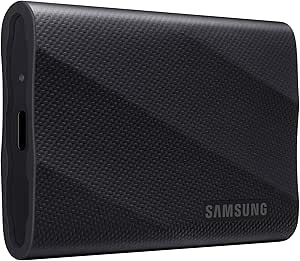 | Best for Creators (Fastest Pick) | Capacity: 1TB | Transfer Speed: Up to 2,000 MB/s | Interface: USB 3.2 Gen 2×2 (Type-C) | VIEW LATEST PRICE | See Our Full Breakdown |
| SSK Portable SSD 500GB |  | Best Budget Entry Point | Capacity: 500GB (~465GB in Windows) | Max Read Speed: 1050 MB/s | Max Write Speed: 1000 MB/s | VIEW LATEST PRICE | See Our Full Breakdown |
| SanDisk 1TB Extreme Portable SSD |  | Best Rugged All-Rounder | Capacity: 1TB | Transfer Speed: Up to 2,000 MB/s | Durability: IP65 water/dust resistance, 3M drop protection | VIEW LATEST PRICE | See Our Full Breakdown |
| SanDisk 1TB Portable SSD |  | Best for Rugged Everyday Carry | Capacity: 1TB | Read Speed: Up to 800MB/s | Drop Protection: Up to 2 meters | VIEW LATEST PRICE | See Our Full Breakdown |
| SSK Portable SSD 250GB External Solid State Drive |  | Best Budget Starter Drive | Capacity: 250GB (~232GB visible on Windows) | Read Speed: Up to 1050MB/s | Write Speed: Up to 1000MB/s | VIEW LATEST PRICE | See Our Full Breakdown |
| SSK Portable SSD 1TB External Solid State Drive |  | Best Value Per Gigabyte | Capacity: 1TB (~931GB visible on Windows) | Read Speed: Up to 1050MB/s | Write Speed: Up to 1000MB/s | VIEW LATEST PRICE | See Our Full Breakdown |
| Samsung T7 Portable SSD 2TB Titan Gray |  | Best Premium Pick | Capacity: 2TB | Interface: USB 3.2 Gen 2 | Max Read Speed: Up to 1,050MB/s | VIEW LATEST PRICE | See Our Full Breakdown |
| SSK 128GB Portable SSD External Solid State Drive |  | Best Ultra-Cheap Utility Drive | Capacity: 128GB (~116GB visible on Windows) | Max Speed: Up to 550MB/s | Connectivity: USB-C and USB-A | VIEW LATEST PRICE | See Our Full Breakdown |
| Samsung T7 Portable SSD 1TB Titan Gray | | Best Mainstream Pick | Capacity: 1TB | Interface: USB 3.2 Gen 2 | Max Read Speed: 1,050 MB/s | VIEW LATEST PRICE | See Our Full Breakdown |
| Lexar ES3 1TB Portable SSD |  | Best Budget Pick with Built-In Encryption | Capacity: 1TB | Interface: USB 3.2 Gen 2 | Read Speed: 1,050 MB/s | VIEW LATEST PRICE | See Our Full Breakdown |
| portable external SSD | Capacity | Interface |
|---|---|---|
| Samsung T7 Shield Portable SSD | 2TB | USB 3.2 Gen 2 (Type-C) |
| SanDisk 2TB Extreme Portable S | 2TB | — |
| Samsung T9 Portable SSD 1TB | 1TB | USB 3.2 Gen 2×2 (Type-C) |
| SSK Portable SSD 500GB | 500GB (~465GB in Windows) | USB-C & USB-A (USB 3.2 Gen 2) |
| SanDisk 1TB Extreme Portable S | 1TB | — |
| SanDisk 1TB Portable SSD | 1TB | — |
| SSK Portable SSD 250GB Externa | 250GB (~232GB visible on Windows) | — |
| SSK Portable SSD 1TB External | 1TB (~931GB visible on Windows) | — |
| Samsung T7 Portable SSD 2TB Ti | 2TB | USB 3.2 Gen 2 |
| SSK 128GB Portable SSD Externa | 128GB (~116GB visible on Windows) | — |
| Samsung T7 Portable SSD 1TB Ti | 1TB | USB 3.2 Gen 2 |
| Lexar ES3 1TB Portable SSD | 1TB | USB 3.2 Gen 2 |
More Details on Our Top Picks
Samsung T7 Shield Portable SSD 2TB
The T7 Shield earns the top spot because it balances speed, durability, and capacity better than anything else here. Its IP65 rating and 9.8-foot drop resistance mean it survives the backpack-and-travel abuse that kills cheaper drives, while 1,050 MB/s transfers handle 4K video offloads without stalling. Compared with the Samsung T9, it’s slower — the T9 doubles the bandwidth — but the T9 lacks any water or dust protection, so creators shooting outdoors get more real-world resilience here. The 2TB capacity at this price point also undercuts the SanDisk Extreme on cost per gigabyte in most listings.
Pros:- IP65 water and dust resistance with 9.8-foot drop protection
- 1,050 MB/s read speeds rival pricier rivals in real-world use
- Works with PC, Mac, Android, iPhone 15 Pro, and game consoles
- 2TB capacity offers strong value per gigabyte
Cons:- Capped at USB 3.2 Gen 2 speeds, half the ceiling of Gen 2×2 drives like the T9
- Operating range limited to 0°C–60°C, narrower than the SanDisk Extreme’s -20°C–85°C
Best for: Traveling photographers and videographers who need rugged 2TB storage that survives weather and drops
Not ideal for: Users with USB 3.2 Gen 2×2 ports on a desktop PC who want maximum 2,000 MB/s speeds — the T9 or SanDisk Extreme Pro-class drives are faster
- Capacity:2TB
- Transfer Speed:Up to 1,050 MB/s
- Interface:USB 3.2 Gen 2 (Type-C)
- Durability:IP65 water/dust resistance, 9.8 ft drop
- Operating Temperature:0°C to 60°C
- Compatibility:PC, Mac, Android, gaming consoles, iPhone 15 Pro
Our verdict“Buy this if you want one drive that’s fast, roomy, and genuinely tough — skip it only if your PC supports Gen 2×2 speeds.”
SanDisk 2TB Extreme Portable SSD
Where the SanDisk Extreme pulls ahead of the Samsung T7 Shield is security and environmental tolerance. Its 256-bit AES hardware encryption runs on the drive itself rather than software, which matters if you carry client files or financial documents. The -20°C to 85°C operating range also beats the T7 Shield’s narrower window, making it the safer choice for winter shoots or hot car storage. The carabiner loop is a small touch, but it keeps the drive clipped inside a bag instead of loose at the bottom. Tradeoff: 1,050 MB/s read speeds match the T7 Shield but fall well short of 2×2 drives like the Samsung T9.
Pros:- 256-bit AES hardware encryption for protecting sensitive files
- 3-meter drop protection exceeds the T7 Shield’s 9.8-foot rating
- Wide -20°C to 85°C temperature tolerance for extreme environments
- Carabiner loop attaches easily to bags and straps
Cons:- Real-world speeds depend heavily on the host device
- Encryption management software details are sparse out of the box
Best for: Freelancers and business travelers carrying sensitive client data who need hardware-level encryption and all-weather durability
Not ideal for: Desktop users wanting cutting-edge 2,000 MB/s transfer speeds for massive video projects
- Capacity:2TB
- Read Speed:Up to 1050 MB/s
- Write Speed:Up to 1000 MB/s
- Durability:IP65, 3-meter drop protection
- Encryption:256-bit AES hardware encryption
- Temperature Range:-20°C to 85°C
Our verdict“This is the pick when data security and weather tolerance matter more than raw speed.”
Samsung T9 Portable SSD 1TB
The T9 is the speed champion of this batch, hitting 2,000 MB/s over USB 3.2 Gen 2×2 — roughly double what the T7 Shield or SanDisk Extreme can manage. For video editors moving hundred-gigabyte ProRes projects, that difference turns a coffee break into a bathroom break. Its advanced thermal management also sustains those speeds under long transfers, where budget drives like the SSK 500GB throttle as heat builds. The catch is honest: you only see 2,000 MB/s on Gen 2×2 hosts, which mostly means recent desktop PCs and some Android flagships. On a standard laptop or iPhone 15 Pro, it performs like any 1,050 MB/s drive, and it offers no water or dust resistance unlike the T7 Shield.
Pros:- Up to 2,000 MB/s — double the speed of Gen 2 rivals
- Thermal management sustains performance during long transfers
- Broad compatibility including iPhone 15 Pro 4K ProRes recording
- Software support for firmware updates and encryption
Cons:- Top speeds require a rare USB 3.2 Gen 2×2 host port
- No water, dust, or drop protection unlike the T7 Shield and SanDisk Extreme
Best for: Video editors and content creators with USB 3.2 Gen 2×2 desktops or phones who regularly move huge files
Not ideal for: Users on standard USB-C laptops — the premium price buys speed you can’t access, and there’s no environmental protection either
- Capacity:1TB
- Transfer Speed:Up to 2,000 MB/s
- Interface:USB 3.2 Gen 2×2 (Type-C)
- Thermal Management:Advanced heat dissipation
- Compatibility:Desktop, camera, gaming console, iPhone 15 Pro 4K
- Durability:None rated
Our verdict“Worth the premium only if your hardware can feed it 2×2 speeds; otherwise the T7 Shield delivers similar everyday performance for less.”
SSK Portable SSD 500GB
This SSK 500GB makes the list as the low-cost way into genuine NVMe-class speed. At 1050 MB/s read and 1000 MB/s write, it matches the numbers on the Samsung T7 Shield at a noticeably lower price. The aluminum alloy shell doubles as a heatsink, keeping peak surface temps around 105°F — comfortable to hold, though it can’t match the Samsung T9’s sustained throughput on marathon transfers. Its secret weapon is the included USB-A compatibility, which is handy for older laptops and consoles without a USB-C port. The obvious limitation is capacity: 500GB (really ~465GB in Windows) fills fast if you shoot 4K video, and there’s no encryption at all.
Pros:- 1,050 MB/s read speeds match drives costing considerably more
- Works with both USB-C and USB-A hosts out of the box
- Aluminum case dissipates heat and keeps the drive cool
- Featherweight at 36.6g and truly pocket-sized
Cons:- Only 500GB, and Windows reports it as ~465GB
- No encryption or bundled software for data protection
Best for: Students and casual users who want fast, dependable portable storage under budget without paying for brand-name premiums
Not ideal for: Anyone storing large video libraries or sensitive files — capacity is tight and there’s no encryption
- Capacity:500GB (~465GB in Windows)
- Max Read Speed:1050 MB/s
- Max Write Speed:1000 MB/s
- Interface:USB-C & USB-A (USB 3.2 Gen 2)
- Dimensions:2.6 x 1.5 x 0.5 inches
- Weight:36.6g
- Material:Aluminum alloy
Our verdict“A smart budget buy for everyday file shuttling, as long as half a terabyte is enough and your data doesn’t need locking down.”
SanDisk 1TB Extreme Portable SSD
This 1TB SanDisk Extreme sits in a sweet spot the others miss: it pairs 2,000 MB/s speeds with IP65 and 3-meter drop protection, something neither the Samsung T9 (fast but fragile) nor the T7 Shield (tough but slower) can claim. For adventure shooters who edit on a Gen 2×2-capable machine, it’s effectively two drives in one. Its 256-bit AES encryption also matches the 2TB Extreme, keeping this line’s security advantage over Samsung. The compromises: write speeds trail the headline read figure, the encryption tools require a separate software download, and like all 2×2 drives, standard USB-C ports knock it back to 1,050 MB/s.
Pros:- 2,000 MB/s transfer speeds rival the Samsung T9
- IP65 water/dust resistance and 3-meter drop protection the T9 lacks
- Pocket-sized despite the rugged build
- 256-bit AES hardware encryption included
Cons:- Write speeds lag well behind the 2,000 MB/s read figure
- Encryption requires downloading separate software
- Performance drops to ~1,050 MB/s on non-2×2 hosts
Best for: Outdoor content creators who want top-tier speed AND serious durability without choosing between them
Not ideal for: Buyers on standard USB 3.2 Gen 2 laptops — the premium over the T7 Shield buys speed headroom they’ll never use
- Capacity:1TB
- Transfer Speed:Up to 2,000 MB/s
- Durability:IP65 water/dust resistance, 3M drop protection
- Encryption:256-bit AES
- Form Factor:Pocket-sized
- Compatibility:PC, Mac, USB-C devices
Our verdict“The only drive here that’s simultaneously among the fastest and the toughest — pay the premium if you’ll actually use both halves of that equation.”
SanDisk 1TB Portable SSD
This model stands out for drop protection up to 2 meters plus a practical rubber carrying hook, a combination that makes it feel genuinely built for life in a bag or clipped to a backpack strap. Compared with the Samsung T7 Portable SSD 2TB, it gives up some speed — 800MB/s reads versus the T7’s 1,050MB/s — but buyers who toss drives into cargo pockets will value the tougher exterior over raw throughput. It also sits below the SanDisk Extreme line in peak performance, which is the real tradeoff here: you are paying for durability and the trusted SanDisk ecosystem rather than benchmark-topping speeds. This pick makes the most sense for field work where bumps are inevitable and 800MB/s is still fast enough for photo offloads.
Pros:- Drop protection rated to 2 meters
- Rubber hook for secure attachment to bags
- Reliable 800MB/s read performance
- Compact black design suited to professional use
Cons:- Slower than similarly priced 1,050MB/s rivals like the Samsung T7
- Real-world performance varies by host device and conditions
Best for: Photographers and field workers who need a shock-tolerant drive that clips securely to gear
Not ideal for: Video editors moving multi-hundred-gigabyte projects — the 800MB/s ceiling lags the 1,050MB/s class
- Capacity:1TB
- Read Speed:Up to 800MB/s
- Drop Protection:Up to 2 meters
- Carrying Feature:Rubber attachment hook
- Color:Black
- Best Use:Mobile and professional field storage
Our verdict“A durability-first choice for people whose drives get knocked around more than they get benchmarked.”
SSK Portable SSD 250GB External Solid State Drive
This option stands out for delivering 1,050MB/s read speeds at a 250GB capacity, which is rare at the entry price point — most budget drives in this size class, like slower 550MB/s models, cost nearly as much while moving files at half the pace. Compared with its sibling, the SSK 1TB Portable SSD, the hardware is essentially identical: same aluminum case, same dual USB-C/USB-A support, same 36.6g weight. The only meaningful difference is capacity, so buyers should think of this as the low-risk entry tier of a proven design. The under 2.4W power draw also makes it unusually phone-friendly. The tradeoff is simple: fill 250GB fast and you will be upgrading sooner than you think.
Pros:- Flagship-class 1,050MB/s read and 1,000MB/s write speeds
- Dual USB-C and USB-A connectivity for cross-platform use
- Featherweight 36.6g aluminum build with good heat dissipation
- Low power draw works well with phones and tablets
Cons:- Only 250GB of usable storage
- Needs USB 3.2 Gen2 ports to hit rated speeds
Best for: Students or first-time SSD buyers who want flagship-tier speed without flagship capacity or cost
Not ideal for: Anyone backing up a laptop or storing a photo library — 250GB (about 232GB visible in Windows) fills up quickly
- Capacity:250GB (~232GB visible on Windows)
- Read Speed:Up to 1050MB/s
- Write Speed:Up to 1000MB/s
- Connectivity:USB-C and USB-A
- Power Consumption:Under 2.4 Watts
- Dimensions:2.6 x 1.5 x 0.5 inches
- Weight:36.6g
- Material:Aluminum alloy
Our verdict“The cheapest way into genuine 1,050MB/s performance, as long as you only need room for working files.”
SSK Portable SSD 1TB External Solid State Drive
Where the SSK 250GB is the starter tier, this 1TB version is the sweet spot: identical 1,050MB/s read and 1,000MB/s write speeds, the same 36.6g aluminum body, but four times the storage. Against the Samsung T7 Portable SSD 2TB, it matches the Samsung on paper for speed while typically undercutting it on price, though Samsung’s unibody build quality and broader software ecosystem give the T7 an edge in polish. A quiet advantage here is iPhone compatibility over USB-C, which makes it a strong companion for ProRes video shooters. The drawbacks are modest but real: the brand’s resale recognition trails Samsung and SanDisk, and capacity tops out at 1TB with no larger sibling at this speed.
Pros:- Full 1TB capacity at flagship 1,050MB/s speeds
- Cross-platform support including iPhone via USB-C
- Extremely compact at 2.6 x 1.5 x 0.5 inches and 36.6g
- Aluminum chassis dissipates heat during long transfers
Cons:- Shows roughly 931GB in Windows due to formatting
- Less established brand support than Samsung or SanDisk
Best for: Value-focused buyers who want 1TB of 1,050MB/s storage, including iPhone 15-and-later users shooting video
Not ideal for: Buyers who prioritize brand recognition, warranty support networks, or capacities beyond 1TB
- Capacity:1TB (~931GB visible on Windows)
- Read Speed:Up to 1050MB/s
- Write Speed:Up to 1000MB/s
- Connectivity:USB-C and USB-A
- Power Consumption:Under 2.4 Watts
- Dimensions:2.6 x 1.5 x 0.5 inches
- Weight:36.6g
- Material:Aluminum alloy
Our verdict“The best speed-per-dollar in this batch — pick it over the Samsung T7 if saving money matters more than brand polish.”
Samsung T7 Portable SSD 2TB Titan Gray
This model is better suited to buyers who want the most refined overall package: a solid aluminum unibody, shock resistance up to 6 feet, and 1,050MB/s transfer speeds backed by Samsung’s mature software tools for encryption and drive management. Compared with the SSK 1TB Portable SSD, the T7 matches it on speed but doubles the capacity and adds a level of build and brand assurance SSK can’t match — at a premium price. Against the Samsung T7 Shield, the standard T7 is slimmer and sleeker but lacks the Shield’s extra impact rating, so rough-and-tumble users may prefer the Shield variant. For creative professionals recording high-resolution video directly to the drive, the T7’s sustained-write reliability is the standout reason to pay more.
Pros:- Generous 2TB capacity for large projects
- 1,050MB/s over USB 3.2 Gen 2 for fast video work
- Shock-resistant solid aluminum unibody
- Samsung’s bundled encryption and management software
Cons:- Premium pricing versus value brands like SSK
- No capacity headroom beyond 2TB in this version
Best for: Content creators and professionals who need 2TB of dependable, high-speed storage with strong software support
Not ideal for: Budget-limited buyers — the SSK 1TB delivers the same speeds for considerably less money
- Capacity:2TB
- Interface:USB 3.2 Gen 2
- Max Read Speed:Up to 1,050MB/s
- Shock Resistance:Up to 6 feet
- Design:Solid aluminum unibody, Titan Gray
- Best Use:High-resolution video recording and large file storage
Our verdict“The polished, big-brand 2TB workhorse — worth the premium if reliability and capacity outweigh bargain hunting.”
SSK 128GB Portable SSD External Solid State Drive
This option stands out as the lowest-cost way to replace a sluggish USB stick with true SSD performance — 550MB/s is roughly five times what a typical flash drive manages. The honest comparison is with the SSK 250GB Portable SSD: for a modest price step up, that model doubles capacity and nearly doubles speed to 1,050MB/s, so this 128GB version only makes sense when the budget is firmly fixed. What it does offer over generic thumb drives is S.M.A.R.T. health monitoring, TRIM support, and an LED activity indicator, which means you can actually keep tabs on drive health instead of trusting blind luck. It’s a utility tool, not a primary backup — anyone treating it as their main storage will hit the 128GB wall almost immediately.
Pros:- 550MB/s speeds vastly outperform USB flash drives
- S.M.A.R.T. monitoring and TRIM for long-term drive health
- Works across USB-C and USB-A devices
- LED indicator shows activity at a glance
Cons:- Very limited 128GB capacity
- Speed depends heavily on host device and OS
- The 250GB SSK offers far better value per dollar
Best for: Buyers who need a cheap, fast emergency boot drive or utility stick for transferring small files between machines
Not ideal for: Primary storage users — 128GB (about 116GB visible) fills after a handful of modern games or one video project
- Capacity:128GB (~116GB visible on Windows)
- Max Speed:Up to 550MB/s
- Connectivity:USB-C and USB-A
- Health Monitoring:S.M.A.R.T. and TRIM support
- Indicator:LED activity light
- Best Use:Boot drives, utility transfers, flash-drive replacement
Our verdict“A capable flash-drive replacement for small, occasional jobs — skip it if you can stretch to the 250GB SSK.”
Samsung T7 Portable SSD 1TB Titan Gray
This option stands out for its aluminum unibody build and consistently reliable 1,050 MB/s transfer speeds, which make it a safe default choice when you just want a drive that works. Compared with the Samsung T7 Shield 2TB, the standard T7 trades away the rubberized drop armor for a slimmer, pocket-friendlier body — it still survives 6-foot drops, but rough-and-tumble users should step up to the Shield variant. Against the Samsung T9, the T7 lacks the Gen 2×2 interface, so buyers with newer PCs will leave speed on the table. Still, for most laptops and phones, this model hits the sweet spot of proven brand reliability, broad compatibility, and sensible pricing, which is why it earns the mainstream slot rather than a niche one.
Pros:- Fast, consistent read and write speeds up to 1,050 MB/s over USB 3.2 Gen 2
- Solid aluminum unibody with shock resistance rated for 6-foot drops
- Compact enough to slip into a pocket or camera bag without noticing it
- Works across PCs, Android phones, and iPhone 15 Pro without adapters
Cons:- No USB 3.2 Gen 2×2 support, so it caps out well below the Samsung T9’s potential speeds
- Lacks the water and dust resistance of ruggedized rivals like the T7 Shield
Best for: Everyday users and content creators who want a dependable 1TB drive from a major brand for backups, photo libraries, and direct-to-drive video work
Not ideal for: Adventure photographers or field workers who need IP-rated water and dust resistance — the T7 Shield covers that better than this standard model
- Capacity:1TB
- Interface:USB 3.2 Gen 2
- Max Read Speed:1,050 MB/s
- Body:Solid aluminum unibody
- Shock Resistance:Up to 6 feet
- Color:Titan Gray
- Compatibility:PC, mobile phones, iPhone 15 Pro
Our verdict“If you want a no-drama, well-built 1TB SSD from a trusted name at a fair price, this is the one to grab.”
Lexar ES3 1TB Portable SSD
This model makes the most sense for buyers who want 1TB of fast storage plus hardware-grade security without paying a premium. The headline differentiator is 256-bit AES encryption, something the Samsung T7 and most SSK drives in this lineup don’t advertise — a real advantage for anyone carrying client files, financial documents, or personal media. Its 1,050 MB/s read and 1,000 MB/s write speeds match the T7 on paper, and at just 45 grams it’s among the lightest full-size-capacity drives here. The tradeoff is polish: compared with Samsung’s refined software ecosystem and proven track record, the ES3 ships with no bundled utility software, and its compatibility claims are oddly specific to newer devices like the iPhone 17, so older hardware buyers should verify support before committing.
Pros:- 256-bit AES encryption protects sensitive data if the drive is lost or stolen
- Read speeds up to 1,050 MB/s with 1,000 MB/s writes rival pricier brand-name drives
- Featherweight 45-gram body that disappears in a bag or jacket pocket
- Works with gaming consoles, laptops, and modern smartphones
Cons:- No bundled software or management utilities, unlike Samsung and SanDisk alternatives
- Advertised compatibility is narrow and skewed toward very recent devices
- Speeds drop sharply on ports that don’t support USB 3.2 Gen 2
Best for: Budget-conscious professionals and students who carry sensitive files and want AES encryption plus full terabyte capacity at a lower price than big-brand rivals
Not ideal for: Buyers with older computers or older iPhones, since the listed device compatibility is narrow and there’s no included software for drive management
- Capacity:1TB
- Interface:USB 3.2 Gen 2
- Read Speed:1,050 MB/s
- Write Speed:1,000 MB/s
- Encryption:256-bit AES
- Weight:45 g
- Dimensions:3.96″ L x 1.97″ W x 0.41″ H
- Compatibility:Gaming consoles, laptops, smartphones
Our verdict“A smart value grab if encryption matters and your devices are current — but older-hardware owners should stick with the Samsung T7.”

How We Picked
My ranking logic starts with real-world transfer performance, which means looking past headline speeds to the interface behind them. A drive rated 1,050 MB/s over USB 3.2 Gen 2 behaves very differently from a 2,000 MB/s Gen 2×2 drive like the Samsung T9, but only on computers that support the faster standard — so I weighed whether each drive’s speed is actually usable by typical buyers. Sustained write speeds mattered too, since dropping large video projects or full system backups exposes the gap between marketing numbers and consistent output.
From there, I scored each product on build quality and durability (drop ratings, water and dust resistance), price per gigabyte within its capacity class, software and security features, and versatility across devices including phones, laptops, and consoles. Capacity variants of the same drive were grouped where they performed identically but ranked separately when the pricing changed the value equation. The final order favors drives that deliver the best balance of these factors for their intended buyer rather than the cheapest or fastest option on paper.
| portable external SSD | Interface |
|---|---|
| Samsung T7 Shield Portable SSD | USB 3.2 Gen 2 (Type-C) |
| SanDisk 2TB Extreme Portable S | — |
| Samsung T9 Portable SSD 1TB | USB 3.2 Gen 2×2 (Type-C) |
| SSK Portable SSD 500GB | USB-C & USB-A (USB 3.2 Gen 2) |
| SanDisk 1TB Extreme Portable S | — |
| SanDisk 1TB Portable SSD | — |
| SSK Portable SSD 250GB Externa | — |
| SSK Portable SSD 1TB External | — |
| Samsung T7 Portable SSD 2TB Ti | USB 3.2 Gen 2 |
| SSK 128GB Portable SSD Externa | — |
| Samsung T7 Portable SSD 1TB Ti | USB 3.2 Gen 2 |
| Lexar ES3 1TB Portable SSD | USB 3.2 Gen 2 |
Factors to Consider When Choosing Portable External SSDs
Before settling on a specific model, it helps to understand what actually separates portable SSDs at different price points — and where buyers most often overspend or regret cheaping out.Interface Speed Only Matters If Your Ports Match
The most common mistake in this category is paying extra for speed your computer cannot use. A USB 3.2 Gen 2×2 drive like the Samsung T9 can theoretically hit 2,000 MB/s, but plug it into a standard Gen 2 port and it caps at around 1,000 MB/s — the same as a cheaper drive. Before buying, check whether your laptop or desktop actually has a 20Gbps USB port; many Windows machines and all base-model Macs do not. If your hardware is limited to Gen 2, spending more on a faster interface is wasted money that would be better spent on capacity. This is why the standard T7 and SSK drives remain such strong picks despite slower paper specs. Match the drive to your port, not to the number on the box.
Price Per Gigabyte Gets Worse at Small Capacities
Small-capacity SSDs are the hidden trap in this market. A 128GB or 250GB drive often costs nearly as much per gigabyte as double or quadruple the storage, and filling a small drive degrades its performance because SSD controllers need free space to manage writes efficiently. In this lineup, the 2TB Samsung models deliver dramatically better value per terabyte than the 128GB SSK, yet buyers gravitate toward small drives because the sticker price looks friendlier. A practical rule: buy at least 1TB if you will move video files, photos, or game libraries, and treat anything under 500GB as a short-term transfer tool rather than storage. Your future self, faced with a full drive six months in, will thank you for the larger purchase.
Durability Ratings Are Not Marketing Fluff
The gap between a ruggedized drive and a standard one becomes obvious the first time one hits pavement. Drives like the T7 Shield and SanDisk Extreme carry IP65 or better ratings, meaning they shrug off rain and dust, and they survive drops from two meters or more. Standard models like the plain T7 or budget SSK drives use unprotected enclosures where a single drop onto concrete can kill the NAND controller. If your drive lives in a laptop bag on a desk, this may not matter. But photographers, students, and anyone working outdoors should treat ruggedness as a form of insurance, since recovering data from a failed portable SSD often costs more than the drive itself. Decide honestly how your drive will be treated before paying for — or skipping — protection.
Sustained Speed vs. Peak Speed
Headline speeds are measured in short bursts; real work happens over minutes. Most portable SSDs use a small SLC cache that delivers the advertised speed for the first few gigabytes, then settle to a slower sustained rate once the cache fills. This matters enormously if you regularly copy 50GB video files or entire photo libraries — a drive that drops from 1,000 MB/s to 400 MB/s mid-transfer effectively doubles your wait time. Drives with larger caches and better thermal management, generally the name-brand flagships, hold their speeds longer than budget alternatives with similar peak ratings. Reviews and independent benchmarks that show sustained write graphs reveal far more than a manufacturer’s speed claim ever will.
Encryption and Software Support
If you carry client files, financial documents, or anything sensitive, hardware encryption support should influence your choice more than a modest speed difference. Samsung and SanDisk both bundle password-protection and AES-256 encryption apps that work across Windows and macOS, while budget brands like SSK and Lexar typically offer little to nothing in the way of security software. Losing an unencrypted portable SSD in an airport is one of the most common data-leak scenarios for professionals. Also check cross-platform behavior: some security apps lock a drive to one operating system, which causes problems if you move between a work PC and a personal Mac. The software bundle is invisible on a spec sheet but shapes the day-to-day ownership experience.
Cables, Connectors, and Device Compatibility
The physical connection details cause more frustration than any performance spec. Some drives ship with short, stiff captive-style cables that are easy to lose and awkward with desktop ports; others include both USB-C and USB-A cables, which saves you from buying extras. Phone users should confirm the drive works with their device — most modern Android phones handle portable SSDs fine, but iOS requires drives formatted appropriately and some models behave inconsistently. Console owners face another wrinkle: PlayStation and Xbox both support these drives, but formatting requirements differ, and Sony’s internal-storage upgrade path has stricter rules than external game storage. Check the connector type, included cables, and device compatibility before clicking buy, because the drive itself is only half the equation.
Frequently Asked Questions
Is the Samsung T9 worth the extra cost over the T7 or T7 Shield?
Only if your computer has a USB 3.2 Gen 2×2 port. The T9’s advantage comes entirely from its faster interface, which can roughly double transfer speeds to around 2,000 MB/s on compatible hardware — a real difference if you regularly move large video files or full system images. On a standard Gen 2 port, however, the T9 performs nearly identically to the cheaper T7, making the price premium hard to justify. Thunderbolt-equipped Mac users get no benefit from Gen 2×2 at all, since Apple’s ports cap USB drives at 10Gbps. Check your hardware first; the T9 is a future-proofing purchase, not a universal upgrade.
Are budget SSK portable SSDs reliable compared to Samsung and SanDisk?
SSK drives generally deliver the speeds they advertise because they use mainstream NAND and controllers, and most users report stable everyday performance. The tradeoffs are elsewhere: warranty terms tend to be shorter, the bundled software and encryption support are minimal, and long-term track records are thinner than Samsung’s, whose T7 family has years of documented reliability behind it. For casual transfers and secondary backups, an SSK drive is a reasonable way to save money. If the drive will hold your only copy of irreplaceable files, the extra cost of a name brand buys peace of mind that a spec sheet cannot. Whichever you choose, follow the standard rule of never trusting a single drive with anything you cannot afford to lose.
What capacity should I buy for photos, video, or gaming?
For photo libraries, 1TB comfortably holds well over a hundred thousand RAW files, making it the sweet spot for most enthusiasts. Video editors should think bigger — 4K footage consumes roughly 40GB per hour, so a 2TB drive like the T7 Shield fills fast on real projects, and professionals often need multiple drives regardless. Gamers installing titles externally should know that a modern AAA game occupies 100–150GB, meaning a 500GB drive holds only three or four games. The 128GB and 250GB drives in this lineup are best reserved for transferring files between machines rather than storing them. When in doubt, buy one size larger than your current library — drives fill up faster than buyers expect.
Can I use a portable SSD to run games or edit video directly from it?
Yes, and this is where SSDs justify their price over hard drives. Any drive in this roundup is fast enough for direct 4K video editing, including multicam timelines, because even the slowest model here outpaces mechanical drives several times over. Gaming works well too, though PlayStation 5 owners should note that external drives cannot run PS5-optimized games directly — they are limited to storing and running PS4 titles, while PS5 games must transfer to internal storage to play. Xbox handles external play more gracefully. One caveat: sustained speeds matter for video work, so a flagship drive with better thermal handling will feel smoother on long editing sessions than a budget model.
Do I need the rugged versions, or is the standard model enough?
It depends entirely on how the drive travels. The ruggedized T7 Shield and SanDisk Extreme survive drops, rain, and dust, which matters if the drive rides in a camera bag, gets tossed in a backpack daily, or works outdoors. If your drive mostly sits on a desk next to your laptop, the standard T7 or a budget SSK will serve you just as well at a lower price. One middle-ground consideration: rugged models often have grippier, less slippery enclosures, which reduces the chance of drops in the first place. Given that the price gap between rugged and standard versions is usually modest, buyers who travel even occasionally tend to be happier with the protected version. Data recovery from a physically damaged SSD frequently costs several times the price difference.
Conclusion
The right pick here depends less on specs and more on how you work. For most buyers, the Samsung T9 is the best overall choice — its Gen 2×2 speed makes it the most capable all-rounder, provided your computer can exploit it. The SSK 1TB Portable SSD is the clear value winner, delivering name-brand performance at a noticeably lower price for buyers who do not need encryption software or rugged enclosures. If money is less of a concern, the Samsung T7 Shield 2TB plays the premium role, combining high capacity, IP65 durability, and Samsung’s reliability record in one package.
For beginners or anyone who just wants a dependable drive that works out of the box, the standard Samsung T7 1TB is the safest starting point — simple, proven, and widely compatible. Specific needs break down further: travelers and outdoor shooters should pick the T7 Shield or SanDisk Extreme for their drop and water resistance, budget-limited buyers transferring files occasionally can grab the smaller SSK drives, and anyone carrying sensitive files should stick with Samsung or SanDisk for their hardware encryption support. Whatever you choose, match the interface to your ports and buy more capacity than you think you need — those two decisions will outlast any single model comparison.