
TL;DR

Get the latest gadgets delivered free with Prime
- Fast, free delivery on millions of items
- Prime Video, Amazon Music and more included
- Member-only deals all year
TAIYI Quantum said on October 14, 2026, that cumulative funding has exceeded RMB 1 billion, or about US$140 million, after a new financing round. The company says the money will support engineering work on its ytterbium-based neutral-atom quantum computing systems; the announcement does not disclose the round size, investors, or independent performance validation for its reported milestones.
TAIYI Quantum said its cumulative funding has exceeded RMB 1 billion—about US$140 million—after a latest financing round, less than a year after the company was founded in January 2026. The Chinese quantum-computing company said the capital will support development of ytterbium-based neutral-atom systems, with a focus on error correction and fault-tolerant computing.
The company said the latest round included venture capital firms, strategic investors and institutional funds, but it did not name the participants or specify how much this round raised. The reported RMB 1 billion figure is cumulative funding, not a disclosed valuation or a measure of revenue. TAIYI said it intends to use the money for engineering development and integration across hardware, control systems and software.
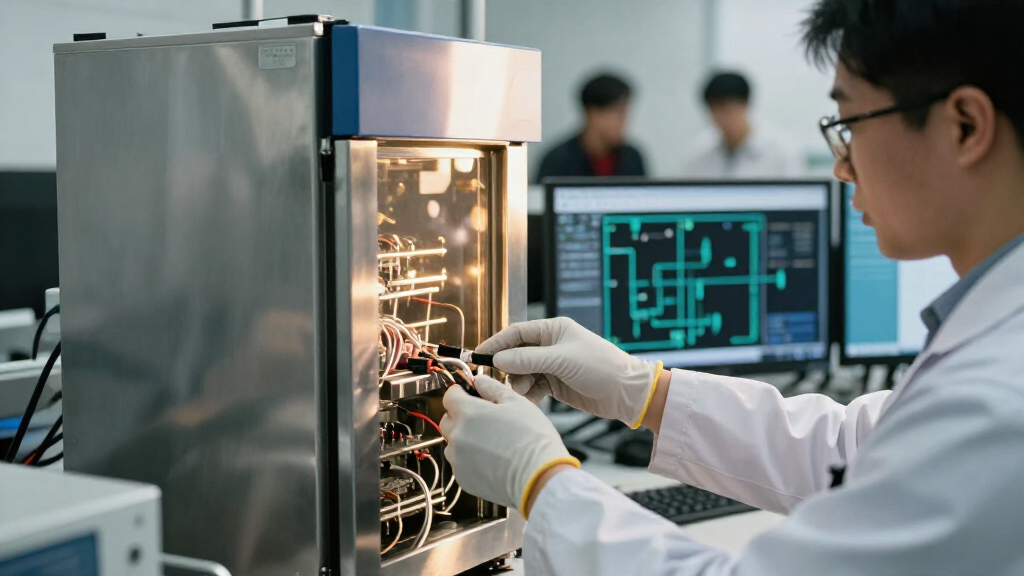
TAIYI reported integrating its first-generation neutral-atom prototype within six months of its founding. It said the experimental platform brings together atomic manipulation, vacuum equipment, laser and optical subsystems, measurement electronics, real-time control and software. These are company-reported milestones; the announcement did not provide independent test results or detailed performance data for the prototype.
The company also reported developing an initial closed-loop control system with latency in the tens of microseconds and releasing LUOSHU, an open-source compiler designed for neutral-atom hardware. TAIYI says LUOSHU accounts for constraints such as atom movement, qubit connectivity and operation scheduling. It has not provided, in the source announcement, comparative benchmarks or details showing how the compiler performs on systems beyond its own development work.
Funding Targets Fault-Tolerant Systems
The announcement matters because it directs substantial reported financing toward a difficult stage of quantum-computing development: combining physical qubits, measurement, control and error correction into a system capable of reliable logical operations. A large funding total can support the specialized staff, equipment and long engineering timelines such work requires, but it does not establish that a machine is fault tolerant or commercially useful.
TAIYI’s approach is to design its hardware and software around fault-tolerance requirements rather than treat error correction as a later add-on. That is the company’s stated strategy, not evidence that it has achieved fault-tolerant operation. For readers tracking the field, the practical measure will be validated progress in system performance, error correction and logical computing—not the financing figure alone.
The company’s reported control latency and prototype integration may be relevant steps toward coordinating neutral atoms and future error-correction routines. However, the announcement does not connect those milestones to demonstrated error-corrected computations. Funding and early engineering progress should therefore be read as indicators of resources and development activity, not as proof that useful quantum applications are near.
As an affiliate, we earn on qualifying purchases.
A Neutral-Atom Development Plan
TAIYI was founded in January 2026 and says it is building a quantum-computing architecture based on ytterbium atoms. Neutral-atom systems use individually controlled atoms as qubits. The company points to potential advantages including flexible qubit encoding and connectivity, while acknowledging that scaling physical qubits alone is not enough to produce reliable computation.
The company says ytterbium may offer properties useful to fault-tolerant designs, including long-lived electronic states and possibilities for erasure-aware error correction. These are the technical rationale for its platform as described by TAIYI, not demonstrated outcomes in the funding announcement. Its plan spans atom manipulation, real-time feedback, software compilation and error-correction architecture.
TAIYI also says it is exploring possible applications in chemistry, materials science, energy, life sciences and scientific computing, and studying how quantum processors might work alongside artificial-intelligence and high-performance-computing infrastructure. It did not identify a commercial application or announce a customer deployment.
“Quantum computing is fundamentally a long-term systems engineering challenge.”
— Zhenghao Fang, TAIYI Quantum co-founder and CEO
neutral atom quantum computer components
As an affiliate, we earn on qualifying purchases.
As an affiliate, we earn on qualifying purchases.
Round Size and Results Not Disclosed
The announcement does not state the amount raised in the latest round, identify its investors, or provide terms. It also does not detail the prototype’s qubit count, error rates, uptime, benchmark results or whether external researchers have assessed the reported system and latency. Those omissions make it difficult to compare the milestones with other quantum platforms.
It remains unclear how soon TAIYI expects to demonstrate quantum error correction or logical operations, and whether the reported control system has been tested in those settings. The company’s application areas are exploratory; no specific customer, commercial product or performance advantage was announced. The reported funding and technical progress have not, in the supplied material, been independently verified.
quantum control system electronics
As an affiliate, we earn on qualifying purchases.
As an affiliate, we earn on qualifying purchases.
Evidence Needed from Future Milestones
TAIYI said the financing will support continued system engineering, including quantum error correction, real-time control and hardware–software integration. The company has not announced a dated milestone schedule. Further disclosures on system scale, error performance, independent validation and progress toward logical operations would help clarify what the reported prototype can do.
Investors and researchers will also be watching for details of the financing round and for evidence that LUOSHU can support broader neutral-atom development. For now, the next step is further technical reporting from the company; no launch date for a fault-tolerant computer or commercial service has been given.
laser systems for quantum experiments
As an affiliate, we earn on qualifying purchases.
As an affiliate, we earn on qualifying purchases.
Key Questions
How much funding has TAIYI Quantum raised?
TAIYI said its cumulative funding exceeds RMB 1 billion, approximately US$140 million. It did not disclose the size or terms of the latest round.
What kind of quantum computer is TAIYI developing?
The company is developing a system based on ytterbium neutral atoms, with hardware, controls and software intended to support error correction and eventual fault tolerance.
Has TAIYI demonstrated a fault-tolerant quantum computer?
No such demonstration was reported. TAIYI described fault tolerance as a long-term objective and reported early system integration and control work, but supplied no results showing fault-tolerant operation.
What technical progress did the company report?
TAIYI said it integrated a first-generation prototype within six months of founding, developed control feedback with latency in the tens of microseconds, and released the open-source neutral-atom compiler LUOSHU. The announcement did not include independent validation or detailed benchmarks.
Source: rss
Fall Picks
fall essentials
As an affiliate, we earn on qualifying purchases.