
📊 Full opportunity report: Route-Responsive Narration For Everyday Walks on IdeaNavigator AI — validation score, market gap, and execution plan.

Get the latest gadgets delivered free with Prime
- Fast, free delivery on millions of items
- Prime Video, Amazon Music and more included
- Member-only deals all year
TL;DR
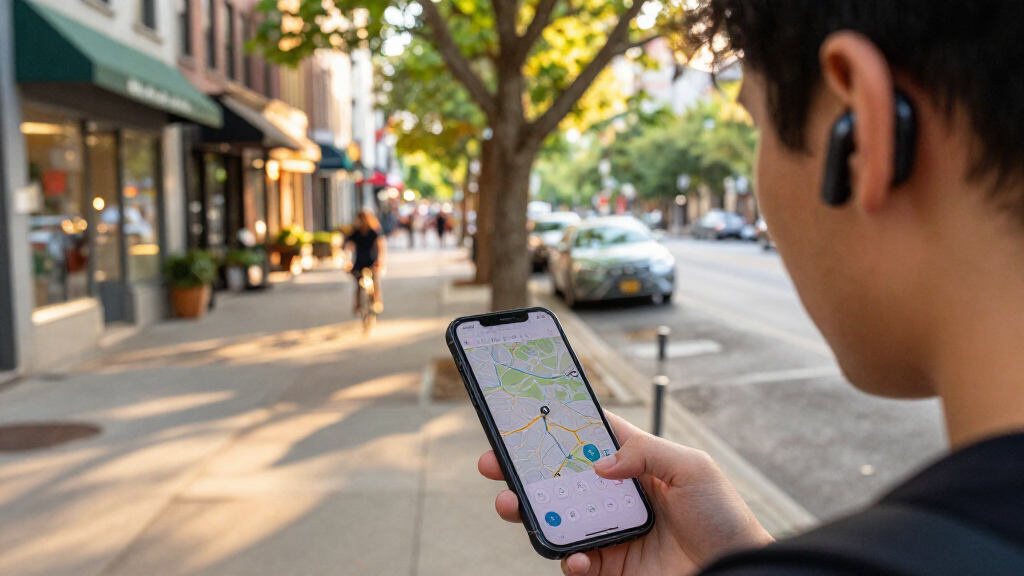
IdeaNavigator AI has outlined a concept for an app that generates location-aware narration during everyday walks, using information such as local history and architecture. The proposal recommends testing the service in two cities and measuring week-four walking frequency and narration accuracy; no launch, trial results or product performance are reported.
IdeaNavigator AI’s proposal outlines a route-responsive audio app that generates narration as people walk through neighborhoods and recommends testing an initial version in two cities. The concept targets walkers who want stories about the streets around them, but the proposal does not report an app launch or a completed trial.
According to the IdeaNavigator AI concept, the proposed app would create audio during a walk using a person’s live route, with narration about local history, buildings and unusual details. Rather than limiting coverage to established tourist attractions, the concept aims at ordinary neighborhood streets and travel routes. It also proposes themed modes, including history, architecture and nature, plus the ability to save favorite routes.
IdeaNavigator AI presents location-aware generation as a way to reduce the cost of producing audio for every route. The proposal says large language models could generate narration on demand from open data, such as historical, architectural and place records. It does not identify specific data sources, a model, an operating system, a launch partner or a technical implementation.
The concept suggests a consumer subscription alongside a licensing tier for tourism boards. To assess the idea, it recommends testing in two cities, tracking how many walks users take per week through week four, and auditing factual accuracy on a sample of routes. The proposal provides no pricing, sample size, target retention rate or accuracy threshold.
Concept brief · Everyday mobility
Route-Responsive Narration for Everyday Walks
IdeaNavigator AI proposes an app that creates location-aware audio about local history, architecture, nature and unusual details as people walk. It remains an early concept: no launch or trial results are reported.
01 / The experience
Audio beyond tourist routes
The concept aims to bring local discovery to everyday walks, including neighborhood streets and travel routes. It proposes generating place-based narration on demand rather than preparing a separate tour for every route.
Listen as you move
Narration would respond to a person’s location, with stories timed around corners and landmarks. The detection and timing approach is unspecified.
Places with a story
Open records could inform stories about local history, buildings and distinctive details along a route.
Choose a theme
Possible modes include history, architecture and nature, with an option to save favorite routes.
02 / The product logic
From curated tours to generated routes
Traditional audio tours often focus on landmark districts. IdeaNavigator AI suggests language models could generate narration from open place data, potentially extending coverage to streets without a prepared tour.
Locate
Use a walker’s route to identify relevant places nearby.
Connect
Draw on open records about local places and their histories.
Narrate
Generate a concise story and deliver it at a suitable moment.
Validate
Measure repeat walks and audit facts across sampled routes.
03 / Open questions
Accuracy and delivery still need answers
The proposal describes a possible service, not a demonstrated experience. Reliable, well-timed narration would depend on product and data choices that have not yet been specified.
Which records?
No specific open datasets, model, verification process or update schedule are named. Handling incomplete or conflicting information remains an open question.
When should audio play?
Route detection and narration timing are not explained. The concept gives no detail on busy crossings, accessibility or offline access.
How much is enough?
Interruptions, pace, personalization and privacy controls are unspecified. No human review process is described.
Who might pay?
The proposal suggests consumer subscriptions and tourism-board licensing, but provides no pricing or evidence of customer demand.
04 / Proposed validation
Two-city test, with clear measures
The recommended next step is a limited test in two cities. No cities, sample size, schedule, retention target or accuracy threshold are provided, and no test is reported as scheduled.
Walks per week through week four
Follow how often participants walk with the app over time to assess whether route-aware stories fit into a walking routine.
Accuracy across sampled routes
Audit factual claims and report the route sample, review method and comparison basis so the findings can be assessed.
05 / Reader questions
What is known so far?
The available details describe a proposal by IdeaNavigator AI. The central claims remain to be tested with walkers and route-level evidence.
Has the app launched?
No launch is reported. The concept recommends a two-city test, but provides no test results.
What could it narrate?
Local history, buildings and unusual details, with possible history, architecture and nature modes.
How might it earn revenue?
The proposal suggests a consumer subscription and tourism-board licensing. Pricing and demand are unestablished.
Testing Audio Beyond Tourist Routes
In its concept, IdeaNavigator AI identifies a gap between general audio and destination-specific tours. Podcasts generally do not respond to a listener’s location, while many audio tours are organized around landmark districts. A service that narrates the places people pass in daily life could make local discovery part of an ordinary walk, rather than requiring a visit to a designated attraction.
The proposal frames the practical test as whether generated narration is useful enough to bring people back. Week-four walking frequency would offer an early signal about repeat use, while an accuracy audit would examine whether the stories can be trusted. Those measures matter because a route-aware app depends both on fitting into a walking routine and on providing reliable, relevant information. IdeaNavigator AI recommends these measures but reports no results.
Tourism-board licensing is presented in the concept as a potential customer stream beyond individual subscribers. The proposal does not establish whether tourism organizations would pay, how licensing might work, or whether generated content would meet their standards. The suggested two-city test is a way to validate the idea, not evidence that a market already exists.
Products Worth Considering

Jackery Explorer 2000 v2 Portable Power Station, 2042Wh

Anker SOLIX C300 Portable Power Station, 288Wh

Bose QuietComfort Headphones (2nd Gen), Wireless Noise-Cancelling Over-Ear Headphones, Black
As an affiliate, we earn on qualifying purchases.
From Curated Tours to Generated Routes
IdeaNavigator AI’s proposal describes audio tours as requiring material tied to particular places, with coverage concentrated around sites expected to attract visitors. It argues that the cost of producing audio for each route has limited that model’s reach. Its proposed alternative uses location and open records to generate narration while someone is moving, potentially extending coverage to streets without a prepared tour.
The concept’s timing rationale rests on the ability of current language models to produce text from information about places. Turning that capability into a dependable walking experience would require more than generating narration: an app would need to identify relevant locations, connect them to information and deliver audio at suitable moments. The proposal describes narration reacting at corners and landmarks, but does not explain how route detection or audio timing would work.
IdeaNavigator AI recommends a limited scope: one primary user need, a test across two cities, and measures focused on repeat walks and accuracy. That framing distinguishes the idea from a claim of a finished product. The proposal names no cities, development schedule, funding, team or partnership.
Accuracy and Delivery Still Open
IdeaNavigator AI’s proposal provides no evidence that the app has been built, launched or tested with walkers. It does not identify the two proposed cities or provide user research, retention data, an accuracy audit, customer commitments or revenue. Its recommendation to conduct those tests is not a report that they have happened.
The proposal also leaves important product questions unanswered. It does not specify which open datasets would support narration, how information would be checked or updated, or how the app would handle incomplete and conflicting records. It gives no details about location permissions, offline access, accessibility, user safety or whether audio would pause at busy crossings. These are open questions, not reported defects.
Nor does the concept explain how the service would distinguish a useful observation from an irrelevant or inaccurate one, or how much narration a walker would want. It names themed modes and saved routes but does not describe user controls over interruptions, pace, privacy or personalization. No human review process is mentioned.
Two-City Validation Proposed
IdeaNavigator AI’s proposed next step is a two-city test. The concept recommends measuring walks per week through week four and checking narration accuracy across a sample of routes. It gives no calendar date and does not say a test has been scheduled, so there is no confirmed upcoming launch milestone.
If the concept proceeds, useful evidence would include how many people try the app, how often they return, which narration modes they use and whether location-based stories are accurate. Reporting the cities, route sample, audit method and comparison basis would help readers assess the results. Until such evidence is available, the idea remains an early product proposal rather than a demonstrated service.
Source: IdeaNavigator AI
Key Questions
Has the route-responsive walking app launched?
No launch is reported. IdeaNavigator AI presents the app as a concept and recommends a two-city test.
What would the app narrate?
The concept proposes using local information to describe history, buildings and unusual details along a walker’s route. It lists history, architecture and nature as possible themed modes.
How would the concept be tested?
IdeaNavigator AI recommends testing in two cities, measuring walks per week through week four and auditing accuracy on a sample of routes. The proposal reports no results or detailed test protocol.
How might the service make money?
The proposal suggests a consumer subscription alongside a licensing tier for tourism boards. Pricing and customer demand have not been established.
Source: IdeaNavigator AI