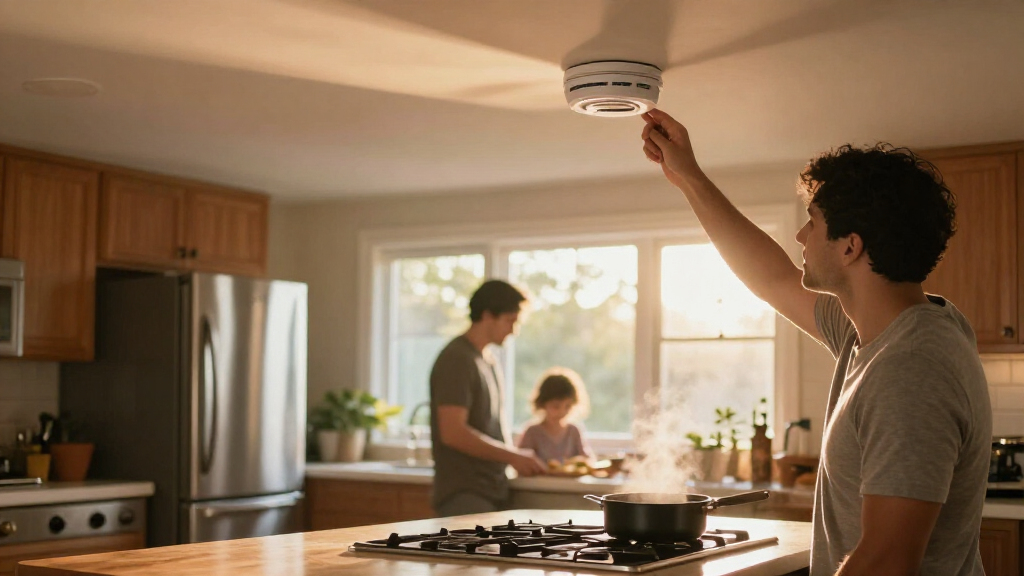

The Kidde Smart Smoke Detector is a hardwired, WiFi-connected smoke alarm with a lithium battery backup, voice alerts, and app notifications. Its strongest advantage is adding remote alerts and smart-home links to a conventional powered alarm, which can help people check on a home while away. Its main drawback is that the extra features depend on WiFi and app setup, while its core job is still limited to smoke detection. It is worth considering for a household that wants connected smoke alerts and already has compatible wiring; buyers who need carbon monoxide detection or a battery-only installation should look elsewhere.

Get the latest gadgets delivered free with Prime
- Fast, free delivery on millions of items
- Prime Video, Amazon Music and more included
- Member-only deals all year

Kidde Smart Smoke Detector
- ✔ Sensor Technology: Photoelectric
- ✔ Alarm Decibel Level: 85 dB
- ✔ Power Source: 120V AC with lithium battery backup
Why This Product Stands Out
The Kidde’s distinction is the connection between a local alarm and remote awareness. A standard smoke detector alerts people within earshot; this model adds app notifications, so a household may receive an alert even when nobody is in the room. That matters most for people who travel, monitor a second home, or want another way to learn that an alarm has activated. The benefit depends on a properly configured app and a working network, so it should be treated as an added notification path rather than the reason to neglect ordinary alarm placement or maintenance.
Against category expectations, its foundation is familiar: hardwired power, battery backup, a test-hush button, and a local alarm. The connected features make it more capable than a basic smoke-only unit for a compatible smart home, but they do not broaden what it detects. The product information describes optional interconnection; buyers replacing linked alarms should confirm compatibility with their current arrangement instead of assuming every existing unit will communicate with it.
Its best comparison depends on the installation and hazard coverage a buyer needs. The Kidde Smart Smoke Detector with Ring is the more relevant alternative when Ring integration and AA battery power are a better match. The Kidde Smart Smoke & CO Detector with Ring is a stronger candidate when hardwired installation and carbon monoxide detection are priorities. For a simpler battery-powered smoke and CO option, the Kidde 30CUDR changes the tradeoff toward basic independent operation rather than this model’s WiFi features.
Key Features and What They Mean
Photoelectric smoke sensing gives this alarm a focused role: detecting smoke and sounding a local warning. That outcome matters to households adding smoke protection at a compatible wired location, while the 85 dB alarm gives people nearby a clear audible cue to respond. It does not cover carbon monoxide, so households needing both protections must add a CO alarm or choose a combination model. Correct placement and timely replacement still matter for the detector to serve its purpose.
WiFi and Kidde app notifications give owners another way to learn that an alarm has activated when they are away or in another part of the property. Frequent travelers, people monitoring a second home, and households with occupants who may not hear the local alarm benefit most. Someone usually within earshot may gain less from the feature. App setup and a working network are required, so phone alerts supplement the local alarm rather than replace it.
Voice alerts and LED indicators help occupants understand and check the alarm’s status. Spoken prompts can give household members more context than a tone alone, while LEDs provide a visible cue for people nearby. These cues can help a busy household recognize and respond to an alarm; buyers who want smoke and carbon monoxide warnings from one device will still need a combination detector.
120V AC power with lithium backup makes the detector a potential fit for homes with compatible hardwired alarm locations. The wired connection means normal operation does not rely on routine battery changes, and the backup is intended to keep the detector powered during an outage; the product description says it can last up to 10 years. This combination benefits homeowners replacing a compatible wired alarm, but buyers should check wiring and interconnection details before relying on it as a replacement.
Alexa and Google Home compatibility lets owners already using either platform include the alarm in a connected-home setup they know. That is most useful to households that want their smoke alarm to fit alongside existing smart-home devices; it offers less value to buyers using another ecosystem. The 10-year limited warranty defines a coverage period for owners considering long-term use, though its terms and conditions still matter when comparing ownership costs.
Performance and Real-World Use
In daily use, the main routine is still that of a conventional smoke alarm: mount it in an appropriate wired location, test it, and respond to its audible warning. The test-hush button and LED indicators support routine operation, while the connected setup adds another task at installation. Users who are comfortable linking devices to an app and home WiFi are more likely to get value from the remote alerts; those who want a no-account, no-network setup may prefer a simpler unit.
The 85 dB alarm and voice messages are designed to provide a local warning, with app alerts serving a different purpose when occupants are away. Connected notifications depend on the detector’s network and the phone’s app configuration, so buyers should not assume a phone alert will arrive under every outage or connectivity condition. The local alarm and backup power are the more direct protections for people in the home.
Hardwiring can reduce reliance on routine battery changes, and the stated lithium backup and 10-year limited warranty speak to longer-term ownership. The available details do not establish a particular installation difficulty, service record, or lifespan beyond those claims. As with any alarm, buyers should follow its instructions for testing, maintenance, and replacement, and confirm how it fits with any alarms already installed.
Who Should Buy This
This model makes the most sense for a homeowner with compatible hardwired smoke-alarm locations who wants phone notifications when away and already uses Alexa or Google Home. It also suits households that value voice alerts and want battery backup without choosing a battery-only alarm. Before buying, check that existing alarm wiring and interconnection needs fit the unit, and make a separate plan for carbon monoxide detection if the home requires it.
Who Should Skip This
Skip it if you need carbon monoxide detection in the same device, lack compatible hardwiring, or want an alarm whose useful features do not depend on WiFi and app setup. Renters who cannot change wired alarms may find a battery-powered option more practical. A Ring-focused household may prefer one of Kidde’s Ring-compatible models, while buyers who want basic smoke and CO coverage from a battery-powered unit should compare the Kidde 30CUDR.
Value for Money
Without a listed price, it is not possible to judge the exact deal, but the value proposition is clear: this alarm is worth paying a premium for only if you will use its remote alerts or smart-home links. For a homeowner replacing a compatible hardwired alarm who travels, monitors another property, or already uses Alexa or Google Home, those features add a meaningful layer of awareness and can justify choosing it over a basic smoke detector. For someone who will rely only on the local alarm, the WiFi setup adds cost and complexity without much practical return, so a simpler model is likely better value. Buyers who need CO coverage, Ring integration, or battery-only installation should put their money toward a model that includes those needs instead.
Kidde Smart Smoke Detector
The Kidde’s distinction is the connection between a local alarm and remote awareness . A standard smoke detector alerts people within earshot; this model adds app notifications, so a household may receive an alert even when nobody is in the room.
Pros:
- App alerts add reach: Notifications can tell you about an alarm when you are away from home, a practical extra for frequent travelers or people who want to check on a property remotely.
- Voice alerts identify hazard information: Spoken warnings can make an alarm’s message clearer than a tone alone, helping household members respond with more context.
- Alexa and Google Home compatibility: Integration fits homes already using those platforms and can make the alarm easier to include in an existing connected setup.
- Hardwired power with backup: The 120V AC connection suits homes with compatible wiring, while the lithium backup helps keep the detector powered during an outage.
- Photoelectric sensing and an 85 dB alarm: These core smoke-alarm details pair an established sensor type with a loud local alert; the 10-year limited warranty adds a defined support period.
Cons:
- WiFi is part of the smart feature bargain: App notifications and connected services depend on network access and setup, so they may be less useful during connectivity problems.
- It detects smoke, not carbon monoxide: Homes that still need CO protection will need a separate detector or a different product.
- Installation is constrained by hardwiring: It is a poor fit for renters or rooms without compatible wiring, and replacing an existing alarm may require checking the wiring and interconnection arrangement.
- Smart-home compatibility is selective: The stated Alexa and Google Home support will not help buyers whose setup relies on other systems, and no price information is available here to confirm a precise value comparison.
Best for: Homeowners with compatible hardwiring who want smoke alerts on their phones and use Alexa or Google Home.
Not ideal for: People who need a battery-only alarm, built-in carbon monoxide detection, or smart features that work without WiFi and app setup.
Bottom line: The Kidde Smart Smoke Detector is worth considering for a connected, hardwired home where phone alerts add useful peace of mind and Alexa or Google Home compatibility fits the household.
Frequently Asked Questions
Does the Kidde Smart Smoke Detector detect carbon monoxide?
No. The listed sensor technology is photoelectric smoke detection. If your home needs carbon monoxide protection, add a separate CO alarm or compare it with the Kidde Smart Smoke & CO Detector with Ring.
Will it send alerts if I am away from home?
The Kidde app provides real-time notifications, which can alert you when you are away. Those connected alerts require app setup and WiFi, so treat them as an added notification channel alongside the local alarm.
Can I install it without existing alarm wiring?
It is specified as a 120V AC hardwired detector with battery backup. Check the installation instructions and your home’s wiring before buying; if you need a battery-only alarm, compare a suitable battery-powered model instead.
Is it a good choice if I use Ring?
The stated integrations are Alexa and Google Home, and the product details do not list Ring compatibility. A Kidde model made for Ring is the more direct option if Ring integration is central to your setup.
Final Thoughts
The Kidde Smart Smoke Detector is worth considering for a connected, hardwired home where phone alerts add useful peace of mind and Alexa or Google Home compatibility fits the household. Its smoke-only sensing and dependence on WiFi for connected features are meaningful limits. Choose it when remote smoke alerts are a real need and the installation matches your wiring; choose a Ring-compatible model for that ecosystem, a smoke-and-CO detector for broader hazard coverage, or a battery-powered alternative when hardwiring is not practical.
Fall Picks
fall essentials
As an affiliate, we earn on qualifying purchases.