TL;DR

Get the latest gadgets delivered free with Prime
- Fast, free delivery on millions of items
- Prime Video, Amazon Music and more included
- Member-only deals all year
Innovate UK has awarded Infleqtion £9 million to advance Quantum Spectrum-DF, a quantum radio-frequency direction-finding system being developed with Leonardo. The project’s second phase is intended to turn a previously tested prototype into a more robust system and evaluate it in realistic conditions; operational performance and deployment plans have not been detailed.
Infleqtion has received £9 million from Innovate UK to develop a deployable quantum radio-frequency direction-finding system, advancing work under the second phase of the Quantum Direction Finding (QuDiFi) project. The company is developing Quantum Spectrum-DF with Leonardo, with intended uses spanning defence and civilian applications such as spectrum monitoring, passive radar and resilient navigation.
The award is part of the Quantum Missions Primer programme, according to Infleqtion. The system uses Rydberg atoms and optical techniques to detect radio signals and determine their direction, rather than relying solely on conventional antenna arrangements. Infleqtion says the approach could reduce reliance on large antenna arrays and make direction-finding equipment easier to use on platforms with limited space.
Infleqtion said it designed and tested a prototype during earlier work. The current phase is focused on developing it into a more robust and deployable product, improving performance, reliability and ease of use, and validating it in realistic operational environments. The company has not published technical results from those planned evaluations or a timetable for completing them.
Leonardo is collaborating on the project. The companies describe Quantum Spectrum-DF as a dual-use technology, intended for applications in both defence and civilian markets. The £9 million award is funding for development; it does not, by itself, establish that the system is ready for operational use or has been adopted by a customer.
Smaller Systems for RF Direction Finding
Radio direction finding helps identify where signals originate, information that can support communications monitoring, navigation, security and emergency response. Existing systems can require large antenna arrays, particularly for some lower-frequency applications. That physical footprint can constrain use on mobile or space-limited platforms.
If the Rydberg-atom approach can meet operational requirements in a compact form, it could offer another way to locate radio signals in settings where conventional antenna systems are difficult to accommodate. Infleqtion and Leonardo point to potential benefits in size, weight and power, alongside sensitivity and precision. Those are project aims and partner assessments, rather than independently reported field-test outcomes.
The award also supports UK development of quantum sensing technology with potential security and civilian applications. Whether the system delivers practical advantages will depend on testing under realistic conditions, including how it performs against existing equipment and whether it can be integrated into working platforms.
As an affiliate, we earn on qualifying purchases.
From QuDiFi Prototype to Product
The work sits within the second phase of QuDiFi, a project focused on quantum radio-frequency direction finding. Infleqtion says the earlier phase produced a designed and tested prototype. The next phase moves from that work toward a system intended for deployment, with reliability and usability among its stated development goals.
Rydberg atoms are highly excited atoms that can interact with radio-frequency fields. In the approach described by Infleqtion, optical methods are used to measure those interactions and infer information about incoming signals. The company presents this as a potential alternative to large conventional antenna structures; the project’s stated purpose is to assess and develop that capability, not to report a completed replacement for existing systems.
Infleqtion Managing Director for the UK, Colin Sullivan, and Leonardo Electronic Warfare Chief Technologist Dr. Oliver Sims described the work as part of a broader effort to assess quantum sensing for future capabilities. Their comments are statements from the project partners, which have not provided independent test data in the supplied announcement.
As an affiliate, we earn on qualifying purchases.
Performance and Deployment Still Unclear
The announcement does not specify when development or testing will be completed, what performance targets the system must meet, or what results the earlier prototype achieved. It also gives no detailed comparison with existing direction-finding equipment, including independently verified measurements of sensitivity, accuracy, range or size.
It remains unclear which platforms or operational settings will be used for validation, whether the system will be tested by potential end users, and when a product might become commercially available. The named uses—including defence, spectrum monitoring, passive radar and resilient navigation—are intended applications, not confirmed deployments or contracts.
The funding amount is confirmed in Infleqtion’s announcement, but the supplied material does not break down how the £9 million will be divided between project partners or specify any additional financial contributions. The award should not be read as proof that the technology has completed qualification for operational use.
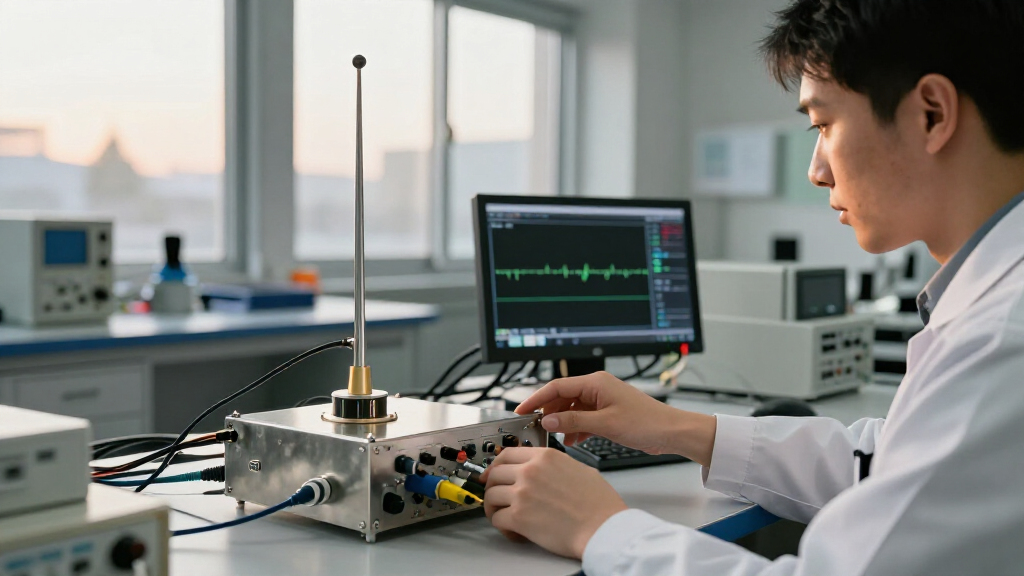
compact radio direction finding system
As an affiliate, we earn on qualifying purchases.
As an affiliate, we earn on qualifying purchases.
Operational Validation Is the Next Milestone
The next stated step is for Infleqtion and Leonardo to develop Quantum Spectrum-DF and validate it in realistic operational environments. That work is intended to assess performance, reliability and ease of use as the project moves beyond the prototype stage.
Further announcements or project results may clarify the test conditions, measured capabilities, delivery schedule and potential users. Until those details are released, the system’s operational readiness and the scale of any advantage over conventional equipment remain open questions.
As an affiliate, we earn on qualifying purchases.
Key Questions
Who awarded Infleqtion the £9 million?
Innovate UK, part of UK Research and Innovation (UKRI), awarded the funding, according to Infleqtion. The award supports the second phase of the QuDiFi project.
What is Quantum Spectrum-DF?
It is a developing quantum radio-frequency direction-finding system. Infleqtion says it uses Rydberg atoms and optical techniques to detect radio signals and determine their direction.
What could the system be used for?
The project partners identify potential defence and civilian uses, including spectrum monitoring, passive radar and resilient navigation. These are intended applications; the announcement does not confirm operational use.
Is Quantum Spectrum-DF ready for deployment?
That has not been established. Infleqtion says an earlier prototype was designed and tested, while this phase will develop a more robust product and evaluate it in realistic operational environments.
What remains unknown about the project?
The announcement does not provide a completion date, detailed test results, performance comparisons or a confirmed customer deployment. It also does not specify how the £9 million will be allocated among project participants.
Source: rss
Fall Picks
fall essentials
As an affiliate, we earn on qualifying purchases.