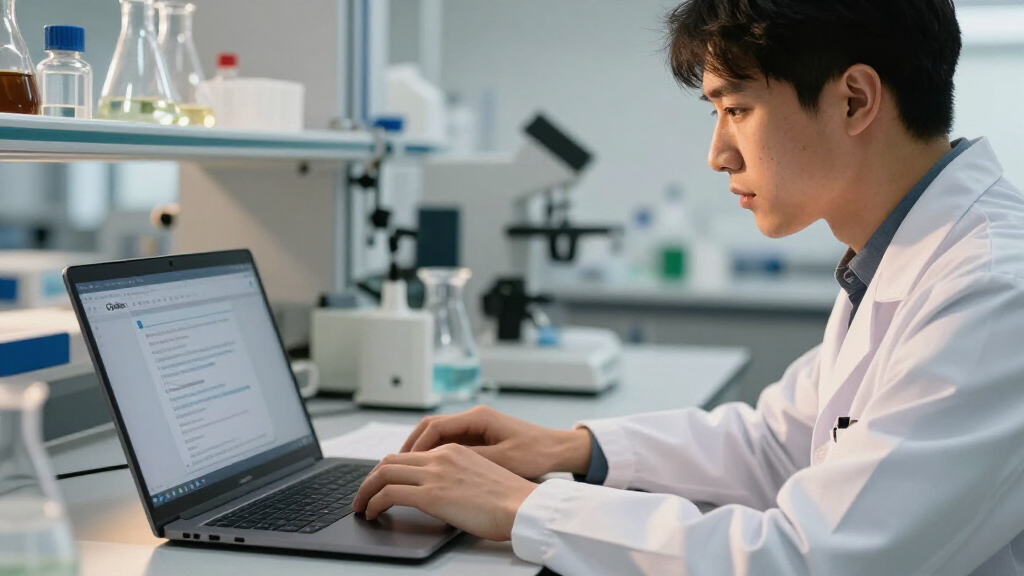

🔍 Read the full analysis: How A Researcher Uses Codex And ChatGPT To Search For New Antimicrobial Molecules on ThorstenMeyerAI.com
Listen free for 30 days with Audible
Thousands of audiobooks and originals — cancel anytime.
Start your free trialAs an affiliate, we earn on qualifying purchases.
TL;DR
A bioengineering lab at the University of Pennsylvania leverages AI tools like Codex and ChatGPT alongside deep learning to drastically shorten the initial search for antimicrobial molecules from years to hours. This approach aims to address the urgent global threat of antimicrobial resistance, though candidates still face extensive validation before clinical use.
Researchers at the University of Pennsylvania have demonstrated that combining deep-learning models with AI tools like Codex and ChatGPT can reduce the initial computational search for new antimicrobial molecules from years to hours, according to an analysis of how AI tools are used in antimicrobial discovery. This breakthrough could accelerate the early stages of drug discovery amid a global rise in antimicrobial resistance, although candidates still require extensive validation before reaching patients.
The laboratory led by bioengineer César de la Fuente employs custom deep-learning models trained to recognize patterns in biological sequences, such as DNA and proteins, to identify peptides with potential antimicrobial activity. They supplement these models with AI tools like ChatGPT and Codex to assist in hypothesis generation, coding, data processing, and interdisciplinary communication. The approach has compressed the initial genomic screening process, which traditionally takes years, into a matter of hours, according to the report from OpenAI.
De la Fuente emphasizes that biology can be viewed as an information system, where nucleotides and amino acids resemble an alphabet. By treating biological sequences as data, the team uses AI to scan vast genomic and proteomic datasets—including those from extinct organisms—for promising antimicrobial candidates. This method allows researchers to explore a broader diversity of organisms than traditional sample-based discovery, potentially uncovering novel molecules.
While the AI-driven pipeline accelerates candidate identification, de la Fuente clarifies that this is only the first step. Each candidate must undergo rigorous laboratory testing to confirm antimicrobial efficacy, assess toxicity, and evaluate resistance development. Only after passing these stages can candidates proceed to clinical trials and regulatory approval. The report does not specify how many AI-identified molecules are currently in the pipeline or their progress toward clinical testing.
Potential Impact on Antibiotic Development Speed
This development could significantly speed up the earliest phase of antibiotic discovery, enabling researchers to focus laboratory efforts on the most promising candidates. Given the rising toll of antimicrobial resistance—approximately five million deaths in 2021 linked to resistant bacteria—faster identification methods are crucial. The use of general-purpose AI tools like ChatGPT and Codex also illustrates a broader shift toward AI-facilitated interdisciplinary collaboration, lowering barriers between biology, chemistry, and computer science.
However, experts caution that this acceleration does not address downstream challenges such as toxicity, resistance management, and clinical validation. The true impact will depend on how effectively these AI-identified candidates can be validated and developed into safe, effective drugs. Nonetheless, this approach offers a promising new front in the fight against one of medicine’s most pressing threats.
laboratory antimicrobial testing kits
As an affiliate, we earn on qualifying purchases.
As an affiliate, we earn on qualifying purchases.
From Traditional to Digital Antimicrobial Discovery
Historically, antimicrobial discovery involved laborious sampling from soils, plants, microbes, and other natural sources, followed by iterative testing over years. The advent of genome sequencing and digital databases shifted the focus to computational methods, enabling researchers to search across the entire spectrum of life—including extinct organisms—more efficiently. Despite these advances, the bottleneck remained in identifying meaningful signals within vast datasets, a challenge that AI aims to address.
De la Fuente’s lab has previously published work on AI-discovered antimicrobial peptides, but the recent report highlights a new approach that combines deep learning with general AI tools for a faster, more integrated discovery process. The emphasis is now on pattern recognition in genomic data, which could reveal molecules with antimicrobial potential that were previously inaccessible or overlooked.
“Antimicrobial resistance is one of the greatest existential threats to humanity. We haven’t had a new class of antibiotics in 50 years, and AI can help us change that.”
— César de la Fuente
As an affiliate, we earn on qualifying purchases.
Limitations and Unverified Aspects of the Approach
The claim that early-stage candidate searches are reduced from years to hours is based on computational processes only and does not reflect the time needed for laboratory validation. It remains unverified how many candidates identified through this pipeline will ultimately succeed in preclinical or clinical testing. The report does not specify the number of molecules progressing to later stages, nor does it provide peer-reviewed validation of the workflow.
Additionally, since the report originates from OpenAI, which develops the AI tools used, there is potential bias in framing their effectiveness. The long-term success of this approach depends on the integration of AI predictions with rigorous laboratory validation, which is still in early stages.
protein analysis tools for scientists
As an affiliate, we earn on qualifying purchases.
As an affiliate, we earn on qualifying purchases.
Next Steps for Validation and Development
The immediate next steps involve laboratory validation of the AI-identified candidates to confirm antimicrobial activity, safety, and resistance profiles. Researchers will need to optimize promising molecules, test them in vivo, and evaluate their potential for clinical development. Parallel efforts will focus on refining the AI models, improving prediction accuracy, and expanding datasets.
Further collaboration with regulatory agencies and industry partners will be essential to translate these discoveries into approved drugs. The lab plans to publish peer-reviewed results and possibly initiate preclinical studies within the next few years, aiming to demonstrate the real-world efficacy of AI-discovered antimicrobials.
As an affiliate, we earn on qualifying purchases.
Key Questions
How reliable are AI tools like ChatGPT and Codex in drug discovery?
These AI tools are primarily used for hypothesis generation, coding, and data analysis. Their reliability depends on the quality of training data and integration with experimental validation. They are not yet capable of independently discovering drugs but can significantly accelerate early-stage research.
What are the main challenges after identifying candidate molecules with AI?
Following computational discovery, candidates must undergo extensive laboratory testing for efficacy, toxicity, resistance development, and pharmacokinetics. Only molecules passing these hurdles can advance to clinical trials, a process that can take several years.
Has any AI-discovered antimicrobial molecule been approved for use?
As of now, no AI-discovered antimicrobial has received regulatory approval. The approach is still in the early research phase, with candidates requiring rigorous validation and testing before clinical use.
Will AI completely replace traditional drug discovery methods?
AI is expected to complement rather than replace traditional methods. It can accelerate initial screening and hypothesis generation but must be integrated with laboratory science for validation and development.
How urgent is the need for new antibiotics?
The World Health Organization estimates that antimicrobial resistance caused about five million deaths in 2021, with numbers projected to rise. Developing new antibiotics is critical to addressing this growing health crisis.
Primary source: OpenAI · via ThorstenMeyerAI.com
Flea & tick season Picks
flea and tick prevention
As an affiliate, we earn on qualifying purchases.