
🔍 Read the full analysis: AI At Work Explained: The Role Of Deep Learning on ThorstenMeyerAI.com

Get the latest gadgets delivered free with Prime
- Fast, free delivery on millions of items
- Prime Video, Amazon Music and more included
- Member-only deals all year
TL;DR
Deep learning systems used for tasks such as image recognition and drafting replies learn patterns by adjusting weights across layers of a neural network to reduce errors. The method helps explain both the capabilities and limits of workplace AI: models can reproduce patterns in their training data but may falter when circumstances differ, and larger models are not automatically better.
An explainer published by ThorstenMeyerAI.com on November 17 describes how deep learning enables AI tools to recognise images and draft customer replies by learning from examples rather than receiving hand-written rules for each task. The account explains the training process and its limits, including why model size alone does not guarantee better performance and why systems can make mistakes when their inputs differ from what they learned.
Deep learning uses artificial neural networks made up of layers of calculations. Each artificial neuron combines its inputs using adjustable weights, adds a bias and applies an activation function. During training, the network changes those weights to reduce the difference between its predictions and the desired answers. The explainer traces this core idea to a 1986 Nature paper by David Rumelhart, Geoffrey Hinton and Ronald Williams.
Training repeatedly runs examples through a network, measures the error with a loss function and adjusts the weights. Gradient descent determines the direction of the adjustments; back-propagation calculates how the error relates to weights throughout the network. The process is repeated across training examples. Once training is complete, using the model—known as inference—means applying its learned weights to new inputs, not updating them as part of each ordinary prediction.
The explainer illustrates the potential of deeper networks with ImageNet results: the best error rate fell from 28.2% in 2010 to 3.57% in 2015. It also reports that winning networks grew from eight layers in 2012 to 152 layers in 2015. Those figures describe results in that image-recognition challenge, not a guarantee that adding layers will improve every model or workplace task.
What Deep Learning Means at Work
Understanding the training loop helps explain why workplace AI can be useful without following a list of explicit rules. A model adjusts its internal weights to capture patterns in examples; at work, those patterns can support tasks such as recognising images or producing a draft customer response. The output is generated by a trained system, not by a person writing a new rule for every possible input.
The same mechanism also sets limits. A model’s performance depends on what it learned and how well new cases resemble its training examples. The source says models can guess when uncertain, reflect gaps in their data and slip when real-world conditions differ from training. For employers, this means a confident-sounding answer is not proof that it is correct; human review and task-specific evaluation remain relevant.
The distinction between training and inference also matters for planning. Training sets the model’s weights, while routine use applies them. These are different jobs, with different computing demands and costs. The explainer does not provide figures for the cost or energy use of particular workplace systems, so those should not be inferred from its account.
Products Worth Considering
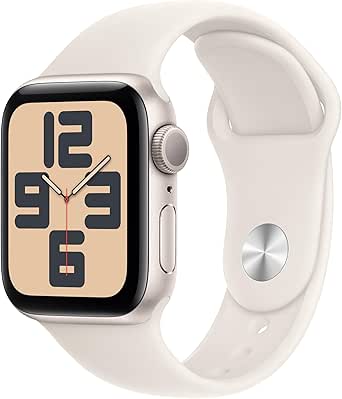
Apple Watch SE (2nd Generation) GPS 40mm Smartwatch with Starlight Aluminum Case and Starlight Sport Band (S/M)

Bose Smart Ultra Dolby Atmos Soundbar with Voice Control, HDMI eARC, Black

Sony WH-1000XM5 Wireless Noise-Canceling Over-Ear Headphones, Black, International Version
As an affiliate, we earn on qualifying purchases.
From 1986 Back-Propagation to Today
The central training principle predates current workplace AI. In a 1986 paper, Rumelhart, Hinton and Williams described repeatedly adjusting network connections to reduce the difference between actual and desired outputs. In plain terms, the network makes a prediction, measures how wrong it was and adjusts its weights. The article presents this as the basic idea behind modern training, while the models and applications built around it have developed over time.
“Deep” refers to the number of layers through which information passes. The cited textbook by Ian Goodfellow, Yoshua Bengio and Aaron Courville describes a hierarchy in which simple concepts can be combined into more complex ones. For an image, early layers may respond to edges, with later layers combining features into object parts and a final output identifying the object. These stages are learned during training rather than manually assigned by a programmer.
The source also cautions against treating scale as a shortcut to quality. It compares DeepMind’s Chinchilla, with 70 billion parameters trained on 1.4 trillion tokens, with Gopher, which had 280 billion parameters trained on 300 billion tokens; Chinchilla performed better in the comparison described. This example supports a narrower point: parameter count by itself does not determine a model’s results. It does not establish that one model will be better for every use case.
““understand the world in terms of a hierarchy of concepts, with each concept defined through its relation to simpler concepts.””
— Ian Goodfellow, Yoshua Bengio and Aaron Courville, in Deep Learning, as quoted by ThorstenMeyerAI.com
Limits the Training Data Cannot Resolve
The explainer describes general properties of deep learning, not the performance of a named workplace product. It provides no controlled comparison of AI tools used for customer service, image processing or other business tasks, and no figures for their accuracy, reliability, cost or productivity effects. The historical ImageNet and model-size examples should not be read as direct evidence about the quality of a particular tool today.
It is also unclear how much human oversight is needed for any specific use. That depends on the task, the consequences of an error and the system’s performance on relevant examples. The source identifies data gaps and differences between training and real-world conditions as possible reasons for errors, but does not quantify their frequency across industries.
Questions for Workplace Deployments
For organisations using AI, the next practical step is to test a system on examples that reflect the actual work it will handle, including unusual cases and inputs that differ from its training examples. Teams should check outputs rather than assume that a model’s fluency or scale proves its accuracy. Where mistakes could affect customers or business decisions, review procedures should match the risk of the task.
The source offers a conceptual explanation rather than announcing a new product, study or policy milestone. It does not identify a forthcoming event or provide a deployment timetable. The central open question for any workplace use is therefore specific: how reliably does the chosen model perform on the organisation’s own tasks, and what checks are needed when it does not?
Key Questions
What does deep learning mean?
Deep learning uses neural networks with multiple layers. Those layers learn patterns from examples, with simpler features feeding into more complex representations.
How does a neural network learn?
During training, a network makes predictions and measures how far they are from expected answers. Back-propagation calculates how weights contribute to the error, and gradient descent adjusts them to reduce it over repeated examples.
Do AI models keep learning while people use them?
In the process described by the source, training sets the weights and inference applies the trained model to new inputs. The weights do not change during ordinary use.
Does a larger AI model perform better?
Not necessarily. The source’s comparison of Chinchilla and Gopher shows that a model with fewer parameters performed better in the cited comparison. That example does not establish which model is best for every task.
Why can workplace AI make mistakes?
Models may reflect gaps in their training data, guess when uncertain or perform poorly when real-world inputs differ from what they learned. The source does not quantify how often these problems occur in specific workplace tools.
Source: ThorstenMeyerAI.com