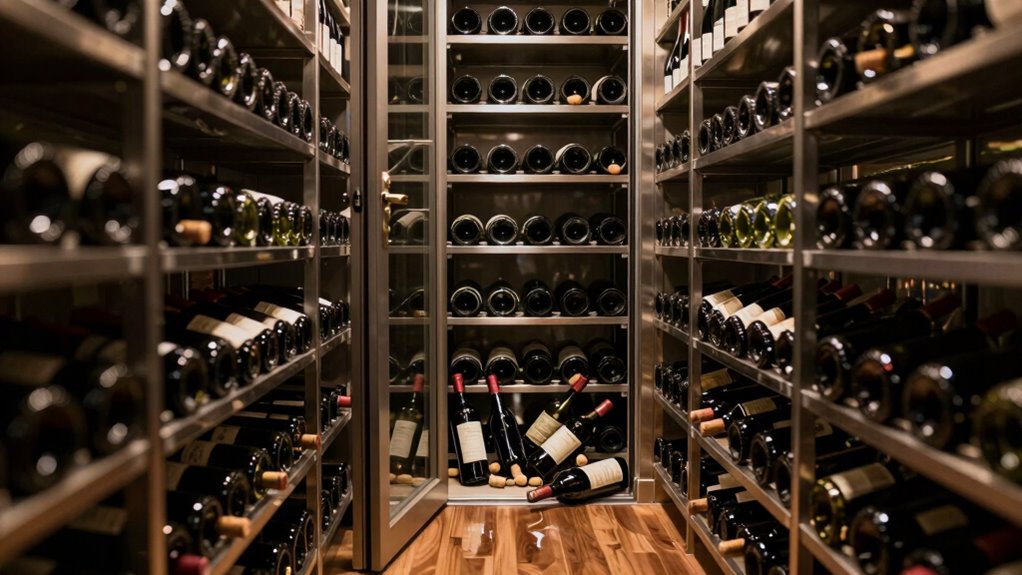

Most wine storage mistakes happen when you open the door too often, disrupting a stable environment. Frequent openings expose bottles to fluctuating air and humidity, which can damage corks and accelerate spoilage. Even small temperature swings caused by door swings can harm wine quality over time. Keeping door opening to a minimum helps maintain consistent conditions that protect your wine. If you want to learn how simple adjustments can improve your storage, keep exploring the details below.

Get the latest gadgets delivered free — and shop member deals
- Fast, free delivery on millions of items
- Access to Prime Big Deal Days deals on October 6–7
- Prime Video, Amazon Music and more included
Key Takeaways
- Frequent door openings cause environmental fluctuations that disrupt stable wine storage conditions.
- Door opening impacts humidity and temperature, accelerating cork deterioration and spoilage risks.
- Minimizing door openings helps maintain consistent temperature and humidity levels crucial for wine aging.
- Environmental disturbances from door use can lead to oxygen ingress and premature oxidation.
- Proper storage practices limit door access to preserve cork integrity and overall wine quality.
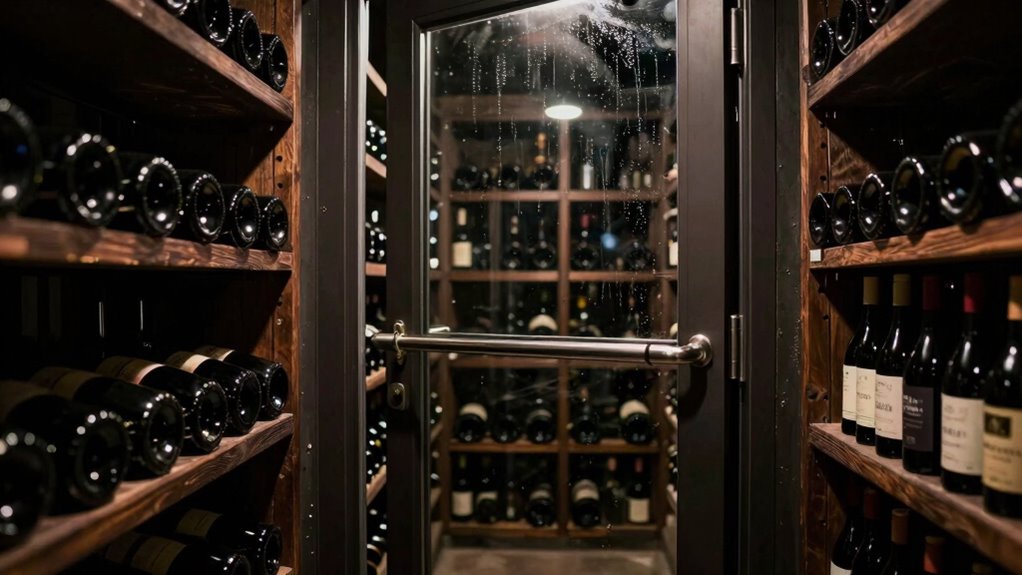
Storing wine properly is essential to preserving its flavor and quality, yet many people unknowingly make mistakes that can ruin their bottles. One common mistake isn’t just about temperature—it’s about how often you open the door of your wine storage. Every time you crack open the wine fridge or wine cellar door, you expose the bottles to fluctuating air and humidity levels. These sudden changes can accelerate the deterioration of cork integrity, which is pivotal for bottle aging. If the cork dries out or becomes compromised, oxygen can seep in, causing the wine to oxidize prematurely and lose its delicate flavors. It’s not just about keeping the temperature steady; it’s about maintaining a stable environment by minimizing unnecessary door openings. Additionally, frequent door openings can introduce micro-fluctuations in temperature and humidity that are subtle but detrimental over time. Many believe that temperature is the only factor in proper wine storage, but the reality is that frequent door openings are just as damaging. When you open the door, warm air rushes in, disrupting the controlled environment. This causes temperature swings that can interfere with the wine’s aging process, leading to off-flavors and spoilage. Even if your storage area is well-regulated, excessive door openings create micro-fluctuations that can accelerate cork deterioration. Over time, this impacts bottle aging considerably because wine needs a consistent environment to develop its full complexity. If the cork loses its seal, oxygen sneaks in, and the wine begins to age prematurely or spoil altogether. Ensuring air quality within your storage space is also crucial, as it can influence cork condition and overall wine preservation. Proper ventilation can help reduce the buildup of mold or musty odors that might otherwise affect your wine. Furthermore, incorporating proper storage conditions can help mitigate the effects of unavoidable door openings by providing a buffer against environmental changes. To avoid these mistakes, try to limit opening your wine storage as much as possible. When you do open it, do so quickly and efficiently, so the internal environment remains stable. If your storage setup allows, consider installing a door alarm or a system that minimizes temperature fluctuations during access. It’s also wise to store wines that you plan to drink sooner near the front for easy access, reducing the need for repeated openings. Properly maintaining cork integrity is essential, so keep the storage environment humid enough—around 60-70%—to prevent corks from drying out, especially during frequent access. Remember that humidity control plays a crucial role in preserving corks and overall wine quality during storage. By paying attention to these details, you can significantly extend the life and enjoyment of your wine collection.
As an affiliate, we earn on qualifying purchases.
Frequently Asked Questions
How Often Should I Open My Wine Storage Door?
You should open your wine storage door only when you’re planning a wine tasting or need to access specific bottles. Frequent door openings can disrupt temperature stability and affect storage organization, risking wine quality. Keep your storage organized so you minimize unnecessary access. When you do open it, do so quickly and purposefully. This helps maintain the ideal environment, preserving your wine’s flavor and ensuring your storage remains in top condition.
Does Door Material Affect Wine Preservation?
Yes, door material affects wine preservation, acting like a shield against temperature swings. You want a door with good insulation that keeps the cool air in and the warm air out, much like a fortress protecting your treasures. Durable materials ensure your wine stays steady, avoiding rapid temperature changes that can spoil its flavor. Investing in a sturdy, well-insulated door guarantees a consistent environment, preserving your wine’s quality over time.
Should I Use a Lock on My Wine Cellar Door?
Yes, you should consider lock installation for your wine cellar door to improve door security. Adding a lock helps prevent unauthorized access and keeps your valuable wine collection safe. It also discourages accidental openings that could disrupt the temperature and humidity levels. By choosing a sturdy lock, you guarantee your cellar remains secure, protecting your wine from theft or mishandling. Lock installation is a simple step to enhance your wine storage safety.
Can Frequent Door Opening Cause Wine to Spoil?
Yes, frequent door openings can cause your wine to spoil by disrupting storage stability. Each time you open the door, temperature and humidity fluctuate, which can negatively impact wine quality over time. These changes accelerate aging and potentially spoil your wine faster. To maintain ideal wine quality, try to limit door openings and keep your cellar at a consistent temperature, ensuring your wine remains in the best possible condition.
What’s the Best Way to Minimize Door Opening Frequency?
Think of your wine storage like a delicate dance, where every move counts. To minimize door openings, set a consistent wine temperature and maintain humidity control so you don’t need to check or adjust often. Keep the door closed as much as possible, like sealing a treasure chest, preserving the environment inside. Use a wine cooler with a digital display for quick checks, reducing unnecessary openings and protecting your collection.
wine storage temperature controller
As an affiliate, we earn on qualifying purchases.
As an affiliate, we earn on qualifying purchases.
Conclusion
Remember, the biggest mistake isn’t just temperature swings, but opening your wine door too often. It’s tempting to check on your bottles, but each door opening introduces airflow and temperature fluctuations that can spoil your wine. Think of your wine as a delicate treasure—you wouldn’t keep it in a constantly changing environment. So, resist the urge to peek frequently. Trust the storage conditions you’ve set, and your wine will thank you with perfect taste and aroma when you finally uncork it.
As an affiliate, we earn on qualifying purchases.
As an affiliate, we earn on qualifying purchases.
Fall Picks
fall essentials
As an affiliate, we earn on qualifying purchases.