Understanding treadmill motor “HP” can be tricky because higher horsepower doesn’t always mean better performance or durability. It measures the motor’s size and power output, but typically, continuous horsepower is more relevant for smooth, reliable use, while peak horsepower shows temporary maximum power. Matching the horsepower to your fitness goals is key. If you’d like to learn how to choose the right motor for your needs, keep exploring this guide.
Key Takeaways
- “Horsepower” (HP) indicates the motor’s size and power, not necessarily its durability or quality.
- Continuous HP reflects sustained, reliable performance, while peak HP shows short-term maximum power.
- Higher HP doesn’t always mean better; matching motor specs to your workout needs is crucial.
- Motor efficiency and build quality are more important for durability than just HP ratings.
- Many misunderstand HP as a performance indicator, but proper context clarifies its real significance.
What Does Treadmill Motor “HP” Really Mean?
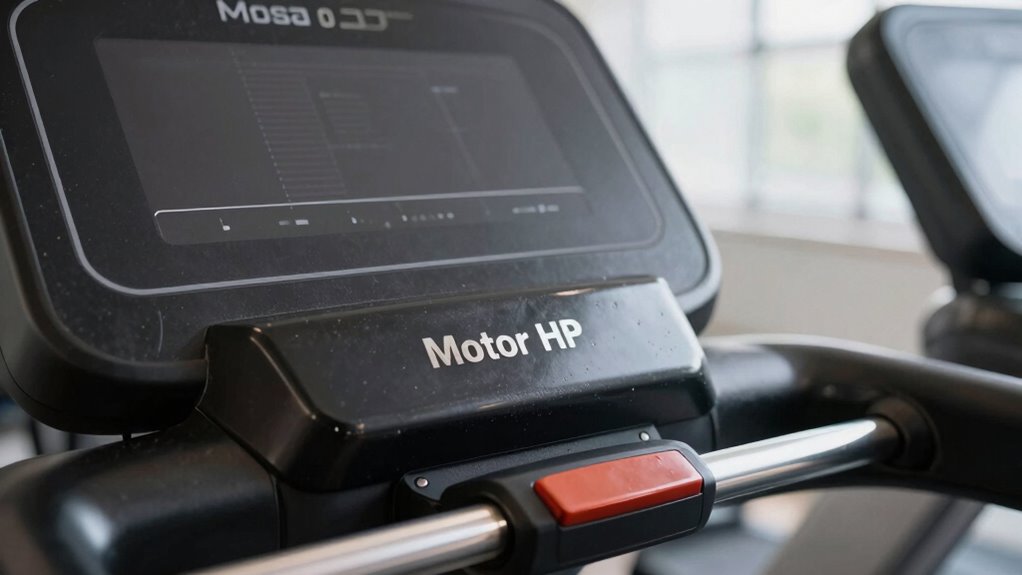
Have you ever wondered what the “HP” in treadmill motors actually stands for? It’s a measure of the motor’s size and power rating, giving you an idea of its capability. While horsepower might seem straightforward, it’s not just about raw strength; it reflects how much work the motor can do over time. A higher HP usually indicates a larger motor size and greater power output, meaning your treadmill can handle more intensive workouts or heavier users. Keep in mind, though, that a more powerful motor isn’t always necessary for casual walking. Understanding motor specifications helps you choose a treadmill that matches your fitness level and workout needs, ensuring you get the right balance of motor size and performance.
How Is Treadmill Motor Horsepower Measured and Rated?

Ever wonder how treadmill motors are rated for power? It’s based on a combination of factors, primarily how the motor’s horsepower is measured during testing. Manufacturers evaluate the motor’s actual output under specific conditions, considering treadmill design and motor efficiency. This rating indicates the motor’s ability to sustain a certain workload. Here’s what influences the rating:
- Testing conditions: How the motor performs under standardized loads.
- Motor efficiency: Higher efficiency means more power output for less energy.
- Design factors: Treadmill construction impacts how horsepower translates into real-world performance.
Understanding these elements helps you interpret horsepower ratings correctly and choose a treadmill suited to your workout needs. Ratings reflect real capabilities, not just theoretical power.
Do You Need a High-Horsepower Treadmill? Here’s How to Decide
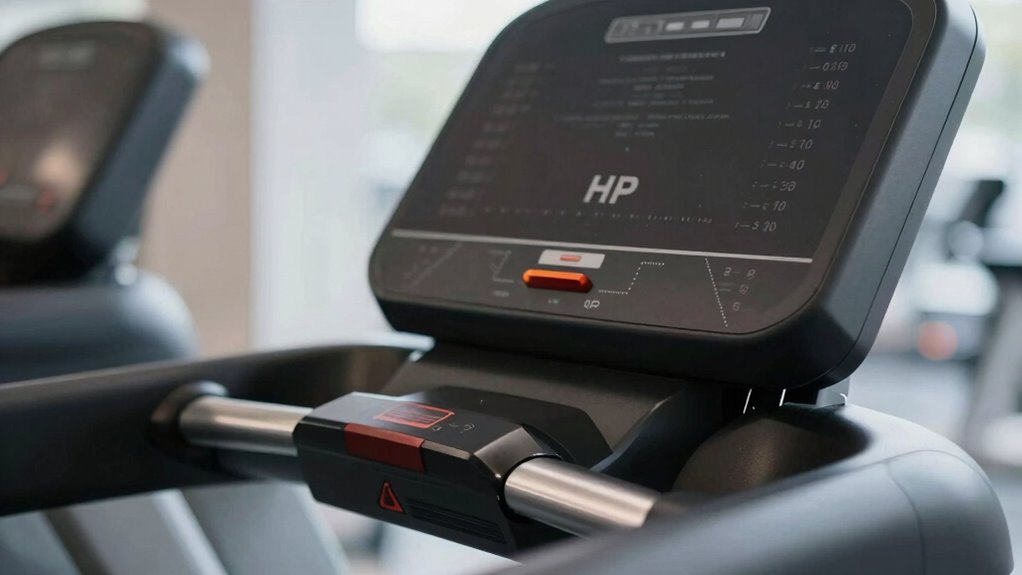
Determining whether you need a high-horsepower treadmill depends on your workout intensity and goals. If you plan to run at higher speeds or incorporate steep incline levels regularly, a more robust motor can provide stability and durability. For casual walkers or those using lower speed settings and gentle inclines, a less powerful motor typically suffices. Consider how often you’ll use the treadmill and the types of workouts you’ll do. If you aim for intense runs or training sessions that push your limits, investing in a higher horsepower model makes sense. However, if your workouts are light or moderate, a treadmill with standard horsepower should meet your needs without overkill. Match your motor power to your typical workout routines for optimal performance and longevity. Additionally, selecting a treadmill with an appropriate motor horsepower can help prevent premature wear and enhance safety during use. Understanding precise motor specifications can also guide your decision to ensure compatibility with your fitness goals. Knowing your treadmill’s motor capacity can ensure you select a machine that will last and perform reliably over time.
What’s the Difference Between Continuous and Peak Horsepower?

Understanding the difference between continuous and peak horsepower is essential when choosing a treadmill. Continuous horsepower (CHP) indicates the motor’s sustained power output, while peak horsepower (PHP) shows the maximum power momentarily available. This distinction affects how well the motor handles speed fluctuation during workouts and influences motor noise levels.
- Continuous horsepower relates to steady, reliable performance without overworking the motor
- Peak horsepower reveals the motor’s maximum capacity during brief, intense efforts
- Relying solely on peak HP can lead to misunderstandings about durability, especially under sustained use
Choosing a treadmill with appropriate continuous horsepower ensures smoother operation, less motor noise, and consistent performance. Recognizing the difference helps you select a machine that matches your workout intensity without overestimating its capabilities.
Why Higher HP Isn’t Always Better for Your Treadmill?
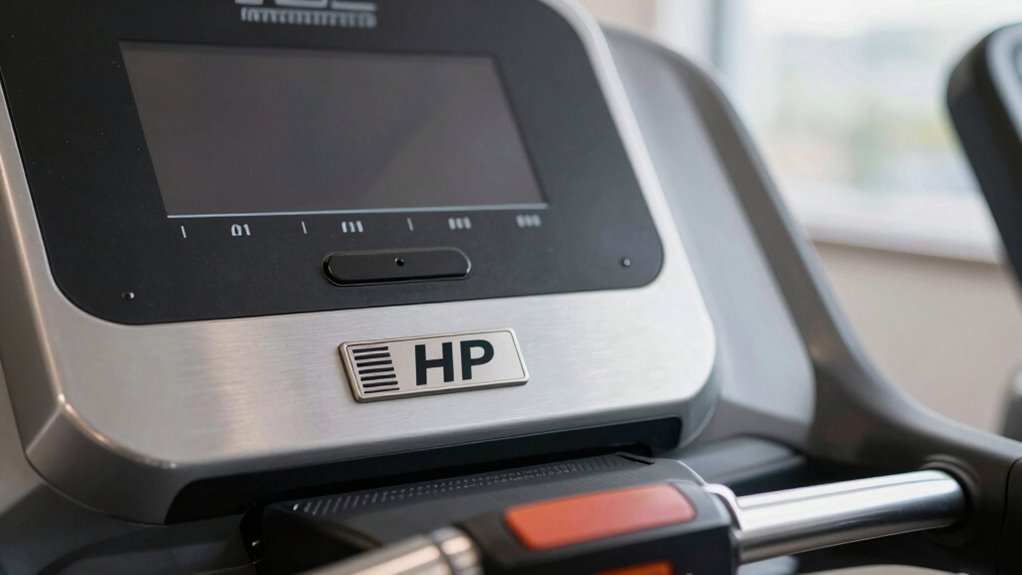
Having a higher horsepower motor might seem like a sign of better quality, but more isn’t always better for your treadmill’s performance or longevity. A more powerful motor can handle higher speed settings, but it doesn’t necessarily mean your machine runs more efficiently. In fact, larger motors often consume more power, reducing overall power efficiency. If you mainly walk or run at moderate speeds, a lower HP motor can do the job just fine without extra energy costs. Additionally, a higher HP motor might add unnecessary weight and complexity, potentially leading to quicker wear and tear. Proper motor sizing ensures your treadmill meets your needs without overburdening its components. Being aware of power consumption can also help you make more informed choices about your equipment’s long-term costs. Moreover, selecting an appropriately sized motor can prevent overheating issues that compromise durability. Additionally, understanding motor efficiency can help optimize your treadmill’s performance and energy use. Furthermore, choosing the right horsepower can contribute to better machine durability and longevity over time.
How Motor Horsepower Affects Treadmill Performance and Longevity

The horsepower of a treadmill motor directly influences how well it performs during your workouts and how long it lasts over time. Higher horsepower often means better motor efficiency, allowing smoother operation under heavier loads. It can also impact power noise, with more powerful motors sometimes running quieter due to better design. However, more horsepower doesn’t automatically guarantee longer lifespan; proper maintenance and quality components matter. Additionally, understanding small appliance efficiency can help you make more informed choices about motor specifications and energy use. Proper motor cooling is also essential to prevent overheating and ensure consistent performance, especially during prolonged use. Ensuring the motor has adequate ventilation systems can further prolong its operational life and maintain optimal performance. Moreover, selecting a motor with appropriate power ratings helps balance performance and durability to meet your specific workout needs. Being aware of motor load capacity can also assist in choosing a treadmill that aligns with your exercise intensity and frequency.
Key Factors to Consider Beyond Horsepower When Choosing a Treadmill
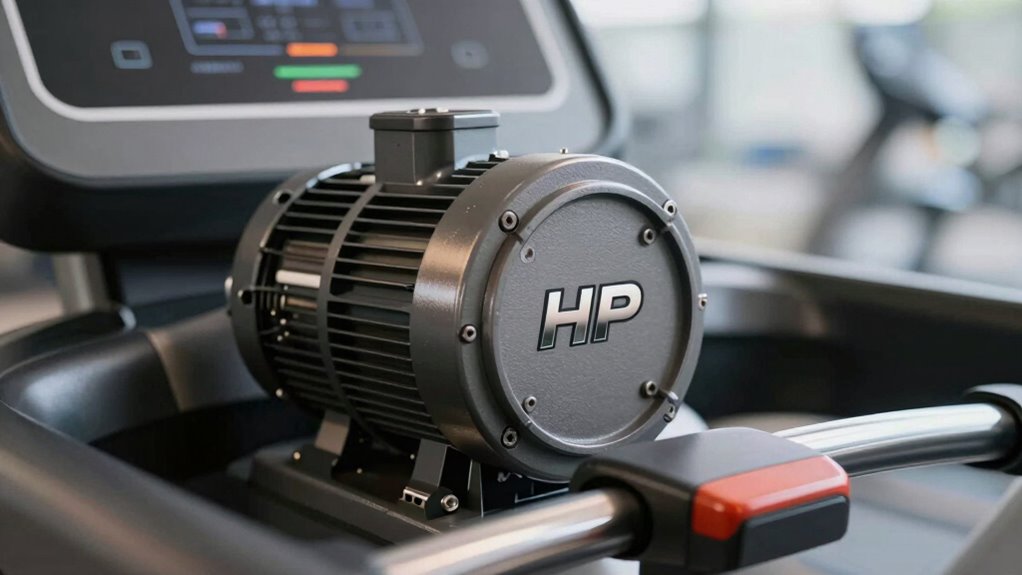
When selecting a treadmill, focusing solely on horsepower can be misleading; other key factors considerably impact your workout experience and the machine’s durability. One important aspect is cost comparison—higher-quality models with better features often come at a higher price, but they’re usually more reliable and last longer. Don’t overlook brand reputation, which indicates the manufacturer’s track record for quality, customer service, and durability. A reputable brand often offers better warranties and support, giving you peace of mind. Consider the treadmill’s build quality, cushioning, and control panel features as well. These factors can enhance your workout and ensure the machine withstands regular use. Additionally, understanding the importance of technological integration can help you select models with innovative features that improve user engagement and convenience. Proper filter maintenance in related equipment demonstrates the value of regular upkeep for longevity. Balancing your budget with these considerations helps you choose a treadmill that meets your needs without sacrificing longevity or performance. Recognizing product reviews and ratings can also provide valuable insights into the real-world performance and customer satisfaction of different models.
Common Myths About Treadmill Motor Power Debunked

Many people believe that higher motor power always means better durability, but that’s not necessarily true. You also need to contemplate how the motor performs under peak demands versus continuous use. Understanding these differences helps you choose a treadmill that truly meets your needs, rather than relying on myths. Additionally, being aware of AI ethics in technology can help consumers make more informed decisions about products that incorporate smart features.
Motor Power Versus Durability
Although higher motor horsepower might suggest a more durable treadmill, this isn’t always the case. Motor power alone doesn’t determine longevity. Instead, factors like motor efficiency and power consumption are vital. A more powerful motor may draw more energy, increasing power consumption and reducing overall efficiency, which can impact durability over time. Additionally, the comparative advantage of a motor’s design influences its ability to perform under sustained workloads. To understand durability better, consider these points: – Higher horsepower doesn’t guarantee longer lifespan if the motor isn’t built for continuous use. – Efficient motors maintain performance without overexertion, extending their life. – Poorly designed or underpowered motors may fail sooner despite high HP ratings. Ultimately, look beyond horsepower numbers. Focus on the motor’s build quality, efficiency, and how well it handles sustained workloads to gauge durability accurately.
Peak Power Versus Continuous
A common misconception is that a treadmill’s peak power rating indicates its real-world performance, but this isn’t entirely true. Peak power reflects the maximum output the motor can briefly achieve, often during sudden speed increases or intense workouts. However, during regular use, the motor depends on its continuous power rating, which is more relevant for steady speed variations. Relying solely on peak power can lead you to overestimate a treadmill’s capabilities. Additionally, higher peak power doesn’t always mean quieter operation; some motors may produce more motor noise during those short bursts of high power. When choosing a treadmill, focus on continuous horsepower for consistent performance and consider motor noise levels during speed changes to ensure a comfortable workout experience. Understanding motor ratings is key to making an informed decision when selecting equipment, especially since motor durability is often linked to continuous power output rather than peak figures.
How to Pick the Right Motor HP for Your Running Goals
Choosing the right motor horsepower (HP) depends on your running goals and how vigorously you plan to use your treadmill. To guarantee ideal motor efficiency and manage energy consumption, select a motor that matches your workout intensity. If you’re a casual walker or light jogger, a lower HP (around 2.0-2.5) should suffice. For regular running or intense training, consider a motor in the 3.0-4.0 HP range for better durability and performance. Keep in mind that higher HP motors often consume more energy but can handle longer, more vigorous sessions efficiently. Here’s a quick guide:
- Casual walking: 2.0-2.5 HP
- Moderate jogging: 2.5-3.0 HP
- Regular running or intense training: 3.0+ HP
Additionally, selecting a vetted motor ensures you get a reliable and high-quality component that will last longer. Understanding motor specifications can help you make an informed decision tailored to your fitness routine.
Frequently Asked Questions
How Does Motor HP Influence Treadmill Noise Levels?
Higher motor horsepower can increase treadmill noise and vibration levels because more powerful motors often run at higher speeds and produce more energy, which translates into louder operation. You might notice more motor noise during intense workouts, and vibration levels could also rise, affecting stability and comfort. To keep noise down, choose a treadmill with a suitable motor HP for your usage, and consider models designed for quieter, smoother operation.
Can a Higher HP Treadmill Handle Heavier Users Better?
Think of higher horsepower as a sturdy engine ready for the weight of your steps. Yes, a more powerful motor manages heavier users better, reducing strain during treadmill maintenance and extending the motor lifespan. It keeps the rhythm steady, preventing overheating or burnout. So, if you’re regularly pushing your limits, opting for a higher HP treadmill guarantees durability, smooth operation, and longer-lasting performance, supporting your fitness journey with resilience.
Is Motor HP the Main Factor in Treadmill Safety?
Motor horsepower isn’t the main factor in treadmill safety; instead, your focus should be on treadmill design and user comfort. A well-designed treadmill includes safety features like emergency stops and sturdy frames, which protect you during use. While a higher HP can support heavier users and intense workouts, safety depends more on proper construction, safety features, and your correct usage. Always prioritize these aspects for a safer, more comfortable workout experience.
How Does Motor HP Impact Treadmill Energy Efficiency?
Think of your treadmill’s motor HP as its heart’s stamina—higher HP can mean more power but also more energy consumption. A robust motor might boost performance, but it can drain energy faster and impact energy efficiency. Over time, this also affects the motor’s lifespan, as a more powerful motor works harder and wears out quicker. Choosing the right HP balances power needs with energy savings and longevity.
Are Higher HP Motors More Prone to Mechanical Failure?
Higher HP motors aren’t necessarily more prone to mechanical failure if you maintain them properly. They tend to have a longer motor lifespan and can handle more intense workouts. However, they may require more frequent maintenance, especially if used heavily or improperly. Regular checks and timely servicing help prevent failures. So, with proper care, a powerful motor can last longer and stay reliable, reducing your chances of breakdowns.
Conclusion
So, next time you see a treadmill boasting a massive horsepower, remember—bigger isn’t always better. It’s easy to get caught up in the hype, but your running goals and actual needs matter more. Don’t let flashy specs fool you; sometimes, a modest motor with the right features will serve you better than a powerhouse that’s just for show. After all, who needs peak horsepower when you’re just trying to get moving?