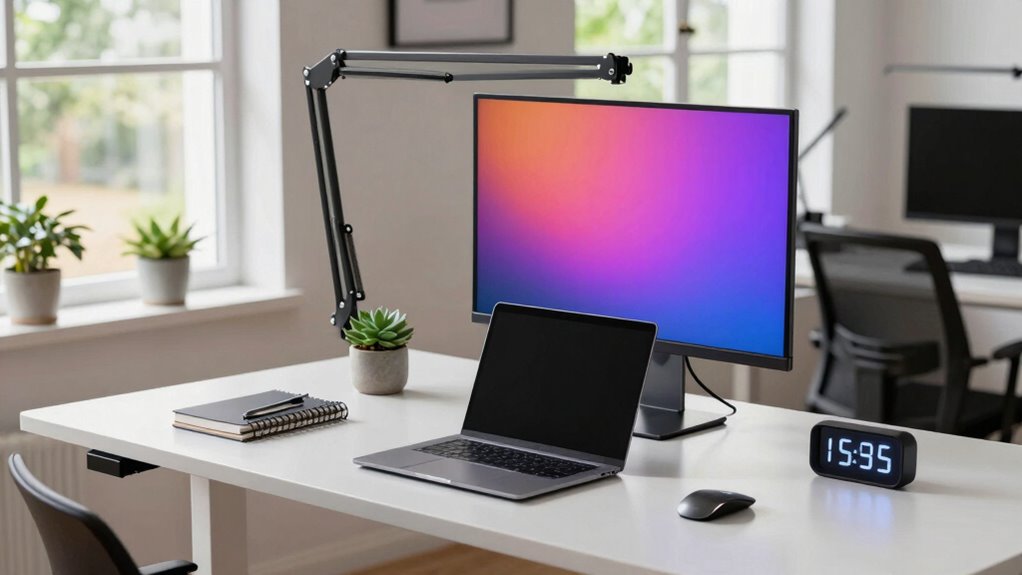
To optimize your standing desk time, set clear intervals like 20-30 minutes of standing followed by sitting or movement breaks. Use timers or reminders to prompt position changes and incorporate short stretches or walks during breaks. Adjust your workspace for comfort with ergonomic accessories, and track your progress to stay motivated. Creating a simple routine helps prevent fatigue and boosts productivity. Keep going, and you’ll discover how a balanced schedule can make all the difference.
Key Takeaways
- Alternate between sitting and standing every 20-30 minutes to prevent fatigue and promote comfort.
- Use timers or reminders to ensure consistent position changes throughout the workday.
- Incorporate movement breaks like stretching or walking during standing periods for better circulation.
- Optimize your workspace with ergonomic accessories to support proper posture in both sitting and standing.
- Track your standing and sitting durations weekly to adjust your schedule and build sustainable habits.
Why Standing All Day Won’t Automatically Boost Your Productivity
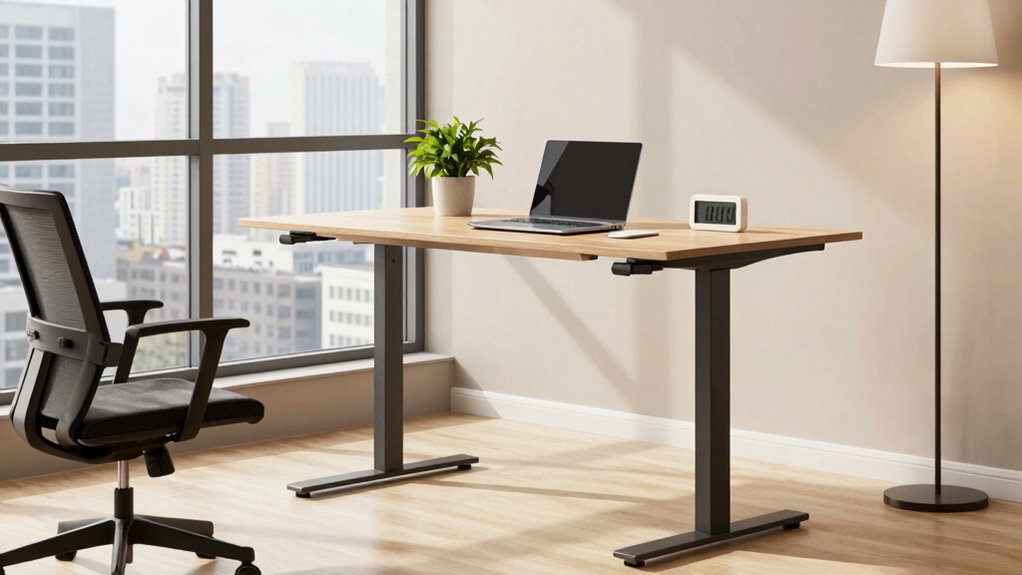
Many people assume that standing all day will automatically make them more productive, but that’s not necessarily true. Relying solely on a standing desk without proper ergonomic accessories can lead to discomfort and fatigue, undermining your efficiency. Standing desk myths often suggest that standing is a magic solution for better focus and energy, but the reality is more nuanced. Prolonged standing can cause strain on your legs, back, and feet if you don’t incorporate movement or ergonomic support. Instead of just standing, you need a balanced approach that includes adjustable desks and anti-fatigue mats. Recognizing these misconceptions helps you avoid wasted time and potential health issues, ensuring that your workspace truly supports productivity rather than hindering it. Ergonomic support is essential for maintaining comfort and preventing injury during long periods of standing. Incorporating proper ergonomic accessories can significantly improve comfort and reduce the risk of musculoskeletal issues. Additionally, integrating movement strategies into your routine is crucial to prevent strain and maintain energy levels throughout the day. Being aware of standing duration and its impact on health can help you develop more effective work habits. Understanding contrast ratio and its role in image quality can also help you optimize your home workspace for both comfort and productivity, especially if your work involves visual tasks or multimedia use.
How to Balance Sitting, Standing, and Moving During Your Workday

To maintain ideal productivity and reduce physical strain, it’s essential to balance sitting, standing, and movement throughout your workday. Use ergonomic accessories like adjustable desks, supportive mats, and monitor stands to make changes easier and promote good posture adjustments. Alternate between sitting and standing every 30 to 60 minutes to prevent stiffness and fatigue. Incorporate short movement breaks—stretch, walk, or do light exercises—to boost circulation and focus. Remember, maintaining proper posture during both sitting and standing helps avoid discomfort. Keep your workspace ergonomically optimized and listen to your body’s signals. Additionally, integrating smart appliances designed for ergonomic support can help monitor and encourage proper positioning. Being mindful of ergonomic principles ensures you create a healthier, more comfortable work environment. Incorporating adjustable furniture can further enhance your ability to switch positions seamlessly. Regularly reviewing and adjusting your setup based on personal wellness needs can optimize comfort and prevent strain. Paying attention to proper ergonomic setup can significantly reduce the risk of discomfort and long-term injury. By intentionally shifting positions and staying active, you’ll enhance comfort, reduce strain, and sustain productivity all day long.
Designing Your Perfect Standing Desk Routine
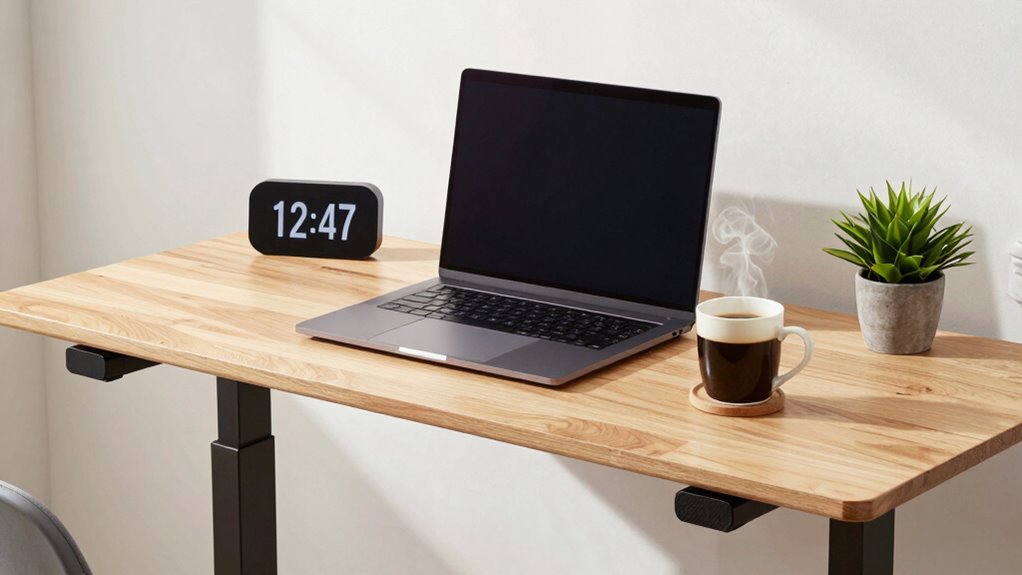
To make the most of your standing desk, set clear intervals to switch between sitting and standing. Remember to include movement breaks to keep your muscles active and reduce fatigue. Sound vibrations are believed to enhance cellular regeneration and overall health, so incorporating gentle movements or stretches during these breaks can further promote well-being. Regularly adjusting your standing desk position can also prevent strain and improve comfort. Incorporating ergonomic principles into your routine ensures proper posture and minimizes the risk of injury. Establishing these habits promotes a more mindful decision-making process about your routine, leading to better health and productivity. By establishing these habits, you’ll create a sustainable routine that boosts your comfort and productivity. Incorporating regular hydration can also enhance overall well-being during your work sessions.
Establish Consistent Intervals
Establishing consistent intervals for standing and sitting can considerably boost your productivity and comfort. Set specific timeframes, like standing for 30 minutes then sitting for 30 minutes, and stick to them daily. Use ergonomic accessories such as adjustable desks or anti-fatigue mats to support proper posture during your standing periods. This helps with posture correction and reduces fatigue. Use a timer or reminder app to guarantee you switch smoothly between sitting and standing, preventing you from staying in one position too long. Proper posture during your standing periods is essential for avoiding strain. Consistency is key; your body adapts better when you follow a predictable routine. By maintaining these intervals, you’ll minimize discomfort and maximize focus, making your standing desk work for you rather than against you.
Incorporate Movement Breaks
Incorporating movement breaks into your standing desk routine is essential for maintaining energy and preventing stiffness. Regular movement boosts circulation and helps you stay alert. Set alarms or timers to remind yourself to stretch, walk, or do quick exercises. Use ergonomic accessories like a footrest or anti-fatigue mat to make movement more comfortable. Keep healthy snacks nearby to refuel during breaks, avoiding unnecessary snacking. Incorporate short activities such as lunges, shoulder rolls, or simple stretches. Here’s a quick guide:
| Break Type | Duration | Activity Tips |
|---|---|---|
| Stretching | 2 mins | Focus on neck, back, legs |
| Walking | 5 mins | Walk around your space |
| Strength | 3 mins | Bodyweight exercises |
| Hydration | Throughout | Drink water regularly |
Additionally, proper workspace setup can contribute to better movement integration and overall comfort during your standing desk sessions. Incorporating ergonomic principles from workplace ergonomics can further enhance your comfort and reduce the risk of strain. Being mindful of movement habits throughout the day can help you stay energized and healthy. This routine keeps your body active and your mind sharp.
Setting Up Your Workspace for Comfort and Efficiency
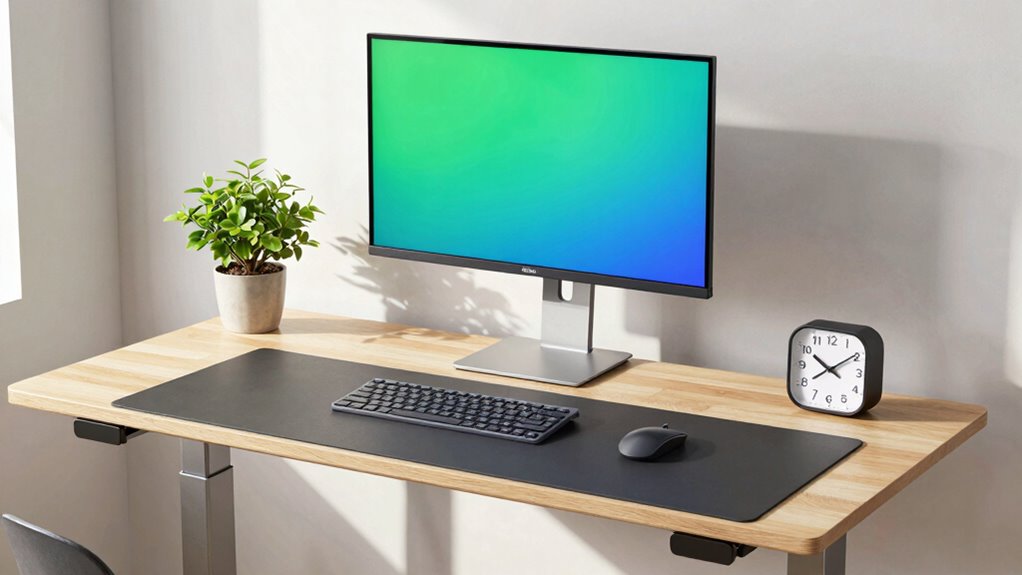
Creating an ergonomic workspace is essential for staying comfortable and productive during your standing desk sessions. Start by choosing ergonomic accessories like anti-fatigue mats, adjustable monitor stands, and supportive footrests to reduce strain. Make posture adjustments so your monitor is at eye level, your elbows are close to a 90-degree angle, and your wrists are straight. Keep your keyboard and mouse within easy reach to prevent unnecessary stretching or leaning. Proper setup minimizes discomfort and helps you maintain good posture throughout the day. Take the time to arrange your workspace thoughtfully, ensuring everything you need is accessible and at the right height. An ergonomic setup not only boosts comfort but also supports sustained focus and energy during your standing periods. Additionally, understanding pool hydraulics can help you optimize water flow and overall system efficiency in your workspace setup if needed. Being aware of ergonomic principles can further help you customize your workspace to suit your specific needs and prevent long-term strain. Incorporating adjustable components allows for easy modifications as your comfort needs evolve over time. Considering load calculations can also help ensure your setup is balanced and safe, especially when integrating heavier equipment or accessories. Furthermore, integrating smart automation can help you remind yourself to adjust your posture or take breaks for better health.
How to Create a Simple, Effective Standing Desk Schedule
Creating a simple standing desk schedule starts with setting clear time goals so you know when to stand and sit. Use reminders to stay on track and prevent slipping into prolonged sitting. Track your progress to see how well you’re sticking to your plan and make adjustments as needed. Incorporating schedule optimization techniques from truck bed organization can help reinforce consistent habits. Additionally, paying attention to ergonomics ensures your workspace supports your body during transitions between sitting and standing.
Set Clear Time Goals
Setting clear time goals is essential for making the most of your standing desk. Without them, you might spend too long standing or sitting, leading to discomfort or fatigue. To stay on track, consider these steps:
- Decide how long you’ll stand before taking a break—start with 20-minute intervals.
- Schedule regular posture adjustments to prevent strain.
- Include short breaks for ergonomic accessories like anti-fatigue mats or footrests.
- Set goals for shifting smoothly between sitting and standing, ensuring you’re not overdoing either.
Use Reminders Effectively
To stay consistent with your standing desk routine, using reminders effectively can make all the difference. Focus on reminder timing by setting alerts at regular intervals that suit your schedule, such as every 30 or 60 minutes. This helps prevent prolonged sitting and keeps you on track. Customize your alerts to stand out—use distinct sounds or vibrations—so you notice them immediately. Effective alert customization guarantees you won’t ignore or dismiss reminders, reinforcing your standing habits. Keep your reminders simple and consistent to build a reliable routine. By strategically timing and personalizing your alerts, you’ll reinforce your standing breaks without feeling overwhelmed. This approach makes maintaining your standing desk schedule easier and more sustainable over time.
Track Your Progress
Tracking your progress is essential for sticking to a standing desk routine. It helps you see how well you’re achieving your goal setting and keeps you motivated. To make progress tracking simple, consider these steps:
- Record daily standing and sitting times to monitor your consistency.
- Set weekly goals, such as increasing standing periods by 10 minutes.
- Use a journal or app to note any challenges or improvements.
- Review your data weekly to adjust your schedule as needed.
Tips to Stay Energized and Focused While Standing
Staying energized and focused while standing at your desk requires intentional strategies. Start by using ergonomic accessories like supportive mats and adjustable monitor stands to promote good posture correction. These tools help reduce fatigue and discomfort, keeping you alert longer. Shift your weight regularly to prevent stiffness and encourage circulation. Break up long periods of standing with brief movements or stretches to maintain energy levels. Stay hydrated and incorporate quick, healthy snacks to avoid dips in focus. Pay attention to your posture, keeping your shoulders relaxed and your neck aligned. Remember, maintaining proper ergonomics isn’t just about comfort—it boosts your productivity and helps you stay sharp throughout the day. Small adjustments make a significant difference in sustaining your energy while standing.
Troubleshooting Common Standing Desk Challenges
Even with the best ergonomic setup, standing at a desk can present some common challenges that disrupt your focus and comfort. You might experience fatigue, poor posture, or aches that hinder productivity. To troubleshoot, consider these steps:
Even with an ergonomic setup, standing desks can cause fatigue, poor posture, and discomfort—small adjustments make a big difference.
- Use ergonomic accessories like anti-fatigue mats and supportive shoes to reduce strain.
- Adjust your monitor height to maintain a neutral neck position.
- Incorporate regular movement to prevent stiffness and promote circulation.
- Focus on posture correction by keeping your shoulders relaxed, chest open, and spine aligned.
Addressing these issues helps you stay comfortable and improves your standing desk experience. Remember, small adjustments can make a big difference in reducing discomfort and maintaining focus throughout your workday.
Building a Standing Desk Routine That Lasts
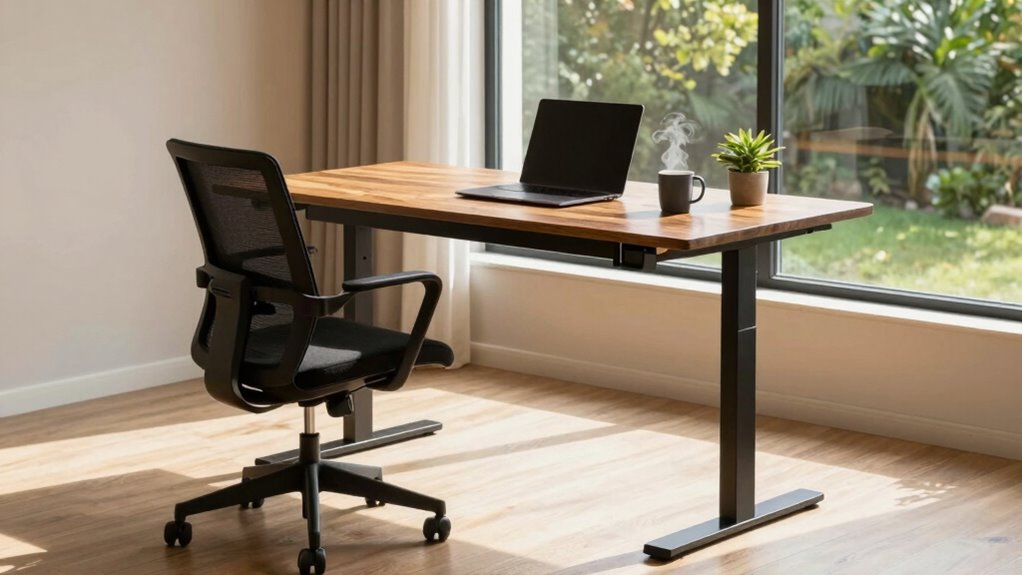
Creating a sustainable standing desk routine requires intentional planning and consistency. Start by making ergonomic adjustments to ensure your desk and monitor height support proper posture. This reduces strain and helps you stay comfortable longer. Develop a schedule that alternates between sitting and standing, gradually increasing standing periods to build endurance. Pay attention to posture awareness; keep your shoulders relaxed, your core engaged, and your feet flat on the floor. Set reminders to prompt you to switch positions, and track your progress to stay motivated. Establishing habits, like adjusting your desk at specific times, makes standing a natural part of your day. With deliberate planning and awareness of your body’s signals, your standing desk routine becomes sustainable and effective.
Frequently Asked Questions
How Long Should I Stand at My Desk Each Day?
You should aim to stand at your desk for about 2 to 4 hours daily, breaking it into intervals of 30 to 60 minutes. Use ergonomic accessories like anti-fatigue mats and monitor stands to support posture correction. This approach helps prevent strain and fatigue, keeping you comfortable and productive. Remember to switch between sitting and standing to maintain good posture and avoid discomfort throughout the day.
What Are Signs I Need to Sit Down More?
If you notice persistent back pain, neck strain, or fatigue, it’s time to sit down more. Pay attention to your sitting posture, ensuring your ergonomic chair supports your lower back and keeps your spine aligned. If you’re slouching or feeling discomfort, reduce standing time and switch to sitting. Listening to your body helps prevent strain and keeps you comfortable while maintaining productivity.
Can Standing All Day Harm My Health?
Standing all day can be like walking a tightrope—too much strain on your muscles and joints. It can harm your health if you don’t use ergonomic accessories or practice proper posture correction. To stay balanced, switch between sitting and standing, and take breaks often. This keeps your muscles engaged without overloading them, helping you avoid fatigue, joint pain, and long-term issues. Listen to your body and adjust accordingly.
What Footwear Is Best for Standing Desks?
You should choose ergonomic footwear with cushioned insoles to stay comfortable at your standing desk. These shoes provide support for your arches and help reduce fatigue, making it easier to stand longer without discomfort. Look for shoes with good arch support, shock absorption, and a non-slip sole. Avoid flats or unsupportive shoes, as they can cause pain over time. Proper footwear is key to maintaining comfort and health during your workday.
How Do I Stay Motivated to Stick With My Routine?
Think of your routine as a garden that needs regular watering. To stay motivated, set clear goals and use ergonomic accessories to make standing comfortable, turning it into a habit you enjoy. Incorporate motivational techniques like tracking progress or rewarding yourself. When your workspace feels good and your goals are in sight, you’ll naturally stay committed, making your routine a thriving, sustainable part of your day.
Conclusion
So, there you have it—ditch the myth that standing all day magically boosts productivity. Instead, embrace a balanced routine, stay comfy, and keep moving. Because nothing screams success like swapping endless standing for a little common sense. Remember, your desk isn’t a stage for a stand-off; it’s a tool to work smarter, not harder. Now, go conquer your day—preferably while sitting, standing, and maybe even dancing a little.