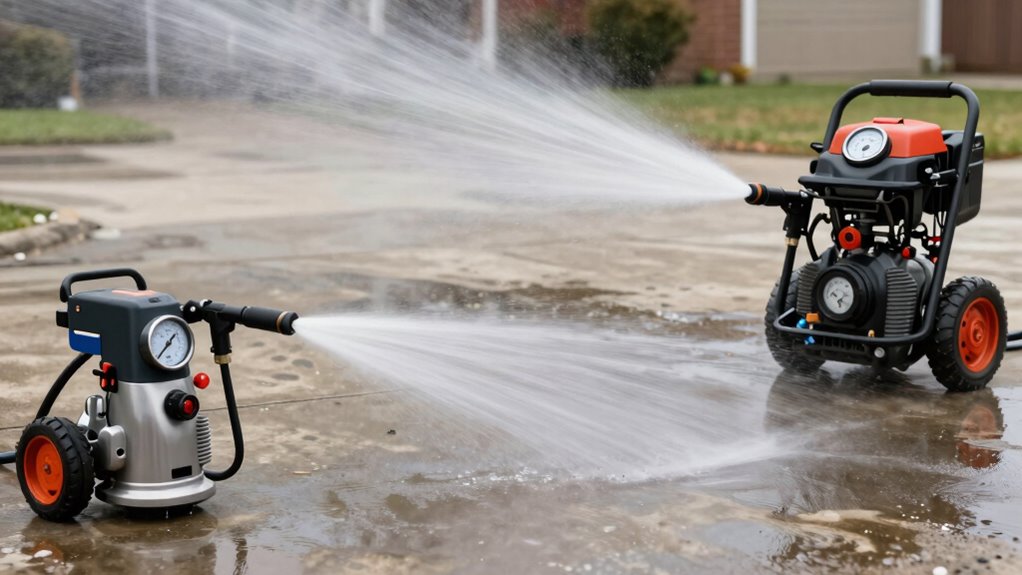

When comparing PSI and GPM on a pressure washer, neither works alone to deliver the best clean. PSI provides the force needed to remove stubborn grime, while GPM determines how quickly and efficiently water flows to rinse away dirt. For heavy-duty cleaning, focus on higher PSI; for faster, broader cleaning, higher GPM matters. To get the most out of your equipment, understanding how these work together is key—keep exploring to learn more.
Key Takeaways
- PSI delivers the cleaning force, ideal for tough stains; GPM determines how quickly surfaces are rinsed and debris are removed.
- High PSI is effective for stubborn grime, while high GPM speeds up cleaning large areas and rinsing.
- The best cleaning results depend on balancing PSI and GPM based on surface type and dirt level.
- Relying solely on PSI or GPM can cause surface damage or ineffective cleaning; proper matching is essential.
- Using appropriate nozzles and maintaining equipment maximizes the combined power of PSI and GPM.
What Do PSI and GPM Mean in Pressure Washers?
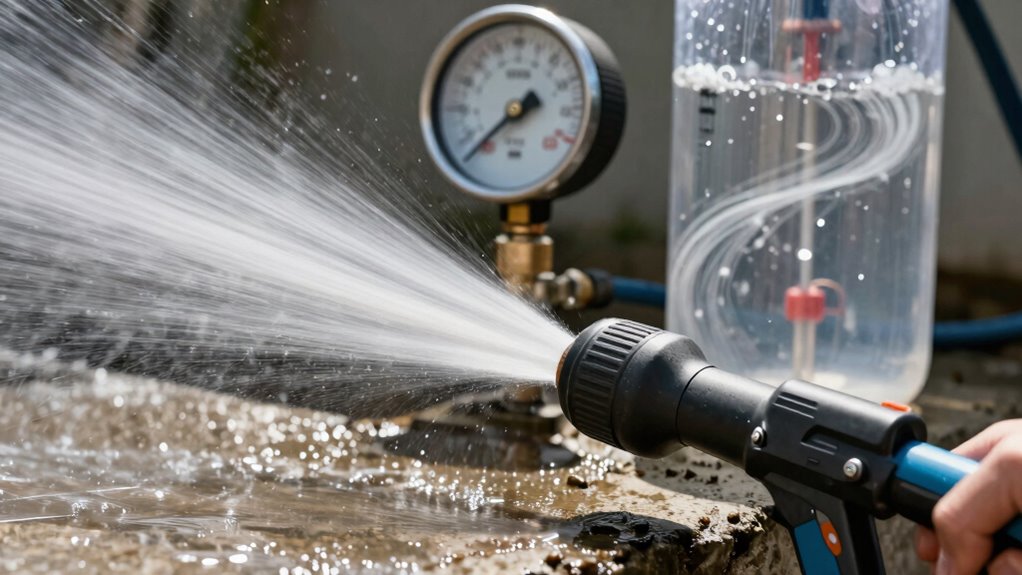
Have you ever wondered what PSI and GPM really mean when choosing a pressure washer? PSI, or pounds per square inch, measures the pressure of the water stream, affecting how hard it hits the surface. GPM, gallons per minute, indicates how much water flows through the system, impacting cleaning speed and efficiency. Your hose length can influence these factors, especially if it’s too long, which may reduce pressure or flow. Nozzle size also plays a role; a smaller nozzle increases pressure but reduces flow, while a larger one does the opposite. Understanding these elements helps you select the right pressure washer for your tasks, ensuring you get enough power without sacrificing ease of use or water efficiency. Additionally, pressure washer technology influences how effectively these factors work together to deliver optimal cleaning results. Recognizing pressure dynamics is essential for optimizing performance and achieving the best cleaning outcomes. Properly balancing PSI and GPM is crucial for cleaning efficiency and to prevent damage to surfaces. A good grasp of water flow principles can help you troubleshoot and customize your cleaning approach for different surfaces and dirt levels.
How Do PSI and GPM Impact Your Pressure Washer’s Cleaning Power?

Understanding how PSI and GPM work together is key to evaluating a pressure washer’s cleaning power. PSI determines the force of water, while GPM controls water flow. Both factors influence pressure consistency, affecting how well dirt and grime are removed. Higher PSI delivers stronger pressure, ideal for tough stains, but without sufficient GPM, the water may not flow steadily. Conversely, high GPM ensures a steady water flow, enhancing cleaning efficiency even at lower PSI. To visualize their impact:
| PSI | GPM | Effect on Cleaning Power |
|---|---|---|
| 1500 | 1.2 | Moderate pressure, good for light tasks |
| 3000 | 2.5 | Strong pressure, high water flow |
| 2000 | 1.8 | Balanced for general cleaning |
| 2500 | 2.0 | Good for stubborn stains |
| 4000 | 2.8 | Heavy-duty cleaning, high water flow |
Balancing both ensures consistent pressure and water flow for *ideal* cleaning. Understanding how these pressure washer specifications interact helps you select the right machine for your particular cleaning needs. Additionally, recognizing the performance factors of PSI and GPM can help you optimize your cleaning strategy for different surfaces and tasks.
When Should You Focus More on PSI or GPM?
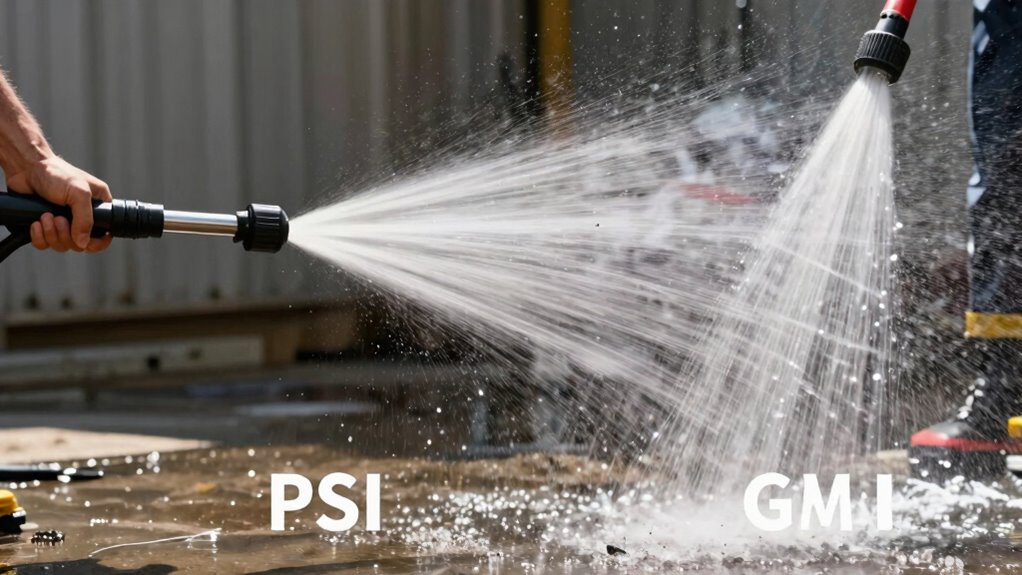
Your cleaning needs change depending on the task and surface. If you’re tackling stubborn dirt or tough surfaces, focusing on PSI is more important. For large, less resistant areas, GPM can help you finish faster without damaging the surface. Additionally, considering Free Floating features can optimize your cleaning efficiency by allowing adjustments based on specific tasks. Understanding the pressure and flow balance is essential for achieving optimal results and preventing damage. Being aware of pressure regulation can further help customize your settings to match different cleaning scenarios.
Task Type Consideration
Choosing whether to prioritize PSI or GPM depends largely on the specific cleaning task at hand. For tasks requiring detergent compatibility, like cleaning cars or patios, a higher GPM ensures more water flow, helping detergents work effectively. If you’re working on stubborn grime or heavily soiled surfaces, focusing on PSI provides the pressure needed to dislodge dirt efficiently. Noise levels also matter; higher PSI models tend to be louder, so consider your environment. For delicate surfaces or indoor cleaning, lower PSI with higher GPM can prevent damage while maintaining cleaning power. Additionally, understanding water pressure consistency can help you select a model that maintains steady performance during extended use. Recognizing the importance of pressure regulation ensures you can control and adapt your washer’s output for optimal results. Furthermore, being aware of water flow dynamics can assist in choosing the right pressure washer for specific cleaning tasks. When selecting a pressure washer, it’s also helpful to consider performance stability, as inconsistent pressure can affect cleaning efficiency. It’s also advisable to review warranty and safety considerations to ensure your equipment remains reliable and safe during operation. Ultimately, assess your task’s needs: for soap and gentle cleaning, emphasize GPM; for tough stains, focus on PSI. Matching your pressure washer’s specs to your task ensures ideal results.
Surface and Dirt Type
When tackling different surfaces and types of dirt, knowing whether to prioritize PSI or GPM can make a big difference in cleaning efficiency. For tough grime on concrete or brick, focus on pressure enhancement with higher PSI to maximize dirt removal. This ensures the force penetrates stubborn surfaces effectively. Conversely, when cleaning delicate surfaces like cars or wood, a higher GPM helps rinse away dirt without causing damage, providing consistent water flow for better dirt removal. Soft or loose dirt benefits from increased GPM to flush debris away quickly. Recognizing the surface and dirt type guides you to balance PSI and GPM appropriately, ensuring you don’t underperform or risk damage. Ultimately, adjusting based on surface and dirt type leads to ideal pressure settings for thorough, efficient cleaning.
How GPM Influences Cleaning Efficiency and Water Usage
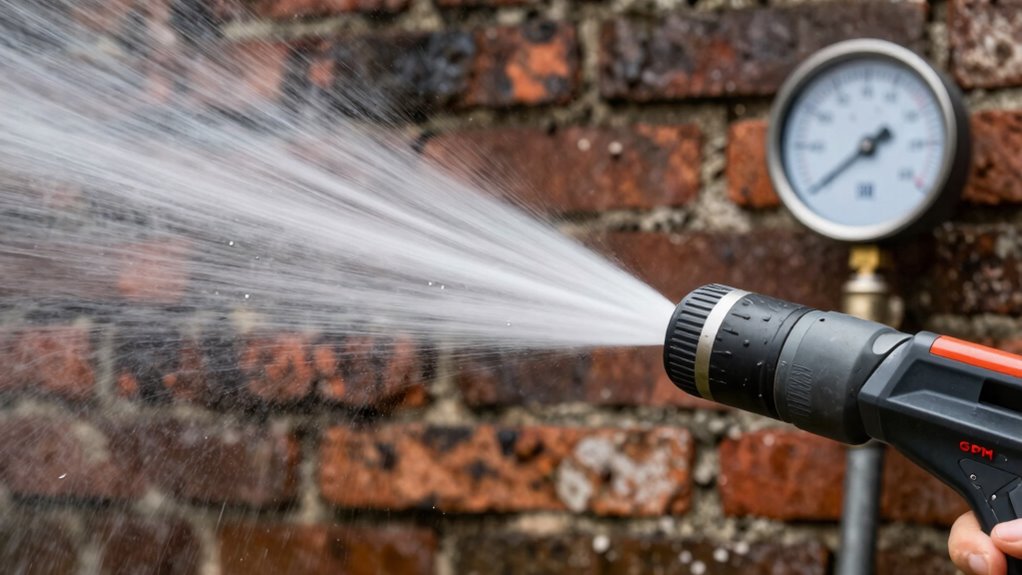
GPM, or gallons per minute, directly impacts how effectively a pressure washer cleans and how efficiently it uses water. Higher GPM means more water flows through the spray, enabling you to cover larger areas faster and remove dirt more thoroughly. This can improve cleaning efficiency, especially on big jobs. However, increased GPM also means more water consumption, which affects water conservation efforts and has a greater environmental impact. If you’re mindful of water use, choosing a washer with a moderate GPM can balance cleaning power with responsible water management. By understanding how GPM influences both cleaning performance and water usage, you can select a pressure washer that suits your needs while minimizing environmental impact.
How to Balance PSI and GPM for Optimal Results
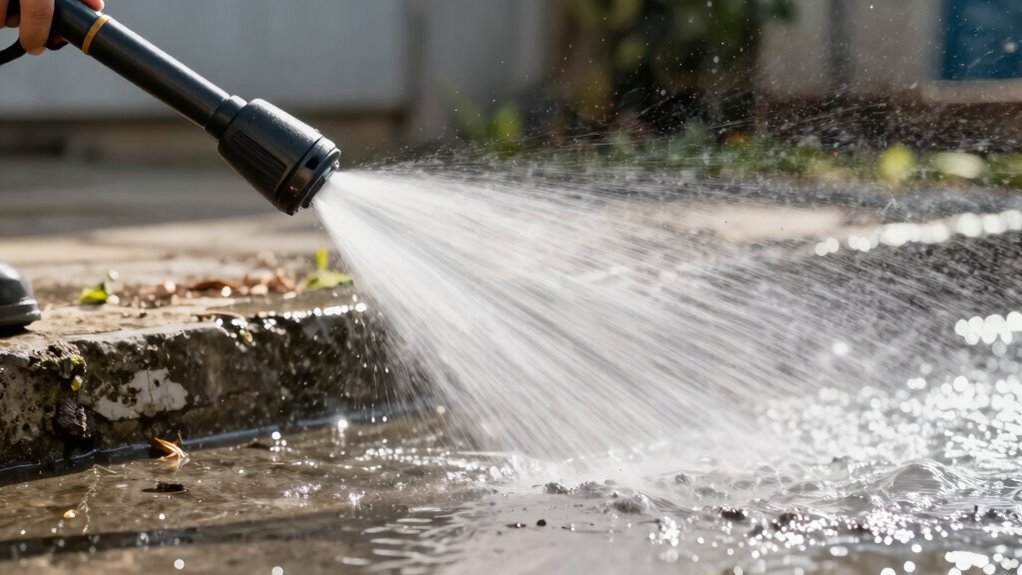
Achieving the best cleaning results requires carefully balancing PSI and GPM to match your specific tasks. For chemical cleaning, you need moderate PSI with higher GPM to ensure thorough coverage without damaging surfaces. In industrial applications, higher PSI combined with sufficient GPM tackles stubborn grime efficiently. To optimize your pressure washer:
- Adjust PSI for delicate surfaces or sensitive materials
- Increase GPM for faster cleaning and better water flow
- Combine the right PSI and GPM for effective chemical cleaning and heavy-duty tasks
Common Mistakes When Choosing a Pressure Washer Based on PSI and GPM
Many people make the mistake of focusing only on the numbers when choosing a pressure washer. They often misunderstand the difference between pressure (PSI) and flow rate (GPM), which can lead to poor results. Don’t rely solely on the specs—consider how both factors work together for your specific cleaning tasks. Additionally, understanding air quality considerations can help you choose equipment that produces more effective cleaning without unnecessary energy use. Recognizing the importance of holistic SEO strategies can also aid in making more informed decisions regarding equipment features and performance.
Misunderstanding Pressure and Flow
One common mistake when choosing a pressure washer is focusing solely on PSI or GPM without understanding how they work together. This leads to pressure misconceptions and flow misunderstandings, which can result in underperforming equipment. Remember, higher PSI isn’t always better if the flow rate is low, and vice versa. To visualize, consider:
- A high PSI with low GPM might strip paint but struggle with large debris.
- A high GPM with low PSI could rinse surfaces effectively but won’t clean stubborn grime.
- An imbalance can cause inefficient cleaning or damage surfaces.
Additionally, understanding the pressure-flow relationship is essential for selecting the appropriate pressure washer for your specific tasks. Proper pressure regulation allows for safer and more effective cleaning, especially on delicate surfaces. Understanding how pressure and flow collaborate helps you select the right tool. Proper pressure and flow work together to optimize cleaning performance and prevent damage. Ignoring this relationship causes ineffective cleaning and can even harm surfaces. Focus on both numbers to match your cleaning needs accurately, especially since pressure and flow are essential for optimal cleaning performance.
Focusing Solely on Numbers
Focusing only on PSI or GPM when selecting a pressure washer can lead to poor performance and potential damage. Relying solely on these numbers ignores important factors like pressure efficiency and how well the washer cleans. A high PSI might seem better, but if the GPM is low, you won’t get the flow needed for effective cleaning. Conversely, high GPM without adequate PSI may struggle to remove tough grime. Instead, consider how pressure and flow work together to optimize cleaning performance. Choosing a washer based solely on raw numbers can result in inefficient cleaning or damage to surfaces. The best approach balances PSI and GPM to match your specific cleaning tasks, ensuring pressure efficiency and superior results without risking harm. Additionally, understanding the pressure-to-flow relationship is crucial for selecting the right equipment. Properly matching these factors can improve cleaning effectiveness and extend the life of your pressure washer. Recognizing the importance of pressure efficiency helps prevent overloading your equipment and ensures consistent results. Focusing on pressure distribution can further enhance your understanding of how the washer performs across different surfaces. Moreover, paying attention to pressure stability can ensure consistent performance during use, preventing sudden drops or surges that may compromise cleaning quality.
How to Match Your Pressure Washer’s Specs to Different Cleaning Tasks
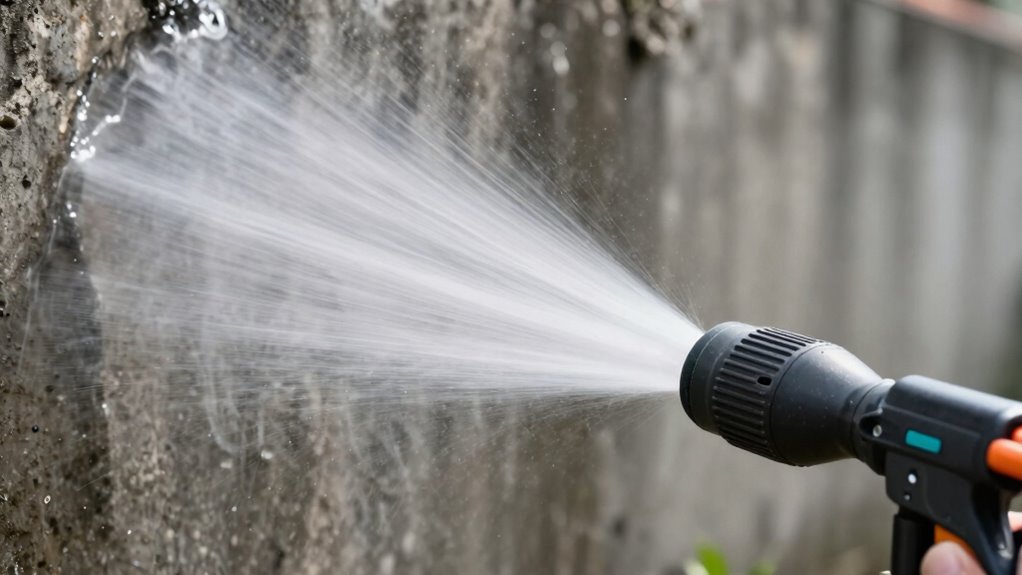
Matching your pressure washer’s specifications to different cleaning tasks guarantees you get the best results without causing damage. To do this effectively, consider the task at hand and select appropriate pressure washer accessories, such as different nozzles or brushes, for ideal cleaning. For delicate surfaces like cars or painted walls, choose lower PSI settings and soft wash attachments. For tougher jobs like concrete decks, higher PSI and wider GPM will be more effective. Remember to follow maintenance tips to keep your equipment running smoothly, including inspecting hoses and nozzles regularly. Additionally, understanding the importance of vetted essential oils for cleaning can promote a healthier environment during and after cleaning tasks. By matching specs to tasks, you avoid surface damage and ensure efficient cleaning. Think about these factors to customize your setup for every job:
Matching pressure washer specs to tasks ensures safe, efficient cleaning and prevents surface damage.
- Surface type and fragility
- Required cleaning power
- Proper accessory selection
Tips to Maximize Power From Your Pressure Washer
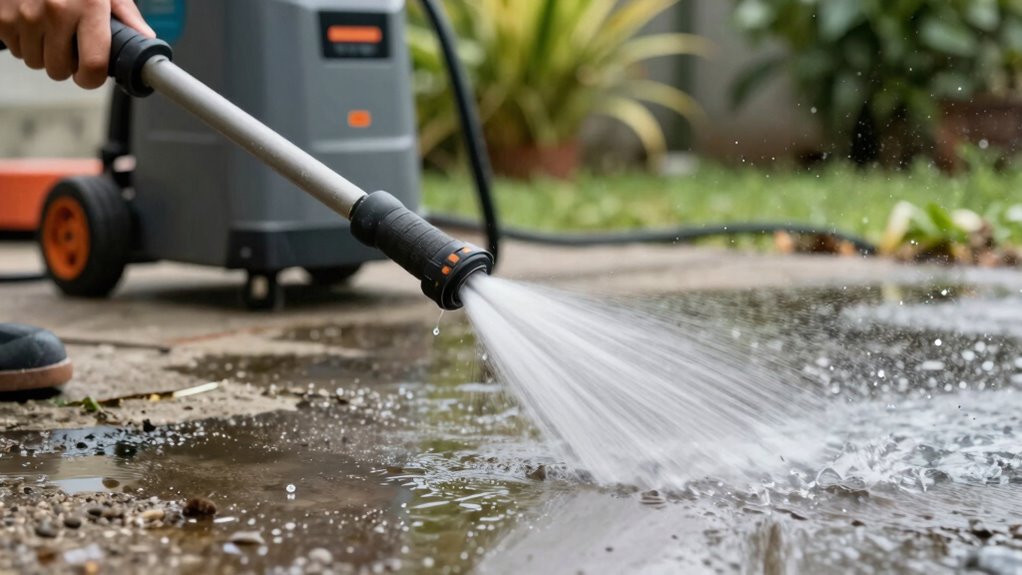
To maximize the power of your pressure washer, start by selecting the right nozzle and adjusting the spray pattern to suit your cleaning task. Using the correct pressure washer accessories, like adjustable nozzles and extension wands, can boost efficiency. Regular maintenance tips, such as cleaning filters and checking hoses, guarantee ideal performance. Properly maintaining your equipment keeps pressure consistent and prevents damage. Visualize this setup:
| Nozzle Type | Spray Pattern |
|---|---|
| 0-Degree | Focused, intense jet |
| 25-Degree | General cleaning |
| 40-Degree | Wide, gentle spray |
| Turbo Nozzle | Rotating high-pressure jet |
Mastering these tips helps you leverage maximum pressure and flow, making cleanup faster and more effective.
Key Takeaways for Choosing the Right Pressure Washer
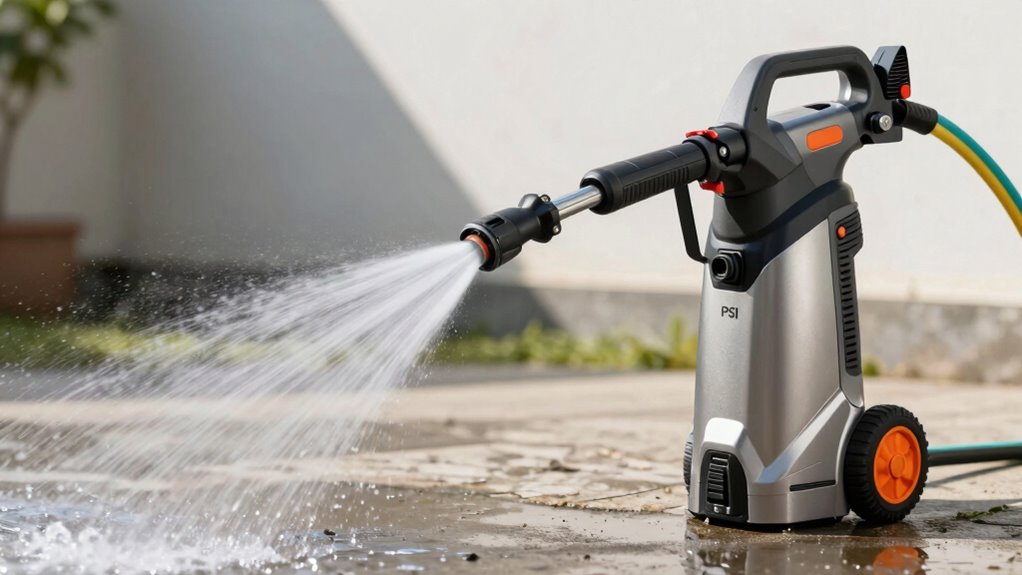
Choosing the right pressure washer depends on understanding your cleaning needs and matching them with the appropriate specifications. For garden maintenance or eco-friendly cleaning, consider the following key factors:
- Power level (PSI and GPM): Ensure the PSI suits delicate surfaces or tougher stains, while GPM determines how fast dirt is rinsed away.
- Nozzle options: Different nozzles help you target specific tasks, from gentle cleaning to heavy-duty scrubbing.
- Size and portability: Choose a compact model for easy maneuvering around your yard or a larger unit for extensive cleaning jobs.
Having the right combination helps you clean effectively without damaging surfaces or wasting water. Balancing power and efficiency ensures your cleaning is thorough, eco-friendly, and suitable for garden maintenance tasks.
Frequently Asked Questions
How Do PSI and GPM Affect Cleaning Speed?
You’ll find that PSI and GPM directly influence your cleaning speed. Higher PSI increases the pressure, helping you remove stubborn dirt, while higher GPM delivers more water volume, speeding up the process. By adjusting pressure regulation and choosing the right nozzle, you can optimize both factors for faster, more efficient cleaning. Remember, balancing these settings ensures you clean effectively without damaging surfaces.
Can a Higher GPM Replace Higher PSI?
A higher GPM can’t replace higher PSI because water flow alone doesn’t deliver enough pressure to remove tough grime. While increased GPM boosts cleaning speed by providing more water, maintaining pressure stability is essential for effective results. You need both: high water flow for efficiency and sufficient PSI to handle stubborn dirt. Combining the right balance ensures your pressure washer cleans thoroughly without sacrificing performance.
Which Is More Important for Stubborn Stains—Psi or GPM?
Stubborn stains demand more than just a gentle spray; you need raw power. In this battle, PSI is your knight’s sword, delivering concentrated force to break through tough grime. GPM, on the other hand, acts like a relentless river, washing away debris with sustained cleaning duration. For stubborn stains, focus on high PSI with the right pressure nozzle, ensuring every blast delivers maximum impact for deep, thorough cleaning.
Do Different Surfaces Require Different PSI and GPM Settings?
Yes, different surfaces need different PSI and GPM settings. For delicate surfaces like wood or painted surfaces, keep the PSI low to prevent damage and use a higher GPM for gentle rinsing. Harder surfaces like concrete require higher PSI for effective cleaning and moderate GPM. Always consider the surface material to avoid damaging equipment and guarantee durability. Adjust your settings accordingly for ideal cleaning and to prolong your pressure washer’s life.
How Does Water Pressure Impact Safety During Cleaning?
Think of water pressure like a powerful tide—if you don’t control it, it can cause damage. Higher water pressure increases cleaning efficiency but also raises safety risks. Always wear safety gear, like goggles and gloves, to protect against water flow. Keep a firm grip and stay aware of your surroundings. Properly adjusting your pressure settings helps prevent injuries and damage, making your cleaning safer and more effective.
Conclusion
Remember, choosing the right pressure washer depends on balancing PSI and GPM for your specific needs. Don’t just chase high numbers—consider what you’ll be cleaning and how each feature impacts performance. As the saying goes, “It’s not just about the strength, but how you use it.” Focus on matching your washer’s specs to your tasks, and you’ll get the best results without wasting water or power.