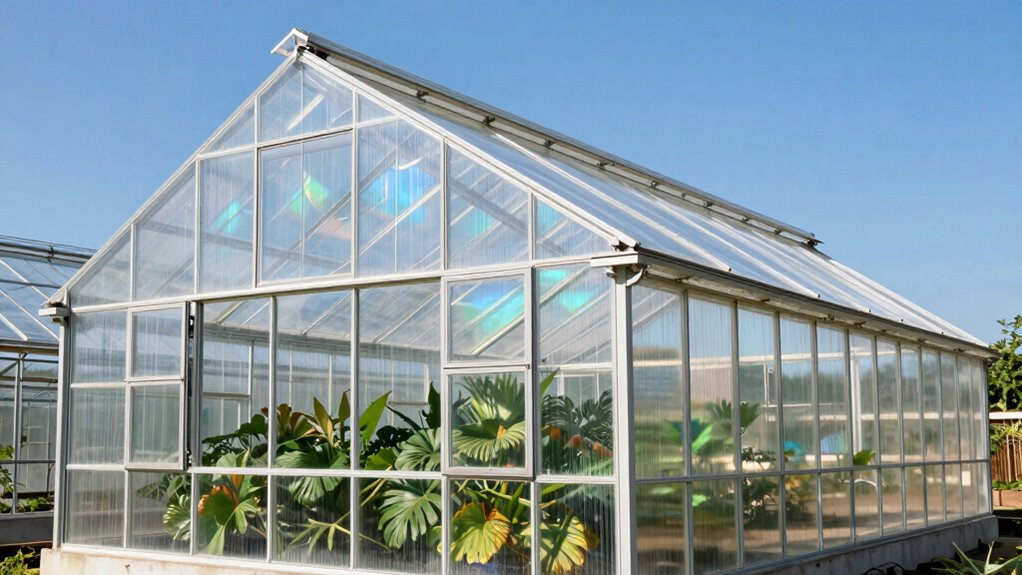

Polycarbonate greenhouses are incredibly durable thanks to their impact-resistant and weatherproof design, making them ideal for long-term use. They insulate well and distribute light evenly, supporting healthy plant growth. However, to maximize durability, you need to properly manage heat buildup through ventilation and insulation techniques. If you control heat effectively, your greenhouse will last longer and perform better. Keep going to discover practical tips on maintaining a climate that protects your investment.

Get the latest gadgets delivered free with Prime
- Fast, free delivery on millions of items
- Prime Video, Amazon Music and more included
- Member-only deals all year
Key Takeaways
- Polycarbonate’s impact resistance and flexibility ensure greenhouse durability against environmental stresses like hail and wind.
- Proper heat management and ventilation prevent heat buildup, protecting the structure and extending its lifespan.
- Multi-wall design enhances insulation, reducing thermal stress and maintaining structural integrity in cold conditions.
- Effective climate control minimizes material fatigue caused by temperature fluctuations.
- Combining insulation with ventilation optimizes durability and energy efficiency in polycarbonate greenhouses.

Polycarbonate’s strength lies in its ability to insulate against temperature fluctuations. Unlike glass, which can be fragile and prone to breaking, polycarbonate is impact-resistant and flexible. This resilience helps it withstand harsh weather conditions, including hail, wind, and snow, ensuring your greenhouse remains intact year after year. Its material insulation properties also mean it traps heat more effectively during colder months, helping you extend your growing season. At the same time, it allows excess heat to escape when the sun gets intense, preventing dangerous heat buildup inside the structure. Proper ventilation management is essential to prevent heat accumulation, especially since polycarbonate’s insulation can trap heat more efficiently than other materials. Climate control is essential when working with any greenhouse, and polycarbonate plays a significant role in maintaining a stable environment. Its multi-wall design creates a layer of trapped air that acts as an insulator, reducing heat transfer and keeping temperatures more consistent. This means you won’t have to rely as heavily on heating or cooling systems, saving energy and costs. Plus, the diffuse light transmission of polycarbonate helps distribute sunlight evenly, reducing hot spots and creating a more uniform environment for your plants. Additionally, understanding heat buildup and how to manage it is crucial for optimizing plant health and greenhouse longevity. Proper insulation techniques can further enhance these benefits and protect your plants from temperature extremes. Moreover, selecting the right ventilation methods can significantly improve airflow and temperature regulation, ensuring your greenhouse remains a healthy environment for your plants. Implementing effective climate control systems can also enhance the overall durability and performance of your polycarbonate greenhouse.
polycarbonate greenhouse ventilation system
As an affiliate, we earn on qualifying purchases.
As an affiliate, we earn on qualifying purchases.
Frequently Asked Questions
How Does Polycarbonate Compare to Glass in Extreme Weather?
Polycarbonate outperforms glass in extreme weather because it’s more impact-resistant and flexible. You get better UV protection, which shields plants and reduces heat buildup, especially during hot days. Plus, its color options let you customize your greenhouse’s appearance. While glass can crack under severe conditions, polycarbonate remains durable, making it a smarter choice if you face harsh weather, ensuring your plants stay protected year-round.
What Maintenance Is Required to Prevent Heat Buildup Issues?
To prevent heat buildup, you’ll want to keep your greenhouse from turning into a sauna. Use effective ventilation strategies like roof vents or exhaust fans to let hot air escape. Pair this with insulation techniques such as shading or reflective coatings to regulate temperature. Regularly check and clean vents, ensuring airflow isn’t blocked. This way, you avoid cooking your plants and turning your greenhouse into a tropical heatwave.
Are There Specific Ventilation Systems Recommended for Polycarbonate Greenhouses?
You should consider installing automated ventilation systems and passive cooling methods for your polycarbonate greenhouse. Automated ventilation opens windows or vents automatically based on temperature sensors, helping to regulate heat effectively. Passive cooling strategies, like shade cloths and strategic vent placement, also reduce heat buildup without extra energy. Combining these approaches guarantees your greenhouse stays cool, protects plants, and maintains ideal growing conditions, even during hot weather.
How Long Do Polycarbonate Panels Typically Last Outdoors?
Polycarbonate panels typically last 10 to 15 years outdoors, especially if you choose panels with good UV protection and appropriate thickness. Thicker panels offer better durability and insulation, while UV protection prevents yellowing and degradation from sunlight. To maximize lifespan, guarantee proper ventilation to manage heat buildup, and regularly inspect panels for damage. With proper care, your polycarbonate greenhouse can stay functional and sturdy for many seasons.
Can Polycarbonate Greenhouses Be Easily Repaired or Replaced?
You can easily repair or replace polycarbonate panels, so don’t let it ruffle your feathers. When a panel gets damaged, use simple repair techniques like sealing cracks with specialized adhesives or replacing individual panels. Panel replacement is straightforward, especially with modular designs. Keep a few extra panels handy, and you’ll be back in business in no time—no need to tear the whole greenhouse down.
multi-wall polycarbonate greenhouse panels
As an affiliate, we earn on qualifying purchases.
As an affiliate, we earn on qualifying purchases.
Conclusion
In choosing a polycarbonate greenhouse, you prioritize durability, resist weather, and enjoy long-lasting protection. You respect the heat buildup, monitor ventilation, and manage temperature. You embrace the strength of polycarbonate, trust its resilience, and safeguard your plants. You plan for the future, adapt to conditions, and maximize your growth potential. In doing so, you create a space that’s tough, reliable, and ready for any challenge—making your gardening journey more successful and rewarding.
impact-resistant polycarbonate sheets for greenhouse
As an affiliate, we earn on qualifying purchases.
As an affiliate, we earn on qualifying purchases.
As an affiliate, we earn on qualifying purchases.
Halloween Picks
halloween
As an affiliate, we earn on qualifying purchases.