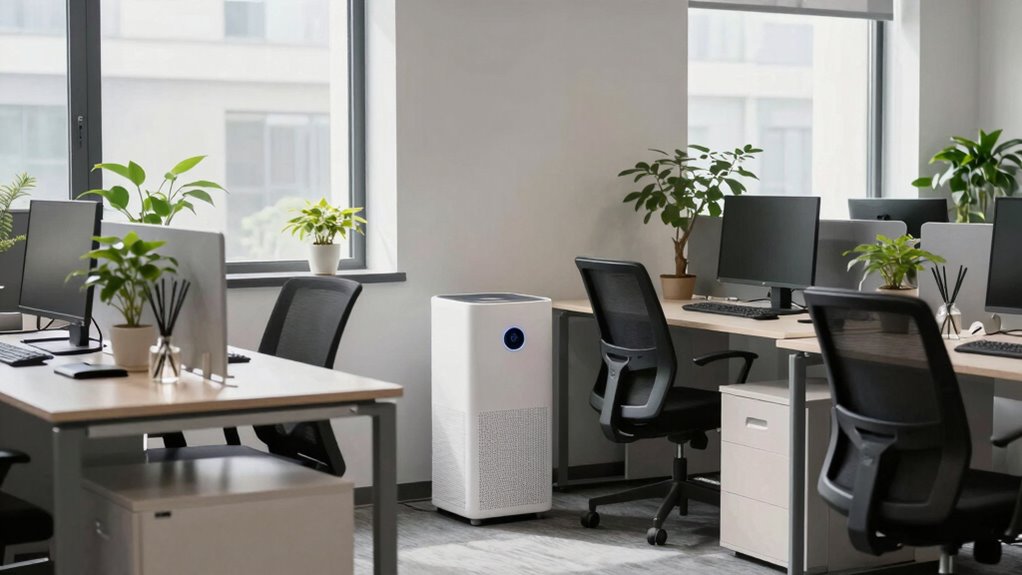
If your office starts to feel stale or stuffy and persistent odors linger, it’s often a sign your ventilation isn’t doing its job. You might notice headaches, congestion, or fatigue without realizing the cause is poor air exchange. These warning signs usually appear before you understand the root problem. Addressing issues like outdated fans or filters can quickly refresh your space. Keep going to uncover how to improve your air quality effectively.
Key Takeaways
- Persistent odors or stuffiness often signal poor air quality before teams realize ventilation issues.
- Headaches, congestion, and fatigue are common early symptoms indicating inadequate indoor air quality.
- Stale air and lingering smells suggest outdated or clogged ventilation systems needing attention.
- Reduced productivity and increased sick days often stem from unrecognized poor air conditions.
- Upgrading ventilation and installing high-efficiency filters quickly improve air quality and staff well-being.
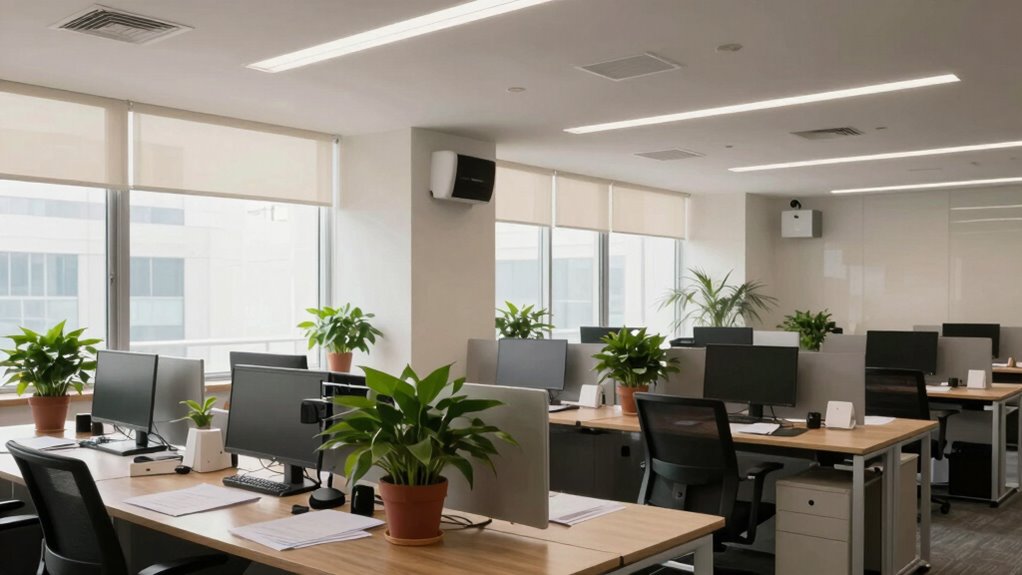
When it comes to creating a healthier workspace, fixing office air quality is a vital step that often gets overlooked. Many teams don’t realize that the air they breathe inside the office can significantly impact productivity, comfort, and overall well-being. The most common sign of poor air quality—like persistent odors or stuffiness—may seem minor at first, but it’s usually a symptom of underlying issues with air filtration or ventilation systems. Addressing these problems early can make a noticeable difference in how your team feels and performs.
Prioritizing air quality boosts productivity, comfort, and well-being—address ventilation and filtration issues early for a healthier workspace.
One of the most overlooked clues is a lingering smell or stale air that doesn’t seem to clear out. This often indicates that your ventilation system isn’t circulating fresh air effectively. Ventilation systems are designed to bring in outside air and remove indoor pollutants, but if they’re outdated, clogged, or improperly maintained, their efficiency drops. When the airflow stagnates, pollutants from office equipment, cleaning supplies, or even human respiration accumulate, creating a stuffy environment that hampers concentration. Many teams mistake this for a minor inconvenience, not realizing it’s a sign that their ventilation system needs an upgrade or regular maintenance.
Air filtration plays an equally important role. High-quality air filters can trap dust, allergens, and airborne viruses, improving air quality dramatically. If your office’s air filtration system isn’t up to par, these particles remain suspended in the air, leading to discomfort or health issues over time. You might notice increased sneezing, coughing, or fatigue among team members—clear indicators that the air isn’t as clean as it should be. Proper air filtration goes hand-in-hand with effective ventilation, ensuring that fresh, filtered air replaces stale indoor air continuously. Recognizing the importance of indoor air quality can help prioritize these upgrades effectively. Additionally, understanding the role of ventilation efficiency can guide you in making informed decisions about system upgrades. Improving ventilation system maintenance can often be achieved with minimal disruption and cost, yet yields substantial health benefits.
Most teams notice these issues before they fully understand the cause. They might see a decline in productivity, more sick days, or complaints about headaches and congestion, but they don’t immediately connect these symptoms to poor air quality. Recognizing that subpar ventilation and inadequate air filtration are at the core helps you take targeted action. Upgrading your ventilation systems, installing high-efficiency filters, and scheduling regular maintenance can restore balance. It’s also crucial to consider air exchange rates, which determine how effectively stale air is replaced with fresh air. These fixes are often more straightforward and less costly than many realize, and the benefits—improved focus, fewer sick days, and happier employees—are well worth the investment.
In the end, paying attention to these early signs can save you from bigger problems down the line. When you prioritize proper air filtration and well-maintained ventilation systems, you create a healthier, more comfortable office environment. It’s a simple yet powerful way to boost morale, enhance productivity, and ensure your team breathes easier every day.

Air Purifiers for Office with H13 Quiet HEPA Filter Up to 1076 Ft² for Pet Family, Pollen, Smoke, Compact Air Cleaner with 3 Speeds, Timer, Aroma Quiet, 360°Intake, for Home Bedroom, Black
Effortless Operation: Simplified control panel with intuitive design makes it easy to operate. No complicated setup—just one tap,…
As an affiliate, we earn on qualifying purchases.
As an affiliate, we earn on qualifying purchases.
Frequently Asked Questions
How Often Should Air Filters Be Replaced in an Office Setting?
You should replace air filters in your office about every 90 days, but this can vary based on air filter lifespan and usage. Regular replacement scheduling guarantees good air quality and system efficiency. If your office has allergens or pets, you might need to change filters more frequently, around 60 days. Keep an eye on filter condition and follow manufacturer recommendations to maintain healthy indoor air.
Are There Eco-Friendly Options for Improving Office Air Quality?
Yes, you can improve office air quality with eco-friendly filtration and sustainable ventilation. Opt for air purifiers with HEPA filters made from recycled materials, and choose ventilation systems that maximize energy efficiency while reducing carbon footprint. Using plants for natural air purification, installing solar-powered fans, and maintaining proper airflow all contribute to healthier, greener indoor environments. These eco-friendly options guarantee cleaner air without harming the planet.
Can Plants Significantly Improve Indoor Air Quality in Offices?
Yes, plants can considerably improve indoor air quality. They provide plant benefits like filtering toxins and increasing humidity, creating a healthier environment. Indoor greenery not only enhances aesthetics but also reduces airborne pollutants, making your office space fresher and more comfortable. By adding a variety of plants, you support better air circulation and promote well-being, turning your workspace into a more productive and eco-friendly environment.
What Are the Signs of Poor Air Quality in an Office Environment?
Poor air quality often presents as persistent stuffiness, sneezing, or sore throats. You might notice musty odors or foggy windows indicating inadequate ventilation. Keep an eye on air quality sensors, which can reveal rising levels of pollutants or carbon dioxide. If these signs appear, consider ventilation improvements, like opening windows or upgrading HVAC systems. Recognizing these symptoms early helps you address indoor air issues before they impact health or productivity.
How Do HVAC Systems Impact Office Air Quality?
HVAC systems play a vital role in maintaining office air quality by meeting air quality standards and implementing effective ventilation strategies. They filter pollutants, control humidity, and circulate fresh air, reducing contaminants and allergens. Properly maintained HVAC systems guarantee ideal airflow, preventing stale or polluted air from lingering. By focusing on these aspects, you can improve your office environment, boost productivity, and promote healthier indoor air for everyone.

HOCENWAY Upgrade 3-Layers Filter System Smoke Exhaust Kit with 5000RPM Fan and Speed Control Power Adapter for All Laser Engraver 3D Printer Enclosure Tent Cover DIY (Ventilation Kit)
12V Fan Filter System with Speed Control power adapter (Input: AC 100-240V 50/60Hz; Output: 3-12V, 2A): You can…
As an affiliate, we earn on qualifying purchases.
As an affiliate, we earn on qualifying purchases.
Conclusion
Once you notice the subtle signs of poor air quality, it’s like catching a whisper before it turns into a roar—a warning from your environment. Addressing these issues early transforms your office into a breath of fresh air, clearing the fog of discomfort. Remember, a healthier workspace isn’t just a fix; it’s the foundation of productivity and well-being. Don’t wait for the storm—tune into the quiet signals and keep your office atmosphere shining bright.
air filter for office HVAC
As an affiliate, we earn on qualifying purchases.
As an affiliate, we earn on qualifying purchases.
energy-efficient exhaust fan
As an affiliate, we earn on qualifying purchases.
As an affiliate, we earn on qualifying purchases.