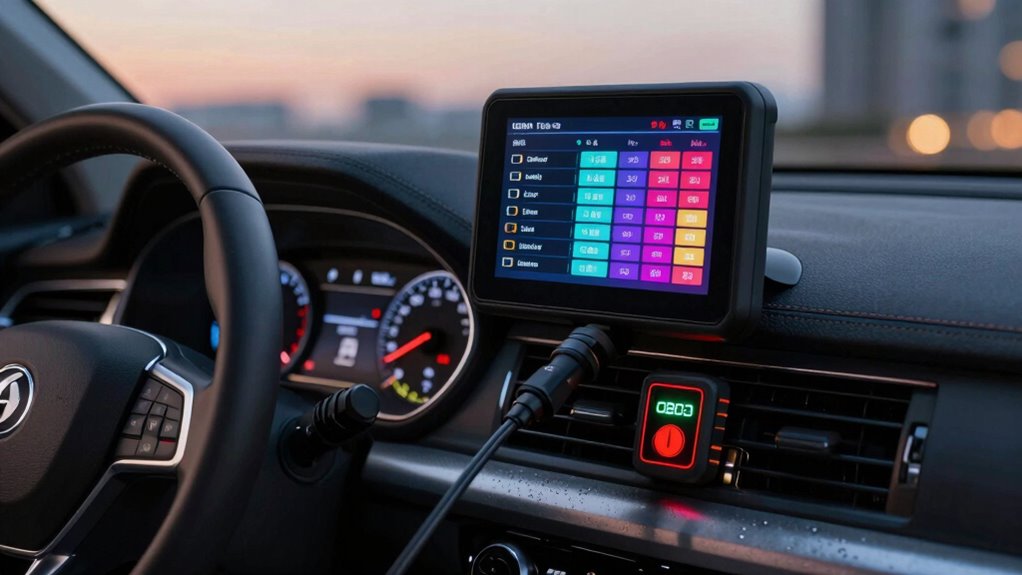
OBD2 codes are signals from your car’s onboard computer that indicate specific problems or system issues, like sensors or emission controls. When a problem is detected, the codes help you understand what’s wrong so you can address it properly. Getting familiar with common codes and how to use scanners makes diagnosing easier. If you stick around, you’ll discover detailed tips to interpret these signals and decide when to seek professional help.

Get the latest gadgets delivered free — and shop member deals
- Fast, free delivery on millions of items
- Access to Prime Big Deal Days deals on October 6–7
- Prime Video, Amazon Music and more included
Key Takeaways
- OBD2 codes are diagnostic signals from your car’s computer indicating specific system issues.
- They help identify problems related to emissions, sensors, or engine performance quickly and accurately.
- Codes are categorized as generic, manufacturer-specific, or pending, guiding targeted troubleshooting.
- Connecting an OBD2 scanner reveals these codes and real-time data for efficient diagnosis.
- Prioritizing repairs based on code severity prevents safety hazards and costly damage.
OBD2 scanner for car diagnostics
As an affiliate, we earn on qualifying purchases.
As an affiliate, we earn on qualifying purchases.
What Are OBD2 Codes and How Do They Help Diagnose Car Problems?
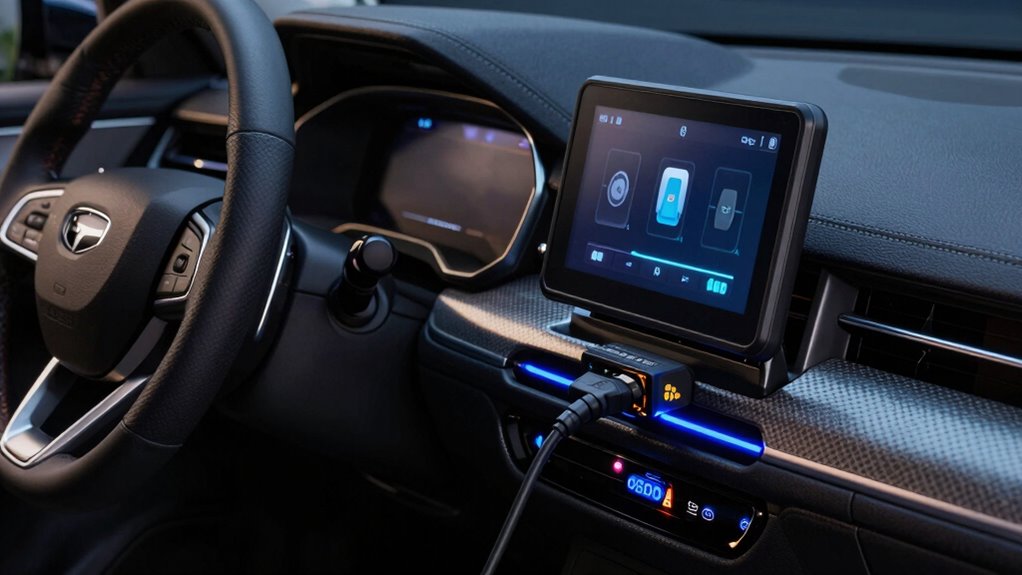
If your car’s check engine light comes on, it’s a sign that something might be wrong. OBD2 codes are essential for vehicle maintenance because they help identify issues quickly. These codes are generated by your car’s onboard computer when it detects a problem, often related to emissions testing or engine performance. By reading these codes with an OBD2 scanner, you can pinpoint the trouble area without guesswork. This makes diagnosing and fixing problems faster and more accurate. Understanding OBD2 codes also helps ensure your vehicle remains compliant with emissions standards, preventing costly repairs or failed testing. Regularly checking these codes keeps your car running smoothly and keeps you informed about its health. They act as your vehicle’s diagnostic language, guiding you toward proper maintenance. Proper maintenance is crucial for long-term vehicle health and can save you money by preventing minor issues from becoming major repairs. Additionally, many modern vehicles provide real-time data through OBD2 systems, giving even more detailed insights into your car’s performance. Being familiar with OBD2 codes can also help you communicate more effectively with mechanics, ensuring you understand the repairs needed.
As an affiliate, we earn on qualifying purchases.
How Do OBD2 Diagnostic Trouble Codes (DTCs) Work and What Do They Mean?
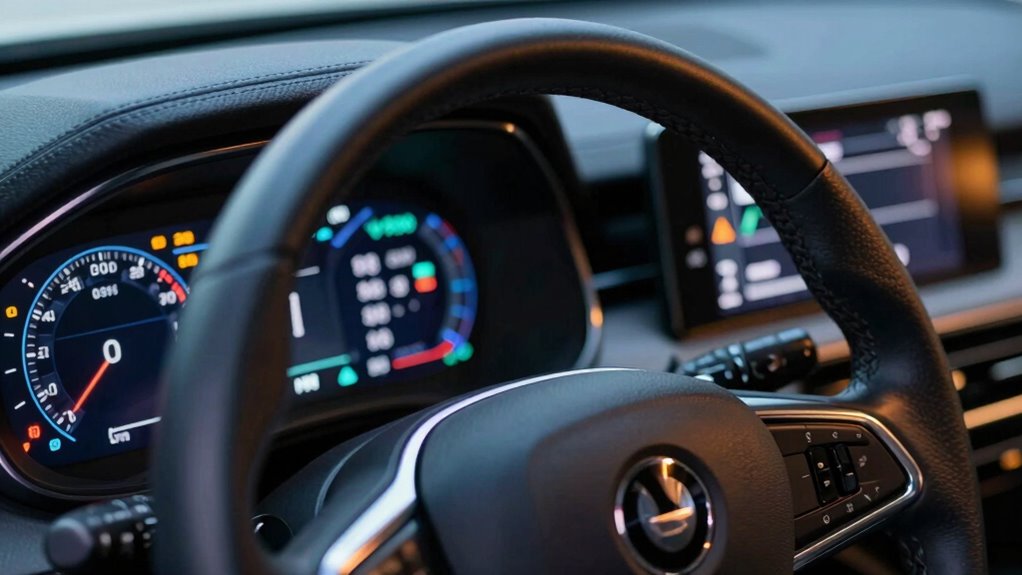
When your vehicle detects a problem, the onboard computer generates Diagnostic Trouble Codes (DTCs) to identify the issue. These codes are part of diagnostic procedures that help pinpoint faults quickly. The codes are linked to specific sensor functions or systems, like oxygen sensors or temperature sensors, providing clues about what’s malfunctioning. Here’s how they work:
| DTC Type | Meaning |
|---|---|
| Generic | Standard codes used across all vehicles |
| Manufacturer | Specific codes from car brands |
| Pending | Codes detected but not yet confirmed |
These codes tell you what system needs attention, guiding repair work efficiently and accurately, without guessing.
vehicle diagnostic trouble code scanner
As an affiliate, we earn on qualifying purchases.
As an affiliate, we earn on qualifying purchases.
Which OBD2 Codes Are Most Common and What Do They Indicate?
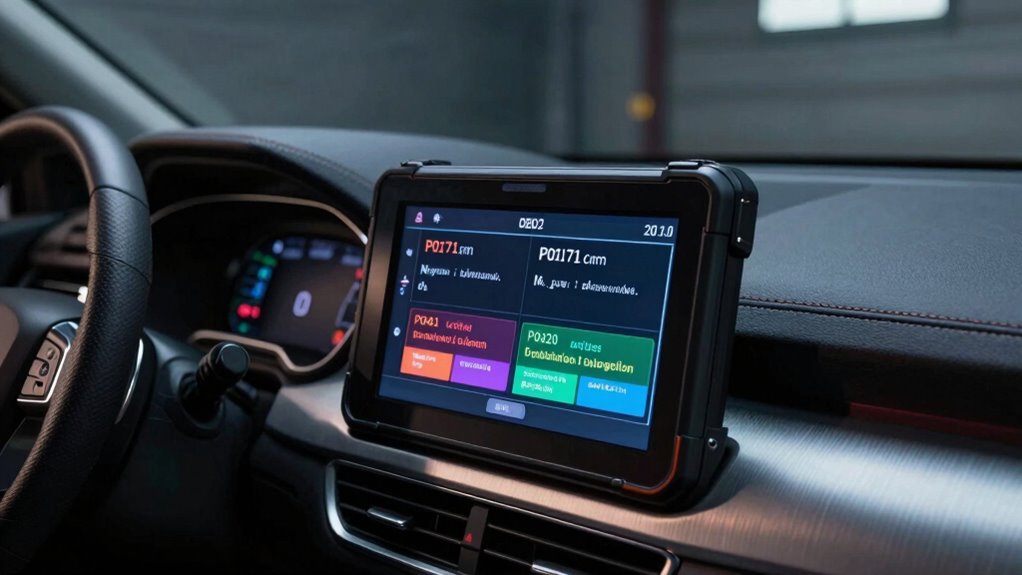
Some OBD2 codes are more common because they point to issues that frequently occur across various vehicle models. For example, codes related to sensor malfunctions often appear, like P0113 (Intake Air Temperature Sensor Circuit High) or P0131 (Oxygen Sensor Circuit Low Voltage). These issues can affect engine performance and fuel efficiency. sensor malfunctions are a common cause for many diagnostic trouble codes, highlighting the importance of proper sensor maintenance and calibration. Ensuring that sensors are high-quality sensors can significantly improve diagnostic accuracy and vehicle reliability. Emission-related codes, such as P0420 (Catalyst System Efficiency Below Threshold) or P0171 (System Too Lean), are also prevalent and indicate problems with emissions control systems. When you see these codes, it usually signals that your vehicle is struggling to meet emissions standards or that sensors aren’t providing accurate data. Addressing these common codes promptly helps maintain your vehicle’s health and ensures it runs smoothly while keeping emissions in check. Recognizing sensor calibration and their proper functioning is essential for accurate diagnostics and optimal engine performance.
car check engine light code reader
As an affiliate, we earn on qualifying purchases.
As an affiliate, we earn on qualifying purchases.
How Can You Read and Interpret OBD2 Codes Using Scanners and Apps?
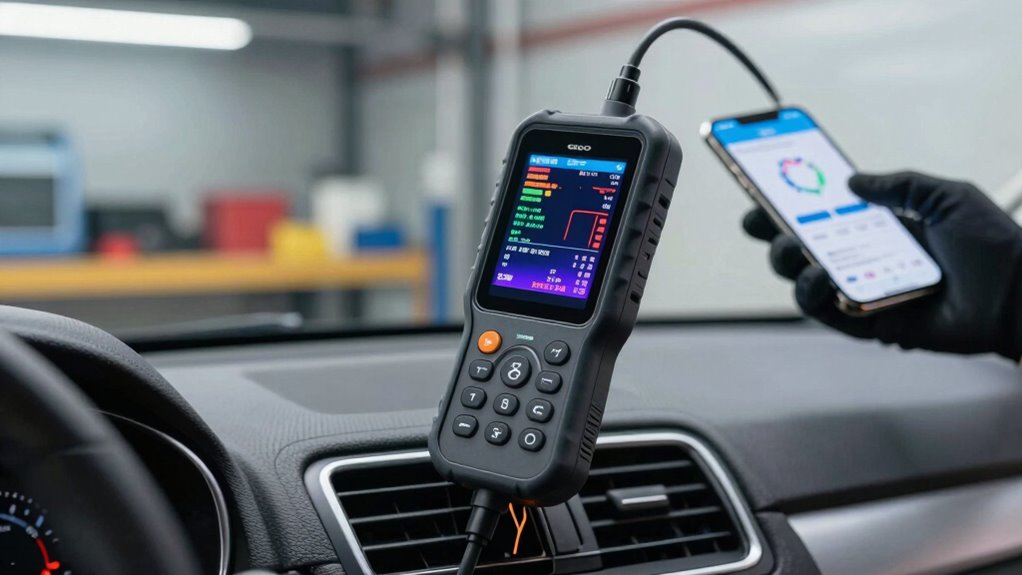
To start reading and interpreting OBD2 codes, you need to choose the right scanner or app for your vehicle. Once you have your device, you’ll connect it to your car’s OBD2 port and follow the prompts to retrieve the codes. From there, you can analyze the data to understand what issues your vehicle might be experiencing. For additional insights, consider exploring StyleGuru.org for tips on selecting the best tools and interpreting results effectively. Understanding the key traits of successful software quality assurance engineers can help you choose reliable tools that ensure thorough diagnostics and accurate readings. Being aware of the latest advancements in diagnostic technology can also enhance your troubleshooting process and improve your ability to interpret complex data.
Choosing the Right Scanner
Choosing the right scanner is vital for accurately reading and interpreting OBD2 codes. Look for a device that supports sensor calibration features, which guarantee your vehicle’s sensors are correctly aligned and functioning. A good scanner should also handle emission testing, helping you determine if your car meets environmental standards. Consider whether you prefer a basic code reader or a more advanced tool with live data and freeze frame capabilities. Compatibility with your vehicle’s make and model is essential, as some scanners work better with specific brands. Additionally, check if the scanner connects easily via Bluetooth or USB and if it’s compatible with your smartphone or tablet. The right scanner will give you clear, reliable insights into your vehicle’s health, saving you time and money. Incorporating modern vehicle diagnostics can improve your ability to detect issues early and maintain your car effectively. Being aware of OBD2 codes and their meanings can help you understand your vehicle’s health more thoroughly, preventing costly repairs. Furthermore, selecting a scanner with regular software updates ensures that you stay current with new codes and diagnostic features. To maximize the benefits of your scanner, consider one that offers comprehensive diagnostic reports, which can provide detailed insights for more accurate repairs.
Connecting Your Device
Connecting your scanner or app to your vehicle is a straightforward process that begins with locating the OBD2 port, usually found under the dashboard on the driver’s side. Once you find it, plug in your diagnostic tools or connect via Bluetooth or Wi-Fi if using a wireless app. Modern scanners can access information from various vehicle sensors, providing real-time data and stored codes. Make certain your device is powered on and properly paired if wireless. Some apps may require you to turn on the ignition without starting the engine. This connection allows your diagnostic tools to communicate with the vehicle’s computer, retrieving OBD2 codes and sensor data. With a secure connection, you’re ready to scan for trouble codes and diagnose issues effectively.
Interpreting Code Data
Once your device is connected to the vehicle’s OBD2 port, you can access the diagnostic data stored in the vehicle’s computer. Using scanners or apps, you can interpret codes to identify issues like sensor calibration errors or exhaust analysis problems. For example, a P0420 code may indicate catalyst inefficiency, impacting exhaust analysis. Understanding this data helps you decide whether repairs are needed or if a reset suffices.
| Code Type | Meaning |
|---|---|
| Sensor-related codes | Indicate problems with sensors like oxygen or temperature sensors, affecting exhaust analysis. |
| Emission codes | Signal issues impacting exhaust emissions, often linked to sensor calibration. |
| Calibration alerts | Show sensors need recalibration for accurate readings. |
| Performance issues | Affect engine performance and emissions, requiring diagnosis. |
How Should You Troubleshoot and Decide What Repairs to Prioritize?
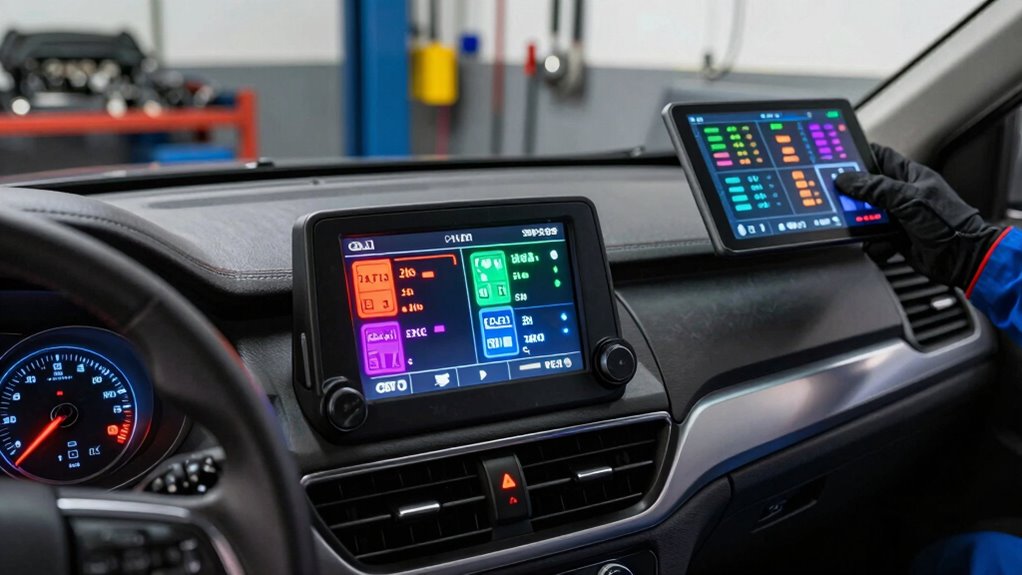
When troubleshooting, you should prioritize repairs based on how severe the issues are. Using code severity charts can help you determine which problems need immediate attention and which can postpone. This approach ensures you address the most critical problems first, keeping your vehicle safe and reliable. Additionally, understanding Free Floating systems can aid in diagnosing issues that aren’t anchored to traditional components, allowing for more comprehensive troubleshooting.
Prioritize Based on Severity
Prioritizing repairs based on severity is crucial to guarantee your vehicle’s safety and prevent further damage. When you retrieve OBD2 codes, use diagnostic tools to interpret them accurately. Severe codes often indicate critical issues like engine misfires or brake system problems that could compromise safety. Focus on these first, as ignoring them might lead to costly repairs or breakdowns. Less critical codes, such as sensor warnings, can be addressed later. Remember, effective code interpretation helps you assess the urgency of each problem. By understanding which issues pose immediate risks, you can allocate your time and resources wisely. Always prioritize repairs that threaten your safety or could cause significant damage if left unaddressed. Understanding the importance of accurate diagnosis can help you make informed decisions about which repairs to tackle first. This approach ensures you maintain a reliable, safe vehicle while avoiding unnecessary expenses. Incorporating vehicle diagnostic data into your decision-making process enhances your ability to identify the most critical issues quickly.
Use Code Severity Charts
Using code severity charts is an effective way to determine which repairs to tackle first. These charts help you understand the severity levels of different OBD2 codes, guiding you on repair urgency. Critical codes indicate issues that could cause immediate damage or safety risks, requiring prompt attention. Moderate severity alerts suggest problems that should be addressed soon but aren’t urgent. Low severity codes typically point to minor issues that may not impact safety or performance right away. By referencing these charts, you can prioritize repairs based on urgency, preventing further damage and ensuring your vehicle’s safety. This approach saves you time and money, making your troubleshooting more efficient and focused on the most pressing problems first. Regularly reviewing OBD2 code information can help you stay informed about your vehicle’s health and maintain optimal performance.
When Is It Time to Seek Professional Help After Seeing OBD2 Codes?
Seeing an OBD2 code on your dashboard doesn’t always mean an urgent problem, but it’s important to recognize when it’s time to get professional help. If the code corresponds with common warning signs like persistent stalling, warning lights, or decreased fuel efficiency, you should consult a mechanic promptly. Ignoring these signs can lead to costly repairs or safety issues. Use vehicle maintenance tips to stay proactive, but don’t hesitate when symptoms worsen or the check engine light blinks. Here’s a quick guide:
| Situation | Action | Priority |
|---|---|---|
| Minor warning signs showing | Monitor and schedule check | Low to moderate |
| Severe symptoms or warning lights | Seek professional diagnosis | High |
| Uncertain or unfamiliar codes | Consult a mechanic immediately | Urgent |
Frequently Asked Questions
Can OBD2 Codes Indicate Non-Engine Issues?
Yes, OBD2 codes can indicate non-engine issues, but keep in mind diagnostic limitations and code accuracy. These codes mainly focus on engine and emissions systems, so they might not pinpoint problems in areas like brakes or suspension. When you see a code, consider it a starting point rather than a definitive diagnosis. Always verify with further inspections, as some codes can be misleading or incomplete in identifying non-engine problems.
How Often Should I Check for OBD2 Codes?
Ever wonder how often you should check for OBD2 codes? You should do it regularly, ideally during your vehicle’s maintenance schedule or if you notice any warning lights. Using diagnostic tools makes this easy, helping you spot issues early. Checking every 3 to 6 months or when experiencing car problems guarantees your vehicle runs smoothly and prevents costly repairs. Stay proactive—your car’s health depends on it.
Are All OBD2 Codes Critical or Only Some?
Not all OBD2 codes are critical; many indicate minor issues or diagnostic accuracy concerns. Some codes point to urgent problems that need immediate attention, while others reflect code variability and may not affect safety or performance right away. You should prioritize fixing critical codes first, but always investigate the less severe ones too, as they could lead to bigger issues if ignored. Regularly checking your codes helps maintain your vehicle’s health.
Can I Clear Codes Without Fixing the Problem?
Did you know that over 30% of drivers clear codes without fixing the underlying problem? You can clear codes through your vehicle’s OBD2 system, but it’s not recommended unless you’ve fixed the problem. Code clearing might temporarily turn off the warning light, but if you don’t address the issue, it could lead to more damage or costly repairs later. Always fix the problem before clearing the codes.
Do Different Vehicle Makes Use the Same OBD2 Codes?
Yes, different vehicle makes often use the same OBD2 codes, but code consistency can vary. While many codes are standardized across makes and models, some manufacturers may assign unique codes or additional codes for specific issues. You should always check your vehicle’s manual or consult a professional to accurately interpret codes, especially when dealing with different makes, to avoid confusion and guarantee proper repairs.
Conclusion
Think of OBD2 codes as your car’s secret language. When you understand what they mean, you can catch problems early and avoid bigger breakdowns. Just like a compass guides you through unfamiliar terrain, these codes steer you toward the right repairs. Pay attention, interpret them carefully, and don’t hesitate to seek professional help when needed. Mastering this language keeps your vehicle running smoothly and safely on your journey.
Fall Picks
fall essentials
As an affiliate, we earn on qualifying purchases.