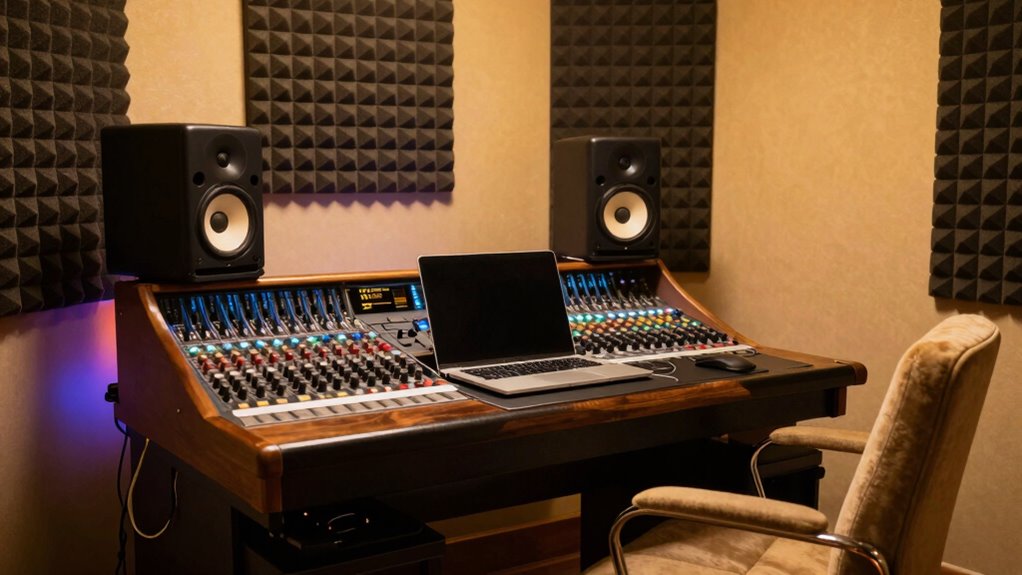

To improve your home studio’s sound without buying new gear, start by optimizing the acoustics with simple fixes like placing acoustic panels or DIY solutions such as blankets and foam to cut down on reflections. Calibrate your headphones regularly for a truer sound. Focus on room layout and make small adjustments to eliminate echo and standing waves. You’ll be surprised at how these tweaks can dramatically enhance clarity and quality—continue below to discover even more effective tips.

Get the latest gadgets delivered free with Prime
- Fast, free delivery on millions of items
- Prime Video, Amazon Music and more included
- Member-only deals all year
Key Takeaways
- Optimize room acoustics with strategic placement of diffusers and panels to reduce reflections and improve sound clarity.
- Use DIY acoustic treatments like blankets or foam to enhance sound quality without cost.
- Properly calibrate headphones for accurate monitoring and consistent sound reproduction.
- Incorporate natural elements and ecological principles to create a balanced, harmonious acoustic environment.
- Focus on cost-effective adjustments such as arranging existing equipment and space for better sound performance.
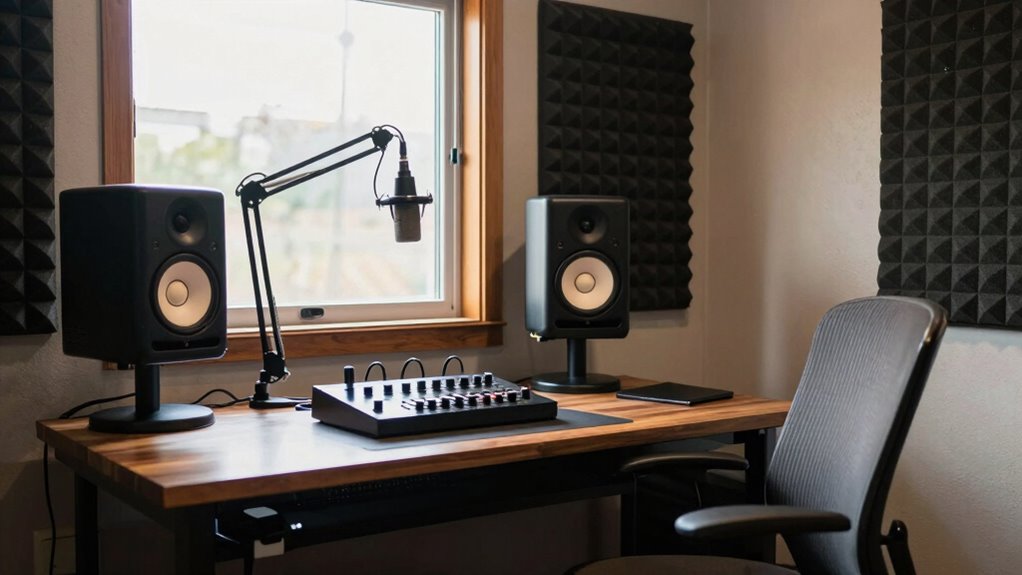
Are you ready to transform your home studio into a professional-sounding space? You don’t need to spend a fortune on new gear to make a noticeable difference. Sometimes, the biggest improvements come from optimizing what you already have. One of the most effective ways to do this is by focusing on your studio acoustics. The way your space handles sound greatly influences your mixes, recordings, and listening experience. Instead of trying to conquer a room with costly soundproofing or bass traps, start with simple adjustments. Use bass diffusers, acoustic panels, or even DIY solutions like thick blankets or foam to manage reflections and standing waves. Proper placement of these materials can eliminate harsh echoes and improve sound clarity, giving you a more accurate representation of your recordings. Biodiversity, which includes maintaining diverse and balanced ecosystems within your space, can also influence acoustics by supporting healthier environments for your equipment and yourself. Incorporating these ecological principles into your studio setup can further enhance your acoustic environment, creating a more harmonious workspace. Additionally, paying attention to the room dimensions can help you identify potential problem areas and tailor your acoustic treatment more effectively. Understanding the room acoustics in your space allows for targeted adjustments that maximize sound quality. Recognizing the room’s natural resonance can guide you in choosing the right materials and placement for optimal sound absorption. Alongside improving your studio acoustics, don’t overlook the importance of headphone calibration. While studio monitors are essential, your headphones are your immediate reference point. Many home producers underestimate how much headphone calibration can enhance their mixes. By using calibration tools or software, you can correct frequency response issues inherent in your headphones, ensuring what you hear is more true to life. This process helps you make more reliable mixing decisions, especially when your room isn’t perfectly treated. Regularly calibrate your headphones to maintain consistency over time, and consider investing in a calibration microphone if you want precise results. These steps can considerably sharpen your listening environment without the need for expensive upgrades.
Products Worth Considering

LG UltraGear 32GX870A-B 32-inch 4K UHD OLED Gaming Monitor

LG UltraGear 45GX950A-B 45-Inch 5K2K Curved OLED Gaming Monitor

Samsung 57 Odyssey Neo G9 (G95NC) Dual 4K UHD 1000R Curved Gaming Monitor
As an affiliate, we earn on qualifying purchases.
Frequently Asked Questions
How Can I Improve My Home Studio’s Acoustics Without New Equipment?
You can improve your home studio’s acoustics by adding soundproof curtains and acoustic panels. Hang soundproof curtains over windows and doors to reduce sound reflections and outside noise. Install acoustic panels on walls to absorb echo and improve clarity. Rearrange furniture to minimize sound bounce, and seal gaps around doors and windows. These simple adjustments make a significant difference without the need for new equipment, creating a better recording environment.
What Are Quick DIY Fixes to Enhance Sound Quality?
To quickly improve sound quality, add bass traps in your room’s corners to reduce low-frequency muddiness. Use DIY soundproofing panels made from thick blankets or foam to dampen reflections and echoes. Rearrange furniture to break up sound waves, and seal gaps around doors and windows. These simple fixes boost acoustics without investing in new gear, creating a clearer, more professional-sounding home studio environment.
How Does Room Layout Impact Overall Audio Clarity?
Ever wondered how your room shape and speaker placement shape your sound? It’s essential. An irregular room shape can create echoes and dead spots, muddying clarity. Proper speaker placement, like positioning them at ear level and forming an equilateral triangle, drastically improves sound. Small adjustments can transform your listening experience, revealing details you never knew existed. Don’t overlook layout—your ears will thank you for the effort.
Are There Affordable Ways to Reduce Background Noise?
Yes, you can reduce background noise affordably with simple soundproofing techniques and acoustic treatments. Start by sealing gaps around doors and windows, use rugs or carpets to dampen sound, and hang thick curtains. Adding foam panels or DIY acoustic treatments can absorb unwanted noise, making your studio quieter. These budget-friendly solutions considerably improve sound clarity without the need for costly equipment upgrades.
Can Software Adjustments Replace Hardware Upgrades Effectively?
Think of software adjustments as a skilled gardener pruning a tree; they can shape your sound beautifully without new equipment. Digital optimization and plugin enhancements act like a fine-tuned instrument, refining your recordings with precision. While hardware upgrades are like adding new branches, software keeps your existing setup healthy and vibrant. With thoughtful tweaks, you can substantially improve sound quality, making your home studio feel richer and more professional without spending extra.
Conclusion
So, here’s the irony—sometimes, the best upgrade isn’t new gear, but simply making smarter choices with what you already have. You could spend a fortune chasing the latest gadgets, or you could invest a little time and effort into your space and skills. Turns out, the secret to better sound isn’t always about more gear; it’s about working smarter, not harder. Who knew that upgrading your mindset could be the real game-changer?