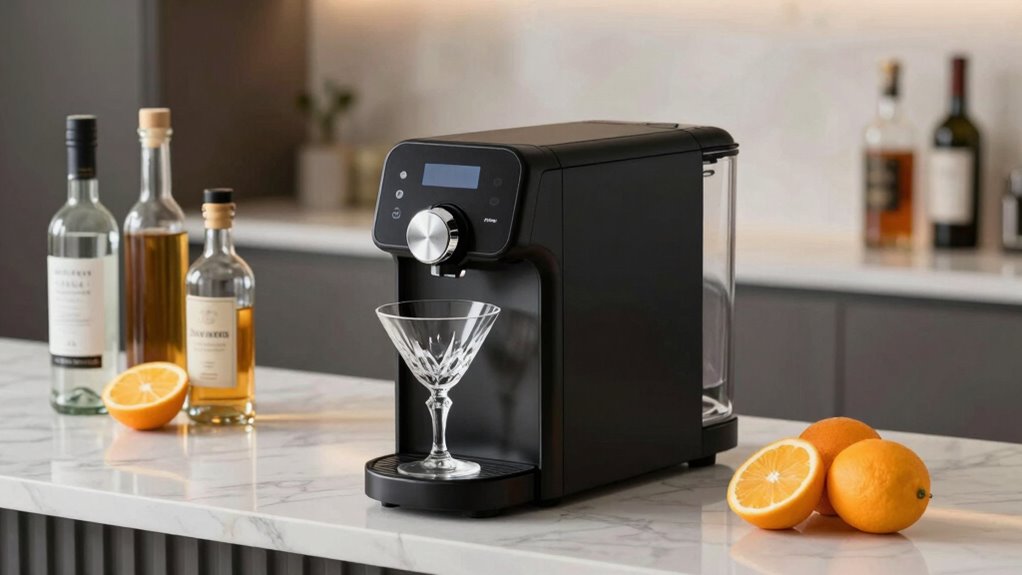
Home cocktail machines are designed for quick and convenient drinks, relying on pre-measured ingredients and automated mixing. They help you impress friends or enjoy a drink after a long day with minimal effort. However, they aren’t meant to help you develop bartending skills or explore creativity. If you’re interested in mastering mixology techniques, there are better tools and methods to try first. Keep exploring to learn more about making better cocktails at home.

Get the latest gadgets delivered free with Prime
- Fast, free delivery on millions of items
- Prime Video, Amazon Music and more included
- Member-only deals all year
Key Takeaways
- Home cocktail machines prioritize quick, consistent drinks over teaching bartending techniques or flavor balancing skills.
- They rely on pre-measured ingredients, removing the need for manual mixing and skill development.
- These devices limit creativity, restricting customization and experimentation with ingredients and recipes.
- They are ideal for convenience and social occasions but do not foster home bartending expertise.
- For skill-building, investing in proper tools and practicing manual techniques is more effective than relying on machines.
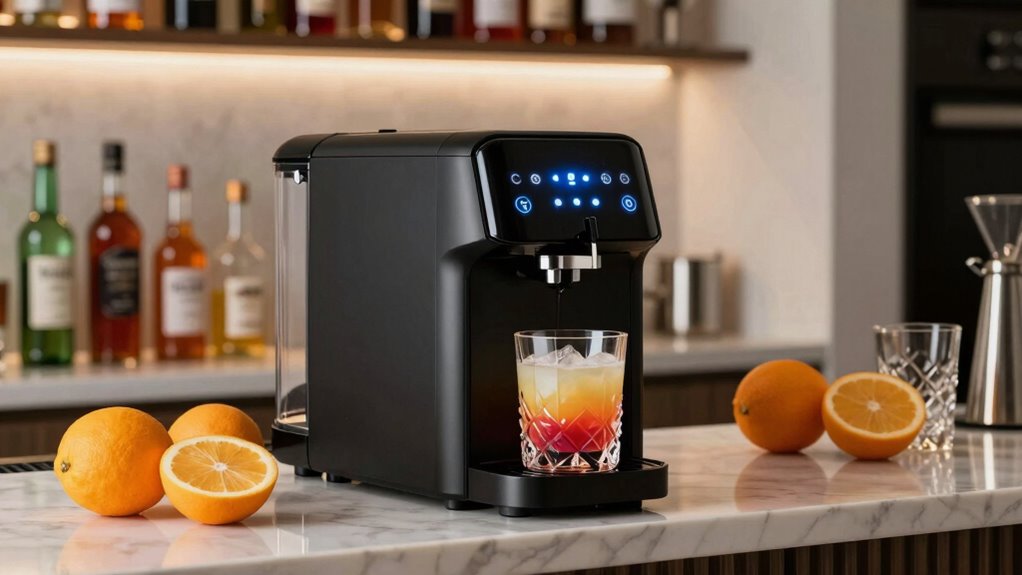
Have you ever wished you could craft restaurant-quality cocktails at home with minimal effort? That’s exactly what home cocktail machines promise—convenience over complexity. These devices are designed to simplify the process, allowing you to enjoy expertly mixed drinks without needing to master complicated techniques or spend years practicing mixology techniques. But that’s the core point: they’re convenience products, not tools for honing your skills or becoming a professional bartender.
Home cocktail machines offer quick, convenient drinks but don’t help develop true bartending skills or creativity.
When you use a home cocktail machine, you’re primarily relying on pre-measured ingredients and automated mixing processes. It might seem impressive, but it doesn’t give you the opportunity to learn the nuances of professional bartending. Unlike traditional methods, where you learn how to balance flavors, control pour sizes, and improve your presentation, these machines do all that work behind the scenes. They remove the skill and artistry that come with manual mixing, shaking, and pouring. Instead, they focus on delivering a consistent, quick result with minimal input from you. Developing bartending skills takes time and hands-on practice, which these machines do not provide.
This isn’t to say that these machines aren’t useful. If your goal is to impress friends at a party or enjoy a quick cocktail after a long day, they’re perfect. They eliminate the need for a full bar setup, reduce waste, and ensure you get a good drink every time. But if you’re hoping to develop your mixology techniques or replicate the finesse of professional bartending, a home cocktail machine falls short. It’s a shortcut—convenient but not educational. You’re missing out on the opportunity to learn the art of balancing ingredients, experimenting with flavors, or mastering the craft of presentation.
Furthermore, relying on these devices might limit your creativity. When you’re using a machine, you’re confined to its recipes and capabilities. Traditional bartending involves improvisation and customization—adjusting ingredients to suit your taste or inventing new cocktails. With a machine, you’re limited to its programmed options, which can stifle your growth as a home mixologist. If you genuinely want to develop skills and understand the craft, you’re better off investing in good tools, ingredients, and learning the fundamentals of professional bartending. Additionally, understanding the technology behind these devices can help you make more informed choices about their features and limitations. Developing an understanding of biodiversity and sustainable practices can also guide you toward more eco-friendly choices in your cocktail ingredients and equipment.
In essence, home cocktail machines are about convenience. They’re designed to make your life easier and ensure you get a decent drink without much effort. They’re not meant to teach you the art of mixology or help you become a skilled bartender. So, if your aim is to learn and grow as a home mixologist, these machines should be viewed as a quick fix, not a substitute for the real skill-building that comes from practice and experimentation. Gaining a deeper knowledge of mixology fundamentals can significantly enhance your overall cocktail experience and skill development over time.
As an affiliate, we earn on qualifying purchases.
Frequently Asked Questions
Do Home Cocktail Machines Require Regular Maintenance?
Yes, home cocktail machines require regular maintenance. You should clean them regularly to guarantee peak performance, typically after each use or at least weekly, depending on usage. Proper cleaning frequency prevents buildup and mold. If you encounter technical troubleshooting issues, consult the user manual for specific cleaning steps or maintenance tips. Keeping up with these routines ensures your machine functions smoothly and extends its lifespan.
Can These Machines Make Non-Alcoholic Beverages?
Yes, many home cocktail machines can make non-alcoholic options. They often offer customization possibilities, allowing you to create flavorful mocktails and other non-alcoholic beverages. You simply choose the ingredients or flavors you want, and the machine handles the rest. This makes them versatile for both adult drinks and family-friendly options. So, if you’re looking to enjoy a variety of non-alcoholic beverages with ease, these machines can certainly accommodate that.
Are Replacement Parts Easy to Find and Affordable?
They say, “A stitch in time saves nine,” and that’s true for replacement parts. You’ll find replacement parts for these machines are generally easy to find, especially online, and many brands keep stock for quick shipping. Regarding affordability concerns, most replacement parts are reasonably priced, making repairs cost-effective. This way, you can keep your machine running smoothly without breaking the bank.
How Loud Are These Machines During Operation?
These machines tend to produce a moderate noise level during operation. The operational sound is noticeable but usually not disruptive, often comparable to a blender or food processor. If you’re sensitive to noise, you might find them slightly loud, especially when blending or dispensing cocktails. However, overall, their noise level remains manageable, allowing you to enjoy your drinks without significant disturbance.
Do They Come With a Variety of Drink Recipes?
Yes, many home cocktail machines come with a variety of drink recipes, allowing you to explore different flavors. They often feature flavor customization options, so you can adjust sweetness or strength to suit your taste. While recipe versatility is limited compared to manual mixing, these machines make it easy to enjoy a range of cocktails at home with minimal effort, perfect for casual gatherings or quick indulgence.
professional bartending tools kit
As an affiliate, we earn on qualifying purchases.
As an affiliate, we earn on qualifying purchases.
Conclusion
So, don’t fool yourself into thinking these home cocktail machines will turn you into a master mixologist overnight. They’re more like magic boxes that spit out drinks with the flick of a switch—impressive, sure, but ultimately, they strip away the art, skill, and soul of true bartending. If you want to craft legendary cocktails, you’ll need to roll up your sleeves, learn the craft, and embrace the beautiful chaos of real bartending—and leave the machines for mere convenience.
As an affiliate, we earn on qualifying purchases.
cocktail recipe book for beginners
As an affiliate, we earn on qualifying purchases.
As an affiliate, we earn on qualifying purchases.
Halloween Picks
halloween
As an affiliate, we earn on qualifying purchases.