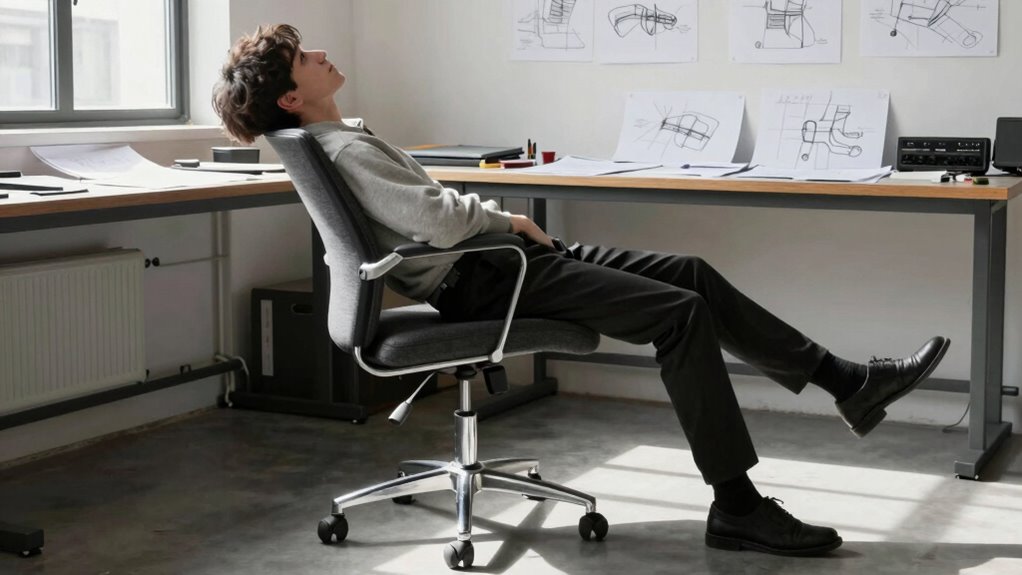

Using a drafting chair often leads to a hidden posture problem: you may unknowingly lean too far forward, creating a forward-leaning stance that puts strain on your lower back and hips. This happens because of the high seat height, which can cause you to reach for your work or hunch your shoulders. Over time, this awkward position can cause discomfort and even chronic pain. Stay with us to discover how to avoid this common but overlooked issue.
Key Takeaways
- Drafting chairs often have higher seats, causing users to lean forward excessively to reach work surfaces.
- The elevated position can lead to forward-leaning postures, increasing lower back and neck strain.
- Users may compensate by slouching or craning their necks, creating hidden muscular imbalances over time.
- Poor seat height adjustment in drafting chairs can cause sustained awkward postures not immediately noticeable.
- Over time, this posture may develop into chronic discomfort or repetitive strain injuries, often overlooked initially.
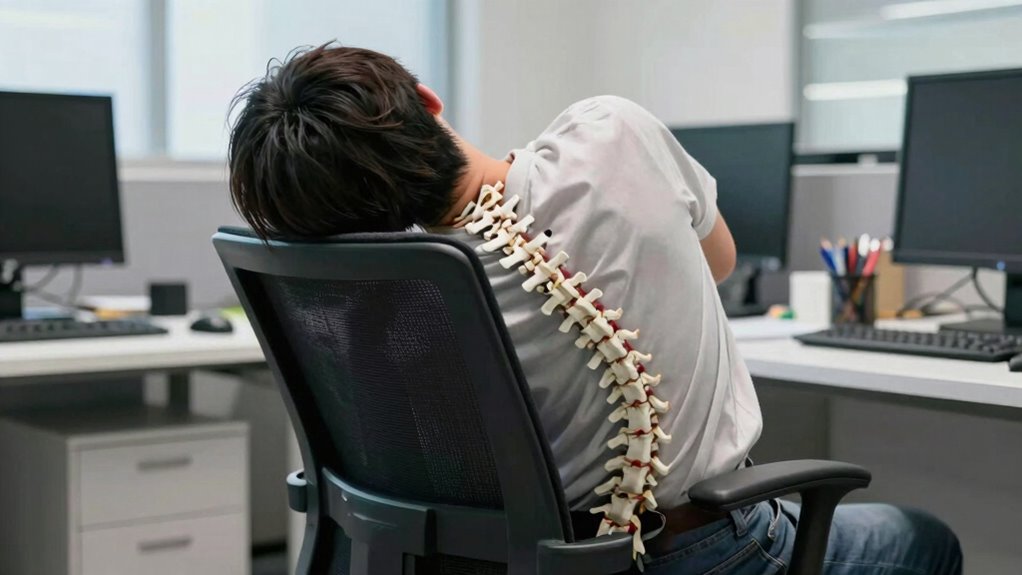
Drafting chairs are essential for many professionals, but poor posture while using them can lead to discomfort and long-term health issues. One often-overlooked aspect of maintaining good posture is making proper ergonomic adjustments, especially when it comes to seat height. If your seat isn’t adjusted correctly, it can create a cascade of posture problems that are easy to miss until they become painful or limiting. When you sit too high or too low, you might find yourself leaning forward or slouching, which strains your neck, shoulders, and back. Adjusting your seat height to guarantee your feet rest flat on the ground and your knees are at a 90-degree angle is the first step toward better posture.
Many people focus solely on other ergonomic adjustments, like back support or armrest positioning, but neglect seat height. This oversight can cause a weird posture problem that almost nobody predicts: a forward-leaning stance that puts extra pressure on your lower back and hips. When your seat is too high, your hips might lift, forcing your pelvis into an unnatural tilt, which can lead to discomfort and even chronic pain. Conversely, if your seat is too low, you may slide forward in your chair to compensate, creating a hunched posture that strains your upper back and neck. Awareness of ergonomic principles can help you understand how proper adjustments support your overall posture. Recognizing the importance of seat height adjustment can significantly improve your sitting habits. Additionally, being mindful of proper ergonomic setup** can help you identify other factors that contribute to maintaining a healthy sitting posture. Understanding how seat height influences** your posture can help you make more informed ergonomic choices.
Neglecting seat height can cause forward-leaning postures that strain your lower back, hips, and neck.
This leaning forward posture is sneaky because it often feels like you’re just trying to get closer to your work, but in reality, you’re adopting an awkward position that can cause long-term issues. It’s easy to overlook because it happens gradually, and you might not realize how much your seat height influences your overall posture. Proper ergonomic adjustments involve not only setting your seat height correctly but also ensuring your hips are level with your knees, which encourages a natural, relaxed spine alignment. When your seat height is suitable, your upper body stays upright, reducing the tendency to lean forward or backward. Additionally, understanding ergonomic setup can help you identify other factors that contribute to maintaining a healthy sitting posture. Making small, consistent checks of your setup can prevent this issue from developing into a chronic problem.
This weird posture problem can be avoided with simple, consistent checks of your ergonomic setup. Take a moment to sit with your feet flat, knees at a right angle, and hips slightly higher than your knees. Adjust your seat height accordingly, and you’ll notice how much easier it is to maintain a comfortable, healthy posture throughout your workday. Remember, even minor adjustments can make a significant difference. Prioritize ergonomic setup, especially seat height, so you prevent this hidden posture trap from taking hold and causing discomfort over time.

Primy Drafting Chair Tall Office Chair with Flip-up Armrests Executive Ergonomic Computer Standing Desk Chair with Lumbar Support and Adjustable Footrest Ring (Black)
- Adjustable Height and Footrest: Includes adjustable footrest and height for comfort
- Space-Saving Armrests: Flip-up 90-degree armrests save space
- Lumbar Support: Adjustable lumbar support for spine protection
As an affiliate, we earn on qualifying purchases.
As an affiliate, we earn on qualifying purchases.
Frequently Asked Questions
Can Adjusting the Chair Height Fix the Posture Issue?
Adjusting your chair height can help fix posture issues, but it’s often a myth that this alone solves everything. Posture myths suggest that minor adjustments are enough, but poor ergonomics involve more factors. Chair myths also lead people to believe height adjustments are a cure-all, but you need proper lumbar support and desk alignment too. Focus on overall ergonomics, not just chair height, to truly improve your posture.
Are There Specific Exercises to Prevent This Posture Problem?
Yes, there are specific exercises to prevent this posture problem. You should focus on posture awareness, regularly checking your alignment, and strengthening key muscles. Incorporate exercise routines like shoulder rolls, neck stretches, and core strengthening to support proper posture. Consistent practice helps you stay mindful and resilient. By combining posture awareness with targeted exercises, you can reduce strain and maintain healthy, balanced sitting habits throughout your workday.
How Long Does It Typically Take to Develop This Posture Problem?
It usually takes a few months of poor posture habits to develop this problem, but it varies based on your posture awareness and ergonomic training. If you neglect proper support and sit improperly often, the issues can appear sooner. Staying mindful of your posture and practicing ergonomic training helps prevent this. Regular breaks, stretching, and adjusting your workspace are key. The sooner you adopt good habits, the less likely you’ll develop this posture problem.
Do Ergonomic Accessories Help Mitigate the Issue?
Ergonomic accessories can be a game-changer in preventing posture issues—you’ll feel like you’re sitting on a cloud of comfort! These accessories, like lumbar supports and adjustable footrests, offer significant ergonomic benefits by promoting better alignment and reducing strain. While they don’t completely eliminate the risk, using the right accessory options helps mitigate the problem, making your workday healthier and more comfortable, even during long hours at your desk.
Is This Problem Common Among All Drafting Chair Users?
This posture problem isn’t common among all drafting chair users, but it can happen if the ergonomic design isn’t ideal. You might experience it if you ignore posture awareness or don’t adjust your chair properly. To prevent this, prioritize ergonomic features that support natural alignment, and stay mindful of your posture throughout the day. Regularly checking in with your body helps avoid developing this unusual issue.

Synorla Ergonomic Tall Drafting Chair-Mesh Desk Chair with Flip-Up Arms
- Ergonomic Design: Adapts to drafting tables and desks
- Adjustable Seat Height: Max 9 inches for customized comfort
- Flip-Up Armrests: Repositionable for convenience
As an affiliate, we earn on qualifying purchases.
As an affiliate, we earn on qualifying purchases.
Conclusion
So, next time you settle into your drafting chair, beware of the unexpected posture trap lurking beneath. It’s a problem almost no one sees coming—until it’s too late. Will you notice the subtle signs before it’s a real issue? The secret to staying ahead might just be in how you sit, right now. Don’t let this hidden hazard catch you off guard—your back will thank you later. Are you ready to take action?

FREEKYROCK Office Drafting Chair with Footrest, Tall Height Adjustable Stool with Back Support, Heavy Duty Rolling Stool Chair with Wheels for Office Home Kitchen Bar Shop Guitar Studio Vanity, Black
- Customer Support: Professional assistance for assembly and use
- Multi-Purpose Use: Suitable for salons, offices, gaming, and more
- Adjustable Height: Seat height from 24.01" to 31.89"
As an affiliate, we earn on qualifying purchases.
As an affiliate, we earn on qualifying purchases.
Primy Drafting Chair Tall Office Chair with Flip-up Armrests Executive Ergonomic Computer Standing Desk Chair with Lumbar Support and Adjustable Footrest Ring (Black)
- Adjustable Height and Footrest: Includes adjustable footrest and height for comfort
- Space-Saving Armrests: Flip-up 90-degree armrests save space
- Lumbar Support: Adjustable lumbar support for spine protection
As an affiliate, we earn on qualifying purchases.
As an affiliate, we earn on qualifying purchases.