To start a podcast, choose simple yet quality equipment like a good microphone and headphones, which don’t have to be expensive. Select user-friendly hosting platforms such as Anchor, Libsyn, or Podbean that distribute to platforms like Spotify and Apple Podcasts. Promote your episodes through social media, websites, and collaborations with other creators to grow your audience. Consistency and engagement are key. Keep going to discover more tips that can help turn your podcasting dreams into reality.
Key Takeaways
- Choose affordable, quality audio equipment like a microphone, headphones, and pop filter to ensure professional sound.
- Select user-friendly hosting platforms such as Libsyn, Anchor, or Podbean for easy uploading and distribution.
- Distribute episodes across major directories like Spotify and Apple Podcasts to reach a wider audience.
- Promote your podcast through social media, websites, email newsletters, and collaborations to grow your listener base.
- Engage your audience consistently with quality content and active promotion to build credibility and long-term success.
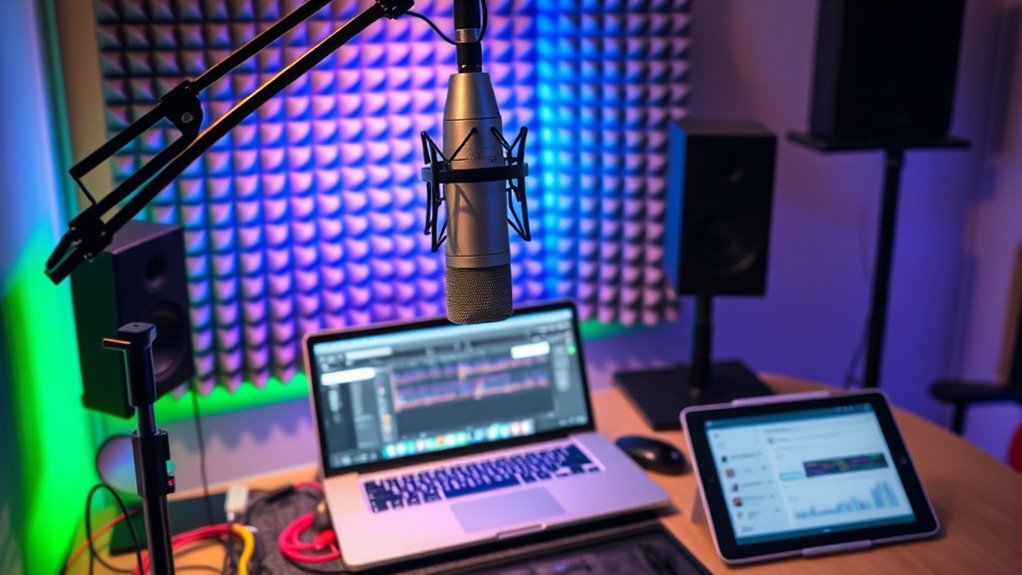
Have you ever considered starting a podcast but aren’t sure where to begin? Launching your own show can seem overwhelming at first, but once you get the basics down, it becomes an exciting way to share your ideas, connect with others, and even generate income. A key part of this process is understanding how to monetize your podcast effectively. Monetization strategies vary, from sponsorships and affiliate marketing to listener donations and premium content. To attract sponsors, you’ll need to grow your audience and establish credibility, which starts with honing your interview techniques. Conducting engaging, well-prepared interviews not only adds value but also keeps listeners coming back. Good interview techniques involve active listening, asking open-ended questions, and maintaining a natural conversational flow. This makes your podcast more dynamic and helps you build rapport with your guests, which enhances your credibility and attracts new listeners. Additionally, investing in audio quality is essential, as clear, professional sound can significantly improve listener retention and overall perception of your show. Choosing the right equipment is essential for producing high-quality audio, as poor sound quality can turn listeners away quickly. You don’t need the most expensive gear to start, but investing in a decent microphone, headphones, and a pop filter makes a significant difference. A good microphone captures your voice clearly, while headphones allow you to monitor your recordings and catch issues early. Recording in a quiet space minimizes background noise and results in a professional-sounding product. Once you have your equipment sorted, selecting a user-friendly platform to host your podcast is the next step. Platforms like Libsyn, Anchor, or Podbean simplify the uploading process, distribute your episodes across major directories like Spotify and Apple Podcasts, and provide valuable analytics. This helps you understand your audience better and refine your content. Promotion is equally important in growing your listener base. Social media channels, your website, and email newsletters can help you reach a wider audience. Consistent posting and engaging with your followers build a loyal community. Collaborations with other podcasters or influencers can introduce your show to new listeners and boost your credibility. Remember, podcasting is a long-term game. By regularly delivering quality content, applying effective interview techniques, and exploring multiple monetization strategies, you’ll gradually turn your passion into a sustainable venture. Starting a podcast isn’t just about recording episodes; it’s about creating a brand, building relationships, and finding innovative ways to monetize your content. With patience and persistence, your podcast can grow into a rewarding endeavor that resonates with audiences and provides ongoing opportunities for income.
Frequently Asked Questions
How Do I Choose the Best Microphone for My Budget?
To choose the best microphone for your budget, consider microphone types like USB for simplicity and affordability or XLR for better sound quality if you can invest more. Assess your budget considerations by setting a clear price range, then read reviews to find models within that range. Prioritize features like noise cancellation and durability. With careful research, you’ll find a microphone that fits both your needs and your budget.
What Are the Common Editing Software Options for Beginners?
For audio editing, beginners often choose software like Audacity, GarageBand, or WavePad because they’re user-friendly and free. A software comparison shows Audacity offers powerful features for free, GarageBand is great for Mac users, and WavePad provides an easy interface. You should pick based on your device and needs, focusing on simple tools for editing, cutting, and adding effects to improve your podcast sound quality.
How Can I Effectively Grow My Podcast Audience Organically?
You’ve got to hit the ground running to grow your podcast audience organically. Focus on boosting social media engagement by sharing eye-catching content and engaging with your listeners regularly. Encourage listener feedback and use it to tailor your episodes, making your audience feel heard. Consistency is key—release episodes reliably and build a community that shares your passion. Remember, a little effort every day will eventually turn your audience into loyal fans.
What Are the Legal Considerations When Using Music or Guest Content?
When using music or guest content, you need to consider music licensing and guest consent. Always make sure you have the proper licenses for any music you include to avoid copyright infringement. Additionally, get clear guest consent before sharing their stories or recordings to protect yourself legally. By handling music licensing and guest consent responsibly, you keep your podcast compliant and respectful of creators’ rights.
How Often Should I Release New Podcast Episodes for Optimal Growth?
You should aim to release new episodes weekly or biweekly to maintain steady growth. Consistent episode scheduling helps build audience loyalty and boosts your podcast’s visibility. Prioritize content consistency so your listeners know when to expect new material, which encourages regular engagement. Stay committed to your schedule, and you’ll see better growth over time, as your audience anticipates and looks forward to your next episode.
Conclusion
Starting your podcast is like planting a seed that grows with the right equipment, platforms, and promotion. Stay consistent, be authentic, and let your passion shine through every episode. With dedication, your voice will ripple through the waves of listeners, turning small beginnings into a booming success. Remember, every great podcast started with a single idea—so take that first step today and watch your story unfold like a blooming garden.