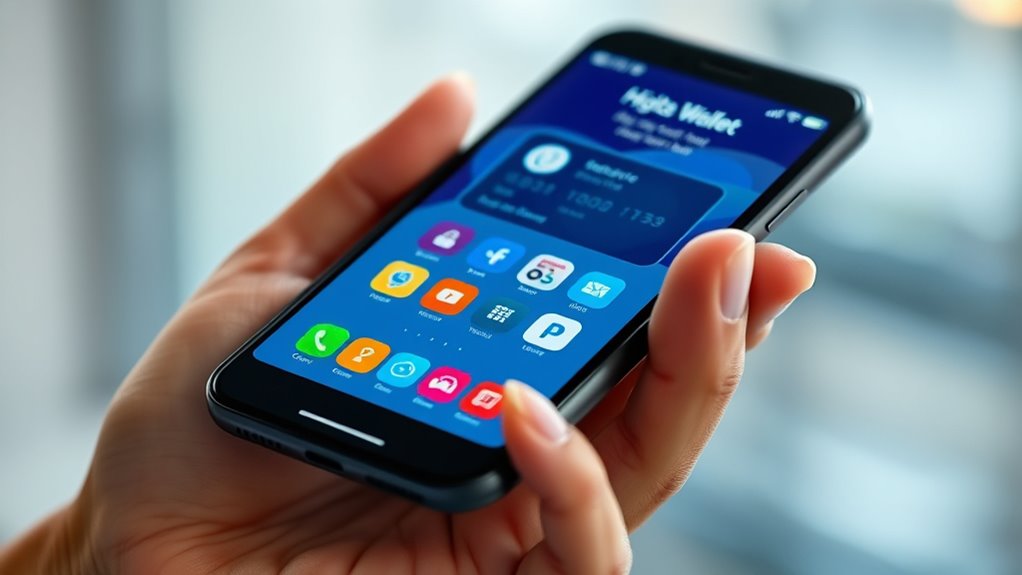

To master digital wallets, start by choosing a wallet compatible with your device and payment needs. Download the app, create an account, and securely link your bank or credit card. Make certain your wallet supports your cryptocurrencies if needed. Pay attention to security by enabling multi-factor authentication, updating software regularly, and safeguarding private keys offline. With these steps, you’ll open seamless, secure payments—continue exploring for expert tips to optimize your digital wallet experience.
Key Takeaways
- Choose a compatible digital wallet suited for your device and preferred payment methods.
- Download and securely set up the wallet, linking necessary bank accounts or cards.
- Enable strong security measures like multi-factor authentication and protect private keys offline.
- Ensure the wallet supports your desired cryptocurrencies and integrates seamlessly with payment terminals.
- Regularly update your wallet software and follow best security practices for safe digital transactions.
Have you ever wondered how digital wallets are transforming the way you pay for things? These handy tools make transactions quick, secure, and convenient, but understanding how to use them effectively requires some basics. First, you need to familiarize yourself with wallet compatibility. Not all digital wallets work with every device or merchant. Some wallets are designed specifically for smartphones, while others also support desktops or wearables. Before you choose a wallet, check whether it’s compatible with your phone’s operating system—iOS or Android—and whether it works with the payment terminals you frequent. Wallet compatibility also extends to the cryptocurrencies you might want to store or use; some wallets support only specific coins, so if you plan to use cryptocurrencies, ensure your wallet can handle those particular currencies. Compatibility issues can cause frustration if your wallet isn’t compatible with your devices or the services you want to access. Choosing a wallet with robust security features can help protect your assets from potential threats. Next, understanding cryptocurrency security is essential to protecting your digital assets. Digital wallets store sensitive information like private keys that give access to your funds, so security measures are vital. Look for wallets that offer strong encryption and multi-factor authentication. These features add layers of protection, making it harder for hackers to access your wallet. Be cautious about where you store your wallet’s seed phrase or private keys—never share them, and store them securely offline if possible. Also, consider using hardware wallets for larger amounts of cryptocurrencies, as they provide an extra shield against online threats. Regularly updating your wallet application is necessary too, as updates often patch security vulnerabilities. Remember, no system is completely immune, so being vigilant about security practices is your best defense. When you set up your digital wallet, you’ll typically need to download an app or software compatible with your device. Once installed, you’ll create an account and link your bank account or credit card for seamless transactions. Many wallets also support adding cryptocurrencies, but ensure the wallet you select supports the currencies you want to use. As you get comfortable, explore additional features like contactless payments, QR code scanning, and integration with other apps to enhance your experience. Keep in mind that wallet compatibility extends beyond hardware—ensure the wallet’s ecosystem aligns with your payment habits and the services you use most. This way, you avoid hiccups during transactions and enjoy smooth, secure payments every time. By understanding wallet compatibility and prioritizing cryptocurrency security, you equip yourself with the knowledge needed for confident and safe digital payments.
Frequently Asked Questions
Are Digital Wallets Secure Against Hacking?
Digital wallets are generally secure against hacking because they use advanced encryption protocols, making your data hard to access. However, no system is completely invulnerable. You can boost security by enabling biometric verification like fingerprint or facial recognition, which adds an extra layer of protection. While hackers constantly evolve, these features help keep your digital wallet safer, giving you peace of mind during transactions.
Can I Use Digital Wallets Internationally?
Yes, you can use digital wallets internationally for cross border payments. They often support multiple currencies, making currency conversion seamless. Just make certain your wallet provider accepts transactions in your destination country and check for any fees associated with international use. Using digital wallets abroad simplifies payments and helps you manage currency exchange on the go, making your travel or global transactions much more convenient.
What Are the Fees Associated With Digital Wallet Transactions?
You might encounter transaction fees with digital wallets, especially for international payments. Fees can include small charges for transactions or currency conversion, which varies depending on the provider. Always check your digital wallet’s fee schedule before making a transaction. Some wallets waive fees for certain uses or offer flat rates, but be aware that currency conversion fees can add up if you’re paying in a different currency than your account’s base currency.
How Do I Recover Lost Digital Wallet Access?
If you lose access to your digital wallet, start with recovery techniques like resetting your password or using your registered email or phone number for account verification. Most wallets offer security questions or biometric verification to confirm your identity. Follow the app’s step-by-step instructions for recovery, and contact customer support if needed. Staying prepared with updated recovery info guarantees you can regain access quickly and securely.
Do Digital Wallets Work Without Internet Connectivity?
Digital wallets generally don’t work without internet connectivity, as online access is needed to authenticate transactions and sync data. However, some wallets support offline payments, allowing you to make quick transactions with wallet compatibility features like NFC or QR codes. Keep in mind, offline payments are limited and often require prior setup. For seamless use, verify your device and wallet app are compatible with offline payment options before heading out.
Conclusion
By mastering digital wallets, you simplify your payments, secure your transactions, and stay ahead of technology. Embrace convenience, enhance security, and enjoy flexibility every time you pay. With digital wallets, you transform your spending, streamline your purchases, and empower your financial future. Remember, in this digital age, adopting new tools means embracing progress, embracing ease, and embracing opportunity—because the future of payments is in your hands.